You've collected the keys. The previous owner's reno-era parquet is peeling, the kitchen looks like it was last updated when dial-up internet was a thing, and your Instagram saved folder is now 400 posts deep of fluted oak islands and arch doorways.
Then comes the quotation. Fifty grand. Sixty. A hundred and sixty.
For most Singaporeans in their late twenties and thirties, the renovation bill is the single largest lump of unsecured cash they will ever hand over to a stranger — often more than the down payment they scraped together for the flat itself. And unlike buying the flat, there is no HDB officer checking the paperwork, no bank holding the funds in escrow, no conveyancing lawyer reading the fine print on your behalf.
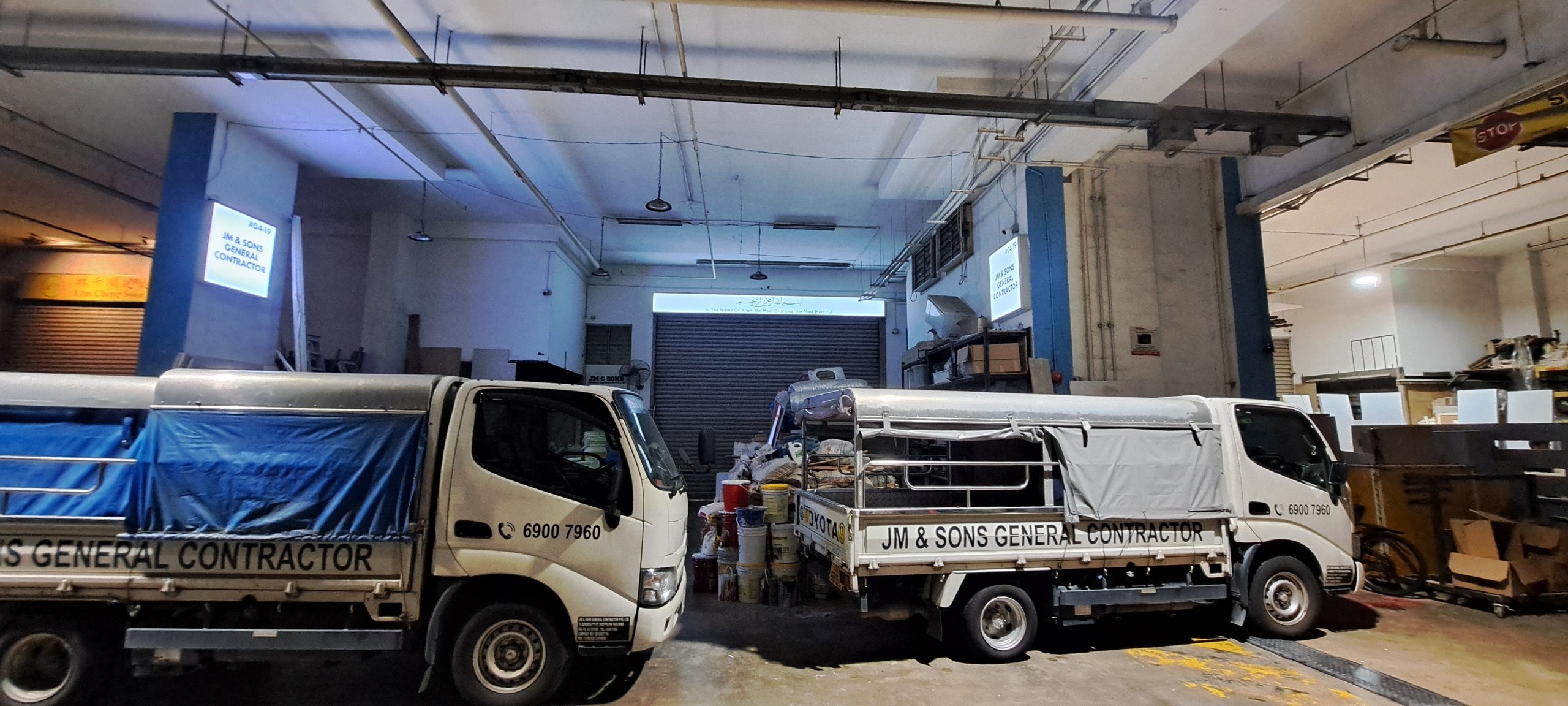
The collapse of JM & Sons General Contractor is the clearest recent illustration of what happens when that trust is misplaced. It is also the best free lesson young homeowners will get this year — provided they actually read it.
The JM & Sons General Contractor Case: What Actually Happened
According to reports, the Consumers Association of Singapore (CASE) received 28 complaints against JM & Sons General Contractor between January and November 2023, with homeowners reporting combined prepayment losses of over S$362,000. The firm was subsequently listed as "Permanently Closed", with insolvency cited as the reason, leaving multiple projects unfinished and clients unable to reach anyone.
Read those numbers again, because the ratio matters more than the total:
- 28 complaints over roughly 11 months means this was not a single botched job — it was a pattern.
- S$362,000 across 28 households works out to roughly S$12,900 per affected homeowner in prepayments alone, before accounting for the cost of hiring a replacement contractor to finish the job.
- The phrase that should stop you cold is "prepayment losses" — not "workmanship disputes", not "delay disputes". Money handed over ahead of work done.
The uncomfortable truth is that JM & Sons is not a freak event. It is the visible tip of a structural feature of the renovation industry: homeowners pay forward, contractors pay backward. Your deposit lands in the contractor's operating account and is immediately consumed by the previous client's project, this month's wages, and next month's rent on the showroom. The moment new sales slow down, the whole chain seizes.
That is why due diligence is not about finding a "bad" contractor. It is about structuring your deal so that one contractor's cash-flow failure cannot become your financial catastrophe.
Why This Matters More for Young Homeowners Than Anyone Else
Two trends have collided, and the collision point is your renovation budget.
The first is demographics. According to ERA Singapore's research, buyers aged 26 to 35 tripled their market share of new private home purchases between 2015 and 2022. Millennials and younger Gen Zs are entering the property market earlier, and often at higher price points, than any generation before them.
The second is the state of the resale market. Younger buyers chasing value gravitate toward older resale flats and older private units — precisely the stock that needs the most renovation work. A 1990s five-room flat in a mature estate might be S$150,000 cheaper than a newer unit, but it will also demand a full overhaul.
The result is a demographic group that is asset-rich on paper, cash-poor in practice, and renovating for the first time with no institutional memory of how these projects go wrong.
Renovation Cost Benchmarks in Singapore (S$)
As the chart shows, renovation spend in Singapore ranges from around S$45,000 for a basic resale flat renovation to over S$160,000 for extensive overhauls, with an average of roughly S$53,300 for resale HDB flats in areas like Punggol, based on Qanvast's cost data. In private condominiums, that ceiling goes considerably higher.
Now put that in context of a household income. A combined S$120,000 annual income — comfortably above median for a young couple — means a S$60,000 renovation is half a year of gross salary, paid in cash, with no mortgage financing available for it. There is no bank underwriting your contractor. You are the bank.
And the regrets are already baked in. Survey findings cited in industry coverage suggest around 66% of Singaporeans regret some aspect of their renovation — not necessarily because contractors are dishonest, but because the process is under-planned, under-documented, and negotiated under emotional pressure.
The Market Backdrop: Why Renovation Budgets Are Stretched Right Now
Property prices have kept climbing while incomes have not kept pace. Private residential property prices rose 1.5% in Q3 2023, following a 0.2% rise in Q2 2023. HDB resale prices have followed a similar, if slower, upward track.
Private Residential Price Growth in 2023 (%)
Every dollar that goes into the purchase price is a dollar unavailable for the renovation — and vice versa. Young buyers who stretch to afford the flat are exactly the buyers most tempted to (a) pick the cheapest quote, and (b) accept a contractor's demand for a large upfront deposit because their own cash flow is tight and they need work to start. That combination is precisely the JM & Sons risk profile.
Lesson 1: Licence Checks Are Non-Negotiable
This is the cheapest, fastest, most boring step — and it is the one that filters out the largest number of disasters before you spend a single dollar.
If You Own an HDB Flat
HDB maintains a Directory of Renovation Contractors (DRC). Every renovation contractor performing works in an HDB flat must be listed in it. Hiring a contractor who is not in the DRC is an offence, and HDB states that penalties can run up to S$5,000.
That bears repeating: it is illegal to engage a non-DRC contractor for your HDB renovation, even for works that don't require a permit.
What the DRC actually gives you:
- A baseline competency filter. Contractors must meet HDB's standards to be listed and are qualified to carry out works without compromising structural integrity.
- A demerit point system. Contractors who breach rules accumulate demerit points, and their record is publicly visible. Check it. A contractor with a clean listing is not necessarily excellent, but a contractor with a stack of demerit points is telling you something concrete.
- An avenue for recourse. A DRC contractor has something to lose — their listing — which changes the economics of walking away from your project.
What the DRC does not give you: any guarantee of financial solvency. This is the crucial gap. The DRC is a regulatory directory, not a creditworthiness directory. A contractor can be perfectly compliant on workmanship and safety standards and still be three months away from insolvency.
So layer your checks:
| Check | Where to Look | What You're Screening For |
|---|---|---|
| HDB DRC listing | HDB website | Legal eligibility, demerit points |
| ACRA business profile | ACRA BizFile | Company age, directors, paid-up capital, status |
| Insurance coverage | Ask the contractor directly | Public liability, all-risk cover |
| Litigation / winding-up notices | Insolvency registers, court records | Financial distress signals |
| Reviews and complaints | CASE, Google, forums, Qanvast | Pattern vs. one-off issues |
If You Own a Private Property
There is no direct HDB DRC equivalent for condominiums and landed homes, which means the regulatory safety net is thinner and your own vetting has to be thicker. The due diligence shifts almost entirely onto:
- Company track record — how long has it operated? A company incorporated eight months ago has no history to assess.
- Insurance — ask for the certificate, not the assurance.
- Management corporation (MC) rules — your condo's MC will impose its own renovation hours, lift protection requirements, and deposit procedures. A contractor who has never worked in your development is a delay waiting to happen.
- Written references from comparable projects — ideally within the last 12 months, not from 2019.
Mr Tan Sze Teck, Senior Director of Research at Huttons Asia, frames the first step plainly: verifying a contractor's official registration status, especially with HDB's DRC, is non-negotiable — it provides a baseline assurance of adherence to regulatory standards.
Baseline, though — not insurance.
Lesson 2: The Written Quotation Is Your Only Real Contract
Verbal quotes are worthless. A one-line WhatsApp quotation reading "Whole house reno $58,000" is worse than worthless, because you will remember a number that was never written down, and your contractor will remember a scope that was never agreed.
The rule is simple: if it is not itemised in writing, it does not exist.
The Anatomy of a Quotation That Protects You
A defensible quotation should break down every element — not as one lump sum, but line by line, with specifications, brands, model numbers, and quantities.
Compare these two:
Weak: "Carpentry — $18,000"
Defensible: "Carpentry — 18ft kitchen base cabinets, 8ft top cabinets, laminate finish (Egger H1180), Blum soft-close hinges, quartz countertop 20mm with waterfall edge — $18,400"
The second version tells you what you're getting, what it costs, and — critically — what it will cost to change. The first version is where variation orders breed.
The Seven Clauses to Read Before You Sign
Most homeowners skim the contract and focus on the price. The price is one of the least important numbers in the document.
| Clause | Why It Matters | What to Demand |
|---|---|---|
| Scope of work | Prevents "that wasn't included" disputes | Full itemisation of tasks, materials, brands, models, quantities |
| Project timeline | Delays cost you rent, storage, or a hotel | Start date, completion date, milestone schedule, delay penalties |
| Variation orders | The #1 source of budget blowouts | Written approval process, quoted before work, priced at a stated rate |
| Payment schedule | Your single best protection against insolvency | Tied to milestones, modest deposit, meaningful final payment |
| Warranty / DLP | Covers what fails after handover | Explicit duration for workmanship and materials |
| Dispute resolution | Determines what happens when things go wrong | Named mechanism: CASE, SMC, or RCMA mediation |
| Insurance & permits | Liability and compliance | Coverage confirmed; HDB permit applications handled by contractor |
Two clauses get skipped most often and matter most:
Variation orders. Uncontrolled VOs routinely add 10–30% to a renovation budget. The fix is procedural, not contractual: no VO proceeds without a written quotation and your written approval, priced before the work is done. Contractors who resist this are telling you how they plan to operate.
Dispute resolution. Agree in advance how a disagreement gets resolved. CASE, the Singapore Mediation Centre (SMC), and the Renovation Contractors & Material Suppliers Association (RCMA) all offer structured mediation routes. Naming one in the contract costs nothing and changes the temperature of every later conversation.
<figure>Lesson 3: Payment Schedules — Where the Money Actually Goes
This is the lesson JM & Sons teaches most expensively. Over S$362,000 in prepayment losses. Not in work that was done badly — in work that was paid for and never done.
The structural principle is straightforward: your payments should always trail the work. If you are ever meaningfully ahead of your contractor in value, you have stopped being a client and started being an unsecured creditor.
What a Healthy Payment Structure Looks Like
Industry guidance and CASE's consumer advice both point the same way: avoid large deposits, and tie payments to the completion of specific work stages. A defensible structure typically looks like:
- Deposit — modest, covering mobilisation and materials ordering, not the contractor's cash flow.
- Progress payments — released as defined stages complete: demolition, masonry, electrical rough-in, carpentry installation, final handover.
- Retention — a meaningful final sum held back until defects are rectified and the job is genuinely complete.
The specific percentages are negotiable. The direction of risk is not.
<figure>The Red Flags, Ranked
- A deposit above 20% before any work begins. Some deposit is normal — mobilisation costs money — but a contractor asking for a third of the contract value upfront is using your money to fund someone else's job.
- Requests to pay directly to an individual's bank account rather than the company account. This can complicate recovery and, in some cases, is a sign of a business operating outside its proper structure.
- Pressure to "confirm the slot" with a payment today. Artificial urgency exists to bypass your thinking time.
- No written schedule at all — "just pay as we go". There is no version of this that ends well.
- Disappearing communication between payments. Slow replies before signing become no replies after paying.
- Cheapest quote by a wide margin. If two quotes come in at S$65,000 and one at S$42,000, the third is not efficient — it is under-scoped, and the difference will reappear as VOs.
Paying for Materials: A Practical Middle Path
Some contractors will ask for materials to be paid upfront, particularly for tiles, sanitaryware, and custom carpentry. That's legitimate. The fix is direct-to-supplier payment or proof of purchase — you pay the tile supplier directly, or the contractor provides an invoice and order confirmation in your name. The money buys goods; it doesn't disappear into a general account.
Lesson 4: The Defect Liability Period — Your Post-Handover Safety Net
Handover is not the finish line. It is the point at which the work starts being tested by actual living — showers running daily, doors slamming, aircon condensate draining, floor tiles taking load.
The Defect Liability Period (DLP) is the window during which the contractor is obligated to return and rectify defects at their own cost.
For New Homes vs. Renovation Works
These are two different DLPs and homeowners routinely confuse them.
- Developer DLP (new launches): For new homes, the DLP typically runs at least 12 months from the Temporary Occupancy Permit (TOP) date, during which the developer is responsible for rectifying defects. This is statutory in nature and applies whether or not you negotiated anything.
- Contractor DLP / warranty (renovation): This is contractual. It exists only if you put it in the contract. Typical warranty terms for renovation workmanship and materials run from one to three years, depending on the scope and the contractor.
If your contract is silent on warranty, you have no DLP for the renovation. You have whatever goodwill the contractor feels like extending after the final invoice is paid.
What Your Renovation DLP Should Cover
- Workmanship — tiling alignment, waterproofing integrity, carpentry joints, painting finish, door alignment.
- Materials — manufacturer warranties on supplied products (sanitaryware, appliances, laminates).
- Response commitments — how quickly defects must be attended to, and what happens if they are not.
- Retention linkage — release of the final payment tied to a satisfactory inspection at a defined point in the DLP.
The Wet Area Problem
The most expensive defects are the ones that don't appear for months. Waterproofing failures in bathrooms and kitchens often only reveal themselves after sustained use — which is exactly why a 12-month DLP exists for new builds and why your renovation contract should mirror that logic for wet works.
This is also where pre-renovation inspection matters. A widely reported 2022 incident involving a false ceiling highlighted how existing defects, if not documented before work begins, can complicate or void warranty claims later. Before your contractor touches anything, photograph and video every surface, and note existing cracks, water stains, and uneven floors with dates. It's a fifteen-minute job that can settle a dispute months later.
<figure>The Questions to Ask Before You Sign Anything
Print this. Bring it to the meeting. A good contractor will answer these without flinching; a bad one will get defensive, vague, or start talking about how "we do things differently here."
| # | Question | What a Good Answer Sounds Like |
|---|---|---|
| 1 | Are you listed in the HDB Directory of Renovation Contractors, and can you show me your listing and demerit record? | Immediate, verifiable proof without hesitation |
| 2 | Can you provide a fully itemised quotation with brands, model numbers, and quantities? | Yes, with specifications, not "standard laminate" |
| 3 | What is your payment schedule, and what percentage is due before work starts? | Milestone-based, modest deposit, retention at the end |
| 4 | What is your warranty period for workmanship and for materials? | Specific durations, in writing, with a call-back process |
| 5 | How do you handle variation orders and what is the approval process? | Written quote before work, signed approval, no verbal changes |
| 6 | What is the start date, completion date, and penalty for delay? | Firm dates and a stated delay clause |
| 7 | Who applies for HDB permits, and what happens if approval is rejected? | Contractor handles submission; process explained |
| 8 | What insurance do you carry, and can I see the certificate? | Public liability and all-risk cover, documented |
| 9 | Can I speak to two recent clients and view a completed project? | Yes, with genuine contactable references |
| 10 | If we disagree, what is the dispute resolution process? | Named mechanism: CASE, SMC, or RCMA mediation |
Two more worth adding quietly in conversation:
- "How many projects is your firm running right now?" A contractor juggling fifteen concurrent jobs will not be on your site. Overcommitment is a leading cause of delay and quality failure.
- "Which subcontractors will be on site, and are they your direct employees or casual labour?" Quality lives or dies at this level.
HDB Renovation Rules That Can Sink Your Project
Regulatory compliance isn't just bureaucracy — a rule breach can stop work on site, and the stoppage costs you, not the contractor.
Key things to know:
- Permit-controlled works require HDB approval before work commences. Structural alterations, demolition of walls, and certain plumbing and tiling works fall into this category. Your DRC contractor applies; you should confirm the approval has actually been granted.
- Non-DRC contractors are illegal for HDB renovation, with penalties of up to S$5,000.
- Noisy works are time-restricted. Drilling, hacking, and demolition are confined to stipulated weekday and Saturday windows, with Sundays and public holidays off-limits.
- Neighbour notification is required for renovation in occupied blocks, and HDB's rules exist as much to protect your relationships next door as to protect the structure.
- Common property is off-limits — no unauthorised alterations to corridors, service yards, or external facades.
Ask your contractor to confirm, in writing, which specific permits your project requires and who is submitting them. If they can't answer clearly, that's a competence signal, not just an administrative one.
The Wider Ripple: What Contractor Failures Do to the Property Market
The JM & Sons fallout isn't confined to 28 households.
For buyers: Every high-profile collapse raises the perceived risk of buying a home that needs work — which nudges demand toward newer units at a premium, and away from older resale stock that would otherwise be good value. Risk gets priced in.
For investors: An unfinished renovation means no rental income, a stalled refinancing timeline, and a unit that can't be marketed. For a landlord with a mortgage running, an abandoned renovation can quietly destroy a year's yield.
For tenants: Delayed handovers push move-in dates, disrupt leases, and occasionally strand tenants in units where work has stalled midway.
For the industry: Reputable contractors end up paying for the sins of the bad ones, through heavier consumer scepticism, tougher deposit negotiations, and more insistence on retention, which strains cash flow across the board.
The market-level lesson is the same one that applies at the household level: renovation risk is property risk. A home's value is not just the transacted PSF — it's the condition of the asset, and the condition of the asset depends on who you hire.
How Disputes Actually Get Resolved in Singapore
If things go wrong, there is a ladder. Knowing it in advance changes how you behave during the project.
- Direct negotiation in writing. Everything by email or WhatsApp, never verbal. Documentation is your leverage.
- CASE mediation. CASE handles consumer complaints under the Consumer Protection (Fair Trading) Act framework and mediates disputes between homeowners and renovation firms. This is the most common first formal step.
- Industry association mediation. The RCMA supports members with structured dispute resolution processes for renovation disagreements.
- Singapore Mediation Centre. For larger or more complex disputes, formal mediation offers a faster, cheaper route than litigation.
- Legal recourse. The final step, and the one where the legal costs frequently exceed the disputed amount.
Two practical notes. First, keep a project diary — dated photographs, messages, payment receipts, site logs. If you ever need mediation, your file is your case. Second, act early. The single most common failure pattern is homeowners waiting months hoping the contractor will come back, by which point the company has been struck off and the money is gone.
Food for Thought
-
If your contractor went insolvent tomorrow, what would you actually lose? Work out the value of work completed versus money paid. If the answer is more than a few thousand dollars, your payment schedule needs restructuring — not your contractor.
-
The DRC is a regulatory filter, not a financial one. What's your solvency check? Most homeowners can name their contractor's DRC status but not their company's incorporation date, director history, or whether they've been subject to winding-up proceedings. Why is the harder question the one nobody asks?
-
You spent months comparing flat layouts and PSF. How many hours did you spend comparing contracts? For a purchase decision involving a lawyer, a bank, and an HDB officer, most buyers do extensive diligence. For a renovation decision involving none of those, many buyers sign in a single meeting.
-
Is the cheapest quote actually cheaper? If a contractor is S$20,000 below the next bid, either the scope is smaller than you think, the materials are lower grade than you assume, or the business model depends on your deposit funding someone else's project. Which of those three are you willing to accept?
-
What does "trust" mean when there's a contract? The purpose of a rigorous contract is not to signal distrust. It's to make the relationship survivable when something goes wrong — because in almost every renovation, something goes wrong.
The Bottom Line
Renovation is the least regulated large financial transaction most Singaporeans will ever undertake. There is no escrow, no underwriting, no conveyancing. What protects you is a short list of unglamorous habits:
- Verify the DRC listing — and check the demerit record, not just the name.
- Insist on itemised, written quotations with brands, models, and quantities.
- Structure payments to trail the work, with modest deposits and meaningful retention.
- Put the defect liability period in the contract, with defined durations and response commitments.
- Document everything, from pre-work condition photos to every approved variation order.
JM & Sons General Contractor cost 28 households over S$362,000 in prepayments. The due diligence that might have prevented it costs an afternoon.