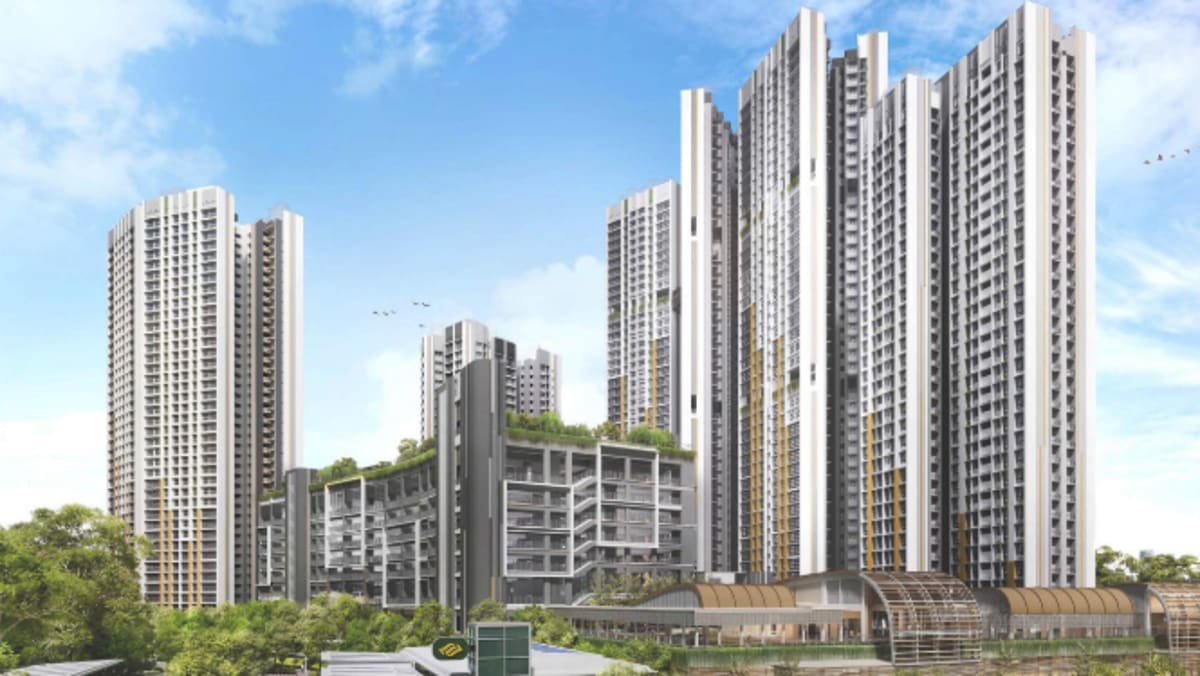
The November 2026 BTO launch is the last Build-to-Order exercise of the year, and it lands with an unusual combination of features: nearly 8,000 flats, seven projects spread across six towns, the first application round since the household income ceiling went up — and a three-tier classification system that will shape what you can do with your flat for a decade or more.
If you are 25 to 40, gainfully employed, and anywhere on the spectrum between "thinking about it" and "already have my HFE letter", this launch is engineered to test your priorities. Do you chase the mature estate with the 10-year Minimum Occupation Period and an 11% subsidy clawback? Or do you take the cheaper, less central Standard flat with more flexibility and a shorter wait?
This guide breaks down what is on offer, ranks the six towns on affordability, commute and amenities, looks at what each location's resale market could look like once the MOP lapses, and ends with a decision framework you can actually use.
The November 2026 BTO Launch at a Glance
HDB launched 7,964 flats across seven projects in Bedok, Geylang, Sembawang, Tengah, Toa Payoh and Yishun, according to CNA's coverage of the exercise. The application window ran from 4 November to 11 November 2026 — notably later than the usual October slot.
That timing was deliberate. HDB moved the final exercise of 2026 from October to November to give newly eligible buyers more time to obtain an HDB Flat Eligibility (HFE) letter, as reported by PropertyGuru. And "newly eligible" is the operative phrase here, because the income ceiling moved.
Under the revised rules effective for HFE applications submitted from 24 August 2026:
- The monthly household income ceiling for BTO flats rose to S$16,000 for families
- The ceiling for singles aged 35 and above rose to S$8,000
That single change widened the eligible pool considerably, and analysts expect it to show up in the application numbers.
The seven projects at a glance
| Town | Project | Classification | Project type |
|---|---|---|---|
| Bedok | Bayshore Sails | Plus | Waterfront precinct |
| Bedok | Bayshore Oasis | Plus | Waterfront precinct |
| Geylang | Merpati Meadow | Plus | Central mature estate |
| Sembawang | Sembawang Anchor | Standard | Non-mature estate |
| Tengah | Plantation Dew | Standard | New "forest town" |
| Toa Payoh | Toa Payoh Hillside | Prime | Mature central estate |
| Yishun | Chencharu Acres | Standard | Non-mature estate |
Note the asymmetry: Bedok gets two projects, while the other five towns get one each. That matters for your odds. More flats in a single town generally means a larger ballot pool per project, which is not the same thing as better odds — demand concentrates where the queue is longest.
Application Mechanics: What Actually Happens Between Now and Key Collection
Before anything else, the HFE letter. This is not a nice-to-have. Applicants must hold a valid HFE letter at the point of submitting their flat application, and may apply for only one flat type in one town — a rule that forces a single, irreversible choice.
The HFE letter consolidates three separate checks into one application: whether you are eligible to buy a new flat, what housing grants you qualify for, and what HDB housing loan you can obtain. Previously these were separate exercises; the consolidated letter means you know your full financial position before you ballot, not after.
The application itself is lodged online through the HDB Flat Portal, costs S$10 per application, and is allocated by computer ballot — not first-come, first-served. There is no advantage to applying at 9am on day one versus 11pm on the final night.
Waiting times vary meaningfully across this launch. Sembawang Anchor offers 1,310 flats with waiting times under three years — the shortest in the exercise and the obvious draw for anyone who needs a roof sooner rather than later. The other six projects carry wait times of under four years.
Standard, Plus and Prime: The Rule That Matters More Than the Postcode
Here is the part where many first-timers under-prepare. Since the classification framework was introduced, a BTO flat's category determines not just its price but its entire resale life. The three tiers in this launch split cleanly:
| Classification | Projects | MOP | Subsidy clawback on resale | Resale eligibility |
|---|---|---|---|---|
| Standard | Sembawang Anchor, Plantation Dew, Chencharu Acres | 5 years | None | Standard rules |
| Plus | Merpati Meadow (8%), Bayshore Sails (9%), Bayshore Oasis (9%) | 10 years | 8–9% of resale price | Stricter buyer eligibility |
| Prime | Toa Payoh Hillside (11%) | 10 years | 11% of resale price | Strictest buyer eligibility |
Subsidy Clawback Rate on Resale (%)
The clawback is the mechanism most people misread. It is not a penalty you pay at purchase — it is a share of the resale proceeds returned to HDB when you eventually sell, reflecting the additional subsidy baked into the launch price. An 11% clawback on a S$900,000 resale is S$99,000. That is real money, and it should be in your mental model from day one, not year nine.
The MOP difference is equally consequential. A Standard flat lets you sell or rent out after five years. A Plus or Prime flat locks you in for ten. For a couple in their early thirties planning children, a job relocation, or an upgrade, that is a large chunk of your prime earning years committed to a single asset.
Minimum Occupation Period by Classification (Years)
Affordability: What Each Project Actually Costs
Indicative prices below are before grants, which can meaningfully change the picture for eligible first-timers. The Enhanced CPF Housing Grant can go up to S$120,000 for eligible first-timer families.
| Town | Project | Classification | Flat type with indicative price | From (before grants) |
|---|---|---|---|---|
| Tengah | Plantation Dew | Standard | 3-room (White flat) | S$266,000 |
| Sembawang | Sembawang Anchor | Standard | 4-room | S$312,000 |
| Bedok | Bayshore Sails | Plus | 3-room | S$409,000 |
| Geylang | Merpati Meadow | Plus | 4-room | S$545,000 |
| Toa Payoh | Toa Payoh Hillside | Prime | 4-room | S$558,000 (no balcony); S$619,000 (with balcony) |
| Yishun | Chencharu Acres | Standard | Range of types | Not announced at time of writing |
Indicative Starting Prices by Project (S$, before grants)
One important caveat before you read too much into those numbers: they are not apples-to-apples. The Tengah and Bedok figures are 3-room starting prices; the Sembawang, Geylang and Toa Payoh figures are 4-room. A 4-room flat in Tengah will cost more than S$266,000, and a 3-room in Bedok will cost less than a 4-room there.
The affordability tiering, roughly
- Entry tier (under S$350,000): Tengah and Sembawang. Both Standard, both non-mature, both with the flexibility of a 5-year MOP.
- Mid tier (S$400,000–S$550,000): Bedok and Geylang. Plus classification, mature estates, meaningful subsidies — and the 10-year lock-in that comes with them.
- Top tier (S$550,000 and above): Toa Payoh Hillside. Prime, central, heavily subsidised relative to open-market value, but the most restrictive terms on the menu.
The trap for first-timers is treating the headline price as the decision. A S$266,000 flat with a five-year MOP and no clawback is not automatically "better value" than a S$558,000 flat with a ten-year MOP and an 11% clawback, because the two assets behave completely differently when you sell.
Commute and Amenities: The Connectivity Scorecard
Location quality in Singapore usually reduces to two things: how fast you can get to a job hub, and whether the coffee shop downstairs is open at 6am.
Toa Payoh Hillside (Prime)
Sited near Caldecott MRT on the Thomson-East Coast Line, Toa Payoh Hillside sits in one of the oldest and best-served mature estates in Singapore. Toa Payoh town centre, the library, hawker centres, polyclinics and a dense bus network are all within established reach. The project also includes Community Care Apartments, the assisted-living flat model aimed at seniors — a signal that this is a genuinely mixed, long-horizon development rather than a single-demographic block.
Caldecott's TEL connection puts Orchard Road a handful of stops away without a single transfer. That is the entire pitch, and it is a strong one.
Bayshore Sails & Bayshore Oasis (Plus)
The Bayshore precinct is Singapore's newest waterfront housing area, with access to Bayshore MRT on the Thomson-East Coast Line. The estate sits along the East Coast corridor, with the beach and East Coast Park within reach, and Bedok's existing town centre, markets and schools a short ride inland.
The trade-off is honesty-for-honesty: Bayshore is a precinct still filling in. Some amenities will arrive after you do.
Merpati Meadow (Plus)
Geylang's Merpati Meadow sits near Mattar MRT on the Downtown Line, which runs straight into the CBD and the Downtown Core without a transfer. The surrounding area is dense with established food, schools and everyday retail, and the older Geylang/MacPherson/Aljunied fabric means almost nothing here is "coming soon" — it already exists.
Geylang's name carries a reputation, but the Merpati Road side is residential, established and well-connected. Do not dismiss it on the postcode alone.
Sembawang Anchor (Standard)
Sembawang MRT on the North-South Line anchors the town, with the Canberra area's newer amenities and Sembawang Shopping Centre nearby. Commute to the CBD is a long NSL ride, so this suits people working in the north, in Woodlands, or with hybrid arrangements.
The standout feature is practical: 1,310 flats with waiting times under three years. If you are currently renting and the rent is bleeding you dry, that is not a minor detail. That is the whole decision.
Chencharu Acres (Yishun)
Chencharu is Yishun's newest residential precinct, served via the North-South Line at Yishun and Khatib with bus connections into the estate. Yishun itself has built up substantial amenities over the past two decades — malls, hospitals, parks, and a reputation for good food that outstrips its public image.
Yishun is genuinely a tale of two towns: the older ring-road blocks and the newer, quieter precincts like Chencharu behave quite differently in both lifestyle and pricing.
Plantation Dew (Tengah)
Tengah is Singapore's first new town in decades, built around a "forest town" concept with greenery, car-lite streets and a planned Jurong Region Line network. Today, residents rely on buses to Bukit Batok, Choa Chu Kang and Jurong East for rail.
This is the classic new-town bet: cheapest entry price, most modern planning, and a connectivity dividend that arrives years after you move in. Whether that is a bargain or a burden depends entirely on your tolerance for a construction site outside your window for the first few years.
What Each Town's Resale Market Could Look Like
BTO pricing tells you what you pay. Resale comparables in the surrounding estate tell you what the market might eventually pay you — with the caveat that a resale transaction eight to thirteen years from now will reflect a very different interest rate, income and policy environment.
Here is how to read each town.
Mature-estate Plus and Prime projects: strong demand, constrained upside
Toa Payoh, Bedok and Geylang all sit inside established resale ecosystems. When you eventually sell, your buyer faces the same classification restrictions you did: income ceilings, a wait-out period for private property owners, and a narrower pool of eligible purchasers. That caps the top end.
What it does not cap is baseline demand. Mature-estate resale flats in these areas transact in volume because the amenity base is already there. When you pull resale comparables for surrounding blocks in Bedok or Toa Payoh on a platform like Hiva, the pattern you will see is a tight price band formed by decades of transactions — not a speculative curve.
The practical implication: expect resilient, not explosive. Plus and Prime flats are designed to be homes first, appreciating assets second. That is a feature of the policy, not a bug.
Standard projects in non-mature estates: the appreciation curve depends on infrastructure
Sembawang, Yishun and Tengah all rely on the same mechanism — value arriving with amenities. Sembawang and Yishun already have the MRT and the malls; what they lack relative to the mature estates is proximity to the centre. Tengah lacks almost everything today and is scheduled to receive most of it.
The resale signal to track in these towns is the spread between older resale blocks and newer ones. In a maturing non-mature estate, that spread narrows as the estate fills in. In a brand-new town, it can widen first before it narrows.
The comparables that matter most
When you evaluate any of these six towns, the most useful comparison is not the launch price against another launch price. It is:
- The transacted PSF of immediately surrounding resale blocks — the closest proxy for what your flat could clear
- The lease decay profile of those blocks — a 30-year-old neighbouring estate tells you what your flat might look like in 2056
- The transaction volume, not just price — a thin market with three sales a year is a very different proposition from one with forty
- The rental yield on nearby units — relevant if you ever intend to rent out post-MOP
Hiva's district-level scoring and per-project pricing exist precisely to make those comparisons legible instead of guesswork, but the underlying judgement remains yours.
Expert Views and the Competition Question
The raised income ceiling is the headline variable for this launch.
Ms Christine Sun, chief researcher and strategist at Realion (OrangeTee & ETC), noted that this is the first sales exercise since the monthly household income ceilings were raised, and said it will likely see higher demand from homebuyers for BTO flats — with middle-income families and higher-earning dual-income couples the newly enfranchised group.
Mr Lee Sze Teck of Huttons Asia projected over 30,000 applicants for the exercise, which would push the overall application rate above 3.7 — meaning more than three applicants for every available flat, on average. That average hides enormous variation: a Prime project in Toa Payoh and a Standard project in Sembawang will not see remotely the same queue.
Analysts also flagged that shorter waiting times — specifically Sembawang Anchor's sub-three-year build — could pull demand away from the resale market and contribute to price stabilisation in the resale segment. That is a second-order effect worth watching if you are also considering a resale flat as your fallback.
The realistic read: this is a competitive launch. It is not 2021-competitive, but it is not a sure thing either. Apply with a plan for what happens if you do not get a number.
A Decision Framework for First-Timers
Here is the sequence that actually works. Answer the questions in order — do not skip to location.
Step 1: Run the numbers before you fall in love with a project
The 30% rule is a starting point, not a law. What matters more is that your monthly instalment survives a job change, a rate reset, or a period on one income. Use the HFE letter's loan assessment as the ceiling, then subtract a buffer you are comfortable with.
Factor in the S$120,000 Enhanced CPF Housing Grant ceiling only if you actually qualify — the grant scales with income, and higher earners within the new S$16,000 ceiling will receive less or none.
Step 2: Decide how long you can be locked in
This is the decisive question in 2026, and it is not the one most buyers ask.
- If there is a realistic chance you will relocate, upgrade, or need to rent out within ten years, a Plus or Prime flat is a trap you are walking into voluntarily.
- If you are confident this is your home for ten to fifteen years, the Plus and Prime tiers become much more attractive — you are buying location at a subsidised price and paying for it later out of proceeds you would not otherwise have had.
Step 3: Rank commute honestly, not aspirationally
Count the actual door-to-desk minutes, including walks and transfers, for the job you have now — not the job you hope to have. A Bayshore-to-Raffles Place commute and a Tengah-to-Jurong East commute are both "good", but only one of them is good for you.
Step 4: Weigh amenities by life stage, not by brochure
If you are planning a child in the next three years, school proximity, a polyclinic and a decent supermarket outrank a waterfront promenade. If you are not, the calculus flips. Bayshore's appeal is real, but it is a lifestyle product more than a family-services one in its current state.
Step 5: Only then pick the town
Once budget, lock-in horizon, commute and amenities are settled, the town usually picks itself. If it does not, here is the ranking this analysis lands on.
| Rank | Town | Affordability | Commute | Amenities | Resale flexibility | Best for |
|---|---|---|---|---|---|---|
| 1 | Toa Payoh (Prime) | Low | Excellent | Excellent | Low | Long-horizon buyers who want central Singapore |
| 2 | Bedok (Plus) | Moderate | Very good | Very good | Moderate-low | East-siders and waterfront long-holders |
| 3 | Geylang (Plus) | Moderate | Very good | Excellent | Moderate-low | CBD-adjacent professionals |
| 4 | Sembawang (Standard) | High | Moderate | Moderate | High | Buyers who need to move in fast |
| 5 | Yishun (Standard) | High | Moderate | Good | High | Budget-conscious families wanting flexibility |
| 6 | Tengah (Standard) | Highest | Low today | Developing | High | Patient buyers betting on a new town |
Read the ranking as a value-for-lifestyle ordering, not an investment tip. Tengah finishes last on present-day liveability and could easily finish first on ten-year appreciation. Toa Payoh finishes first on almost everything except flexibility.
Five Things Worth Watching
A few specifics that did not fit neatly above but matter:
- Yishun's pricing was not announced at the time of writing. Do not assume it will mirror Sembawang; Chencharu is a newer precinct and could price differently.
- Two Bedok projects means you should check whether you can indicate a preference between Bayshore Sails and Bayshore Oasis, or whether the ballot is project-specific. The 9% clawback applies to both.
- Toa Payoh Hillside's balcony option adds S$61,000 to the starting price. Decide whether that is worth it before you are sitting in the selection room with a queue number and thirty seconds to choose.
- The S$10 fee is non-refundable and you can apply only once. There is no "try both Bedok and Geylang".
- Short waiting times are scarce in this launch, concentrated in a single project. If speed is your priority, Sembawang Anchor is effectively the only door.
Food for Thought
1. Is the 10-year MOP a constraint or a commitment device? Singapore's property discourse treats the longer MOP as a cost. But for a generation that has watched friends churn through two or three properties in a decade, a ten-year lock-in could equally be read as forced discipline — a guarantee you will not sell at the wrong point in the cycle. Which framing fits your temperament?
2. What is a "good location" worth if you commute three days a week? Hybrid work has quietly rewritten the value of central locations. If you are in the office two or three days a week, is a Prime flat near Caldecott still worth a 10-year MOP — or does a Standard flat near a bus interchange buy you the same life for S$250,000 less?
3. Does the income ceiling raise actually help the people it was aimed at? Moving the ceiling to S$16,000 widens eligibility, but it also widens the ballot pool. If the newly eligible households simply join a longer queue, the policy's benefit may land more on the resale market — where their increased purchasing power shows up as prices — than on BTO outcomes. Who is actually better off?
4. When Tengah matures, will the appreciation be captured by the first buyers or the third? New-town narratives have a habit of rewarding whoever arrives after the MRT line opens. If the Jurong Region Line arrives in the early 2030s, will the buyers who took the S$266,000 flat in 2026 see the gain — or will their MOP have expired just in time for them to sell into a market that already priced it in?
5. Should the clawback change how you think about "subsidy"? A Prime flat's discount is, in part, a deferred payment. Once you net out the 11% clawback, the apparent bargain narrows. Does reframing the subsidy as a loan with a revenue-share feature change which tier you would choose?
The Bottom Line
The November 2026 BTO launch offers a genuine spread of options — from S$266,000 in a town that does not fully exist yet, to S$619,000 in one of Singapore's most connected mature estates. The right answer for you is determined less by which town is "best" than by which constraints you can live with: ten years of lock-in, an 11% clawback, a three-year wait, or a decade of buses before a train arrives.
Pick the constraint you can tolerate, then pick the town that fits inside it.