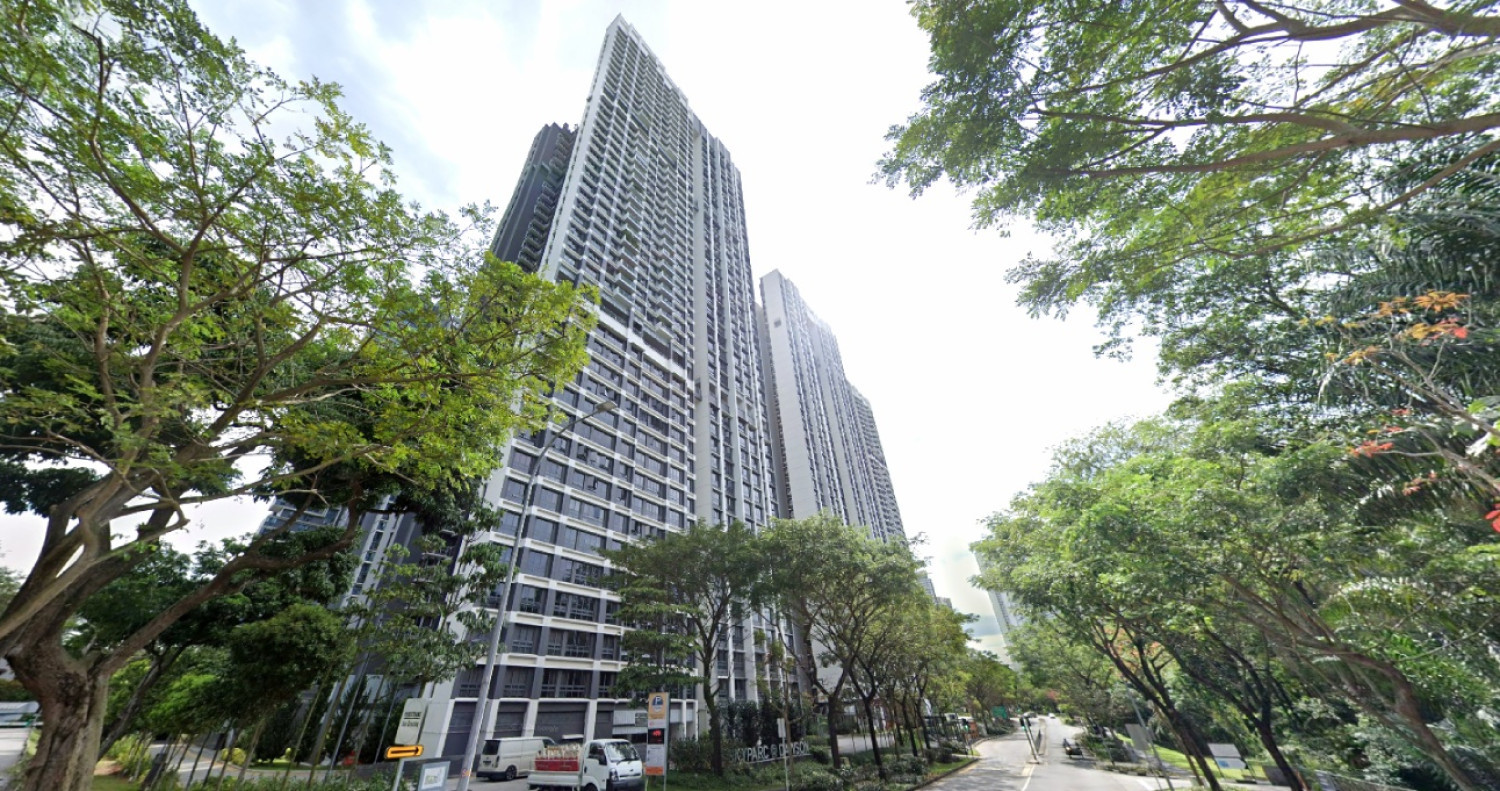
A five-room flat in Dawson, in the Queenstown estate, has reportedly changed hands for $1.818 million — one of the highest prices ever paid for a Housing & Development Board flat, and a fresh marker for what a mature, well-located public housing unit can command in Singapore's resale market.
It is a startling number. A public housing flat, on a 99-year lease, selling for more than the median price of a private condominium in many parts of Singapore. For anyone in the 25-to-40 bracket watching the resale market — whether you are hunting for your first home, sitting on a flat you bought five years ago, or waiting for a BTO — the natural question is: does this record HDB sale in Queenstown mean the market has shifted under your feet?
Short answer: no. Not for the whole town, and certainly not for your block.
This article breaks down exactly what sits behind the $1.818 million figure — the location premium, the unit type, the lease balance, the condition and renovation, and the marketing strategy that got it there — then compares it with broader Queenstown HDB trends, walks through the financing maths that a buyer at this level actually faces, and explains why one record deal is a data point, not a new baseline.
What We Actually Know About the $1.818 Million Dawson Sale
Before the analysis, a note on what is solid and what is noise. Individual resale transactions in Singapore are recorded in HDB's public resale data, but the colour around a headline-grabbing deal — renovation spend, floor level, negotiation history, the buyer's profile — usually comes from media reporting and the marketing agent, not the registry.
Here is what sits in the public domain versus what we have to treat cautiously:
| Detail | What we know | Confidence |
|---|---|---|
| Transacted price | Reportedly $1.818 million | Reported |
| Town / estate | Dawson, Queenstown | Reported |
| Flat type | A large unit in the five-room class | Reported, broadly consistent with the quantum |
| Remaining lease | Newer Dawson stock, completed from around the mid-2010s, so likely 85–90+ years remaining | Derived from completion dates |
| Floor level, facing, renovation spend | Not uniformly disclosed | Unverified |
| Buyer profile | Not disclosed | Unverified |
Two things follow from that table.
First, the price is an outlier, not a trend. Million-dollar resale flats remain a low single-digit share of the roughly 25,000–30,000 HDB resale transactions completed each year. Within that already-narrow group, transactions above $1.5 million are rarer still, and deals above $1.8 million sit at the very tip of the distribution. You are looking at the top fraction of a fraction of a percent.
Second, the price is not a valuation of "Dawson" as a place. It is the price of one specific flat, on one specific floor, in one specific stack, with one specific set of finishes, sold to one specific buyer with one specific set of motivations. Strip any one of those variables away and the number changes.
That distinction — between a headline and a benchmark — is the entire story here.
Background: How a Mature Estate Became a Million-Dollar Market
To understand why a Dawson flat can clear $1.8 million, you need to understand what happened to Queenstown over the last fifteen years.
Singapore's oldest satellite town, rebuilt
Queenstown is Singapore's first satellite town, developed from the 1950s onwards. For decades it was associated with small, old three-room walk-ups and a lease that was visibly running down. Then came the redevelopment.
The Dawson estate — a pocket of Queenstown bounded roughly by Queenstown Road, Alexandra Road and the Alexandra Canal — was progressively cleared and rebuilt. The new generation of projects, SkyTerrace @ Dawson, SkyVille @ Dawson and SkyParc @ Dawson, were designed as design-led public housing, not utilitarian slab blocks. SkyVille @ Dawson reportedly took World Building of the Year at the 2015 World Architecture Festival — an extraordinary result for an HDB project, and a signal that these were being positioned differently from the HDB stock that surrounded them.
What that means in practice:
- Sky gardens, linkways, community spaces designed by name architects rather than standard-issue precinct templates.
- Higher floors and denser stacks, which in Singapore's climate and skyline translates directly into price.
- A rooftop garden network and a neighbourhood centre with a supermarket and food court, giving the precinct a self-contained feel.
- A lease clock that started late — the late 2010s rather than the 1970s.
That last point is the quiet engine behind the whole story, and we will come back to it.
Why location keeps compounding
Queenstown's geography does a lot of work that no renovation can replicate:
- Queenstown MRT on the East-West Line, with the CBD roughly six to seven stops away and Buona Vista / one-north a short ride in the other direction.
- Road connectivity via the AYE and Alexandra Road, with Orchard Road within a short drive.
- Amenity density — Anchorpoint, IKEA Alexandra, Queensway Shopping Centre, Alexandra Hospital, the Alexandra Canal linear park, and Queenstown Public Library all within a small radius.
- The Alexandra/near-city employment cluster — Mapletree Business City, one-north, and the CBD fringe — which supplies a deep pool of well-paid tenants and owner-occupiers.
Anyone who has tried to buy in Queenstown knows the punchline: it is a mature, near-city town with very little new supply. Scarcity plus connectivity plus a young lease on the newest stock is a pricing cocktail that no amount of cooling measure has been able to dilute.
The national tailwind
None of this happens in a vacuum. The record sale landed in a market that has been rising for most of the last six years.
HDB Resale Price Index: Annual Change (%)
The pattern is unmistakable. After a flat 2019, the resale market accelerated sharply through 2021 and 2022, cooled to a more moderate pace in 2023, and has continued grinding higher since. A record transacted price in 2024 or 2025 is therefore partly a story about the flat and partly a story about the tide.
The key insight: a rising index lifts the whole distribution. It does not lift every flat equally. The top of the distribution moves faster because there are more buyers competing for a fixed set of genuinely scarce attributes — high floor, young lease, good facing, near-MRT, design-led precinct, move-in condition.
The Anatomy of a Record: Five Factors That Stack Into $1.818M
A record price is rarely the product of one variable. It is a stack. Here is how the layers build.
1. Location: the Queenstown premium, and why Dawson specifically
Not all of Queenstown is priced alike, and not all of Dawson is priced alike. The premium within the estate falls along three gradients:
- Distance to Queenstown MRT — flats within a comfortable walk command more than flats that require a feeder bus.
- Age and lease — the newer Dawson projects versus the 1970s stock elsewhere in the town.
- Micro-position — a unit facing the canal or facing greenery on a high floor versus a unit facing a car park on a low floor. In a single precinct, this alone can move the price by a meaningful double-digit percentage.
Dawson scores well on the first two and can score exceptionally on the third.
2. Unit type and size: the PSF reality check
Here is where the headline number gets more interesting than it first appears. Absolute price (quantum) and per-square-foot price (PSF) tell different stories, and a record quantum is often less dramatic once you convert it.
We do not have a confirmed floor area for the unit, so here is the arithmetic across a range of plausible five-room sizes at the $1.818 million price:
| Floor area (sqm) | Floor area (sqft) | Implied PSF |
|---|---|---|
| 102 | 1,100 | $1,653 |
| 105 | 1,130 | $1,609 |
| 110 | 1,184 | $1,536 |
| 112 | 1,206 | $1,508 |
| 116 | 1,249 | $1,456 |
| 120 | 1,292 | $1,407 |
Two observations jump out.
- If the unit is on the smaller end, the PSF is roughly $1,600+ — a figure that would not look out of place on an older 99-year leasehold private development in the suburbs. That is the real story of the record: not that the flat is expensive in absolute terms, but that public housing in a prime mature estate has converged with suburban private housing on a per-square-foot basis.
- If the unit is on the larger end, the PSF drops toward $1,400, which is a far less shocking number and closer to the upper band of what well-located, young-lease resale flats in the same town have been achieving.
In other words: a large, well-finished unit at a high PSF and a very large unit at a moderate PSF produce the same headline number. Always convert before you react.
3. Lease balance: the quiet multiplier
This is the factor most buyers underweight, and the one that most cleanly separates Dawson from the rest of Queenstown.
A 99-year lease starts on the date of completion. Flats in the newer Dawson projects were completed from roughly the mid-2010s onwards, which means a unit transacting today would carry somewhere in the region of 85 to 90+ years of lease remaining. Compare that with Queenstown's older stock, whose clocks started in the 1960s and 1970s.
Illustrative Remaining Lease on a 99-Year HDB Flat, as at 2025
Why does this matter so much in practice?
- CPF usage and loan eligibility. Buyers can use CPF Ordinary Account to pay for a leasehold flat, but there are withdrawal limits tied to the lease term, and a flat with a shorter remaining lease constrains both financing and buyer pool. A young lease keeps the pool wide.
- Resale liquidity. A flat with 60 years left is a different product from a flat with 90. The buyer who will pay $1.8 million for the latter almost certainly will not pay the same premium for the former, because the next buyer in line will have the same concern.
- Depreciation curve. Lease decay is slow at first and accelerates. Being on the "slow" part of the curve is worth real money — though it is worth less if you are the one paying a record price for it.
4. Condition and renovation: paying for someone else's works
At the top of the resale market, "move-in ready" and "needs $150,000 of work" can be a six-figure difference in transacted price — and it is often genuinely rational, not just sentiment.
Why?
- Renovation cost in Singapore has climbed sharply. A full gut-and-redo of a large flat — flooring, kitchen, three bathrooms, electrical, carpentry, air-conditioning — can plausibly run into six figures once you account for hacking, disposal, permits and the cost of temporary accommodation.
- Buyers pay for certainty. A unit with documented, well-executed works removes execution risk, and buyers who are upgrading from a BTO and short on time will pay to skip a renovation project.
- Some design features cannot be replicated. Structural treatment, ceiling height, window lines, custom joinery in a high-floor unit — these become part of the product.
The practical implication for you as a buyer or seller: when you compare a record sale to your own flat, ask whether you are comparing the same product. A pristine, fully renovated high-floor unit and a tired, original-condition low-floor unit in the same block are not comparable, no matter what the postal code says.
5. Marketing and the buyer pool
This is the least "technical" factor and the one that sellers underestimate.
Record prices are almost always produced by a competitive process, not a passive one. That typically involves:
- A deliberate listing strategy — launching at a price that sets an anchor rather than one that invites lowballing.
- Broad exposure across portals and agent networks, so that the buyer pool is national rather than local.
- Viewing discipline — staging, cleanliness, photos, video, and appointment slots that create a sense of demand.
- Time in the market. A flat that stays listed for several months through multiple price revisions is not the one that sets records. The one that sets records usually transacts with buyers who see several options and choose this one.
Marketing does not create value out of nothing. But it does determine whether you capture the top of your flat's value range or settle at the median.
How the sale actually completes
If you are heading toward your own transaction, the sequence for a resale purchase matters because the option period and valuation step sit right next to the negotiation.
The valuation step in the middle is where records and reality collide — which brings us to financing.
Putting the Record in Context: Queenstown HDB Trends
Zoom out, and the record sale looks like the far right tail of a distribution, not a description of the whole town.
Three distinct segments in one town
| Segment | Illustrative stock | Approx. remaining lease | Typical formats | What drives price |
|---|---|---|---|---|
| Newer Dawson | SkyTerrace, SkyVille, SkyParc | ~85–95+ years | 4-room, 5-room | Design, height, MRT access, young lease |
| 1990s–2000s Queenstown | Blocks around Stirling Road, Commonwealth, Margaret Drive | ~65–75 years | 3-room, 4-room, some 5-room | MRT proximity, size, condition |
| 1960s–1970s stock | Older blocks, some under redevelopment programmes | ~40–55 years | 2-room, 3-room | Affordability, rental yield, redevelopment hope |
These are not one market. They behave differently, finance differently, and appeal to different buyers. A $1.818 million transaction in the first segment has almost no mechanical read-through to the third.
Quantum versus PSF: two different records
Something worth internalising before you panic about a headline:
- A record quantum is often a function of a large floor area. Big flats have always transacted at big numbers. This is not new, and it does not mean prices per square foot have spiked.
- A record PSF is the more meaningful signal about underlying land and location value — and it is where the Dawson story genuinely is striking.
When a record is reported, check both. A 1,300 sqft flat at $1,400 PSF is a very different market signal from a 1,100 sqft flat at $1,650 PSF, even though the headline numbers are in the same neighbourhood.
Where Queenstown sits nationally
Queenstown has consistently ranked among the towns producing the most million-dollar resale flats, alongside Bukit Merah, Bishan, Toa Payoh, Kallang/Whampoa and Clementi. The common threads:
- Mature, near-city, well-connected — the exact attributes Singapore's planning framework has spent decades making scarce.
- Limited new resale supply of young-lease flats. Dawson is one of the few places where you can buy a near-new HDB flat in a prime central location on the resale market.
- A deep buyer pool that includes HDB upgraders, downgraders from private property, and buyers relocating from further-out towns with strong sale proceeds.
That structural story is real. But note what it explains: why the top end of Dawson is expensive. It does not explain why your particular flat should be priced off a record.
The Financing Reality Check: Who Can Actually Buy at $1.818M?
This is the part that separates analysis from speculation. Even if the seller achieves $1.818 million, the buyer has to clear Singapore's prudential rules — and those rules are unforgiving at this price point.
Step 1: the down payment
Under the rules in force since August 2024, the maximum loan-to-value (LTV) ratio for an HDB loan is 75%. Bank loans for HDB flats carry a comparable LTV ceiling.
| Item | Amount |
|---|---|
| Transacted price | $1,818,000 |
| Maximum loan (75% LTV) | $1,363,500 |
| Minimum down payment (25%) | $454,500 |
| Of which cash, if using a bank loan (min. 5%) | $90,900 |
For an HDB loan, the 25% can in principle be met from CPF Ordinary Account, subject to withdrawal limits. For a bank loan, at least 5% must be cash. Either way, you are looking at roughly $450,000 of upfront capital before a single renovation dollar or stamp duty.
Step 2: stamp duty
Buyer's Stamp Duty on a $1.818 million residential purchase works out to approximately $60,500 for a Singapore citizen buying a first residential property (with no Additional Buyer's Stamp Duty payable). That is on top of the down payment, legal fees, and renovation.
Step 3: the income test — where most buyers fall out
The Mortgage Servicing Ratio (MSR) caps total monthly repayments on an HDB flat at 30% of gross monthly household income. It applies whether you use an HDB loan or a bank loan. Run the numbers on a $1,363,500 loan and the requirement is steep:
| Tenure | Interest rate (illustrative) | Monthly repayment | Gross household income implied by MSR |
|---|---|---|---|
| 25 years | 2.6% | ~$6,185 | ~$20,600 |
| 30 years | 2.6% | ~$5,460 | ~$18,200 |
| 25 years | 4.0% | ~$7,195 | ~$24,000 |
Read that again. To comfortably service this flat under MSR, the household likely needs gross monthly income somewhere in the $18,000 to $24,000 range, depending on tenure and the rate environment at the point of drawdown.
That tells you something important about who the buyer is — and it is not a young couple on a combined $12,000. It is a household likely combining a property sale, significant equity, CPF accumulation, and a high income. Note also that HDB loan eligibility comes with a gross monthly income ceiling (currently $14,000 for most households), which means a buyer at this level is almost certainly on a bank loan — and exposed to interest rate movements.
The valuation gap risk
Here is the practical sting. When you buy above what the bank's valuer supports, the loan is sized on the valuation, not your agreed price. The difference has to be paid in cash.
For a record-setting purchase, that risk is at its highest: there may be few or no comparable transactions above the previous ceiling to anchor a valuation. A buyer paying $1.818 million in a block where the previous high was meaningfully lower could face a shortfall running into the tens or hundreds of thousands — payable in cash, within the option period.
That is why record prices are often cash-heavy transactions. And it is exactly why they are not replicable by the next seller down the corridor.
Why One Record Deal Does Not Reprice Your Block
This is the crux. Sellers in Queenstown will inevitably look at the $1.818 million headline and adjust their asking prices. Buyers should understand why that adjustment is usually unjustified.
1. A sample of one is not a market
Statistically, a single transaction tells you what one buyer was willing to pay on one day. A market requires volume and variation. HDB's resale data is published per transaction for exactly this reason — so that you can see the distribution rather than a single point.
When you check comparables, filter by:
- Same block, or at minimum the same precinct.
- Same flat type and similar floor area.
- Similar floor range — HDB publishes floor ranges, which is the closest proxy to height.
- Recent window — six to twelve months, adjusted for where in the cycle those transactions fell.
2. Flats are far more heterogeneous than they look
Two five-room flats in the same precinct can differ on:
- Floor level and view orientation
- Whether the unit is corner or corridor
- Renovation quality and age
- Facing — greenery, canal, road, or a neighbouring block
- Distance to the lift lobby, the car park and the MRT
- Whether the unit is near a bin centre, a bus stop, or the precinct's service road
These are not cosmetic differences. In resale negotiations, they routinely account for double-digit percentage spreads within a single block.
3. The financing ceiling is real, and it binds
Even if your neighbour achieves a record, the next buyer must clear the same MSR, LTV and valuation tests. If the pool of households able to finance a $1.5 million-plus resale flat in your town is small, the number of transactions at that level will stay small — no matter how many sellers ask for it.
This is why asking prices can drift up while transaction volumes at those prices stay thin. In a market like that, the gap between the highest asking price and the highest transacted price widens — and the eventual sale tends to converge on the transacted side.
4. Anchoring is the seller's friend and the buyer's enemy
Behavioural economics has a name for what happens after a record sale: anchoring. Once a number like $1.818 million enters the local conversation, it becomes a reference point, and everything else gets evaluated relative to it — including flats that share nothing with it except a postal district.
The defence is boring and effective: ignore the headline, pull the transaction data. If the last three five-room transactions in your block were at $X, a seller asking $X plus 20% needs to explain, specifically, what is different about their unit — and then you need to decide whether that explanation is worth the money.
5. Early record-setters often get the best of the cycle
Here is a slightly counterintuitive observation. The first record in a precinct often captures the strongest premium, because it establishes the ceiling and gives the next buyer a reference. Records set later in a run-up can be stickier, because they are chasing a market that has already moved. If you are a seller, the lesson is about timing and marketing. If you are a buyer, the lesson is about not paying for someone else's timing.
So what actually moves your flat's value?
In rough order of impact:
- Lease remaining — the single most underrated variable in Singapore resale.
- Location within the town — MRT distance, amenity access.
- Floor level and orientation — the classic, durable premium.
- Flat type and efficiency — usable layout, number of bedrooms, whether the plan wastes corridor space.
- Condition — documented renovation with a sensible age.
- Supply in your immediate vicinity — how many similar units are listed at the same time as yours.
Notice that "a record was set three blocks away" is not on the list.
What This Means If You Are Buying, Selling, or Holding
If you are buying
- Set your budget from the MSR and LTV rules first, then look at flats. At today's prices, the financing rules — not the asking prices — are what actually constrain you.
- Use PSF, not quantum, to compare across flat sizes and precincts.
- Price the lease. A flat with 70 years remaining is not a discount version of one with 90; it is a different asset with a different exit.
- Get the valuation early. Especially if you are paying above the last transacted price.
- Treat record sales as context, not comparables.
If you are selling
- A record nearby is an opportunity, not an entitlement. Use it to justify a strong launch price, but be honest about how your unit differs.
- Invest in presentation. In a thin market at the top end, the best-presented unit in the stack wins — and the gap between the best and the average can be substantial.
- Watch the listing clock. Long listing periods erode negotiating position. A flat that has been on the market for six months at a record price is telling the market something.
If you are holding
- Your flat is a home first and an asset second, but the asset part deserves attention. Check the lease trajectory, the comparable transactions in your block, and how your town's supply pipeline looks over the next three to five years.
- Do not extrapolate a single transaction into a plan. If your upgrade maths depends on your flat achieving a record price, your maths is fragile.
Food for Thought
-
If the unit's floor area turns out to be on the larger end, does the $1.818 million still feel like a record — or does it look like a large flat sold at a normal PSF? Which number should the market actually be reacting to?
-
How much of the premium is the lease, and how much is the architecture? If an identically sized flat with 60 years remaining sat next door, what would it transact at — and what does that gap tell you about what buyers are really paying for?
-
At what income level does a $1.8 million HDB flat stop being irrational? If the buyer's household earns $25,000 a month and is trading out of a private property, is the purchase a stretch, or is it simply a cheaper way to live near the city?
-
Does a record at the top of the market help or hurt the first-time buyer two segments down? Asking prices respond to headlines faster than transaction prices do — so who absorbs the friction in between?
-
If Singapore keeps producing design-led, young-lease public housing in mature estates, is the million-dollar HDB flat an anomaly or the new normal for a narrow but growing slice of the market?
Conclusion
The $1.818 million Dawson sale is a genuinely remarkable data point, and it deserves the attention it has received. It captures something real: that a young-lease, well-designed, near-city HDB flat in a mature estate is now competing for the same buyer dollars as suburban private housing — and winning on location.
But a record is a description of the top of a distribution, not a new floor for the whole town. The factors that produced it — a specific unit type, a lease with 85-plus years on it, a high floor, a well-executed renovation, a disciplined marketing campaign, and a rising market — do not distribute evenly across Queenstown. Understanding which of those factors your own flat has, and which it does not, is the difference between pricing it well and pricing it optimistically.