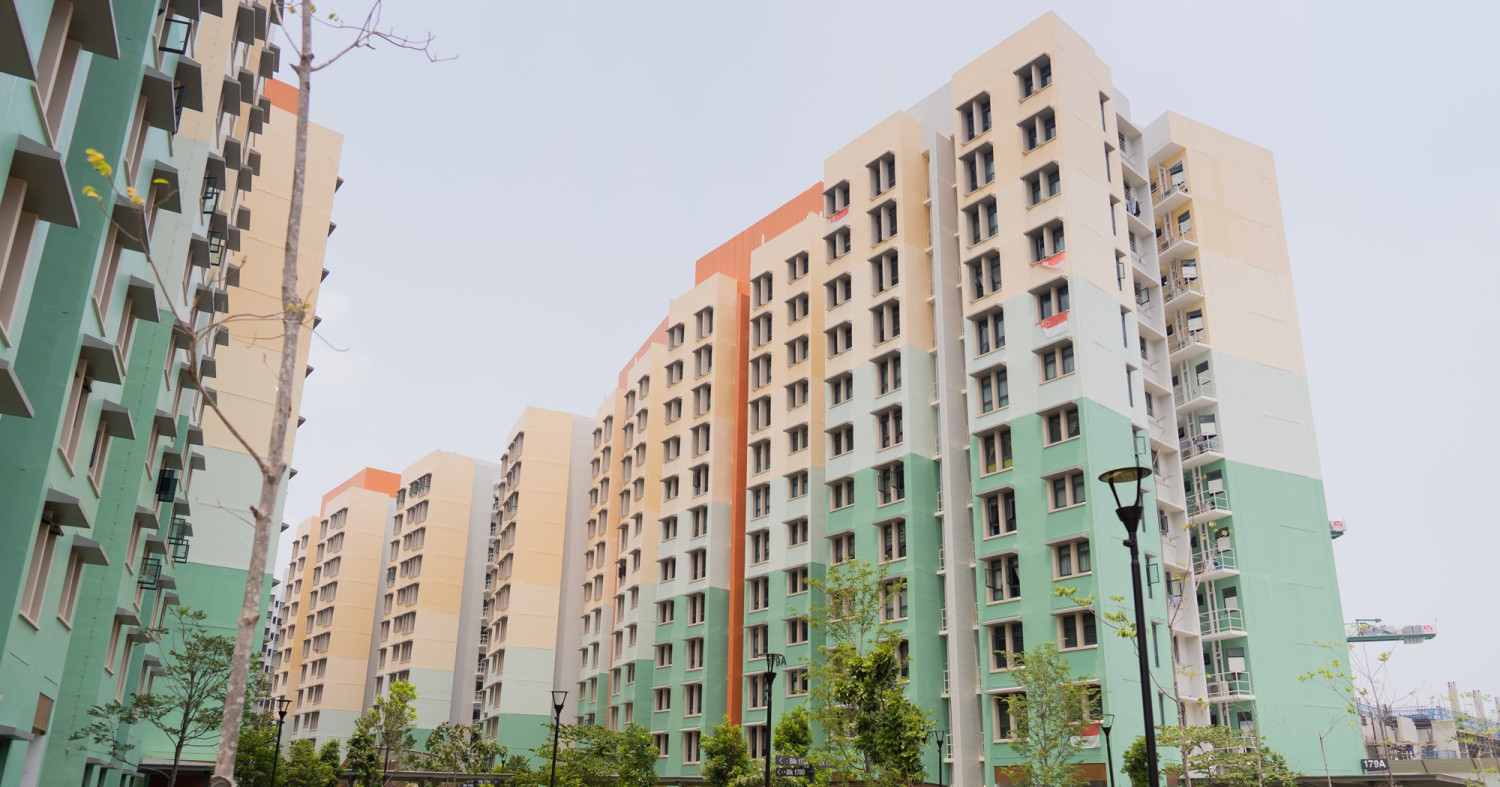
Somewhere in Singapore right now, a couple in their early thirties is shortlisting BTO projects on a shared spreadsheet. They are comparing square footage, walking distance to an MRT line, and whether the estate has a decent hawker centre. What most of that spreadsheet will not capture is the fact that the single most consequential variable in their housing decision is not the flat at all — it is the rulebook stapled to it.
Since the HDB Plus/Prime/Standard framework took effect with the October 2024 BTO exercise, every new flat launched carries a distinct set of ownership conditions: the length of the 10-year MOP for Plus and Prime flats, the subsidy clawback applied on resale, the income ceiling that governs who may later buy the unit, and whether the owner can ever rent out the whole flat. These are not fine-print footnotes. They determine when a household can move, how much cash it walks away with, and who is even allowed to bid for its flat years down the road.
This piece is written as a reference. Bookmark it, come back to it each time a launch exercise opens, and use it to pressure-test the assumptions behind your own spreadsheet.
Why 2027 Is the Year the New Rules Actually Bite
The framework is not new — it has been in force since late 2024. So why focus on 2027?
Because 2027 is roughly the point at which the classification stops being a novelty and becomes the operating environment. Three things converge.
First, the arithmetic of the 10-year MOP. The earliest Plus and Prime flats launched in the October 2024 exercise. Add a typical three-to-four-year construction wait, then ten years of occupation, and the first legal resales of those flats land somewhere around 2034 to 2035. Anyone expecting a wave of Plus and Prime resale supply in the near term is misreading the calendar. The 10-year MOP is not a speed bump — it is a decade-long lock.
Second, the resale market's composition shifts before then. Buyers who rule themselves out of Plus and Prime flats — because of the MOP, the clawback, or the rental ban — do not disappear. They crowd into the Standard flat segment and the existing resale pool. That reallocation is already visible in launch data and buyer behaviour, and by 2027 it will be the settled structure of demand rather than a transitional wobble.
Third, the supply side has its own clock. Households that bought resale flats during the 2022–2023 surge reach their five-year MOP around 2027 and 2028, by simple arithmetic. A meaningful cohort of Standard flats will become legally sellable in that window — into a buyer pool that has been reshaped by rules governing the newer stock. That is the collision worth preparing for.
In short: 2027 is when the framework's second-order effects — not its first-order rules — become the thing that determines prices, liquidity, and who upgrades to what.
The Framework in One Page
The old mature-versus-non-mature estate distinction has been retired. In its place, HDB classifies each new BTO project into one of three tiers, based on locational attributes and the level of subsidy applied.
| Feature | Standard | Plus | Prime |
|---|---|---|---|
| Typical location | Islandwide, non-mature and mature estates | Choicer locations, strong connectivity | Most central, most coveted sites |
| Subsidy level | Baseline market discount | Additional subsidy | Highest additional subsidy |
| Minimum Occupation Period | 5 years | 10 years | 10 years |
| Subsidy clawback on resale | None | 6%–8% of higher of price or valuation | 9% of higher of price or valuation |
| Whole-flat rental after MOP | Permitted, subject to HDB approval | Not permitted | Not permitted |
| Resale buyer eligibility | General public | Subject to prevailing eligibility conditions, including income ceiling | Strictest conditions, including income ceiling |
The design logic is consistent across all three: the more the state compresses your entry price, the more conditions it attaches to the exit. As one widely cited framing puts it, extra subsidy helps the home function as a home; extra restrictions exist to stop that subsidy from functioning purely as a private windfall.
For a young household, the practical takeaway is that the classification is not a quality ranking. A Prime flat is not "better" than a Standard flat in the way a higher-floor unit is better than a lower-floor one. It is a different contract, with a different set of obligations and a different ceiling on what the asset can do for you financially.
Rule 1: The 10-Year MOP and What It Costs You in Life-Years
The Minimum Occupation Period is the number of years you must physically occupy the flat before you may sell it or rent it out. For Standard flats it remains five years. For Plus and Prime flats it doubles to ten.
Minimum Occupation Period by Flat Classification (Years)
Ten years sounds abstract until you lay it against a life. A couple who book a Plus flat at 31 and collect keys at 34 will only clear their MOP at 44. In that span, most households will navigate at least three of the following: a job change, a first or second child, a decision about childcare arrangements, a parent's health event, a schooling decision, or a shift in income that changes what they can afford.
The longer MOP converts an attractive location into a longer commitment to the life built around that location. That is not rhetoric — it is a hard liquidity constraint. A five-year MOP gives a household a natural decision point in their late thirties. A ten-year MOP pushes that decision point into their mid-forties, by which time the options available to them have narrowed.
The Loan Tenure Knock-On
This is the part most buyers underweight. Huttons Asia has laid out the comparison starkly: a couple holding a Standard flat can typically plan to sell around age 40 and still qualify for a loan tenure of up to about 25 years on their next property. Owners of Plus and Prime flats, clearing their MOP at around 46, face a dramatically shorter allowable tenure of roughly 19 years on the next purchase — which means higher monthly instalments for the same loan quantum.
Illustrative Remaining Loan Tenure at Next Purchase, by First-Flat Path
Run the numbers on a hypothetical $800,000 second property with a 75% loan. Stretching the same $600,000 loan across 19 years instead of 25 raises the monthly repayment materially — several hundred dollars a month, which compounds into tens of thousands over the loan's life. The 10-year MOP does not just delay your upgrade; it makes the upgrade more expensive when it finally happens.
There is a second, less discussed risk: price drift. If the wider market rises meaningfully during those extra six years of holding, the gap between your flat's resale proceeds and your target next property may widen rather than close. You are not simply waiting — you are waiting inside a moving market.
Rule 2: Subsidy Clawback — What It Is and What It Isn't
The subsidy clawback is the mechanism that recovers part of the additional subsidy when a Plus or Prime flat is resold. It is calculated as a percentage of the higher of the resale price or the valuation price at the point of sale.
Subsidy Clawback Rate on Resale, % of Higher of Price or Valuation
Three things about this are widely misunderstood.
It is not a tax. A tax is levied on a transaction by the state in its capacity as tax collector. The clawback is a contractual recovery of subsidy previously extended to you as a buyer, and it is written into the terms of your flat from day one.
It is applied to the higher of price or valuation. That means you cannot escape it by selling above valuation, and — importantly — you are not penalised for selling below valuation either. The floor is the valuation.
It reduces proceeds, not headline price. If you sell at $650,000 with a 9% clawback, the amount recovered is $58,500. Your gross sale proceeds are not the number that funds your next purchase; the post-clawback figure is.
Illustrative Arithmetic
The table below applies the published rates to hypothetical resale prices. These are arithmetic illustrations, not forecasts.
| Hypothetical resale price | Valuation | Higher of the two | Plus @ 6% | Plus @ 8% | Prime @ 9% |
|---|---|---|---|---|---|
| $500,000 | $510,000 | $510,000 | $30,600 | $40,800 | $45,900 |
| $650,000 | $640,000 | $650,000 | $39,000 | $52,000 | $58,500 |
| $800,000 | $800,000 | $800,000 | $48,000 | $64,000 | $72,000 |
Analysis from PLB Insights has observed that while Plus and Prime flats may show somewhat stronger capital appreciation over the longer holding period — a plausible outcome given their locations — the net difference versus a Standard flat is often modest once the clawback is deducted. The clawback does not eliminate gains. It compresses them toward the middle.
For a young household, this matters most at the moment of upgrade. The traditional Singaporean asset progression story — buy a BTO, ride the appreciation, sell, upgrade to a condo or a larger resale flat — assumes the first flat's gain is fully yours. Under the Plus and Prime contract, a slice of that gain is pre-committed elsewhere.
Rule 3: Income Ceilings and the Narrowing Buyer Pool
Standard flats, once past MOP, can generally be sold to any eligible buyer. Plus and Prime flats cannot. Their resale is subject to prevailing public-housing eligibility conditions, including an income ceiling — reported at $16,000 per month for families and singles.
Because these thresholds are reviewed periodically, verify the current published figure with HDB before you commit to a financial plan built around it. The direction of travel, however, is clear: the buyer pool for your flat is legally capped.
What does a capped buyer pool do to a seller?
- It moderates the ceiling on resale prices. A smaller pool of eligible buyers means fewer bidders at the top of the range. Sellers may find that the most aggressive offers simply are not available to them, because the households able to make those offers are excluded by income.
- It lengthens time-on-market for less desirable units. A three-room Plus flat with a long commute has a narrow eligible pool and a narrower still pool of buyers who want it. Reports in The Straits Times have already noted muted demand for some Plus and Prime flats as first-time buyers weigh the stricter resale conditions, with three-room units particularly affected.
- It introduces policy risk into your exit. Rules on eligibility can be adjusted. A household that modelled its exit on today's conditions is modelling on a variable, not a constant.
Against that, location still sells. Eugene Lim of ERA Singapore has observed that buyers willing to accept the stricter resale regime for Plus flats typically do so for the location — proximity to an MRT station, access to amenities — and are deterred by projects requiring long commutes. Christine Sun of Realion (OrangeTee & ETC) Group makes the same point from the demand side: projects near MRT stations continue to command strong buyer appeal.
The lesson is that in the Plus and Prime segment, location quality is doing double duty. It is the reason you buy, and it is the only thing that will rescue you on exit when your buyer pool is constrained.
Rule 4: The Rental Ban Nobody Reads Carefully
Standard flats allow whole-flat rental after MOP, subject to HDB approval and prevailing rules. Plus and Prime flats do not — this prohibition is structural, not a temporary condition that lifts after ten years.
For households whose long-term plan involved moving overseas for a posting, relocating for work, or simply renting out the whole flat to fund a move into private property, this is a hard stop. Renting out individual rooms remains possible under certain conditions, but the whole-flat rental strategy — one of the most common wealth-building plays in the Singapore resale market — is closed.
If a Plus or Prime flat is in your shortlist, be honest with yourself about whether whole-flat rental features anywhere in your ten-to-twenty-year plan. If it does, this rule alone should send you back to the Standard category.
The Buy-Hold-Sell Calculus, Rewritten
Put the four rules together and you get a genuinely different decision framework. The traditional Singapore playbook — buy, wait five years, sell into appreciation, upgrade — was calibrated for a five-year MOP with no clawback. That playbook still works. It just works for a narrower set of flats than it used to.
Buy: Match the Contract, Not the Brochure
Huttons Asia's guidance is direct: if you expect to stay in one place for more than ten years, a Plus or Prime flat in your preferred location and size may genuinely serve as a forever home, and the additional subsidy is worth having. If flexibility and asset progression matter more to you, a Standard flat's shorter MOP and simpler exit make more sense.
PLB Insights adds a caution that is easy to skip: the higher upfront cash outlay often associated with Plus and Prime flats can strain couples in the early years of their careers — the exact years when cash is tightest and income is least predictable.
A practical three-question filter:
- Is there any realistic scenario in which I need to move within ten years? Overseas posting, a parent moving in, a second child, a career change requiring relocation. If yes, stop.
- Does my upgrade plan depend on the resale gains of this flat? If the answer is yes, model the post-clawback number, not the headline number.
- Would I still want this flat if it appreciated at exactly the rate of inflation? If the answer is no, you are buying an investment thesis dressed as a home.
Hold: Plan for a Decade, Not a Five-Year Block
The ten-year MOP is a planning horizon, not a waiting period. Households holding Plus and Prime flats should be building their decade plan around it: schooling catchments locked in for the duration, caregiving arrangements that do not assume a move, and a career plan that treats geographic mobility as constrained.
Some analysts suggest the logical response is to buy larger at the outset — a four-room or bigger Standard flat that can absorb a growing family for ten-plus years — rather than a smaller Plus unit that will feel tight by year six but cannot be exited until year ten. That is a defensible strategy, though it trades location for space.
Sell: Expect a Compressed Gain and a Slower Sale
By the time a Plus or Prime owner clears MOP — PLB Insights notes this may land around age 45 — the upgrade to a larger home or private property may no longer align with the household's lifestyle at that stage. Children may be nearing independence. The appetite for a 19-year loan may be gone.
The sell calculus therefore has three components that Standard flat owners do not face:
- Clawback reduces net proceeds by 6%–9% of the higher of price or valuation.
- Income ceiling narrows the buyer pool, moderating the achievable price at the top end.
- Timing is compressed, because the loan tenure available for your next purchase is shorter, which raises the monthly cost of the upgrade you are funding.
The result is not a bad outcome. It is a slower, flatter, more predictable outcome — which is arguably the policy's entire intent.
What the Market Is Already Telling Us
Launch and resale data since the framework's introduction point to three observable patterns.
Demand has become more selective, not weaker overall. Buyers are not abandoning Plus and Prime flats wholesale. They are filtering hard on connectivity. The projects with genuine locational advantages clear; those with long commutes and thinner amenity offerings linger.
Three-room units are the weak spot. Space constraints bite harder when you are contractually locked in for a decade. A young couple can tolerate a compact three-room flat for five years. At year eight with a toddler, it is a different conversation.
The Standard segment is absorbing the spillover. Buyers who decide the restrictions are not worth it do not leave the HDB market — they redirect into Standard flats and the existing resale pool. That is upward pressure on a segment that has its own supply constraints.
Five Misconceptions Worth Correcting Now
- "After 10 years I can rent out the whole flat." No. The whole-flat rental prohibition for Plus and Prime flats is structural, not a function of the MOP.
- "The clawback is a tax I can plan around." It is not a tax and it is not avoidable. It is a contractual term of your purchase, calculated on the higher of price or valuation.
- "Prime flats are the best flats." They are the most heavily subsidised and the most heavily restricted. Whether they are best depends entirely on whether you want what the restrictions permit.
- "The buyer pool restriction won't matter because demand is always strong." It matters precisely when you need to sell, not when the market is hot. Constrained pools are most painful in soft conditions.
- "Waiting for the rules to change is a strategy." Policy can change, but planning your housing decision around an assumed future loosening is speculation, not planning.
Frequently Asked Reference Points
| Question | Short answer |
|---|---|
| When did the framework start? | With the October 2024 BTO exercise, which included a Prime project in Redhill among a launch of more than 9,000 BTO and balance flats. |
| When can the first Plus and Prime flats be resold? | Not before roughly 2034–2035, accounting for construction time plus the 10-year MOP. |
| Is the clawback applied to the resale price or the valuation? | Whichever is higher. |
| Can I rent out rooms in a Plus or Prime flat? | Rooms, under certain conditions. The whole flat, no. |
| Do the same rules apply to Standard flats? | No. Standard flats retain the 5-year MOP, no clawback, and whole-flat rental after MOP subject to approval. |
| Does the income ceiling apply to the original buyer or the resale buyer? | The resale buyer of a Plus or Prime flat must meet prevailing eligibility conditions, including the income ceiling. |
Food for Thought
1. If the 10-year MOP effectively freezes a household's housing decision until the mid-forties, what does that do to the wider labour market's willingness to relocate for opportunity — and is that a cost anyone is counting?
2. The clawback compresses gains. Does compressing gains push ambitious young households toward private property earlier, accelerating the very stratification the policy was designed to soften?
3. If Plus and Prime resale buyer pools are capped by income, and Standard flats are not, are we creating two distinct resale markets with genuinely different liquidity profiles — and does the market yet price that difference in?
4. For a couple whose income will plausibly cross the ceiling within a decade, is buying a Plus flat now effectively buying a flat they will be barred from buying later?
5. What happens to the calculus if interest rates move materially during the ten-year hold? The MOP locks the timeline, but not the cost of carrying the loan through it.
The Bottom Line
The Standard/Plus/Prime framework is not a redesign of what an HDB flat is. It is a redesign of what an HDB flat is allowed to do. The flat still shelters you, still anchors a neighbourhood, still appreciates in most scenarios. What has changed is the speed at which it can do any of those things, and how much of the appreciation you keep.
For a young household, the correct response is not to avoid Plus and Prime flats, nor to chase them for the subsidy. It is to read the contract as carefully as you read the floor plan — and then decide which of the two documents should govern your choice.