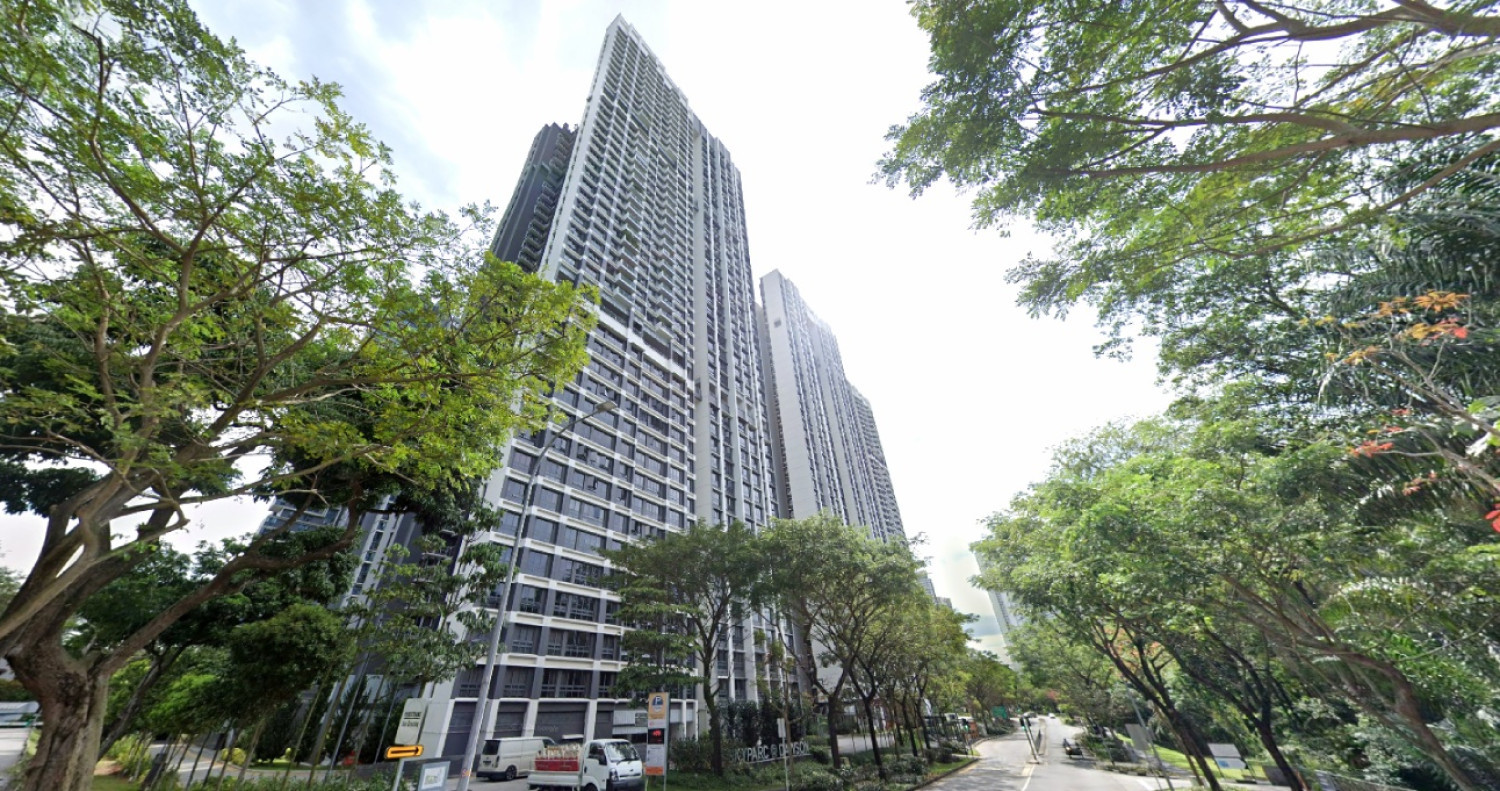
A five-room flat in Dawson changing hands for more than a million dollars is no longer shocking. What should still make you pause is the reasoning behind the decision to pay it. Every few months, another transaction in this pocket of Queenstown gets reported as a record, and every time it happens, the same question ripples out to buyers across Singapore: are HDB resale prices genuinely re-rating upwards, or is this one unusual flat, sold to one unusual buyer, on one unusual day?
Dawson is the perfect case study for that question because it is small, architecturally famous, well-located, and dominated by flats that hit their five-year minimum occupation period (MOP) in a narrow window. Those three traits make it a magnet for headline prices — and a terrible proxy for the wider HDB resale market if you read it carelessly.
This piece breaks down what is actually happening in Dawson, separates a record transaction from a market trend, runs the affordability maths on a seven-figure HDB flat, and maps out where else your money goes if you decide the Dawson premium is not worth it.
A note before we start: transaction data moves quickly and individual caveats get lodged and revised. Treat every figure here as a directional guide, and verify the specific unit, floor range, and lease start date on HDB's resale portal before you commit anything.
What Is Actually Happening in Dawson?
A short history of a very unusual HDB estate
Queenstown is Singapore's oldest satellite town, developed by the Singapore Improvement Trust in the 1950s and handed to the Housing & Development Board when it was formed in 1960. Dawson — the slice of Queenstown bounded roughly by Alexandra Road, Jalan Bukit Merah and the Queenstown MRT corridor — was for decades a low-rise, older neighbourhood with rental blocks and ageing walk-ups.
From around 2011, HDB began redeveloping it as a showcase. The result was a cluster of projects that look nothing like the HDB estate your parents grew up in:
- SkyTerrace @ Dawson and SkyVille @ Dawson, launched in the early 2010s and completed mid-decade, introduced 40-plus storey towers, sky gardens, and community decks to public housing in the area.
- SkyVille @ Dawson, designed by WOHA, went on to win World Building of the Year at the World Architecture Festival in 2015 — a genuinely rare accolade for public housing anywhere in the world.
- Later phases — Dawson Vista, SkyResidence @ Dawson and others — extended the concept with more units, more landscaping, and a car-lite layout that pushes car parks under landscaped decks.
The design pedigree matters commercially because it created a stock of flats that are visually distinctive, relatively new, and clustered in a mature central estate. Buyers who want "new flat feel" without moving to Punggol or Tengah now had an inner-city option.
The location argument, honestly assessed
Dawson's locational strengths are real but often overstated. Here is the fair version:
What works well
- East-West Line access via Queenstown MRT, with Commonwealth MRT also within reach of parts of the estate. The East-West Line remains the single most useful line for reaching the CBD, Raffles Place, and the western industrial corridors.
- Employment proximity. One-North, Mapletree Business City, Alexandra Hospital, and the Alexandra industrial cluster are all within a short bus ride or a walk. The CBD is roughly six to seven kilometres away.
- Everyday amenities. Anchorpoint, IKEA Alexandra, Queensway Shopping Centre, Dawson Community Centre, the Queenstown Public Library, and the Alexandra Canal park connector are all part of the neighbourhood fabric.
- Green and heritage adjacency. The Southern Ridges, HortPark, and Telok Blangah Hill Park sit just to the south-west.
What gets glossed over
- No major rail upgrade is scheduled for this stretch. Queenstown already has a station. Unlike estates near the Jurong Region Line, the Thomson-East Coast Line extension, or the Cross Island Line, Dawson is not sitting on a future connectivity jump that could re-rate it again. The connectivity premium is already priced in.
- The estate is small. That is the story behind the price records, and it cuts both ways. Fewer units for sale means fewer comparables — and less liquid resale when you want to exit.
- Some blocks sit a solid walk from the MRT. "Dawson" is not a single point; a 12-minute walk to the station is a very different product from a five-minute one.
Why Records Happen Here: The Supply Wave and the MOP Clock
Here is the mechanism almost nobody explains properly. HDB resale supply is not decided by the market. It is decided by construction schedules from five years earlier.
Every flat sold by HDB carries a five-year MOP. That means the number of flats that become legally sellable in any given year is fixed years in advance by the completion date of the project. In an estate where almost everything was completed in a two- or three-year window, the entire sellable stock unlocks in a two- or three-year window too.
This produces three effects that look like a market trend but are really an accounting artefact:
- A supply shock at a single point in time. When 1,000-plus units in one small estate become sellable within a couple of years, and the estate happens to be central and architecturally notable, the first movers set the price ceiling. Every subsequent seller anchors to that ceiling.
- A very thin market for the best units. The five-room and larger units in the taller towers are a small subset of an already small estate. If only a few dozen transact in a year, one determined buyer with cash can move the "record" by a meaningful margin.
- A composition effect. As higher-floor, better-view units come to market, the estate's median price and median PSF both rise even if no individual flat has appreciated at all. You are not comparing like with like across time.
Reading a "record" correctly
"Record price" is a slippery phrase. It almost always refers to the highest absolute dollar figure ever recorded for a specific flat type in a specific estate over an unspecified window. It says nothing about the market clearing price for the average unit.
| What the headline says | What it actually measures | What it misses |
|---|---|---|
| "Record price for a Dawson five-room" | The single highest absolute transaction in that category | Whether the flat was a high-floor corner unit with an unusual view |
| "Prices up X% in the estate" | Movement in a median across a changing mix | That the mix may have shifted toward bigger, newer units |
| "Million-dollar HDB flat sold" | The crossing of a psychological round number | That S$1 million in 2025 is not S$1 million in 2019 |
| "Buyers are paying over valuation" | Cash over valuation (COV) on a specific deal | That COV is negotiated deal by deal, not set by the estate |
Absolute-price records deserve particular scepticism, because the largest flat type in a project will almost always set them. A 110-square-metre five-room flat at S$1.4 million works out to roughly S$1,180 per square foot. A 90-square-metre four-room flat in the same block at S$1.05 million works out to about S$1,085 psf — a solid premium for the bigger unit, not a runaway one. The million-dollar headline is often just arithmetic.
Are Record HDB Resale Prices Broad-Based, or Just Dawson?
The national picture: strong, but not uniform
Dawson's records did not happen in a vacuum. The whole HDB resale market has had an extraordinary five-year run, according to HDB's Resale Price Index.
HDB Resale Price Index: Annual Change (%)
The pattern is telling. 2021 and 2022 were the acceleration years — construction delays pushed buyers who could not wait for a BTO into the resale market, while historically low interest rates stretched what buyers could borrow. 2023 was the cooling year, as the December 2021 and September 2022 rounds of cooling measures — including the 15-month wait-out period for private property owners downgrading to resale HDB — bit into demand. 2024 re-accelerated, driven by income growth, a maturing BTO supply pipeline, and buyers pivoting back to resale as price gaps with BTO narrowed.
Meanwhile, the million-dollar transaction count tells you where that strength concentrated.
Million-Dollar HDB Resale Transactions (reported tally)
Media tallies for 2024 put the count at roughly double the 2023 figure — a record year by a wide margin. But note what this actually shows: the million-dollar segment is growing far faster than the overall market. The Resale Price Index rose about 9.7% in 2024; the number of seven-figure deals rose far more. That is the signature of a market where price growth is concentrated in a narrow band of central, mature, well-located estates — not one where every flat in Singapore is appreciating equally.
Where Dawson sits in that distribution
Queenstown consistently ranks among the estates with the highest concentration of million-dollar resale flats, alongside Bukit Merah, Bishan, Toa Payoh, Kallang/Whampoa and Clementi. These are the mature, central estates with the least remaining undeveloped land for new BTO supply and the strongest replacement-cost dynamics.
So the honest answer to "is Dawson momentum real?" is: yes, but it is a premium-segment phenomenon, not a broad market signal. If you own a four-room flat in Woodlands, a Dawson record does not tell you anything useful about your flat's value. If you are shopping in a mature central estate with a S$1.2 million budget, it tells you a great deal — mostly about what you are competing against.
That last loop is the dangerous one. Headlines about record prices create expectations among sellers, which pushes asking prices up, which produces more record prices. It is a self-reinforcing cycle that can run well past the point where fundamentals justify it.
Affordability Check: What a S$1.4 Million HDB Flat Actually Requires
This is where the conversation needs to get concrete, because the gap between "I can service the loan" and "I can actually buy this flat" is where most seven-figure buyers get surprised.
The three limits that decide what you can borrow
Singapore does not let you borrow whatever a bank is willing to lend. Three separate constraints apply to HDB flats:
- Loan-to-Value (LTV) limit. For an HDB loan, the maximum you can borrow is 75% of the lower of the purchase price or the flat's valuation. The LTV cap for HDB loans was cut to 75% in August 2024, aligning it with bank loans. The remaining 25% must come from cash and CPF Ordinary Account savings, and at least 5% must be in cash.
- Mortgage Servicing Ratio (MSR). For HDB flats and Executive Condominiums, your monthly loan instalment cannot exceed 30% of your gross monthly household income. This is the binding constraint for most buyers, and it is stricter than the TDSR.
- Total Debt Servicing Ratio (TDSR). Total monthly debt obligations — including car loans, personal loans, and credit card minimums — cannot exceed 55% of gross monthly income.
There is also a stress-test overlay. Financial institutions assess your loan at an assumed interest rate floor rather than the headline rate, so a loan that looks comfortable at 2.6% can look tight at 4.0%.
The affordability ladder
Here is what those rules mean at different price points, using a 25-year HDB loan at the concessionary rate of 2.6% per annum and a 75% LTV.
| Flat price | 25% down payment | Maximum loan (75%) | Monthly instalment (2.6%, 25 yrs) | Household income needed at MSR 30% |
|---|---|---|---|---|
| S$700,000 | S$175,000 | S$525,000 | ~S$2,381 | ~S$7,940 |
| S$900,000 | S$225,000 | S$675,000 | ~S$3,062 | ~S$10,210 |
| S$1,100,000 | S$275,000 | S$825,000 | ~S$3,742 | ~S$12,470 |
| S$1,300,000 | S$325,000 | S$975,000 | ~S$4,423 | ~S$14,740 |
| S$1,500,000 | S$375,000 | S$1,125,000 | ~S$5,103 | ~S$17,010 |
Illustrative Household Income Required at MSR 30% (25-year HDB loan at 2.6%)
The numbers are sobering. To comfortably buy a S$1.4 million flat under these assumptions, you need a household income in the region of S$16,000 a month — above the S$14,000 ceiling that applies to most HDB grants and BTO eligibility. In other words, the typical buyer of a record-priced Dawson flat is, by definition, outside the grant system.
Now apply the stress test. At an assessment rate of 4.0%, a S$1.05 million loan over 25 years costs about S$5,540 a month, which pushes the required income to roughly S$18,500. That is the number that actually decides whether you get the loan.
The costs that are not in the brochure
| Cost | Amount on a S$1.4m flat | Notes |
|---|---|---|
| Minimum cash down payment (5%) | S$70,000 | Cannot be paid with CPF |
| Buyer's Stamp Duty | ~S$40,600 | Payable within 14 days of exercising the OTO; CPF OA can be used if funds are available |
| Legal fees | S$2,000–S$3,000 | Varies by conveyancing firm |
| Cash over valuation (COV) | Deal-dependent | Must be paid in cash when the price exceeds the flat's valuation |
| Renovation | S$40,000–S$80,000+ | Assume higher for a resale flat of this size |
That BSD figure follows the standard progressive schedule: 1% on the first S$180,000, 2% on the next S$180,000, 3% on the next S$640,000, and 4% on the remainder up to S$1.5 million.
Why COV matters more than the headline price
This is the single most under-appreciated point about record-priced HDB flats. Your loan is based on the lower of the purchase price and the flat's valuation. If you agree to pay S$1.4 million but the valuation comes in at S$1.3 million, you are not borrowing 75% of S$1.4 million. You are borrowing 75% of S$1.3 million — and paying the S$100,000 gap in cash.
So a record price is often a cash commitment test, not an affordability test. The buyer who sets the record in Dawson is frequently someone with substantial equity from a previous sale or family support, and their willingness to pay says more about their balance sheet than about the market's fundamentals.
Are Loan Limits the Real Ceiling on HDB Resale Prices?
Here is an analytical point worth internalising: in a market where almost everyone borrows, financing capacity — not sentiment — sets the price ceiling.
Think about the marginal buyer for a S$1.4 million flat. Under MSR at 30% and a 4.0% assessment rate, they need about S$18,500 a month in household income. There are only so many households in Singapore in that bracket who also want to live in an HDB flat rather than a condominium. That pool is finite, and it is the hard boundary on how far Dawson prices can run.
Three policy levers move that boundary, and all three have been used recently:
- LTV cuts reduce the maximum loan directly. The August 2024 reduction of HDB loan LTV to 75% meant every buyer needed more upfront capital, immediately.
- The TDSR interest rate floor raises the qualifying bar. When the floor rises, the same income buys less flat.
- The 15-month wait-out period removes a whole class of cash-rich downgraders from the resale HDB buyer pool — although buyers aged 55 and above buying four-room or smaller flats are exempt.
The corollary is important for anyone buying near a peak: if prices are being supported by leverage, then any tightening of leverage becomes a price ceiling with a lag. It does not crash the market. It caps it, and then inflation and income growth gradually close the gap. That is broadly what happened between 2013 and 2019, when the Resale Price Index drifted sideways and down for six years after a round of cooling measures.
Alternatives to Dawson: Where the Same Money Goes Further
If you have S$1.2 million to S$1.5 million and you are considering Dawson, you owe it to yourself to see the comparison set. Here is how the alternatives stack up.
| Option | What you get | The trade-off |
|---|---|---|
| Dawson (Queenstown) | Newest central HDB stock, design pedigree, One-North and CBD access, sky gardens | Small estate, thin comparable set, premium already priced in, no future rail catalyst |
| Bukit Merah / Telok Blangah | Similar centrality, some units with sea or greenery views, strong million-dollar track record | Older stock in parts, patchier MRT access, also heavily bidded |
| Toa Payoh / Bishan | Deep mature-estate amenity, multiple MRT lines, large resale pool | Very little new supply; older leases; prices equally stretched |
| Clementi / Jurong East | West-side employment access, Jurong Lake District upside, Jurong Region Line from the late 2020s | Longer CBD commute; JLD benefits are partly speculative |
| Ghim Moh / Holland Drive | Genuinely central, mature, strong rental and resale demand | Older flats, shorter remaining leases, similar absolute prices for less floor area |
| Non-mature estates (Punggol, Sengkang, Tengah, Tampines North) | Newer leases, larger floor plates, materially lower PSF | Longer commute, less immediate amenity, and (for Tengah) an unproven resale market |
Two structural points to weigh carefully.
First, remaining lease is a pricing variable you can actually exploit. A 20-year-old flat in a mature estate may sell at a meaningful discount to a five-year-old flat in the same area. If your holding horizon is 10 to 15 years rather than forever, buying the older, larger, better-located flat at a lower PSF can be the better financial decision — provided the remaining lease still comfortably covers your planned exit.
Second, check whether the project sits under the Prime Location Housing (PLH) model. PLH flats carry a 10-year MOP, a subsidy clawback on first resale, an income ceiling that applies to buyers, and a permanent restriction on renting out the whole flat. Dawson's original design-led projects predate PLH, but several later Queenstown launches fall under it. If the flat you are eyeing is PLH, your eventual buyer pool is structurally narrower — and that should be priced in, not discovered at exit.
The Exit Question: Who Buys Your Flat in 2050?
Nobody buying a resale flat today should skip this section. A record price is only a good outcome if someone else pays a record price when you sell.
Three forces erode HDB flat value over long horizons, and all three are already in motion:
- Lease decay. As the remaining lease shortens, financing tightens. Once remaining lease falls below 60 years, both HDB and banks progressively reduce the loan quantum, and CPF usage becomes pro-rated against the lease. Below roughly 20 years of remaining lease, CPF cannot be used at all and bank financing becomes extremely difficult. The buyer pool then shrinks to cash buyers and downgraders.
- The MOP wave reversing. Dawson's supply is not permanently constrained. Every phase that completes adds units, and every one of those units will become sellable five years later. If a large tranche of later phases reaches MOP in the late 2020s, the scarcity premium that supported today's records will soften.
- Replacement cost. HDB continues to launch new BTO flats, including in Queenstown under PLH. Every launch puts a fresh supply of brand-new, subsidised, well-located flats into the consideration set of your future buyer.
None of this argues against buying in Dawson. It argues for buying in Dawson with your eyes open, at a price that leaves room for the lease to run and the market to breathe.
A Practical Checklist Before You Sign
- Pull the caveats, not the headlines. Check the last 12 months of transactions in the specific block and project, not the estate-wide median. Look at floor range and lease start date.
- Get a valuation before you commit. An informal indication from a banker costs nothing and tells you immediately whether you are looking at a COV situation.
- Run the 4.0% stress test. Calculate your instalment at the assessment rate, not the headline rate. If it does not clear MSR at 4.0%, you are one policy tweak away from a problem.
- Ring-fence your cash. On a S$1.4 million flat, 5% cash down payment plus BSD plus COV plus renovation can easily exceed S$250,000 in cash. Verify you have it after emergency reserves.
- Check remaining lease against your exit age. If you plan to sell in 15 years, make sure the flat still has enough lease left that a buyer in 2040 can get a normal loan and full CPF usage.
- Confirm the PLH status of the project. It changes your future buyer pool, your rental options, and your resale timeline.
- Look at three alternatives before deciding. The Dawson premium only makes sense relative to what else the same money buys.
Food for Thought
- If Dawson's premium is driven by a one-off supply wave from 2015 completions, what happens to prices when the next wave of phases reaches MOP in the late 2020s? Supply is scheduled years in advance — do you know the completion dates of the projects around the flat you are considering?
- Who is the marginal buyer for a S$1.4 million HDB flat, and how many of them exist? If the answer is a small pool of high-income households who could equally afford a condominium, how durable is that price support if private property prices soften?
- Would you rather own the newest flat on the street or the largest flat on the street? In a market where buyers increasingly pay for floor area and lease length rather than address prestige, which of those two premiums is more likely to hold?
- What does a record price actually prove — that the flat is worth that much, or that someone was willing to pay it? How would your answer change if you knew the buyer paid a six-figure sum in cash over valuation?
- If you had to sell in exactly 10 years, would you still buy at today's record price? The MOP will have expired, your lease will be 10 years shorter, and a new generation of BTO flats will be competing for your buyer. Run that scenario before you fall in love with the view.
The Bottom Line
Dawson's record prices are real, but they are not a market-wide signal. They are the product of a small, architecturally celebrated estate whose sellable stock arrived in a tight wave, sitting on top of a genuinely strong five-year run in HDB resale prices that has been concentrated in mature central estates. The momentum is understandable. Chasing it without doing the arithmetic is not.
For a buyer, the discipline is straightforward: separate the record from the trend, run the affordability maths at the stressed rate rather than the headline rate, price in the cash over valuation, check the remaining lease against your exit horizon, and always compare against at least three alternatives. Do that, and Dawson might still be the right answer — but it will be a decision rather than a reaction.