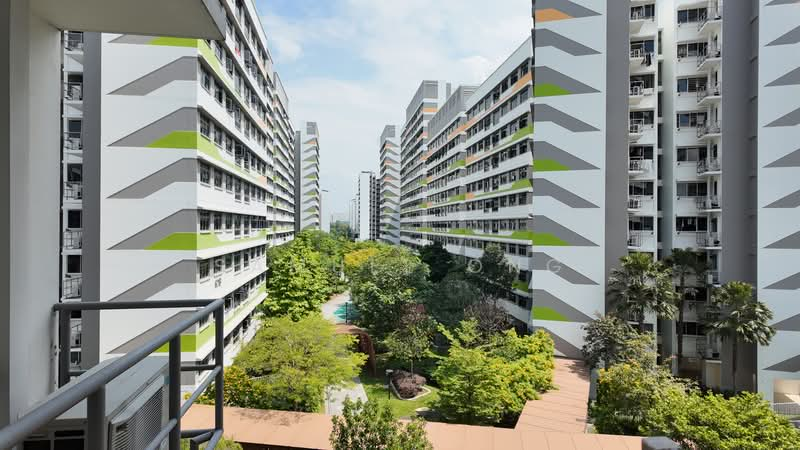
Ask a room of Singaporean buyers where the next big residential story is unfolding and you will usually hear the same names: Lentor, Jurong East, maybe Punggol. Tampines rarely tops the list — which is precisely why it deserves a closer look. The town already functions as the east's de facto regional centre, with two MRT lines, four malls within a stone's throw of each other, and a population larger than several planning areas combined. Now attention is turning to a stretch of road that has quietly sat at the edge of the conversation: Tampines Avenue 12.
If you have driven through the newer northern arc of Tampines recently, you will have noticed the cranes. Whole precincts are rising where there used to be forest and scrub. The question on many buyers' minds is not whether Tampines will see another residential launch — it is when, at what price, and whether a Tampines Avenue 12 address makes sense for their portfolio or their family. This article unpacks what we know, what we can reasonably infer, and what you should watch for before you write a cheque.
Fair warning up front: this is an analytical walk-through, not a sales brochure. Where hard numbers exist, they are cited. Where they don't, they are labelled as indicative estimates so you can calibrate your own expectations. Treat every figure here as a starting hypothesis to test against live URA caveat data, not a guarantee.
The Context: Why Tampines Keeps Appearing on Buyer Shortlists
Tampines has an unusual profile for a HDB heartland town. Under the URA Master Plan, it is designated one of Singapore's regional centres — a status it shares with Jurong East and Woodlands. That designation is not ceremonial. It means the town was deliberately planned as an employment and commercial node serving the entire eastern region, not merely a dormitory suburb for people who commute to Raffles Place.
What that has produced, over three decades, is a town with a density of amenities that most other HDB towns cannot match:
- Four shopping centres within one interchange: Tampines Mall, Century Square, Tampines 1 and the wider Tampines town centre retail cluster.
- Our Tampines Hub: Singapore's first integrated community and lifestyle hub, opened in 2017, combining a regional library, sports facilities, a hawker centre, arts spaces and community services under one roof.
- Two MRT lines converging at Tampines interchange station — the East-West Line and the Downtown Line.
- A regional bus interchange, plus town-wide feeder networks that make car ownership optional rather than essential.
- Temasek Polytechnic, UWCSEA East and a dense cluster of primary and secondary schools within the town boundary.
The town's population is commonly cited at roughly a quarter of a million residents — making it one of the largest and, crucially, one of the most mature HDB towns in Singapore. That maturity matters for property. Mature estates have established schools, established transport, established retail. They also have a deep pool of upgraders: households that bought their first flat in the 1990s or 2000s, completed their Minimum Occupation Period, and now have equity to redeploy into private housing.
That last point is the quiet engine behind every launch in the east. A large, ageing, asset-rich HDB cohort living within three kilometres of a new launch is worth more to a developer than almost any marketing campaign.
The Tampines North Variable
The other half of the story sits north of the existing town centre. Tampines North is one of Singapore's newer HDB precincts, planned and built out over the past decade with a distinct identity — more greenery, more water features, more cycling infrastructure, and a younger demographic profile. It has drawn thousands of young families who wanted a new flat in the east without waiting for a BTO in a more central location.
Those households are now approaching the age where some will upgrade. A private residential offering in the same part of town is a natural destination.
Where Exactly Is Tampines Avenue 12?
Tampines Avenue 12 threads through the newer northern and north-eastern corridor of the town, in the arc that connects the established heartland around the regional centre to the fast-growing Tampines North precinct.
That puts a hypothetical residential parcel on the road in an unusually strong position, because it sits at the seam between two very different but complementary catchments:
- To the south: the mature Tampines town centre, with its malls, MRT interchange, hospital catchments and established schools.
- To the north: Tampines North, with newer HDB blocks, younger households, and the incoming rail infrastructure.
A project dropped on that seam gets the best of both — the amenity depth of an old estate and the demographic tailwind of a new one.
One important caveat: land parcels fronting a road are not interchangeable. Two sites 400 metres apart can have wildly different attributes depending on whether they front a major arterial road, back onto an industrial estate, or open onto a park. The specific plot matters enormously. Buyers should check the URA Master Plan for the exact land use and plot ratio on any site being marketed under the Tampines Avenue 12 banner, rather than assuming a launch is a launch is a launch.
The Connectivity Audit
Let's put the transport picture in perspective, because this is where Tampines genuinely separates itself from most of the Outside Central Region.
The East-West Line connects Tampines directly to the CBD (Raffles Place, City Hall) and to Changi Airport via the Expo branch, without any interchange for most city-bound journeys. The Downtown Line, which opened in Tampines in 2017, cuts diagonally across the island to Botanic Gardens and Bukit Panjang, serving the new downtown and the Newton/Rochor corridor along the way.
The Cross Island Line is the wildcard. Phase 1 of the CRL includes a station at Tampines North, reportedly targeted for around 2030. When it opens, it will give the northern half of the town a direct rail spine that links the east to Ang Mo Kio, Hougang, and eventually the north-east — a corridor that currently requires a bus or two train transfers.
For a residential project on Tampines Avenue 12, the practical implication is this: you are buying into a part of the town that is becoming more connected, not less. That is a rarer proposition than it sounds.
On the road side, the town is bounded by the Tampines Expressway and connects easily to the ECP via the Expo/Upper Changi corridor and to the PIE via Bedok. Anyone who works in Changi Business Park, the Airport Logistics Park, Seletar Aerospace Park or the CBD has a defensible commute.
The URA Master Plan Signal: Reading the Tea Leaves
Singapore's planners are unusually transparent about their intentions. The Master Plan is published, revised periodically, and legally binding. If you want to know what a neighbourhood will look like in ten years, you read it.
For Tampines, the Master Plan has consistently pointed in the same direction for the last two planning cycles:
- Reinforcement of the regional centre, including commercial and mixed-use intensification around the town centre.
- Continued build-out of Tampines North as a distinct residential precinct with supporting facilities.
- Higher-density residential zonings along transport corridors, typically expressed as plot ratios that support large-scale developments.
- Improved pedestrian and cycling connectivity between the town centre and the northern precincts — a planning priority that shows up repeatedly in URA's vision documents.
The mechanism that turns that intent into an actual condominium is the Government Land Sales programme. This is worth understanding because it explains the timing of every launch you will ever read about.
The gap between a site appearing on the Master Plan and a buyer collecting keys is typically six to eight years. So when a road like Tampines Avenue 12 starts appearing in land-sales chatter, the practical launch window is usually two to four years out — and the completion date is several years beyond that.
This is the single most important timing point for anyone planning around a Tampines Avenue 12 launch: you are not buying a flat, you are buying a five-year construction horizon.
The Amenity Audit: What Living There Actually Feels Like
Marketing brochures love proximity circles. Real life is about whether you can buy groceries at 10pm and whether your seven-year-old can walk to school.
Retail and Daily Life
| Amenity | Distance from Tampines Avenue 12 corridor | Notes |
|---|---|---|
| Tampines Mall / Century Square / Tampines 1 | Short drive or bus ride | Full mall ecosystem: supermarkets, F&B, cinema, enrichment |
| Our Tampines Hub | Short drive or bus ride | Library, sports hall, hawker centre, polyclinic-adjacent services |
| Tampines North neighbourhood centres | Walkable from northern precincts | Neighbourhood-scale retail and coffee shops |
| Giant / NTUC / Sheng Siong outlets | Multiple across town | Everyday grocery redundancy — a genuinely underrated convenience factor |
| Tampines Round Market & Food Centre | Drive | One of the east's better-known hawker destinations |
The redundancy of retail in Tampines is a genuine quality-of-life advantage that buyers routinely undervalue. In a newer estate, one failed supermarket anchor can strand a neighbourhood. In Tampines, you have options.
Healthcare
Changi General Hospital in Simei sits a short drive away, with Pasir Ris and Bedok polyclinics also accessible. For a town of Tampines' size, healthcare access is adequate rather than exceptional — but it is materially better than what most new towns in the north or west can offer.
Education
This is where the eastern corridor separates itself. Within reasonable reach:
- Temasek Polytechnic — one of Singapore's five polytechnics, anchoring the town's young-adult demographic.
- UWCSEA East — one of the region's most established international schools, drawing an expatriate rental catchment.
- Multiple primary schools including St Hilda's Primary and Tampines Primary, both long-standing and heavily oversubscribed in some years.
- ITE College East in Simei and SUTD near Upper Changi, adding to the education cluster.
For families with children, the schooling depth is a real draw. For investors, the polytechnic and international school catchment supports rental demand from students, faculty and expatriate families — a segment that is less rate-sensitive than local owner-occupiers.
Green Space
Tampines Eco Green is a 36-hectare ecological park that is genuinely unusual for a HDB town — a secondary forest and freshwater wetland reserve rather than a manicured garden. Add Bedok Reservoir Park to the south-west and Pasir Ris Park to the north-east, and the eastern corridor has a credible outdoor recreation stack.
What a Tampines Avenue 12 Launch Could Look Like
Now the part everyone skips to. Let's be disciplined about this, because pricing is where most property commentary goes wrong.
There are three anchors to use when estimating a new launch price: recent comparable launches in the same corridor, current resale transacted prices, and the land cost implied by any Government Land Sales award. We have reasonable visibility on the first two and none on the third for a specific Tampines Avenue 12 parcel, so treat the estimates below as a framework rather than a forecast.
The Comparables
| Project | Location | Units | Launch era | Indicative psf at launch |
|---|---|---|---|---|
| The Alps Residences | Tampines Street 86 | 626 | Mid-2010s | ~S$1,100–1,200 |
| D'Nest | Pasir Ris Drive 3 | 912 | Early 2010s | ~S$900–1,000 |
| The Tapestry | Tampines Avenue 10 | 861 | 2017 | ~S$1,250–1,350 |
| Treasure at Tampines | Tampines Lane | 2,203 | 2019 | ~S$1,300–1,400 |
| Pasir Ris 8 | Pasir Ris Central | 487 | 2021 | ~S$1,600–1,700 |
Figures are rounded, indicative ranges drawn from publicly reported launch pricing and URA caveat data over time. Verify against current URA transaction records before relying on them.
Unit Counts of Major Launches in the Tampines-Pasir Ris Corridor
Two things stand out from this table. First, the corridor has historically been large-format: Treasure at Tampines alone carries 2,203 units, making it one of the largest private condominiums in Singapore. Second, prices have moved in a steep, non-linear arc — roughly S$1,200 psf in the mid-2010s to S$1,700 psf by 2021, a trajectory that has continued across the OCR since.
The 2025–2026 Benchmark
Land costs, construction costs and OCR-wide price inflation have all moved since 2021. Recent suburban launches in comparable or weaker locations have transacted in the S$2,000 psf and above range. A well-located Tampines Avenue 12 project — with rail access, mall proximity and regional centre status — would sit comfortably within, and possibly at the upper end of, that band.
A defensible working assumption for a launch in the 2026–2028 window is therefore around S$2,000–2,200 psf, with meaningful variance depending on:
- Tenure — 99-year leasehold is almost certain for a GLS site; a rare freehold or 999-year parcel would reset the number sharply upward.
- Plot ratio and unit count — a 1,000-unit project will price more aggressively than a 300-unit boutique development.
- Distance to rail — a genuine sub-500-metre walk to an MRT entrance commands a premium that is measurable in resale data.
- Unit mix — a project weighted toward smaller units will post a higher headline psf while keeping quantum affordable.
Indicative Launch-Era PSF Across East Corridor Comparables (Rounded)
What That Means in Absolute Dollars
Headline psf is an investor's metric. Most buyers think in quantum — how much cash and CPF do I actually need?
At an illustrative S$2,100 psf, the entry points look roughly like this:
| Unit type | Indicative size | Illustrative price |
|---|---|---|
| 1-bedroom + study | ~538 sqft | ~S$1.13 million |
| 2-bedroom | ~700 sqft | ~S$1.47 million |
| 3-bedroom | ~958 sqft | ~S$2.01 million |
| 4-bedroom | ~1,270 sqft | ~S$2.67 million |
Illustrative Entry Quantum at an Estimated S$2,100 psf Launch
Price in S$ millions. Illustrative modelling only — not a forecast of any specific project.
That 3-bedroom figure is the one to sit with. A two-million-dollar three-bedroom in Tampines is a very different proposition from the S$1.3 million three-bedroom that Treasure at Tampines buyers were signing for in 2019. It requires either a substantially higher household income, a large HDB windfall from a sold flat, or a willingness to accept a smaller unit.
This is the central tension of the whole thesis: Tampines Avenue 12 may be a strong location, but the price of entry into that location has roughly doubled in six years.
The Launch Timeline: What to Expect and When
Since no confirmed launch date has been publicly set for a specific Tampines Avenue 12 project, here is the realistic sequence based on how Singapore launches typically unfold.
Phase 1: Land Sale and Award
If a site is on the Government Land Sales Confirmed or Reserve List, the tender process itself takes several months, and award announcements are public. Watch URA's GLS tender results page — it is the earliest hard signal. The winning bid price per square foot per plot ratio (psf ppr) is the single best predictor of the eventual selling price.
Phase 2: Developer Planning
Twelve to eighteen months typically elapse between award and preview, covering architectural design, provisional permission, and marketing agency appointments. During this window, the project name and unit mix usually leak into the market.
Phase 3: Preview and Launch
Previews typically run one to two weeks before the official launch weekend. This is when indicative prices are released and balloting for popular stacks occurs. For a project with strong attributes, expect a meaningful share of units to move on launch weekend itself.
Phase 4: Construction and TOP
Under a standard progressive payment scheme, buyers pay a percentage of the price at each construction milestone, reaching roughly 65% by TOP. The remaining balance is paid on legal completion. For a 2027 launch, expect TOP around 2031–2032.
That long horizon is not a detail — it is the whole risk profile. You are committing capital today against a market you will only be able to sell into five or six years from now.
Who Should Be Watching — and Who Should Wait
The Upgrader from Tampines HDB
This is the natural buyer. If you own a fully paid or near-fully paid 4-room flat in Tampines bought before 2010, your equity position is strong and your familiarity with the town is total. Selling and buying within the same town avoids the biggest hidden cost of upgrading: losing your support network, your children's school, and your routine.
Watch out for ABSD. A Singaporean buying a second property before selling the first faces a significant stamp duty outlay unless the sequence is managed carefully. Plan the sell-and-buy order with a conveyancing lawyer well before launch weekend.
The First-Timer Priced Out of BTO
If you have applied for a Tampines BTO three times and missed, a private launch is tempting but usually wrong. MSR and TDSR caps mean the loan quantum on a S$1.47 million two-bedroom requires a household income well above the BTO ceiling. Do the arithmetic in a spreadsheet, not in a showflat.
The Investor
Tampines' rental story is genuinely solid: Changi Business Park, the airport cluster, the polytechnic, and the international school catchment all generate tenant demand. Gross yields in the 3% range are commonly cited for mass-market OCR projects — modest, but defensible if the entry price is right.
The risk is supply. A 1,000-unit launch in a town that already has substantial private stock, layered on top of an HDB MOP wave, could compress rents in the corridor for several years. Buy for capital preservation, not for yield-chasing.
Risks and Counterpoints
A balanced view has to acknowledge what could go wrong.
- Supply overhang. Tampines and the adjacent Pasir Ris corridor have absorbed a lot of private units over the last decade. Another mega-project adds to that.
- HDB MOP competition. Thousands of flats in Tampines will cross their five-year MOP in the coming years, creating a fresh wave of resale HDB supply and upgraders competing for the same exit buyers.
- Interest rate sensitivity. Entry quantums above S$1.4 million are acutely rate-sensitive. A sustained shift in long-term rates changes the affordability maths materially.
- Lease decay. A 99-year leasehold project bought at S$2,100 psf has a long runway, but the resale market will eventually price in remaining lease.
- Timing mismatch. Five years is a long time. Buying at the top of a launch cycle and selling into a soft patch is the classic OCR mistake.
- Execution risk on the site itself. Road frontage, orientation, noise from arterials and proximity to industrial parcels can all drag on liveability and price.
None of these is a reason to avoid the area. All of them are reasons to be precise about which unit, at what price, on what horizon.
Food for Thought
-
If a Tampines Avenue 12 three-bedroom prices at S$2 million, who is the marginal buyer — and how deep is that pool in the east? Compare that buyer to the one who bought the same configuration at Treasure at Tampines for S$1.3 million in 2019. What changed in their income, not just in the market?
-
What does the Cross Island Line actually do to Tampines North prices — and is any of it already priced in? Rail announcements historically front-run capital appreciation by years. If the market has already anticipated Tampines North, the upside may belong to today's sellers, not tomorrow's buyers.
-
Would you rather own a 99-year leasehold new launch in a mature town, or a smaller freehold resale unit in a less-connected one? The trade-off between lease length and locational liquidity is the oldest argument in Singapore property, and Tampines forces you to take a side.
-
How much of the "regional centre" premium is genuinely reflected in resale values versus assumed by buyers? Tampines has been a regional centre for decades. Has that status compounded into prices, or has the town been perpetually undervalued relative to the hype?
-
If you had to hold for ten years rather than five, would your answer change? Most launch buyers underestimate their actual holding period. Run the numbers at both horizons before you decide.
The Bottom Line
Tampines Avenue 12 is not a hype story — it is a fundamentals story. A mature regional centre, an incoming rail line, deep amenity infrastructure, a large upgrader cohort and a land bank that planners have consistently earmarked for higher-density residential use. Those are the ingredients of a launch that will attract serious attention.
But the price of entry has changed. A buyer in this corridor today is paying roughly double what the same configuration cost at the last major launch cycle, and taking on a five-year construction horizon to do it. That does not make it a bad decision — it makes it a decision that requires more rigour than a showflat visit.