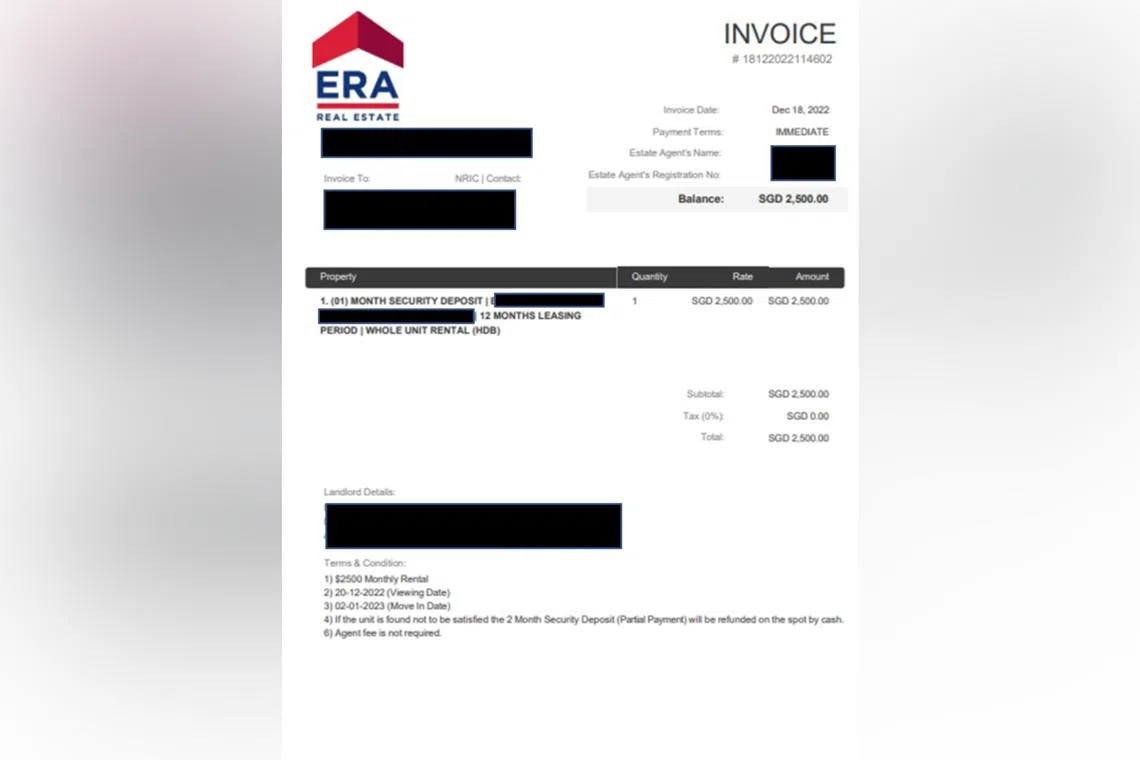
The listing is beautiful. A bright one-bedder in a well-located block, eleven minutes from an MRT interchange, freshly renovated, and priced maybe $400 below everything else you've seen this week. The "agent" replies in four minutes. Within twenty you've sent your number, and within the hour you're told there are two other couples viewing tomorrow morning and, if you're serious, you can secure it now with a one-month deposit by PayNow.
That is the exact moment rental scams in Singapore are engineered around — not the viewing, not the contract, not the keys. The transfer.
Everything about renting in Singapore asks you to trust a stranger with a large, instant, effectively irreversible payment. You hand over a month or two of rent before you have any legal right to the space. There is no escrow by default. There is no cooling-off period. And once a PayNow transfer clears, the money does not come back because you changed your mind — or because the person who took it was never a landlord at all.
The fraud has also got better. The old version — a blurry photo, a too-good rent, a Nigerian prince cadence — still exists, but the modern version borrows real agent names, real listing photos, real CEA registration numbers, and real Singapore property vocabulary. It survives the first round of scepticism most renters apply. The intent of this piece is to move the verification earlier: seven checks, done before the money moves, that most tenants never get round to.
The Structural Reason Rental Fraud Works Here
Start with the asymmetry. In a residential leasing transaction, the tenant has to move first. You pay a deposit to secure a unit you have not signed for, then sign a tenancy agreement, then pay the balance, then collect keys. The landlord's obligations arrive after your money does. That sequencing is normal, and it is also exactly what a fraudster needs.
Three features of the Singapore market sharpen it:
- Rent is a large, single, instant transfer. PayNow and FAST settle in seconds. Bank recalls are discretionary and frequently unsuccessful once funds are moved onward.
- The search is digital-first. Portals and social marketplaces compress discovery into minutes, and legitimate agents compete on response speed. Fast replies are now a quality signal and a scam tactic.
- A meaningful share of tenants cannot view in person. Newly arrived EP holders, relocating families, students arriving for the academic year, and people currently overseas all rent before they land. They are structurally forced into remote verification — which is precisely the gap these playbooks exploit.
Singapore's rental rules add a layer most tenants do not know exists, and that ignorance is monetisable. Private residential leases must run at least three consecutive months under URA rules — so any "short-term" or "month-to-month" private lease you're offered is not a grey area, it's non-compliant. HDB owners must clear a five-year Minimum Occupation Period before renting out a whole flat, and must obtain HDB approval. A scammer will happily promise you a whole flat whose owner is nowhere near eligible, because the flat was never theirs to let.
How the Scam Actually Works: Four Playbooks
Most cases fit one of four shapes. Knowing the shape tells you which check matters most.
Playbook 1 — The Cloned Listing
The fraudster lifts photos, floor plans, and the address from a genuine listing — often one that was recently rented, or one currently live on a portal. The unit is real. The photos are real. The address is real. The person is not. The tell is usually that the "agent" cannot arrange a physical viewing and steers you to a video call, a pre-recorded tour, or a "my colleague will meet you" that never quite happens.
Playbook 2 — The Borrowed Agent
This is the more sophisticated version and the one that defeats the most people. The scammer copies a real salesperson's name, agency, and CEA registration number from the Council of Estate Agencies' public register, uses a similar profile photo, and quotes the genuine registration number in the chat. Everything checks out — because everything is genuine except the human being you are talking to.
The countermeasure is not "check the register." It's check the register, then contact the agent through the number listed on the register, never the number that messaged you. A scammer can clone a name and a registration number. Cloning the registered phone line is a different order of difficulty.
Playbook 3 — The Overseas Landlord
A landlord who is "working in Dubai" or "based in London" cannot meet you, cannot show you the unit, and would like a relative or a friend to hand over keys after you transfer the deposit plus "stamping and admin fees." Some variants produce a notarised-looking power of attorney. Some produce an NRIC image that belongs to someone else entirely.
Playbook 4 — The Sublet Squeeze
The fraudster is a genuine tenant with a genuine lease and genuine keys. They sublet rooms or the whole unit to multiple people, collect deposits from all of them, and disappear — or simply stop paying the head landlord, who then evicts everyone. The victims have valid-looking agreements with someone who never had the legal right to grant them.
The pattern is consistent enough that it is worth recognising as a sequence rather than a set of individual red flags. Each step is individually plausible. Only the sequence is diagnostic.
Why Careful People Still Transfer the Money
It is tempting to treat victims as naive. That framing is wrong and it is also unhelpful, because the mechanisms at work are ordinary.
- Manufactured scarcity. "Two other couples tomorrow" converts a considered decision into a competitive one. Under time pressure, people verify less.
- Calibrated loss aversion. The deposit is one month's rent — painful, but not so large that it triggers the same scrutiny as a property purchase. It sits in a psychological blind spot.
- Authority cues. A CEA-style registration number, a company name, a name card, a professional email signature. These read as institutional verification even when nothing has been verified.
- Platform credibility transfer. A listing on a reputable portal feels implicitly vouched for. It isn't. Most portals are noticeboards, not guarantors, and their moderation cannot outrun the volume.
- Sunk-cost creep. Once you've exchanged forty messages and done a video tour, backing out feels rude and paranoid. Fraudsters count on politeness.
The result is that the moment of highest risk is also the moment of highest emotional momentum. The seven checks below are designed to be mechanical — things you do, in order, regardless of how you feel about the deal.
The 7 Checks Before You Transfer a Deposit
Check 1 — Verify the agent on the CEA Public Register, then call the number on the register
What it catches: unregistered "agents", lapsed registrations, and — critically — impersonation.
The Council of Estate Agencies maintains a public register of licensed estate agents and registered salespersons. It shows the individual's name, photograph, registration number, the agency they are registered with, registration status, and any disciplinary history. Salesperson registration numbers typically begin with an "R" followed by digits; agency licence numbers begin with "L".
Run the check in this order:
- Take the registration number quoted in the listing or chat and look it up.
- Confirm the name and photo match the person you've been speaking to.
- Confirm the agency matches what they told you.
- Then call the salesperson on the number listed in the register. Not the WhatsApp number that messaged you, not the number on the ad.
Step 4 is the one that matters. A cloned name and registration number survive steps 1 to 3. They do not survive a phone call to the registered line.
Also note: a legitimate agent handling a residential lease should have you sign a prescribed Estate Agency Agreement before acting for you. If you've been represented for a week and nobody has mentioned one, ask why.
Check 2 — Match the name on the land title to the name on the receiving bank account
What it catches: the borrowed-agent scam, the overseas-landlord scam, and almost every variant where money goes to the wrong human.
This is the single highest-value check available to a Singapore tenant, and almost nobody does it. The Singapore Land Authority's INLIS e-services allow a title search on a property for a modest fee, returning the registered proprietor's name. HDB flats are registered land, so the same search applies.
The rule is simple: the name on the title must match the name on the bank account you are transferring to. Not a similar name. Not a spouse's name unless the spouse is also on the title. Not a company account unless the company is the registered owner and you can verify it on ACRA.
If the payee is a company, look it up on ACRA and confirm the company is the registered proprietor. If the payee is a relative "helping out", ask for a written authorisation and verify the relationship. If the payee is an agent's personal account, stop — see Check 4.
There is one practical wrinkle worth knowing: PayNow to a mobile number displays only a partial recipient name, which is a weak verification signal. Where you can, prefer a transfer that shows the full recipient name, or a crossed cheque made out to the registered owner.
Check 3 — Confirm the owner actually has the right to rent it out
What it catches: the sublet squeeze, MOP breaches, and unapproved HDB rentals.
Ownership is necessary but not sufficient. The owner may not be legally permitted to let the property to you.
- HDB flats. The owner must have completed the Minimum Occupation Period — generally five years for most flat types — and must obtain HDB approval before renting out the whole flat. There are also eligibility rules and, for non-Malaysian, non-citizen tenants, a non-citizen rental quota that applies to the block. If you are an EP holder renting an entire HDB flat, you should expect the landlord to be able to show approval.
- Private residential. Leases must be for at least three consecutive months. Subletting must be permitted under the head lease. If you're renting a room from a tenant rather than the owner, ask to see the head lease clause that allows subletting, and ask for the owner's consent in writing.
- Power of attorney. If someone is signing on behalf of an overseas owner, ask for the notarised power of attorney and check that it covers leasing and deposit collection specifically.
A landlord who cannot evidence the right to rent is a landlord who may not be able to deliver quiet enjoyment of the property — even if they are entirely genuine.
Check 4 — Never hand transaction money to an agent
What it catches: the most common loss channel of all.
Under CEA's professional standards, salespersons are expected not to hold or receive transaction money — rental deposits, rent, and similar payments — on behalf of their clients. Their role is to negotiate, paper the deal, and verify. The money should move between the tenant and the landlord.
Practically, this means:
- Deposits and rent go to the owner, to an account matching the title.
- No cash. No cash to an agent, no cash to a "caretaker", no cash in a envelope at a viewing.
- No crypto, no gift cards, no overseas remittance to an account in another country. Any of these is a hard stop.
- Commission is separate. Where a commission is payable, it is a distinct payment for a distinct service, with a receipt — it is not a route for the deposit.
A legitimate agent will not object to any of this, because it is how they are supposed to work.
Check 5 — View in person, or run a live verified walkthrough
What it catches: cloned listings and units that are not available at all.
If you're in Singapore, view in person. Insist on being let into the unit, not shown the corridor. Check that utilities are live, that the fixtures in the photos match, and that the unit isn't occupied by someone else with a prior claim.
If you genuinely cannot be here — and many readers can't — replace the video tour with a live, interactive walkthrough: a scheduled video call in which you direct the camera. Ask the person to open a cupboard, look out a window at a named landmark, switch on a tap, show the inside of the utility box, and hold a piece of paper with today's date in front of something fixed. A pre-recorded tour can be scraped from another listing; a live call with responsive direction cannot.
Then ask what the person's relationship to the property is. "I'm the owner" and "I'm the agent for the owner" are different answers requiring different paperwork.
Check 6 — Put it in writing, and stamp the tenancy agreement
What it catches: informal arrangements where nothing is enforceable, plus landlords who never intended to create a record.
A proper tenancy agreement should identify the parties, the property, the term, the rent, the deposit, the notice period, the diplomatic clause (if you're an expat on an employment pass), and who pays for what. Attach an inventory with photos and condition notes.
Then do the thing most tenants skip: stamp the agreement with IRAS. For a lease not exceeding four years, stamp duty is 0.4% of the total rent over the lease term. It must be paid within 14 days of signing if the agreement is signed in Singapore, or 30 days if it is signed overseas. The tenant is responsible by default unless the agreement says otherwise.
Why this is a fraud check, not just a compliance one: a scammer will not stamp an agreement, because doing so creates a government record linking a named party to a named property and a named sum. If the "landlord" resists stamping, or offers to "settle it later", that is a signal worth taking seriously.
Check 7 — Pressure-test the deal itself: price, urgency, and provenance
What it catches: the whole category, because almost every scam has a pricing or pressure tell.
- Price against the market, not against the photos. A unit advertised meaningfully below comparable units in the same block is not a bargain until you understand why. This is the single most reliable numerical tell, and it's the cheapest one to check.
- Reverse image search the photos. If the same images appear on a different listing in a different town, or on a foreign property site, you have your answer.
- Check the listing's age and history. Recently posted, never reposted, no other listings by the same "agent"? Note it.
- Look for urgency engineering. "Decision today", "deposit to secure", "I have three other applicants". Legitimate agents deal with competition; they don't manufacture deadlines within the hour.
- Look at the communication channel. A registered agent using a company email and a verifiable line is a different risk profile from an anonymous account asking to move to a personal chat immediately.
- Search the phone number and the bank account number. Community scam databases and forums are imperfect but cheap to check.
The Checks That Don't Actually Work
Several things feel like verification and are not. Knowing which is which saves you from false confidence.
| "Proof" offered | Why it fails |
|---|---|
| A photo of the agent's name card | Trivially copied or designed; proves nothing about identity |
| A screenshot of an NRIC | Frequently stolen; also, a genuine NRIC proves nothing about property rights |
| The CEA registration number alone | Real numbers are public and get cloned — verify by calling the registered line |
| A "verified" badge on a marketplace | Usually verifies an email or phone number, not a title, not an agent licence |
| A video tour | Can be scraped from a genuine listing or a previous tenancy |
| A voice note or phone call | Synthetic and scripted calls are routine; voice is not identity |
| A company stamp on a receipt | Anyone can order a stamp |
| "You can come see the unit after paying" | The entire point of the scam is that this never happens |
| A tenancy agreement draft | A document is not a stamp certificate; IRAS stamping is the check |
The pattern: all of these verify presentation. None of them verify rights. The checks that work all trace back to a government or statutory record — the CEA register, the land title, the ACRA record, the IRAS stamp certificate — or to physical access to the property.
The Printable Pre-Deposit Checklist
Work down this list in order. If any item fails, the transfer does not happen.
Identity and authority
- Agent's name, photo, and registration number match the CEA Public Register
- I called the agent on the number listed in the CEA register — not the number that messaged me
- The agent has issued a prescribed Estate Agency Agreement for the lease
- The agency named in the chat matches the agency on the register
Property and title
- I have run a title search and have the registered proprietor's name in writing
- The registered proprietor's name matches the name on the receiving bank account
- If the payee is a company, I have verified it on ACRA and it is the registered owner
- If someone is acting under power of attorney, I have seen the notarised POA covering leasing and deposit collection
Right to rent
- For an HDB flat: MOP is served and HDB approval to rent out the flat is evidenced
- For a private unit: the lease term is at least three consecutive months
- For a sublet or room rental: the head lease permits subletting and the owner's written consent is on file
Access
- I have viewed the unit in person, or completed a live interactive walkthrough with date verification
- The fixtures and fittings match the listing photos
- Utilities are live and the unit is not already occupied by someone with a claim
Money
- The deposit is going to the owner's account, not to an agent, a "caretaker", or a third party
- No cash, no crypto, no overseas remittance, no gift cards
- I have a written receipt stating the amount, the property, the purpose, and the payer/payee
- Any commission payable is a separate, receipted payment to the agency
Paperwork
- Tenancy agreement signed by the registered owner or a properly authorised representative
- Inventory and condition report attached and photographed
- Diplomatic clause included if relevant to my employment pass situation
- Stamp duty (0.4% of total rent for leases up to four years) arranged within 14 days of signing in Singapore
- I hold the IRAS stamp certificate
Sanity
- The rent is consistent with comparable units in the same development
- Reverse image search on the listing photos returned nothing suspicious
- Nobody has pressured me to decide within hours
- I have searched the phone number and bank account number for prior reports
If You've Already Transferred the Money
Act in parallel, not in sequence, and act now.
- Call your bank immediately. Ask them to recall or freeze the transfer and flag the receiving account. The window is short and success is not guaranteed, but speed materially improves the odds.
- Make a police report. Rental fraud is a criminal matter, and a report is also what your bank and the platform will ask for.
- Report to the platform. Portals and marketplaces can suspend the account and preserve the listing, which helps the next person.
- Report to CEA if a registered salesperson's name or registration number was used — even if by an impersonator, because the real agent needs to know their identity is being cloned.
- Preserve everything. Chat logs, the listing URL, the bank transfer reference, the receipt, the phone number, the account number. Screenshot before anything gets deleted.
- Tell other people. Scam reporting channels and community groups are imperfect, but the next tenant searching that phone number is the one you help.
The Singapore Police Force publishes current scam reporting channels and helplines; use the numbers listed on the official site at the time rather than any number forwarded to you in a chat.
What Legitimate Looks Like
It is worth stating the positive case, because fear is a poor filter and it makes people walk away from good units.
A legitimate landlord or agent will:
- Be relaxed about you checking the CEA register and asking for a title search
- Put the deposit in writing, in a tenancy agreement, before asking for it
- Accept payment to the registered owner's account without argument
- Push back on nothing when you ask to see HDB approval or the head lease clause
- Have no problem with you calling the agency's main line to confirm the salesperson works there
- Not manufacture a deadline within the hour
If those things are true, the deal is probably fine and you should get on with it. The seven checks are not a reason to be suspicious of everyone. They are a reason to be suspicious of the transfer — the one irreversible step in an otherwise reversible process.
Food for Thought
- If a rental transaction requires the tenant to pay before any legal right exists, why is there no default escrow mechanism in Singapore for deposits — and would the market accept one if it added a day to every deal?
- The CEA register publishes registration numbers openly. Is a verification system that can be cloned by copy-paste actually verification, or just a formality that transfers blame?
- Most rental fraud is reported after the money clears. What would it take for banks to flag first-time transfers to newly opened accounts in rental-sized amounts — and what would that cost legitimate landlords?
- If a large share of tenants now rent remotely before landing in Singapore, should remote verification be standardised — a live, timestamped, directed walkthrough with a recognised protocol — rather than left to individual diligence?
- Price is the most reliable tell. So why do so few tenants actually pull comparable transaction data before signing, when the same people would never buy a phone without checking the spec sheet?
The Bottom Line
Rental scams have improved because the presentation has improved: real photos, real agent names, real registration numbers, real Singapore property language. What hasn't changed is the underlying vulnerability — a large, instant, irreversible payment made before any right exists. Verification, therefore, has to move earlier and anchor to something a fraudster cannot copy: a phone number on a statutory register, a name on a land title, a stamp certificate from IRAS.
Do those checks in order, keep the money where it belongs until they're done, and the deal either survives or reveals itself. Both outcomes are good ones.