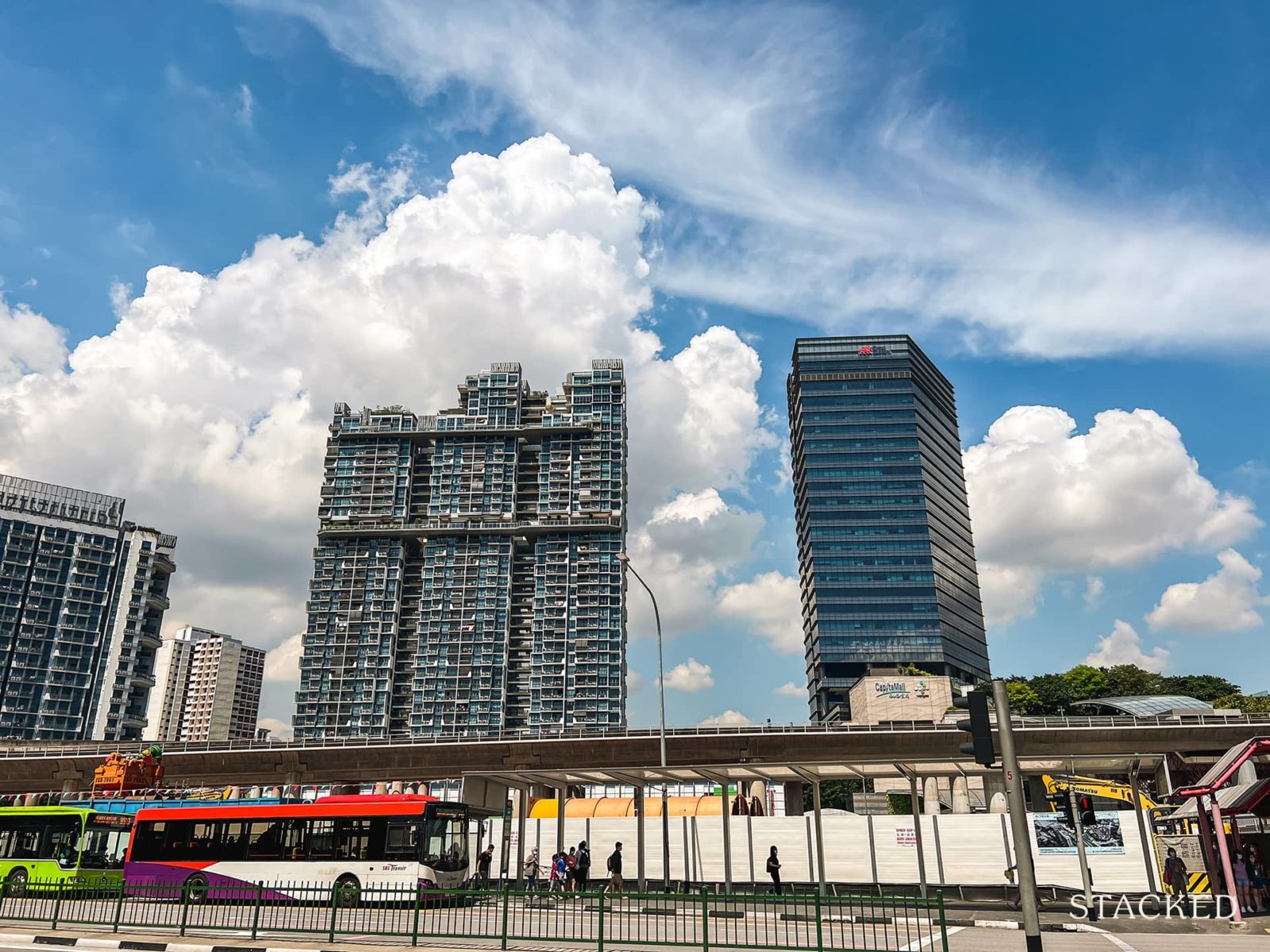
Two towns sit on opposite ends of Singapore, and on opposite ends of the same question. In the west, Jurong is being rebuilt around the promise of a second central business district. In the northeast, Punggol is already the finished article — a waterfront town that has been the default answer for young families for the better part of a decade. The Jurong vs. Punggol debate is not really about which town is "better". It is about which bet you are willing to make with the largest sum of money you will ever commit.
Both towns absorb a huge share of Singapore's Build-To-Order supply. Both are far from Raffles Place, but far in different directions. Both have been marketed heavily to first-timer couples. And in 2024, the rules governing both changed in ways that matter — from the August 2024 cooling measures that cut the HDB loan limit to 75% of the flat price, to the October 2024 launch of the Standard/Plus/Prime classification framework, to the doubling of the Enhanced CPF Housing Grant ceiling to $120,000.
This guide compares the two towns on the things that actually decide a family's quality of life: price per square foot, commute time, schools, healthcare, flat age and lease, and the supply pipeline that will determine what your flat is worth when you eventually sell. All figures below are indicative, rounded bands drawn from recent public transaction clusters rather than live quotes — treat them as a starting frame, not a valuation.
Why Jurong and Punggol Keep Coming Up
There is a structural reason these two names dominate conversations among 25-to-40-year-old buyers.
- They are Singapore's two biggest "future" storylines. Punggol was the first town built around a waterway and a digital district. Jurong is the only town in Singapore being planned as a genuine commercial alternative to the CBD.
- They are both BTO heavyweights. Punggol has absorbed an enormous share of new flat supply over the past 15 years; Jurong West and the Jurong Lake District continue to release sites.
- They are both far from the CBD. Neither gives you a 10-minute ride to Raffles Place, so the commute comparison is genuinely competitive rather than a walkover.
- They attract different buyers. Punggol skews towards couples who want a new flat, a waterfront view and a lifestyle story. Jurong skews towards buyers with existing family roots in the west, or those who want floor area and maturity over novelty.
The trap is treating them as interchangeable. They are not. A four-room flat in Punggol and a four-room flat in Jurong West can differ by more than $100,000 in price — and by nearly 20 years in remaining lease.
The Masterplans: A Tale of Two Visions
Jurong: The Second CBD Bet
Jurong's pitch is scale and ambition. The Jurong Lake District — roughly 360 hectares around Jurong East and Lakeside — is planned as Singapore's largest commercial node outside the CBD, with the Urban Redevelopment Authority having set out a long-term vision of around 100,000 jobs and 20,000 homes in the district.
What already exists matters more than the renderings:
- Jurong East MRT interchange on the North-South and East-West lines — one of the few true cross-line interchanges outside the city centre.
- Ng Teng Fong General Hospital and the JEM/Westgate/IMM retail cluster, which together give Jurong East a genuine town-centre feel.
- Jurong Lake Gardens, a substantial green anchor that has already been delivered.
- The Jurong Region Line, a 24-station network with the first phase targeted to open from 2027 and full completion around 2029.
That last point is the crux. JRL will transform intra-west connectivity — connecting Jurong East to Boon Lay, Tengah, Choa Chu Kang and the industrial heartlands — but it does not shorten the ride to Raffles Place. The CBD commute in Jurong is already served by the East-West Line, and it is already decent.
The honest risk with Jurong is timeline. The Kuala Lumpur–Singapore High Speed Rail, once the centrepiece of the Jurong East narrative, was shelved in 2021. JLD's build-out will take a decade or more, and living next to a construction site for years is a real cost that glossy brochures do not price in.
Punggol: The Waterfront Bet, Already Delivered
Punggol's pitch is that the hard part is done.
- Punggol Waterway and the surrounding park connectors are built and heavily used.
- Waterway Point anchors the town centre, with Northshore Plaza serving the northern waterfront precincts.
- Punggol Regional Sports Centre, SAFRA Punggol and Coney Island give the town an unusually strong outdoor recreation stack for an HDB town.
- The Punggol Digital District — a roughly 50-hectare business park precinct integrated with the Singapore Institute of Technology campus — is the economic anchor, and unlike JLD it is already substantially under construction and progressively opening.
The 2024 milestone that changed Punggol's connectivity story was the opening of Punggol Coast MRT station on the North East Line in December 2024, extending the line directly into the digital district. The Cross Island Line Punggol extension, linking Punggol to Pasir Ris, is targeted for around 2032 — it will improve east-side access substantially but will not shorten the ride into the CBD.
The structural difference: Jurong's upside is still ahead of it and therefore still uncertain. Punggol's upside has largely been banked — and, importantly, already priced in.
The Price Reality: What Young Families Actually Pay
This is where the two towns diverge most sharply, and where the "Punggol premium" becomes concrete.
Resale Flats
Punggol's resale stock is overwhelmingly post-2010, which means most flats carry 90-plus years of remaining lease. Jurong West's stock is heavily 1980s and 1990s, with many flats now in the 60-to-70-year remaining lease range. Jurong East sits in between, with a mix of older blocks and newer additions.
Indicative 4-Room Resale Median Price, 2024 (S$'000)
The headline is straightforward: Punggol trades at a premium to Jurong West of roughly $100,000 on a four-room resale flat, and roughly in line with Jurong East. But the price alone tells you very little. The more revealing comparison is per square foot.
The PSF Trap
Newer flats are smaller. A Punggol four-room flat from the 2010s typically sits around 90 to 95 square metres. A Jurong West four-room flat from the 1990s can run 100 to 105 square metres — and the five-room and executive flats in Jurong West are meaningfully larger than their modern equivalents.
Indicative Resale PSF by Town (S$ per sq ft)
The takeaway: on a per-square-foot basis, Punggol is not just more expensive — it is more expensive per unit of space you actually get to live in. A family that needs three bedrooms plus a study will feel that difference every day. A family that wants a newer flat with a longer lease, lower maintenance risk and a waterfront view will happily pay for it.
BTO Bands
Indicative 4-Room BTO Price Bands, Recent Launches (S$'000)
Indicative four-room BTO price bands, before grants, have run roughly:
| Town / precinct | Indicative 4-room BTO band | Typical classification |
|---|---|---|
| Jurong West (infill sites) | $280,000 – $360,000 | Mostly Standard |
| Punggol (non-waterfront) | $330,000 – $400,000 | Standard / Plus |
| Punggol (waterfront / Northshore-type) | $380,000 – $450,000 | Likely Plus |
| Jurong Lake District fringe | $390,000 – $520,000 | Likely Plus or Prime |
The gap at BTO level is narrower than at resale level — which is exactly why so many young families keep balloting for Jurong West and Punggol alike. A $50,000 to $70,000 BTO price difference compounds into a much larger resale difference five to ten years later, because the Punggol flat tends to launch with more amenity already delivered.
The Lease Decay Question
This is the single most under-discussed factor in the Jurong vs. Punggol decision.
- A Jurong West flat with 64 years left on the lease will face tighter CPF usage rules as it ages, may struggle to attract buyers who need maximum loan tenure, and will likely see flatter price appreciation than a comparable flat with 90 years left.
- A Punggol flat with 92 years left has more runway, but also carries the risk that a wave of neighbouring flats hitting their five-year MOP at the same time creates localised resale competition.
Neither is automatically better. But if your plan is to hold for 30 years and pass the flat to your children, lease matters enormously. If your plan is to upgrade to a private property in 10 years, launch-era lease matters much less than exit liquidity.
Getting Around: The Commute Arithmetic
Here is where the towns genuinely split along work-location lines.
Indicative MRT Journey Time to Raffles Place (minutes)
Jurong
- Jurong East is roughly 25 minutes to Raffles Place on a direct East-West Line ride, with a cross-platform interchange to the North-South Line.
- Lakeside and Boon Lay add a few minutes but remain on the same direct line.
- Road access is strong: the AYE connects to the CBD and to the west coast industrial belt, and Jurong is well positioned for anyone working in Tuas, Jurong Island, one-north or the NUS/NTU corridor.
- The JRL from 2027 will improve intra-west travel dramatically — particularly for Tengah, Choa Chu Kang and Boon Lay residents — but will not change the CBD ride.
Punggol
- Punggol is roughly 35 minutes to Raffles Place via the North East Line, changing at Dhoby Ghaut or Outram Park.
- Punggol Coast adds a few more minutes but puts you at the doorstep of the digital district and SIT.
- The LRT feeder network is essential for most Punggol residents — and during peak hours it is genuinely crowded, a well-documented pain point that no amount of waterfront imagery resolves.
- Road access runs through the TPE and KPE, which is excellent for Changi, Tampines, Seletar and the northeast business parks, and less convenient for the CBD.
The honest verdict: if you work in the CBD and go in five days a week, Jurong saves you roughly 20 minutes a day, 100 minutes a week, over 80 hours a year — a full working fortnight. If you are hybrid, or work in the east, that advantage largely evaporates, and Punggol's newer stock and amenity start to look like the better trade.
Schools, Healthcare and Daily Life
Primary and Secondary Schools
Both towns are well served, but the profiles differ. Punggol's schools were built alongside the town and skew newer; Jurong has a mix of established, long-tenured schools.
| Punggol area | Jurong area |
|---|---|
| Oasis Primary, Waterway Primary, Punggol Green Primary, Valour Primary, Edgefield Primary, Horizon Primary, Northshore Primary, Mee Toh School | Rulang Primary, Shuqun Primary, Jurong West Primary, Fuhua Primary, Lakeside Primary, Westwood Primary, Boon Lay Garden Primary, Yuhua Primary |
| Edgefield Secondary, Punggol Secondary, Greendale Secondary | River Valley High School (Boon Lay), Jurong West Secondary, Boon Lay Secondary, Fuhua Secondary, Yuan Ching Secondary |
Two caveats worth stating plainly:
- Proximity is a big deal in P1 registration, but it is not the only factor. Home-school distance priority sits below sibling and alumni phases, and competition in popular schools is fierce regardless of town.
- Jurong's advantage is depth, not novelty. Schools like Rulang Primary and River Valley High School carry reputations built over decades. Punggol's schools are newer, generally less over-subscribed, and in some cases have fresher facilities.
Post-secondary, Jurong has an outlier advantage: NTU, Jurong Pioneer Junior College and the broader one-north/NUS corridor are all within reasonable reach. Punggol counters with SIT at Punggol Digital District, which puts a university campus inside the town.
Healthcare
This is a genuine differentiator.
- Jurong East has Ng Teng Fong General Hospital inside the town — a full acute hospital with specialist clinics. For families with elderly parents or young children, that is a meaningful quality-of-life factor.
- Punggol residents currently rely on Sengkang General Hospital and polyclinics, with additional healthcare capacity planned as part of the digital district build-out. For routine care this is fine; for anything urgent at 2am, it is a longer trip.
Retail and Recreation
- Punggol: Waterway Point, Northshore Plaza, SAFRA Punggol, Punggol Regional Sports Centre, Waterway Park, Coney Island, Punggol Point Park. The town is genuinely pleasant to walk and cycle, and the waterfront is not marketing — it is a daily-use asset.
- Jurong: JEM, Westgate, IMM, Jurong Point at Boon Lay, Jurong Lake Gardens, Jurong East Sports Centre, the Science Centre precinct. The retail depth is greater; the outdoor recreation is good but less distinctive.
The BTO Pipeline and What It Means for You
Supply is the invisible hand in both towns.
Punggol: Volume and MOP Waves
Punggol has been one of Singapore's highest-volume BTO towns. That has two consequences:
- You can almost always get a Punggol flat — the ballot is less punishing than in mature estates.
- Your future competition is your neighbours. When large clusters of flats in the same precinct hit their five-year MOP at similar times, sellers compete on price. Buyers benefit at entry; sellers may not benefit at exit.
Waterfront and digital-district-adjacent sites are the ones most likely to be classified Plus, which means a 10-year minimum occupation period, a subsidy clawback on resale, and rental restrictions. That is a real constraint if your life plan involves moving within a decade.
Jurong: Maturity and Scarcity
- Jurong West is largely built out. New supply comes from infill sites and is limited, which supports resale scarcity value — but the stock is ageing.
- Jurong Lake District is where the new supply is, and those sites are the most likely to carry Plus or Prime classification with the tighter rules attached.
The October 2024 Classification Framework
Since October 2024, new BTO flats are launched as Standard, Plus or Prime:
- Standard: 5-year MOP, no subsidy clawback, standard rental rules.
- Plus: 10-year MOP, subsidy clawback on resale, tighter rental restrictions.
- Prime: 10-year MOP, larger subsidy clawback, tighter rental restrictions, and typically the most central locations.
Practically, this means a cheap-looking Jurong Lake District or Punggol waterfront BTO may be a decade-long commitment, not a five-year one. Read the classification before you fall in love with the showflat.
The Grant and Financing Maths
Grants can move the needle by more than $100,000 — but only in specific scenarios. The August 2024 changes were substantial.
| Grant | Maximum | Applies to | Key condition |
|---|---|---|---|
| Enhanced CPF Housing Grant (EHG) | Up to $120,000 | BTO and resale | Household income ceiling of $14,000; amount tapers with income |
| CPF Housing Grant (Family) | Up to $80,000 | Resale only | First-timer families; 4-room or smaller |
| Proximity Housing Grant (PHG) | Up to $30,000 | Resale only | Live with or within 4km of parents/children |
| HDB loan LTV | 75% of price | HDB loan | Reduced from 80% in August 2024 |
Worked Example: Household Income of $7,000
| Scenario | Indicative grant stack | Notes |
|---|---|---|
| Resale in Jurong West, near parents | EHG in the region of $40,000 + Family Grant $80,000 + PHG $30,000 ≈ $150,000 | Grants credited to CPF Ordinary Account, not cash |
| Resale in Punggol, away from parents | EHG ~$40,000 + Family Grant $80,000 ≈ $120,000 | No PHG if outside 4km |
| BTO in either town | EHG only, up to ~$40,000 at this income | Lower price offsets smaller grant |
Two things young families routinely get wrong:
- Resale grants go into CPF OA, not your bank account. They reduce your loan requirement, not your down payment.
- The EHG tapers steeply. A household earning $7,000 gets a fraction of what a household earning $3,000 gets, and above $14,000 combined income the EHG disappears entirely.
The PHG is the quiet arbitrage in this comparison. If either spouse's parents live in the west, buying resale in Jurong West can unlock up to $30,000 that a Punggol purchase simply cannot access — on top of a lower headline price.
Which Family Should Pick Which
Choose Jurong if…
- You work in the west, one-north, Tuas, Jurong Island or the NTU corridor.
- You need space per dollar. Older Jurong West flats offer more square metres and lower PSF than anything comparable in Punggol.
- You have parents in the west, unlocking the Proximity Housing Grant and practical childcare support.
- You value hospital access for elderly parents or a young child.
- You are willing to bet on Jurong Lake District over a 10-to-15-year horizon and can tolerate construction disruption in the interim.
Choose Punggol if…
- You want a newer flat with 90-plus years of lease and lower immediate maintenance risk.
- You work in the northeast or east, or you are hybrid and commute infrequently.
- Lifestyle amenity matters — waterway, parks, cycling, Coney Island, a genuinely walkable town centre.
- You want SIT and the digital district as a long-term economic anchor in your immediate vicinity.
- You are comfortable with a longer CBD ride in exchange for a newer home.
The Archetypes, Summarised
| Family profile | Better fit | Why |
|---|---|---|
| Dual-income CBD workers, hybrid | Punggol | Commute penalty softened by hybrid; newer stock |
| Dual-income CBD workers, 5 days in office | Jurong | ~20 minutes a day saved, plus lower PSF |
| Living near parents in the west | Jurong | Up to $30,000 PHG plus childcare support |
| Prioritising floor area on a tight budget | Jurong West | Lower PSF, larger legacy layouts |
| Prioritising a new flat and long lease | Punggol | Post-2010 stock with 90+ years remaining |
| Long-horizon investors in a growth story | Jurong East or Lakeside | JLD build-out is still ahead, not priced in |
| Risk-averse, wants amenity already built | Punggol | Town is essentially complete |
The Risks Nobody Puts in the Brochure
Jurong
- Timeline risk. JLD is a 10-to-20-year project. The HSR cancellation in 2021 showed how quickly a headline anchor can disappear.
- Construction fatigue. Living beside a decade of infrastructure work has real quality-of-life costs — noise, dust, diverted routes, lost parking.
- Lease decay. Much of Jurong West's stock will cross the point where CPF and loan rules tighten within the holding period of a typical buyer.
- Plus/Prime classification risk. Newer Jurong Lake District flats may lock you in for 10 years with a clawback.
Punggol
- MOP supply waves. Concentrated resale supply in the same precinct at the same time can suppress your exit price.
- LRT congestion at peak. A persistent, well-documented friction point.
- Commute ceiling. The CBD ride does not improve meaningfully with the CRL Punggol extension, which heads east rather than south.
- Premium already priced in. You are buying Punggol after most of its infrastructure has been delivered and capitalised into prices. That is not inherently bad — but it is a different risk profile from buying Jurong before JLD lands.
Food for Thought
- If you are hybrid now, will you still be hybrid in five years? The entire commute calculation rests on an assumption that many employers have not committed to. A town choice that only works under a three-day-office week is a leveraged bet on your employer's policy.
- Would you rather buy a $650,000 flat with 92 years of lease or a $540,000 flat with 64 years, if both fit your family? The cheaper option may not be cheaper over 25 years once you account for CPF withdrawal limits, loan tenure caps and resale liquidity.
- What is the Proximity Housing Grant actually worth to you? For some families, $30,000 and free grandparent childcare is worth more than any waterfront. For others, living 4km from parents is a cost, not a benefit.
- Are you buying Punggol's finished product, or Jurong's unfinished promise — and do you know which one you are paying for? Both are legitimate purchases. Confusing the two is where buyers get hurt.
- Does your exit plan survive a 10-year MOP? If a Plus or Prime flat is on your shortlist, ask whether your career, family size and income trajectory can absorb a decade of immobility before you sign.
The Bottom Line
There is no universal winner in the Jurong vs. Punggol question — but there is a clear logic to each.
Jurong wins on space per dollar, healthcare access, western employment proximity and unpriced long-term upside. It loses on lease age, construction disruption and the possibility that the second-CBD story takes longer than your holding period.
Punggol wins on newness, lease length, amenity that is already built, and lifestyle quality. It loses on CBD commute time, LRT crowding at peak, and a price that has already absorbed most of its good news.
The decision usually comes down to three variables: where you actually work, how close your family support network is, and how long you intend to hold. Get those three right and the town choice tends to make itself.