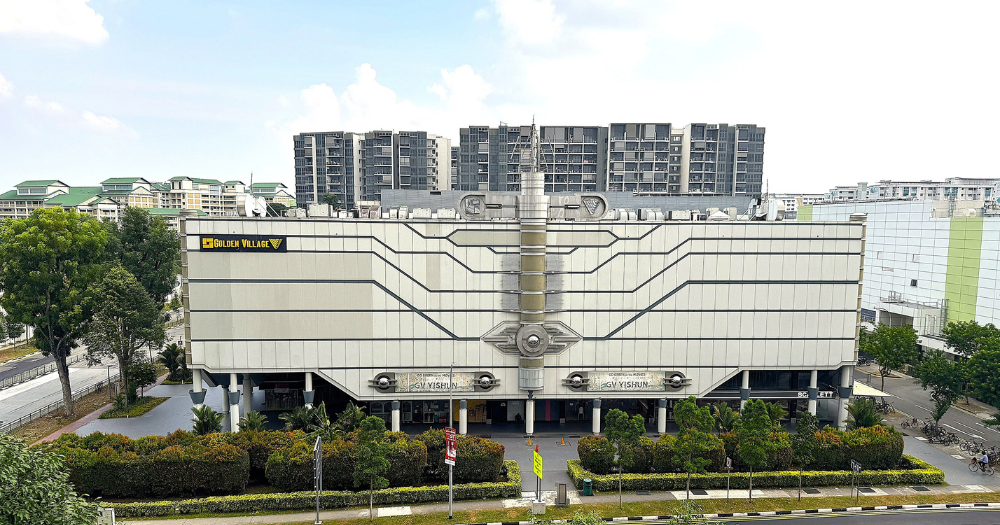
Yishun property has a branding problem that no marketing budget can fix. Type the town's name into any social media search and you will find decades of jokes, memes, and a widely repeated piece of folk wisdom that Yishun is where Singapore's strangest things happen. Yet the same town consistently ranks among the most affordable HDB resale markets on the island, sits on a direct North-South Line connection to Raffles Place, and is named in long-term national plans as part of a corridor meant to anchor Singapore's northern growth story.
Those two facts do not comfortably coexist. Either the stigma is overblown, or the market is mispricing something real. This article works through the data — resale price patterns, supply pipeline, MRT connectivity, amenity depth, and the North Coast Innovation Corridor — to figure out which one it is.
A note on figures: price ranges below are indicative, rounded from recently observed transactions and widely reported market data. They are meant to frame relative positioning, not to substitute for live caveats. Always verify against the latest HDB and URA datasets before committing capital.
The Yishun Paradox: A Town Singapore Loves to Mock and Keeps Buying
Yishun is one of Singapore's larger HDB towns, home to well over 60,000 flats and roughly 200,000 residents across neighbourhoods that range from 1980s walk-ups to recently completed BTO blocks. It is also, by any structural measure, a well-equipped town: an MRT interchange on the North-South Line, an integrated bus interchange, one of the largest suburban malls in Singapore, a nationally recognised hospital, a reservoir, and a park network that few towns can match.
So why the reputation? The short answer is that the stigma is a media artefact, not a statistical one. The longer answer is more interesting, because that same artefact may be doing something useful for buyers — suppressing prices in a location that structurally deserves better.
A short history of Yishun's development arc
Yishun's modern form took shape from the late 1970s, when the Housing & Development Board began developing the area as a new town. The name honours Lim Nee Soon, a rubber and pineapple magnate whose plantations once covered this part of Singapore — a detail worth remembering, because Yishun has been an economic engine before.
The town's fortunes tracked the North-South Line. When Yishun MRT station opened in 1988, the town shifted from a peripheral estate to a commuter town with a direct CBD connection. In the 2010s, Yishun was named in HDB's Remaking Our Heartland programme, which brought estate-wide upgrading, and Northpoint City expanded into an integrated development that consolidated retail, transport and community functions into a single node.
Then came Canberra MRT station in 2019, effectively giving the town a second rail access point for its northern estates, and the North Coast Innovation Corridor entered national long-term planning.
That is a town that has been systematically invested in for four decades. It does not read like the profile of a distressed location.
Where the Stigma Comes From — and What the Crime Data Actually Shows
The "unlucky Yishun" narrative is a case study in how perception forms. Beginning in the mid-2010s, a run of unusual, highly shareable incidents in the town — some tragic, some merely odd — was aggregated by social media into a genre. Once a genre exists, every subsequent incident gets filed into it, while identical incidents elsewhere pass unnoticed.
This is the availability heuristic in its purest form: events that are easy to recall feel more frequent than they are.
What the official statistics suggest
Singapore Police Force crime data has not identified Yishun as a crime hotspot. In per-capita terms, the town's recorded crime rates have generally been comparable to, or lower than, those of several larger and more centrally located towns. The perception and the data simply point in different directions — and they have done so for years.
There are three structural reasons the perception persists:
- Volume bias. Yishun is a large town. More residents means more absolute incidents, even at an identical per-capita rate. Smaller towns look safer purely because they are smaller.
- Narrative momentum. Once a place acquires a reputation, media coverage self-selects. Reporters do not write "another quiet week in Yishun."
- Aesthetic mismatch. Yishun contains a mix of older 1980s blocks and newer high-density developments, plus a hospital and a reservoir-adjacent industrial fringe. It is not uniformly manicured, and visual unevenness reads as disorder to buyers used to newer towns.
The market consequence: a persistent discount
The important question for a property buyer is not whether the stigma is fair. It is whether the stigma is priced in — and whether that pricing is likely to persist.
Yishun's resale flats have consistently transacted below the national median for equivalent flat types. That gap has narrowed during hot market cycles, when buyers chase affordability, and widened during softer cycles, when buyers can afford to be choosy. In other words: the discount behaves like a risk premium, not like a structural defect.
Risk premiums can compress. Structural defects do not.
Yishun HDB Resale Price Analysis: What You Actually Pay
Here is where the Yishun value proposition becomes concrete. Across every flat type, Yishun transacts at or below the equivalent national median — sometimes materially below.
The table below sets out indicative ranges for the town, based on recently observed transactions.
| Flat Type | Indicative Yishun Resale Range | Typical Remaining Lease | Notes |
|---|---|---|---|
| 2-Room Flexi | ~$250,000 – $330,000 | 60+ years | Mostly newer BTO stock |
| 3-Room | ~$380,000 – $430,000 | 55 – 70 years | 1980s blocks dominate |
| 4-Room | ~$490,000 – $570,000 | 50 – 70 years | The town's volume segment |
| 5-Room | ~$590,000 – $680,000 | 50 – 70 years | Wider spread by location |
| Executive | ~$680,000 – $780,000 | 50 – 65 years | Scarcer supply |
Indicative Yishun HDB Resale Prices by Flat Type (S$)
The critical observation is the 4-room segment. At roughly $490,000 to $570,000, a Yishun 4-room flat sits meaningfully below what the same flat type commands in Bishan, Toa Payoh, Queenstown or even parts of Ang Mo Kio. For a couple with a combined income in the $7,000 to $10,000 range, that difference is the gap between stretching and comfortable.
The national backdrop
Yishun's discount has not protected it from national price momentum. HDB resale prices across Singapore rose sharply through the early 2020s, cooled in 2023, then accelerated again in 2024.
HDB Resale Price Index: Year-on-Year Change (%)
Two implications follow. First, Yishun's affordability advantage has been shrinking in absolute dollar terms even as it persists in percentage terms — a $60,000 gap in 2019 is a $90,000 gap today, which sounds worse but is actually just proportional growth. Second, a town that is still the "cheap option" in a market that has run for five straight years is a town where first-timers still have a realistic path to ownership.
Million-dollar flats in Yishun?
Yes, they exist — in small numbers and mostly in the town's Design, Build and Sell Scheme (DBSS) projects, which were built to a higher specification than standard BTO flats. Adora Green and Yishun Sapphire have both reportedly seen transactions approaching or crossing the million-dollar mark for larger units.
That matters less for what it says about Yishun and more for what it says about DBSS as a category:
- DBSS flats occupy an awkward middle. They carry condominium-style finishes but HDB rules, so they appeal to a narrow band of buyers — which is precisely why the segment is so thin.
- They are a leading indicator. When million-dollar transactions appear in a town previously absent from that list, it signals that the buyer pool's ceiling has moved.
- They are not the norm. A handful of outlier transactions should not be mistaken for a town-wide pricing shift.
The lease decay question
This is the most under-discussed risk in the Yishun resale conversation. A substantial share of Yishun's flat stock was built in the 1980s. A flat completed in 1985 is now past 40 years old, with roughly 50 to 55 years of lease remaining.
Buyers should think carefully about:
- CPF usage restrictions. Older flats with shorter remaining leases face limits on how much CPF ordinary account savings can be used.
- Loan tenure constraints. Banks and HDB both tighten loan terms as remaining lease shortens.
- Exit liquidity. A 30-year-old buyer purchasing a 45-year-remaining lease flat will be selling a 25-year-remaining lease flat to a future buyer facing the same restrictions. That is a real constraint on the buyer pool.
The flip side is that short-lease flats are cheaper, and plenty of buyers — particularly older Singaporeans or those prioritising location over legacy — are perfectly well-served by them.
MRT Connectivity and the North Coast Innovation Corridor
If Yishun's reputation is its weakness, its connectivity is its counter-argument.
Yishun MRT station on the North-South Line provides a direct, transfer-free ride to the CBD core. Approximate travel times:
Approximate MRT Travel Time from Yishun Station (minutes)
That is a genuinely competitive commute. Towns further west or east routinely require 45 minutes or more to reach Raffles Place. Yishun does it in roughly 34 minutes on a single line, with no interchange at peak hour — an underrated quality-of-life factor.
Add to that:
- Yishun Bus Interchange, integrated directly into Northpoint City.
- Canberra MRT station, opened in 2019, giving the town's northern estates a second rail option.
- The North-South Line's northbound reach, connecting Yishun to Woodlands in under 10 minutes — relevant given the Woodlands Regional Centre and the Johor Bahru–Singapore Rapid Transit System Link, which will reshape the northern employment map.
The North Coast Innovation Corridor
This is the single most important long-term catalyst for Yishun, and also the one most likely to be misunderstood.
The North Coast Innovation Corridor is a long-range planning concept that ties together the northern waterfront and its hinterland into an integrated economic and lifestyle belt. Its anchor nodes span from the west to the east of Singapore's north.
Yishun sits in the middle of that chain. The logic is straightforward: a corridor of this kind needs a residential and amenity heartland to serve the employment nodes on either end. Woodlands provides the cross-border commercial gateway; Seletar Aerospace and Punggol Digital District provide high-value industrial and technology employment; Yishun provides the housing, hospital, retail and parkland that makes the whole thing liveable.
Two caveats matter here, and honest analysis requires stating them clearly:
- Timelines are long. Corridor concepts of this scale operate on 20-to-30-year horizons. Buyers expecting a five-year re-rating should recalibrate.
- The benefits are diffuse. Unlike a single new MRT station, a corridor does not produce a sharp, datable price step-change. It improves the fundamentals gradually.
But it also does something subtler: it changes the conversation. A town positioned inside a national growth corridor is harder to dismiss as a punchline.
Amenities: Yishun Is Not Amenity-Poor
The stigma narrative relies on buyers not looking too closely at what is actually in the town. When you do, the picture is unusually strong for a non-mature estate on the city fringe.
Retail and daily needs
- Northpoint City is one of the largest suburban malls in Singapore, with several hundred retail units, an integrated library, a community hub, and direct connection to both the MRT station and bus interchange.
- Chong Pang City provides the wet-market and hawker side of the equation — the kind of everyday infrastructure that newer towns take years to build up.
- Neighbourhood centres distributed across Yishun's various estates mean most residents are within a short walk of groceries and food.
Healthcare
- Khoo Teck Puat Hospital is one of Singapore's most highly regarded acute hospitals, notable for its biophilic design and integrated garden setting.
- Yishun Community Hospital sits alongside it, providing step-down and rehabilitation care.
- Together they form the Yishun Health Campus — a genuine employment anchor for the town, and a source of rental demand.
Green and blue space
This is where Yishun quietly outperforms most of Singapore:
- Lower Seletar Reservoir Park offers waterfront jogging, fishing and one of the better sunset views in the north.
- Yishun Park and Yishun Town Garden sit within the estate itself.
- Yishun Dam and the adjacent coastline provide open views that are rare in a dense city.
- Khatib Bongsu and Springleaf Nature Park are within reach for nature-focused residents.
A flat with a reservoir or park view in Yishun costs a fraction of the equivalent view in a central location. That is a real, tangible amenity advantage that the stigma obscures.
Schools
Yishun has a solid school network spanning primary, secondary and pre-university levels, including Yishun Innova Junior College. For families, the combination of school access, hospital access, parkland and mall access within one town is a package that many higher-priced towns do not fully replicate.
The BTO Pipeline: What's Coming to Yishun
Yishun has been an active BTO town throughout the 2020s, with multiple launches across different neighbourhoods. Recent and ongoing supply has included a mix of 2-room Flexi, 3-room, 4-room and 5-room units in estate clusters such as Yishun Greenwalk, Yishun Oleander Breezes and neighbouring developments.
For buyers navigating this, the trade-offs are well-worn but worth restating:
| Dimension | BTO / SBF | HDB Resale | Private Condo / EC |
|---|---|---|---|
| Upfront cost | Lowest | Moderate | Highest |
| Wait time | 3–5 years typical | 3–4 months | Immediate to 3 years |
| Grant eligibility | Highest tier | Tiered | EC only, income-capped |
| Location choice | Allocation-dependent | Full choice | Full choice |
| Exit liquidity | MOP 5 years | MOP 5 years | MOP 5 years (EC) |
The supply question
Yishun's ongoing BTO pipeline is a double-edged sword.
The bullish read: continuous new supply keeps the town vibrant, renews the demographic profile, brings fresh amenities, and prevents the estate from ageing into stagnation.
The bearish read: heavy BTO supply absorbs first-timer demand that might otherwise flow into the resale market. When a buyer can get a brand-new 4-room flat in Yishun at a subsidised price, why pay more for a 40-year-old resale unit down the road?
The answer, for many buyers, is time. A 4-room resale flat in Yishun at roughly $530,000 might cost more than an equivalent BTO, but it is available now. Time has a price, and for buyers facing a wedding, a school enrolment or a job relocation, that price is often worth paying.
New Condo and EC Projects in Yishun: The Private Market Story
Yishun's private residential segment is small but telling. The town has a limited number of condominium developments, mostly clustered around the Yishun Avenue 1 reservoir-adjacent strip and the Yishun Avenue 9 corridor.
Notable projects include:
- The Estuary — a reservoir-fronting development that remains one of the town's most recognisable private addresses.
- Nine Residences and Symphony Suites — both in the Yishun Avenue 9 cluster, benefiting from proximity to Northpoint City and the MRT.
- Skies Miltonia — a lower-density development near the Miltonia Close area.
- The Criterion — a mid-2010s project that helped establish the town's private market credibility.
- North Gaia — an Executive Condominium that brought EC pricing into Yishun, expanding the buyer pool beyond HDB upgraders.
- The Wisteria — a more recent launch that has reset the town's private price ceiling.
Indicative Resale PSF: Yishun Condos vs OCR New Launches (S$ psf)
The gap in that chart is the headline. Yishun's private resale stock transacts well below the Outside Central Region new-launch average, in some cases by $700 to $900 per square foot. For a 900-square-foot unit, that is a difference of roughly $600,000 to $800,000 versus a fresh OCR launch.
Some of that gap is legitimate:
- Age. Older condos carry depreciation and maintenance liability.
- Design. Newer projects offer better layouts, smarter space planning and more facilities.
- Location premium. OCR new launches cluster around growth nodes with stronger rental stories.
But not all of it is. A meaningful portion of the gap reflects the Yishun name.
The rental angle
Yishun's rental case rests on three demand sources: the Yishun Health Campus, the northern industrial and aerospace cluster, and Woodlands-bound cross-border workers who find Woodlands rents too high.
Lower entry prices combined with steady rental demand can produce gross yields that compare favourably with more fashionable districts. A unit bought at a lower PSF simply needs less rent to hit the same yield. This is basic arithmetic, and it is the strongest quantitative argument for Yishun as an investment location.
The counter-argument is capital appreciation. A higher-yielding asset that appreciates slowly can underperform a lower-yielding asset that appreciates quickly. Yishun buyers are, in effect, making a bet that yield plus gradual corridor-driven re-rating will beat headline appreciation elsewhere. That bet is defensible — but it is a bet.
Buyer Profiles: Who Should Actually Look at Yishun?
Yishun is not universally right. It is specifically right for certain buyers.
Yishun makes sense if you are:
- A first-timer with a combined income under $10,000, wanting a 4-room flat without financial strain
- A buyer who values a genuinely fast, direct MRT commute to the CBD
- An investor prioritising gross rental yield over short-term capital gains
- A household that values parkland, reservoir access and hospital proximity
- Someone with a 10-to-20-year horizon who believes northern Singapore will continue to develop
Yishun makes less sense if you are:
- Chasing maximum capital appreciation over a 3-to-5-year horizon
- Buying a flat with under 50 years of remaining lease, without a clear exit plan
- Relying on the stigma disappearing quickly — reputation shifts take a generation
- Sensitive to social perception in a way that will affect your own enjoyment of the home
That last point is not trivial. A home is a place to live, not just an asset. If the jokes will bother you at every gathering, no spreadsheet will fix that.
Risks to Watch
Being balanced requires naming what could go wrong.
- Lease decay on older stock. The 1980s cohort will keep losing lease, and the buyer pool for shorter leases will shrink over time.
- Supply pressure from BTOs. Continued heavy pipeline will cap resale upside in the near term.
- Corridor timeline risk. The North Coast Innovation Corridor is a multi-decade concept. Political or economic shifts could slow it.
- Stigma persistence. Reputational shifts are slow and non-linear.
- Interest rate sensitivity. Like all suburban markets, Yishun's price levels are sensitive to financing costs.
- CBD-centric employment assumptions. If hybrid work continues to reduce the value of a fast CBD commute, part of Yishun's connectivity premium erodes.
None of these are fatal. All of them are real.
Food for Thought
1. If the stigma were removed tomorrow, what would Yishun flats be worth? The town has the MRT line, the mall, the hospital, the reservoir and the parkland. Subtract the name and you have a proposition that looks remarkably similar to towns trading meaningfully higher. How much of the discount is irreducible, and how much is narrative?
2. Does the value buyer always win? Value strategies work when a discount closes. They fail when the discount turns out to be permanent. What specific, datable developments would tell you the Yishun discount is actually closing — and how would you know if it isn't?
3. Is a 50-year remaining lease a home or a liability? For an older buyer planning to age in place, a short-lease Yishun flat can be entirely rational. For a 30-year-old, the same flat is a countdown clock. Which buyer are you, honestly?
4. How much should you pay for a commute you'll take 500 times a year? A 34-minute direct ride to Raffles Place has real value that never shows up in a PSF table. If you saved $100,000 buying further out but added 30 minutes each way, what is your hourly rate on that trade?
5. When a corridor takes 25 years, who actually captures the value? Infrastructure-led growth rewards whoever holds the asset when the infrastructure arrives. Buy too early and you pay carrying costs for decades. Buy too late and you pay the premium. What is your evidence for being on the right side of that timing?
The Verdict
Yishun is not a hidden gem in the sense of being undiscovered. It is hidden in the sense of being mischaracterised — a well-connected, well-equipped, park-rich town where a decades-old reputation has created a persistent, quantifiable pricing discount.
That discount is not free money. It comes packaged with shorter leases on much of the stock, heavy BTO supply, a long corridor timeline, and the genuine risk that a reputation this sticky outlasts a single market cycle. Buyers who go in with clear eyes and a long horizon are buying a structurally sound town at a below-market price. Buyers who go in expecting a fast re-rating are buying a story.
The difference between those two buyers is not information. It is patience.