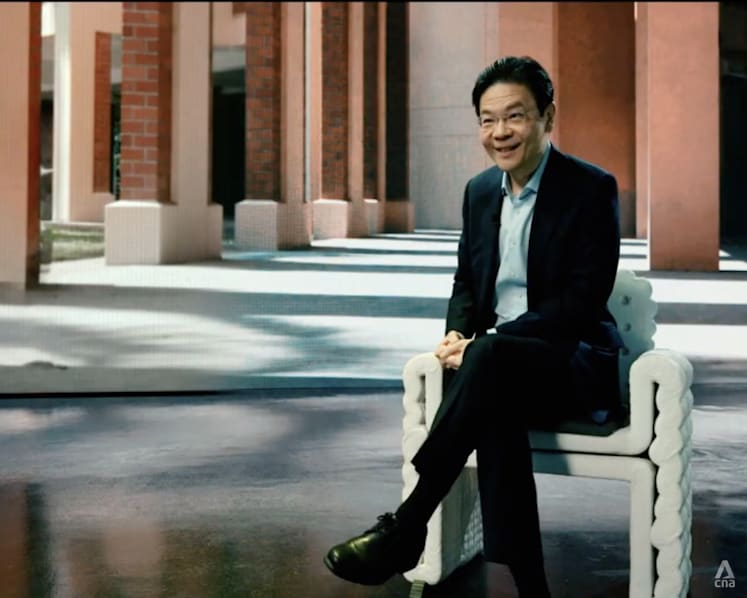
For most Singaporeans between 25 and 40, the housing question is not a thought experiment. It arrives as a ballot number, a fiancé, a five-year plan, and a spreadsheet with CPF balances in one column and renovation quotes in another. And since Lawrence Wong took over as Prime Minister on 15 May 2024, that question has been reshaped by a fairly deliberate set of policy choices: more supply, tighter guardrails around the most desirable locations, a cooler stance on speculation, and a persistent rhetorical push that public housing is a home first and an asset second.
So what does Lawrence Wong's housing agenda actually mean for young Singaporean buyers — the first-timers grinding through their third BTO ballot, the singles who were told for years to wait their turn, and the HDB owners quietly calculating when to jump to a condominium?
This piece breaks down the four pillars of the agenda, the data behind them, and what they plausibly mean for your next move.
Why Housing Is the Defining Domestic Issue for the Wong Government
Housing has never been far from the centre of Singapore politics, but the Wong administration inherited a particularly charged version of it. The 2021–2023 period saw HDB resale prices climb sharply, rents spike, and BTO waiting times stretch out on the back of pandemic-era construction delays. Public anger about affordability and ballot luck became a live political issue.
Lawrence Wong is unusually well-positioned to speak to it. He served as Minister for National Development from 2015 to 2020 — the ministry that oversees HDB — before moving to Education and then Finance. He has publicly framed public housing as a social good rather than a profit centre, and his government has consistently argued that BTO prices are set on affordability rather than being pegged to the resale market.
A few structural facts frame everything that follows:
- Roughly eight in ten Singapore residents live in HDB flats, and home ownership sits above 90% for resident households.
- About 80% of HDB flats are sold directly by HDB as new BTO units; the rest of the market is resale.
- The resale market is where price growth actually shows up, and it is where policy has been aimed most sharply.
- Housing affordability was one of the most heavily contested issues in the May 2025 General Election, which returned the PAP government with a strengthened mandate.
The result is an agenda with four recognisable pillars: supply, affordability architecture, price stability, and the rental/safety-net layer. Let's take them one at a time.
Pillar 1: Supply — The Great BTO Ramp-Up
If there is one lever the government controls directly, it is how many flats it builds. And the numbers moved dramatically.
Between 2021 and 2025, HDB committed to launching up to 100,000 BTO flats — a substantial step-up from the preceding five-year period. Based on HDB's launch announcements, the annual picture looks roughly like this:
Approximate BTO Flats Launched per Year
The peak came in 2022 and 2023, when HDB pushed out more than 23,000 flats a year — the highest annual volumes in years. The 2024 and 2025 numbers look lower on paper, but that is partly by design: HDB has been calibrating launches against actual demand rather than simply maximising headline numbers.
Shorter Waiting Times
Supply volume is only half the story. A flat you can only move into in 2027 is not much use if you need a home in 2024. So HDB has been steadily increasing the share of Shorter Waiting Time (SWT) flats — BTO units with waiting times of roughly two to three years, typically because they are built on sites already prepared or ahead of schedule.
For young couples, this matters more than most policy detail. The classic complaint — "we want to get married but we can't get a flat" — is fundamentally a timing problem, not just a price problem.
What Supply Actually Does to the Market
Here's the important nuance: BTO supply does not directly lower resale prices. It competes with the resale market at the margin, absorbing first-timer demand that would otherwise spill over into resale flats. The effect is indirect and slow — it takes several years of sustained launches before the pressure eases visibly.
But there's a second, subtler effect. When BTO ballot odds improve, fewer first-timers panic-buy a resale flat at an inflated price. That psychological relief valve is arguably as valuable as the physical units.
Bottom line for first-timers: if you can wait, the pipeline has never looked better in recent memory. If you cannot wait, the resale market is the answer — and we'll get to the grants that help with that.
Pillar 2: Affordability — Standard, Plus, Prime and the New Rules of the Game
The single biggest structural change under this government is the Standard / Plus / Prime classification framework, announced at the 2023 National Day Rally and applied from the October 2024 BTO exercise onward.
The old system divided Singapore into "mature" and "non-mature" estates. That created a peculiar dynamic: flats in mature estates were scarce, oversubscribed, and increasingly valuable on resale, funnelling a windfall to whoever won the ballot. The new framework tackles that directly by attaching conditions based on location quality rather than simply estate maturity.
Here's the comparison in table form:
| Feature | Standard | Plus | Prime |
|---|---|---|---|
| Location | Rest of Singapore | Near MRT stations / town centres | City centre, Greater Southern Waterfront |
| Minimum Occupation Period | 5 years | 10 years | 10 years |
| Subsidy clawback on first resale | No | Yes | Yes |
| Rent out whole flat | Yes, after MOP, subject to approval | No | No |
| Own private property during MOP | No | No | No |
| Private property in preceding 30 months | Allowed | Not allowed | Not allowed |
| Household income ceiling | $14,000 | $14,000 | $14,000 |
The Logic Behind the Clawback
The subsidy clawback is the mechanism that does the heavy lifting. If you buy a Prime flat at a subsidised price and sell it years later, you return a portion of the windfall to HDB. The exact percentage is applied to the resale price, and it is calculated at the point of sale.
Critically, the clawback is not a penalty on you — it is a penalty on the arbitrage. It means the flat's capital appreciation accrues partly to the state, which can recycle it into the next generation of subsidised housing. It also means the playing field between Standard and Prime flats narrows considerably over a full ownership cycle.
The Singles Change
One of the most consequential shifts for younger Singaporeans: from the October 2024 BTO exercise, eligible singles aged 35 and above can apply for 2-room Flexi BTO flats in any location — including Plus and Prime projects. Previously, singles were largely confined to non-mature estates for new flats.
For a large cohort of Singaporeans who are not married and not planning to be, this is the most tangible housing reform in years. It doesn't solve the entire problem — 2-room Flexi supply remains limited, and singles' grants are lower than families' — but it materially widens the map.
Income Ceilings and Grants
The eligibility scaffolding around all of this matters just as much as the classification:
- BTO household income ceiling: $14,000 for families; $21,000 for multi-generation family applications.
- Executive Condominium income ceiling: $16,000, which widens the pool of buyers who can consider an EC as a step up from HDB.
- Enhanced CPF Housing Grant (EHG): up to $80,000 for eligible first-timer families and up to $40,000 for singles, means-tested on income.
- CPF Housing Grant for resale flats: up to $50,000 for families buying a 4-room or smaller resale flat, and up to $40,000 for 5-room or larger.
- Proximity Housing Grant: up to $30,000 for families buying a resale flat to live with or near their parents or child.
- Step-Up CPF Housing Grant: $15,000 for first-timer families buying a 2-room Flexi or 3-room resale flat in a non-mature estate.
Maximum First-Timer Housing Grants, S$
Grants are stackable in many combinations, and eligibility is income-tested. A couple earning $5,000 a month buying a resale flat near their parents can tap a very different package from a couple earning $13,000 buying a Prime BTO. Always model your specific case — the variation between households is enormous.
Pillar 3: Price Stability — Cooling Measures and the Market Signal
Supply and grants address affordability at the entry point. But the government has been equally active on the demand side, and the cumulative effect of the last few years of cooling measures is significant.
The ABSD Regime
The April 2023 round of Additional Buyer's Stamp Duty was the sharpest in Singapore's history, and it remains the backbone of the current demand-management posture:
| Buyer profile | 1st property | 2nd property | 3rd and subsequent |
|---|---|---|---|
| Singapore Citizen | 0% | 20% | 30% |
| Permanent Resident | 5% | 30% | 35% |
| Foreigner | 60% | 60% | 60% |
| Entity / Trust | 65% | 65% | 65% |
The message is unambiguous: owner-occupation is encouraged; investment accumulation is not. For a young Singaporean couple buying their first home, ABSD is essentially irrelevant. For an HDB upgrader buying a second property while keeping the first, it is a heavy tax — and that is precisely the point.
Borrowing Rules
On top of stamp duties, the borrowing framework has been tightened incrementally:
- Total Debt Servicing Ratio (TDSR): 55% of gross monthly income across all debts.
- Mortgage Servicing Ratio (MSR): 30% of gross monthly income, applying specifically to HDB flats and new ECs.
- Medium-term interest rate floor of 4% used for TDSR and MSR computation, regardless of the actual loan rate you're quoted.
- Loan-to-Value limits: 75% for HDB concessionary loans and for first bank housing loans — the HDB loan LTV was lowered from 80% to 75% in August 2024.
- HDB concessionary loan rate: 2.6% per annum, pegged at 0.1 percentage points above the CPF Ordinary Account rate.
The MSR is the constraint that catches most young upgraders by surprise. Because it caps housing instalments at 30% of gross income for HDB and new EC purchases, a couple's maximum HDB loan can be meaningfully smaller than what a bank would otherwise extend.
What the Resale Market Actually Did
Despite all of this, the resale market did not go quietly. HDB's Resale Price Index shows the following annual changes:
HDB Resale Price Index: Annual Change (%)
Read that carefully. Price growth moderated sharply in 2023 to around 5%, consistent with the cooling measures and the surge in BTO supply — then re-accelerated in 2024 to roughly 9.7%, according to HDB's flash estimates.
That re-acceleration is the key tension in the Wong government's housing agenda. It suggests that measures designed to suppress speculative demand work, but they cannot fully offset the fundamental forces: household formation, immigration, delayed construction, and the sheer depth of Singaporean savings.
It also explains why policymakers keep returning to supply. You cannot tax your way out of a shortage.
Pillar 4: The Rental Market and the Wider Safety Net
Rental policy rarely makes headlines, but it matters enormously to young Singaporeans — for those who aren't ready to buy, for those between flats, and for the lower-income households who rely on public rental housing.
Public Rental Housing
HDB's public rental flats serve households with no other housing options. The government has been expanding and upgrading this stock, alongside the Fresh Start Housing Scheme, which helps second-timer families with children living in rental flats buy a 2-room Flexi flat with additional grants and a shorter MOP.
The direction of travel is clear: rental housing is being positioned as a temporary bridge, not a destination.
Rules That Affect Private Renters and Landlords
Recent adjustments have also reshaped the private rental market:
- Maximum occupancy for rented private homes and larger HDB flats was raised from 6 to 8 persons from 1 January 2024, easing pressure on larger households and co-living arrangements.
- The minimum rental period for private residential properties was shortened from 6 months to 3 months, a change that formalised what many young professionals were already doing — short-term leases during transitions.
- For HDB flats, whole-flat rental after MOP remains subject to HDB approval and the Non-Citizen Quota, which caps the proportion of flats that can be rented to non-citizens in each block or neighbourhood.
Plus and Prime: A Structural Rental Restriction
The most significant rental change is embedded in the new classification. Plus and Prime flats cannot be rented out in their entirety — at any point, including after MOP. Owners may rent out individual rooms with approval, but the flat itself must remain owner-occupied.
This is a deliberate design choice. It removes one of the primary motivations for buying a well-located BTO flat as a rental yield play, and reinforces the idea that these units exist to be lived in.
What This Means for First-Time Buyers
Pulling the strands together, here's how a young Singaporean buyer should read the current environment.
The Case for BTO
- Supply is at a multi-year high, improving ballot odds relative to 2021–2022.
- Shorter Waiting Time flats offer a genuine 2–3 year path for couples who can't wait five years.
- Grants are substantial and can cover a meaningful portion of the purchase price for lower- and middle-income households.
- Singles aged 35+ now have islandwide access to 2-room Flexi BTO flats — a real expansion of options.
- The trade-off: a longer MOP, and for Plus/Prime units, a subsidy clawback that reduces your eventual upside.
The Case for Resale
- Immediate occupancy, which matters if your timeline is driven by marriage, children or work.
- Higher grants for resale (up to $50,000 for families) plus the Proximity Housing Grant if you want to live near your parents.
- You choose the location, floor, facing and condition — no ballot lottery.
- The trade-off: you are buying into a market where prices rose roughly 9.7% in 2024, and you will pay the seller's asking price, not a subsidised one.
What This Means for Upgraders
If you already own an HDB flat and are thinking about the next rung, the calculus has changed in several ways.
The HDB-to-Condo Ladder
The classic Singaporean wealth ladder — BTO, then upgrade to a private condominium after MOP — is still viable, but it is more expensive to climb than it was a decade ago:
- ABSD of 20% applies if you buy the condo before selling your HDB flat. That single rule forces most upgraders into a sell-first-then-buy sequence, which means temporary accommodation and timing risk.
- TDSR at 55% and the 4% interest rate floor limit how much banks will lend you.
- HDB loan LTV at 75% means a larger cash and CPF outlay.
- Condominium prices in the Outside Central Region have risen sharply, narrowing the gap between HDB resale and entry-level condo pricing.
The Private-to-HDB Downgrade Path
For those moving in the other direction — typically older owners rightsizing — there is a 15-month wait-out period before private property owners can buy a resale HDB flat. The rule was introduced in September 2022 to prevent downgraders from bidding up resale flats with proceeds from private property sales. Since August 2023, those aged 55 and above buying a 4-room or smaller resale flat have been exempted, which meaningfully eases the path for retirees.
The New MOP Reality
The 10-year MOP on Plus and Prime flats is a genuine commitment. If you buy a Prime flat at 35, you cannot sell it on the open market until you are 45 and cannot rent it out at all. That is a life-stage assumption baked into the purchase — and for buyers who expect to relocate, upsize, or work overseas, Standard flats retain real flexibility advantages.
The Risks and the Open Questions
No housing agenda is without friction. Three issues stand out.
First, supply is not infinitely elastic. HDB is constrained by land, construction capacity and labour. The 2021–2025 pipeline was ambitious, and sustaining anything close to it beyond 2025 will be harder.
Second, the resale re-acceleration of 2024 shows the limits of demand-side cooling. If resale prices keep rising faster than incomes, the affordability gap widens regardless of how many BTO flats are launched.
Third, the Plus/Prime framework creates a two-tier market. Standard flats retain full resale flexibility; Plus and Prime flats come with clawbacks and rental restrictions. Whether buyers price that difference correctly is an open question. Early indications suggest Plus and Prime projects are still heavily oversubscribed, which implies buyers are valuing the location far above the restrictions.
Food for Thought
-
If subsidy clawbacks capture the bulk of capital appreciation on Prime flats, does the "lottery" advantage of a prime location actually disappear — or does it just shift from the owner to the state?
-
With a 10-year MOP on Prime and Plus flats, are we quietly creating a new class of owner who is effectively locked out of the upgrade ladder until their late forties? What does that do to retirement adequacy?
-
If BTO supply is the primary affordability lever, what happens to prices when the construction pipeline eventually normalises — and will demand have been permanently reshaped by then?
-
Singles aged 35+ can now buy 2-room Flexi BTO flats islandwide, but their grants remain roughly half of what families receive. Is that a fair reflection of housing need, or a policy lag?
-
The 2024 resale price index rose roughly 9.7% even with ABSD at 60% for foreigners, TDSR at 55% and record BTO supply. What does that tell us about which forces actually drive Singapore's housing market?
The Bigger Picture
Lawrence Wong's housing agenda is best understood not as a single policy but as a deliberate rebalancing. Supply has been expanded aggressively. The most desirable locations now come with conditions attached. Investment demand has been taxed heavily. Rental rules have been adjusted to reflect how people actually live. And singles have been brought further into the fold.
For a young Singaporean buyer, that translates into a market with more options, more complexity, and more conditions. The days of a straightforward "get a BTO, wait five years, sell for a profit" playbook are fading. What replaces it is a set of trade-offs — location versus flexibility, speed versus subsidy, affordability versus upside — that require actual analysis rather than instinct.