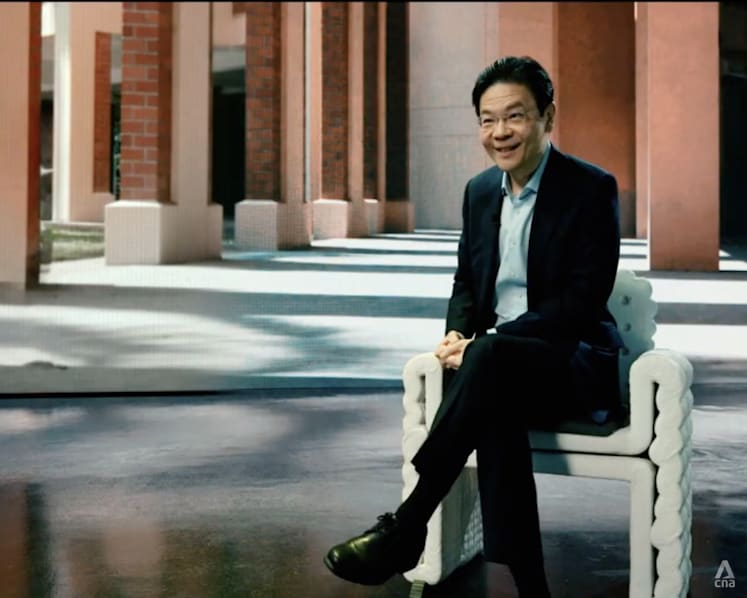
On 15 May 2024, Lawrence Wong was sworn in as Singapore's fourth Prime Minister. Within months, the direction of public housing in Singapore became one of the clearest signals of how his government intends to govern — through supply, through reclassification, and through a deliberate attempt to take some of the lottery out of the HDB flat.
Housing in Singapore is not a niche policy file. Roughly eight in ten resident households live in an HDB flat, and the flat is typically the single largest asset a Singaporean family will ever own. It doubles as a retirement nest egg, a marriage prerequisite in the eyes of many, and a proxy for social mobility. When prices move, so does the national mood.
That is why the Lawrence Wong housing agenda matters beyond the property section of the newspaper. This article looks at what his government has actually done — the BTO pipeline, the new flat classification framework, the rental market, estate renewal, and the unanswered questions analysts are still chewing on.
Housing Is the Test of the Wong Era
There is a detail about Lawrence Wong that rarely makes the headlines but is central to understanding his housing policy: he ran the Ministry of National Development from 2015 to 2020, before moving to Education and then Finance.
That tenure matters. It covered:
- The September 2019 income ceiling revisions, which raised the ceiling for BTO flats to S$14,000 a month and for executive condominiums to S$16,000, expanding the pool of eligible buyers.
- The introduction of the Enhanced CPF Housing Grant, which replaced earlier grant schemes and consolidated support into a single, income-tested grant.
- The Fresh Start Housing Scheme, aimed at second-timer families with children living in public rental flats, offering a shorter-lease flat with a fresh start.
- The ramp-up of BTO supply that began after the last property cycle heated up.
He also co-chaired the multi-ministry COVID-19 taskforce, which meant he lived through the construction crunch that pushed BTO waiting times to five and six years, and the accompanying public frustration.
Then, as Deputy Prime Minister, he led the Forward Singapore engagement exercise, whose report published in late 2023 committed the government to keeping flats affordable and accessible across income groups — an explicit acknowledgement that housing sits at the heart of the social compact.
So when Wong became Prime Minister, the housing brief was not new to him. What changed was the ability to set the terms.
The Supply Ledger: BTO Supply Under the Wong Government
The foundational promise of this era is a supply commitment: up to 100,000 BTO flats launched across the five years from 2021 to 2025.
That is a roughly 20,000-flat-a-year run rate, well above the historical norm. The government has reported being on track against that target, and by early 2025 it said the large majority of the 100,000 had already been launched.
The scale is deliberate. The logic, repeated by HDB and by housing economists, is straightforward: in a market where demand is structurally supported by grants, CPF, and household formation, the only durable way to moderate resale prices is to keep adding new supply — and to add it faster than demand grows.
Alongside supply, the government has been grinding away at waiting times. After COVID-era delays pushed some projects toward five or six years, HDB has rebuilt its construction pipeline and most recent launches carry wait times in the region of three to four years, with a growing share of projects at or under three years.
Where supply has been slower to respond is in land. BTO numbers are ultimately a function of how much land the state can prepare, and preparing it — clearing, reclamation, infrastructure, MRT access — takes years. That lag is the reason the 2021–2025 commitment was framed as a target rather than a guarantee.
It is also worth being clear about what this supply push did not do. As the chart below shows, the resale price index still moved sharply in most of those years.
HDB Resale Price Index: Annual Change (%)
The pattern is instructive. Prices surged in 2021 and 2022 as construction stalled and demand accumulated. They cooled in 2023 as loan limits tightened and buyers hesitated. Then they accelerated again in 2024 — up 9.7%, the strongest annual gain since 2021 — even as BTO launches continued at record pace.
That is the central tension of the current housing market: supply is historically high, and prices are still rising.
Standard, Plus, Prime: How Singapore Public Housing Is Now Tiered
The most consequential structural change of the Wong administration so far came at the National Day Rally in August 2024: the replacement of the old mature/non-mature estate framing with a three-tier classification of new flats — Standard, Plus and Prime.
The framework took effect with the October 2024 BTO launch, and it changes the deal attached to a flat depending on where it sits.
The differences are not cosmetic.
| Feature | Standard | Plus | Prime |
|---|---|---|---|
| Location | Across Singapore | Near MRT stations, town centres and amenities, but outside the central area | Central locations close to the city |
| Minimum occupation period | 5 years | 10 years | 10 years |
| Subsidy recovery on resale | None | Yes — 6% of the higher of resale price or valuation | Yes — 9% of the higher of resale price or valuation |
| Whole-flat rental | Permitted after MOP | Not permitted | Not permitted |
| Resale buyer conditions | Open to eligible buyers | Buyer eligibility conditions apply | Buyer eligibility conditions apply |
Figures as set out by HDB when the framework was announced.
The intent is to solve a specific problem that had become politically awkward: the lottery effect. When a heavily subsidised flat in a desirable location can be resold five years later at a large profit, the state is effectively transferring a windfall to whoever happened to win a ballot. The 10-year MOP and the subsidy clawback are designed to return some of that subsidy to the public purse.
The same National Day Rally speech also widened access in a way that had been lobbied for over years:
- Singles aged 35 and above can now apply for 2-room Flexi BTO flats in any location, not just in non-mature estates. Previously, their choices were geographically restricted.
- The Enhanced CPF Housing Grant was raised to up to S$120,000 for first-timer families and up to S$60,000 for singles.
- More emphasis was placed on shorter waiting times as a stated policy objective, not just an outcome.
Maximum Enhanced CPF Housing Grant for First-Timer Buyers (S$)
The grants are income-tested, so the maximum applies to the lowest-income households. But the direction of travel is unambiguous: more subsidy, more conditions, longer lock-in.
The Buyer's Journey, From Ballot to Keys
For anyone actually in the market, the policy language matters less than the sequence of steps between applying and getting a key. Under the current system that journey looks roughly like this.
A few practical implications sit inside that flow:
- The ballot is still the gatekeeper. Supply increases raise the odds, but in popular locations the application rate can still run many times the number of flats available. First-timer families get additional ballot chances, and the various priority schemes — married couples with children, families living with parents, and so on — tilt the queue.
- The downpayment and financing decision happens before you know your flat's final value. For a BTO, the price is fixed at booking, which is a genuine advantage over the resale market. But the loan quantum depends on income at the point of the HDB loan assessment, and HDB's Loan-to-Value limits are tighter than they once were.
- The MOP is the real lock-in. Five years is already a long time in the life of a young family. Ten years for a Plus or Prime flat is a substantially bigger commitment — and one that matters if a job relocation, a growing family, or a change in circumstances forces a rethink.
- The clawback applies whether or not you made money. The subsidy recovery is calculated on the higher of resale price or valuation, which means a Plus or Prime flat that appreciates hands a larger absolute sum back to HDB.
For buyers weighing options, the honest summary is that the new framework trades lower entry prices in better locations for reduced flexibility and lower resale upside. Whether that is a good deal depends almost entirely on how long you intend to stay.
The Rental Market: Public Housing's Other Half
Public housing policy is often discussed as if it begins and ends with ownership. It doesn't. Singapore runs two distinct rental markets that touch very different populations.
The public rental scheme
HDB's public rental flats are heavily subsidised and reserved for the lowest-income households, with rents far below open-market levels and eligibility tied to income and citizenship criteria. The policy conversation around this segment has shifted under the current government toward pathways out of rental housing rather than just support within it — the Fresh Start Housing Scheme being the clearest example, offering eligible families a shorter-lease flat they can eventually own.
There has also been sustained attention on the "rental flat to home ownership" pipeline: how quickly households can move from subsidised rental into a purchased flat, and what policy levers — grants, priority allocation, counselling — shorten that journey.
The open-market rental sector
The more visible market is the one where HDB owners rent out whole flats or spare bedrooms.
This sector ran hot from 2022 into 2023, when a combination of construction delays, returning expatriates and a tight private rental market pushed both rents and rental volumes up sharply. Since then, the picture has cooled. Multiple property agencies have reported easing median rents and thinner rental volumes through 2024 and into 2025, as a wave of completed BTO projects and new private homes added to the pool of available stock, while tenant demand normalised.
That cooling is meaningful for a specific group: the "accidental landlords" — households who bought a resale flat, served their MOP, and then moved in with family or relocated while renting out the flat. Falling rents and rising vacancy periods change the arithmetic on holding a flat purely as a rental asset.
For tenants, it is a better market than it was two years ago. For owners counting on rental income to service a mortgage, it is a reminder that rental yields in HDB flats are cyclical.
Estate Renewal and the Long Shadow of the 99-Year Lease
The hardest question in Singapore housing is not supply or subsidies. It is time.
The oldest HDB blocks are now around six decades old. Every year, more flats cross the threshold where their remaining lease starts to affect both resale value and financing — because CPF usage and bank loans on older flats become progressively more constrained as the lease shortens.
The government's response has been built on multiple layers of renewal rather than a single scheme.
- The Home Improvement Programme subsidises essential repairs inside the flat — spalling concrete, structural cracks, pipe replacement — with the government covering the bulk of the cost and residents voting on whether to proceed.
- HIP II extends similar works to blocks built between 1987 and 1997, bringing a much larger cohort of flats into the programme.
- The Neighbourhood Renewal Programme operates at precinct level: covered walkways, fitness corners, playgrounds, drop-off points and other shared amenities.
- The Selective En bloc Redevelopment Scheme redevelops selected precincts with high redevelopment value, compensating residents and rehousing them nearby. It is prized precisely because it is rare — SERS is applied selectively, not as an entitlement.
- The Voluntary Early Redevelopment Scheme, announced in 2018, remains the great unknown. The concept is that owners of flats approaching the end of their lease could vote to hand the block back early in exchange for rehousing, subject to government resources and the broader fiscal position. It has not been implemented.
More recently, MND has been signalling a broader push into neighbourhood-level renewal, with a Community Improvement Programme reported in 2025 that would extend upgrading works to older estates from 2026 onward. If it lands as described, it would sit alongside HIP and NRP as a third pillar of estate-level renewal — aimed at the shared spaces between blocks rather than the flats themselves.
The politics of lease decay are delicate. On one hand, the 99-year lease is a fixed contractual term and always has been. On the other, generations of Singaporeans bought flats on the implicit understanding that the state would not let their asset quietly decay into worthlessness. VERS, whenever it arrives, will be the government's attempt to square that circle without writing an open-ended blank cheque.
What the Data Says About Prices, Volume and Cooling
Two data series tell most of the story of the post-2020 market.
The first is the resale price index, already charted above. The second is the million-dollar flat, a category that barely existed a decade ago and is now a routine part of resale reporting.
HDB Flats Sold for S$1 Million or More, Approximate Annual Tallies
Approximate figures compiled from media tallies of resale transactions. Analysts note these represent a small fraction of total resale volume but a disproportionate share of headlines.
The shift from a few hundred to more than a thousand such transactions in a single year is striking. Three caveats matter, though:
- It is still a small share of the market. Total annual HDB resale volume runs in the tens of thousands. Million-dollar flats are an outlier category, concentrated in a handful of mature estates and in units with unusual attributes — high floors, unusual size, proximity to MRT interchanges, or recently renovated state.
- Absolute prices rise with the general price level. Some of the increase reflects broad inflation across the market rather than a sudden concentration of luxury demand.
- Records cluster where supply is scarce. The estates that generate the most eye-catching prices are typically those where new BTO supply is hardest to add, because the land is already built up.
Meanwhile, the cooling measures that have shaped this cycle remain in force. The Additional Buyer's Stamp Duty regime was tightened significantly in April 2023, with rates for foreigners raised to 60% and for Singaporeans' second properties raised to 20%. The Loan-to-Value limits for housing loans were reduced further in 2024, and HDB's own loan framework remains tighter than it was pre-2021.
The combined effect is a market that is expensive but not frothy in the way it was in 2021 and 2022. Transaction volumes have moderated, buyers are more cautious, and the sharpest price growth has come not from speculation but from genuine owner-occupier demand chasing a limited pool of well-located resale flats.
What Analysts Are Watching
A handful of themes recur consistently in commentary from property agencies, academics and market watchers. None of them have clean answers yet.
Does the Plus/Prime framework actually dampen the lottery effect? The clawback and the 10-year MOP reduce the windfall, but they also reduce the attractiveness of these flats relative to Standard flats in similar locations. If Plus and Prime projects see weaker subscription rates over time, that would suggest the trade-off is working as intended — or that the subsidy is no longer generous enough to justify the lock-in. It will take several more launch cycles to tell which.
Is supply keeping pace with household formation? Record BTO numbers are being absorbed relatively easily, which suggests underlying demand is stronger than headline supply figures imply. Analysts point to delayed marriages, rising singlehood, immigration, and the growing number of households formed by older Singaporeans living alone.
What happens when the first Plus and Prime flats hit resale? The earliest of these flats will only reach their 10-year MOP in the mid-2030s. Until then, the resale market for them is theoretical. Any pricing model for these flats rests on assumptions about buyer demand a decade out.
Will the rental market's softness persist? More completions mean more stock in the rental pool, but also more households moving out of rental and into ownership. Whether rents stabilise or continue to drift lower depends on which effect dominates.
How will lease decay be handled at scale? SERS covers a small number of precincts. HIP and NRP extend the physical life of buildings but do not extend the lease. VERS is the government's stated answer, and it has no implementation date. As more flats cross the 60-year mark, the pressure to formalise something will grow.
Is housing still a path to social mobility, or a source of inequality? This is the most politically loaded question of all. If a flat bought in the right estate at the right time generates more wealth than a decade of wages, the housing system is doing something other than providing shelter — and the government's clawback mechanisms are an attempt to answer exactly that.
Food for Thought
- If BTO supply has been running at record levels for five years, why are resale prices still climbing? Is the constraint really the number of flats, or the price of land, the cost of construction, and the expectations of sellers who bought in a rising market?
- Does the Standard/Plus/Prime framework remove the lottery — or simply redirect the winnings to the state? And if it does redirect them, is that a fair trade for a buyer who gives up ten years of flexibility?
- What is a 99-year lease actually worth in year 60? If the answer is "much less than owners assumed", does the social compact that made HDB flats both homes and retirement assets need to be rewritten?
- Should singles' access to BTO flats be widened further — lower age threshold, higher income ceiling, larger flat types — or does that simply shift demand rather than expand it?
- What does "affordable" mean in a city where a well-located four-room resale flat can clear S$800,000? Is it a multiple of income, a share of take-home pay, or simply a price that enough people are willing to pay?
The Long Game
Lawrence Wong's housing agenda is not a single policy. It is a portfolio of them: a record supply commitment, a re-tiered flat classification, larger grants for first-timers, wider access for singles, a continued push on estate renewal, and a stubborn refusal to let the resale market run entirely on its own logic.
Whether it works will be judged over a decade, not a term. The 100,000-flat commitment will be tested by whether prices moderate without volumes collapsing. The Plus and Prime framework will be tested when the first cohort of those flats reaches resale in the 2030s. Estate renewal will be tested as the oldest blocks edge toward the end of their leases.
For now, the most useful thing a buyer or owner can do is stop listening to the noise and start reading the data — project by project, district by district, launch by launch.