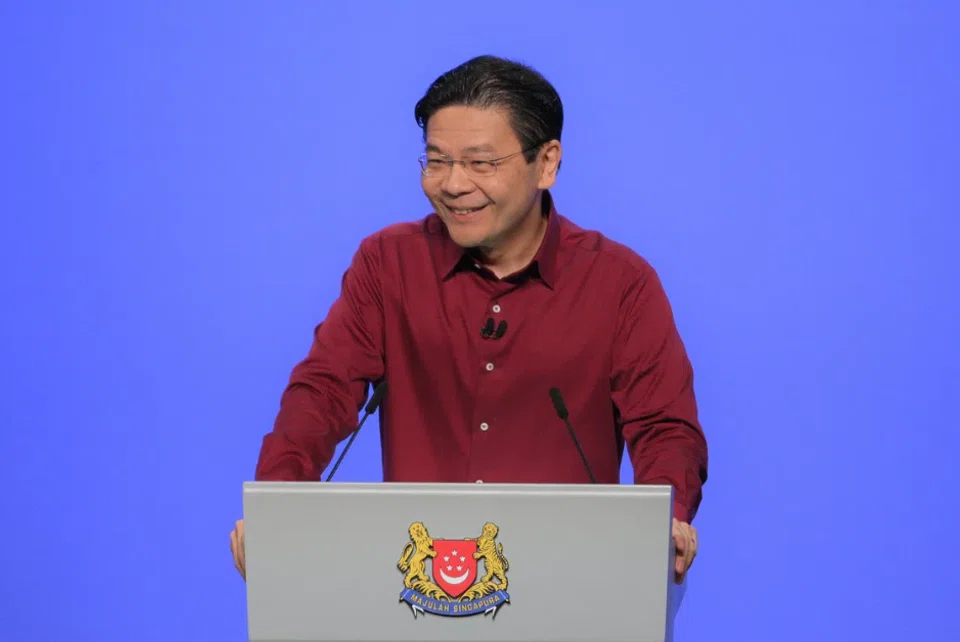
Lawrence Wong's policy priorities have moved housing close to the centre of Singapore's political agenda — and for anyone with a stake in the Singapore property market, the direction of travel matters far more than any single headline measure. Since taking office as Singapore's fourth Prime Minister in May 2024, and as the first person to hold the job who was born after independence, Wong has consistently framed public housing not as a line item in a budget but as ballast for the social compact: something that must stay affordable for the next generation, while still functioning as the asset that funds the previous one's retirement.
That is a hard circle to square.
And the tools being used to square it — a record supply pipeline, a new tiering system for new flats, an ABSD regime that taxes foreign buyers at 60%, and loan rules that cap how much anyone can borrow — are already reshaping prices, yields, waiting times and buyer behaviour across the island.
This article maps Wong's stated priorities onto the mechanics of the Singapore property market and works through what each one plausibly means for HDB supply, cooling measures and private condo demand. Figures used here are drawn from public URA and HDB releases and are quoted as reported; where numbers are provisional, that is flagged.
The Political Backdrop: Why Property Sits in the Policy Crosshairs
Three structural pressures collided in the early 2020s, and every one of them landed on the housing market.
- A construction backlog. COVID-19 disrupted supply chains and site manpower, stretching BTO waiting times and starving the resale market of completions at exactly the moment demand rebounded.
- A price surge. HDB resale prices jumped 12.7% in 2021 and 10.4% in 2022, while private residential prices rose 10.6% and 8.6% over the same two years, according to URA and HDB data.
- A rental shock. Private residential rents spiked sharply in 2022 and 2023, squeezing tenants and pushing young families to accelerate purchase decisions.
Against that backdrop, the Forward Singapore exercise — launched in 2022 and culminating in the October 2023 report on refreshing the social compact — formalised housing as one of the pillars of the national agenda. The message was that a flat is not just shelter. It is a retirement nest egg, a stake in the country, and a determinant of whether young Singaporeans feel the system is working for them.
According to HDB, close to nine in ten Singaporean households own their home, and roughly eight in ten live in HDB flats. That concentration is precisely why housing policy doubles as economic policy: move the dial on public housing and you move household balance sheets, consumption patterns, retirement adequacy and the political mood.
The logic chain from priority to market outcome looks roughly like this.
Priority One: Housing Affordability and the HDB Supply Ramp-Up
The single most important number in Wong-era housing policy is 100,000.
That is the number of BTO flats the Ministry of National Development committed to launching between 2021 and 2025 — an average of roughly 20,000 units a year, sustained across five consecutive years. At the peak of the push, annual launches ran at roughly 17,000 to 23,000 flats, with 2024 coming in at about 19,600 units and 2025 planned at a similar scale, according to MND's public statements.
The choice of instrument is telling. Supply treats the cause of unaffordability; demand-side measures treat the symptom. A government that leans on supply is signalling that it sees the problem as structural rather than speculative — and that it is willing to absorb the political cost of a long construction runway to fix it.
Supply takes years to bite
The catch is timing. A flat launched in 2025 completes around 2028 or later. Meanwhile, the resale market has its own momentum.
HDB Resale Price Index: Annual Change (%)
The chart tells a story that should temper any assumption that more BTO flats alone will cool the resale market quickly. After growth moderated to 4.9% in 2023, HDB resale prices re-accelerated to a provisionally estimated 9.6% in 2024 — in the same year that HDB launched one of its largest-ever batches of new flats.
Why the divergence? A few plausible explanations:
- The wait is the product. Buyers who cannot stomach a three-to-four-year construction timeline pay a premium for immediate occupancy. The longer the BTO queue, the stronger the resale bid.
- The MOP wave is priced high. Flats reaching their five-year Minimum Occupation Period create resale supply, but sellers anchor to recent record transactions rather than to replacement cost.
- Location trumps volume. Supply is concentrated in specific towns. Demand is not. A queue in Tengah does not relieve pressure in Bishan.
Waiting times are the quiet affordability lever
Affordability is not only a price question; it is a time question. A couple who marry at 30 and collect keys at 35 have lost five years of household formation. HDB has said it is working to bring median waiting times back down, prioritising projects with shorter build times where site conditions allow.
That is a supply-side objective with demand-side consequences. Shorter waits reduce the incentive to buy resale at a premium, which in turn takes some heat out of the resale market without a single new tax.
Priority Two: A New Tiering System for New Flats
The most structural change to public housing in a generation is the Standard / Plus / Prime classification, introduced for BTO projects from the October 2024 launch. It is a direct attempt to decouple location value from speculative gain.
What each tier means
| Tier | Location profile | MOP | Whole-flat rental after MOP | Subsidy clawback on first sale | Buyer income ceiling |
|---|---|---|---|---|---|
| Standard | Most sites islandwide | 5 years | Allowed | No | $14,000 (families) |
| Plus | Close to MRT stations or town centres | 10 years | Not allowed | Yes | $14,000 (families) |
| Prime | City centre or highly sought-after locations | 10 years | Not allowed | Yes | $14,000 (families) |
Additional conditions apply to Plus and Prime flats: buyers of such flats on the resale market are also subject to the income ceiling, and private property owners or former owners face a wait-out period before they can buy a resale flat. The clawback recovers a portion of the discount the buyer received at launch, crystallising only when the flat is resold.
The design intent is straightforward. If a flat in a prime location is priced below market, that discount should not be pocketable as a windfall five years later. The tier system converts a lottery ticket into a home.
How to think about it as a buyer
The practical trade-off is easy to state and hard to live with:
- Plus and Prime flats offer a lower entry price for a better location, but lock you in for a decade, deny you rental income, and cap your upside on exit.
- Standard flats preserve flexibility: sell at five years, rent out the whole flat, and keep the full gain — but you may be buying in a less connected town.
- Resale flats still offer the fastest route to occupancy and the widest choice of location, but at market-clearing prices with no subsidy.
The knock-on effects worth watching
Two second-order effects could matter more than the tiering itself.
First, less windfall, less upgrade fuel. The classic Singapore wealth path — buy BTO, sell at MOP for a large gain, upgrade to a condo — depends on outsized resale appreciation. If Plus and Prime flats are structurally constrained, a slice of that upgrade demand is deferred or reduced. Over a decade, that could soften demand at the entry end of the mass-market private condo segment.
Second, longer lock-ins mean slower churn. A 10-year MOP removes a cohort of potential resale sellers and potential upgraders from the market for five extra years. In a supply-constrained resale market, that matters.
Priority Three: Cooling Measures as Permanent Furniture
Singapore's approach to demand-side cooling has shifted from episodic intervention to standing architecture. The measures are now recalibrated rather than removed — and the calibration carries a clear hierarchy of who gets to buy.
The ABSD ladder
Additional Buyer's Stamp Duty, in its current form, is the sharpest expression of the affordability-first priority.
| Buyer profile | ABSD rate |
|---|---|
| Singapore Citizen, 1st property | 0% |
| Singapore PR, 1st property | 5% |
| Singapore Citizen, 2nd property | 20% |
| Singapore Citizen, 3rd and subsequent | 30% |
| Singapore PR, 2nd property | 30% |
| Singapore PR, 3rd and subsequent | 35% |
| Foreigners (any residential property) | 60% |
| Entities | 65% |
| Housing developers | 35% plus 5% non-remittable |
| Trustees | 65% |
ABSD Rates by Buyer Profile (current regime, %)
The jump to 60% for foreigners — roughly a doubling from the previous headline rate — was the clearest possible signal that Singapore is no longer willing to let its residential stock function as a global store of value at the expense of local buyers. Certain remissions exist, for instance for married couples in specific circumstances, but the direction is unambiguous.
The borrowing rules do the quieter work
ABSD gets the headlines. The loan framework does more of the day-to-day heavy lifting.
| Rule | Current setting |
|---|---|
| Loan-to-Value, first housing loan (bank) | 75% |
| Loan-to-Value, HDB flats (HDB or bank loan) | 75% |
| Total Debt Servicing Ratio | 55% of gross monthly income |
| Mortgage Servicing Ratio (HDB flats and new ECs) | 30% of gross monthly income |
| HDB concessionary loan interest rate | 2.6% p.a. |
| Interest rate floor for HDB loan eligibility | 3% |
| Medium-term rate floor for TDSR computation | 4% |
Two details deserve emphasis. First, the LTV for HDB flats was cut to 75%, reducing the maximum leverage available to public housing buyers. Second, the interest rate floors used to stress-test eligibility sit above prevailing market rates — a deliberate buffer so that a borrower who qualifies today does not become distressed when rates normalise.
The effect is a mortgage market that is conservative by international standards, and a buyer pool that is filtered by income rather than by ambition.
The developer channel
Housing developers pay 35% ABSD on land purchased for residential development, plus a 5% non-remittable component, with the 35% remittable only if all units are sold within the prescribed window (typically five years). That single rule shapes the entire new launch calendar: it pushes developers to price for velocity, to stagger launches, and to clear tail-end inventory aggressively rather than hold for a higher price.
For buyers, that creates predictable windows of opportunity — and predictable risk, since a developer under pressure to clear remaining units may also be cutting specification or discounting in ways that affect the project's resale profile later.
The sequence matters
Priority Four: Social Mobility, Grants and the Rental Market
If supply and cooling measures manage price, the grant system manages access. Wong's social mobility agenda runs directly through it.
The grant stack
- Enhanced CPF Housing Grant (EHG): up to $80,000 for eligible families and up to $40,000 for eligible singles, tiered by income so the largest sums go to the lowest earners. Applies to both BTO and resale purchases.
- Family Grant: up to $50,000 for eligible families buying a resale flat, subject to flat type and citizenship criteria.
- Proximity Housing Grant (PHG): $30,000 for families buying a resale flat to live with parents or a child, or $20,000 to live near them. Singles receive $15,000 or $10,000 respectively.
- Step-Up CPF Housing Grant: $15,000 for eligible citizen families buying a 2-room Flexi or 3-room BTO flat in a non-mature estate.
Read together, these schemes reveal the priority: not just affordability at the point of purchase, but sustainable affordability — grants that scale with need, and incentives that keep families geographically close so that caregiving and childcare costs do not quietly become a second mortgage.
Priority schemes as family policy
Housing allocation is also being used as demographic policy. The Parenthood Priority Scheme gives first-timer married couples with children priority in BTO and resale applications. The Parenthood Provisional Housing Scheme provides interim rental housing for families waiting for their BTO to complete. The Multi-Generation Priority Scheme lets parents and married children book flats in the same project. Budget 2025 then layered on further support for larger families, reported at up to $16,000 for a third or subsequent child.
The through-line is that housing policy is being asked to do more than house people. It is being asked to make family formation less financially punishing — which is a slower-acting but potentially more consequential intervention than any stamp duty tweak.
The rental market as the safety valve
Rental rules have tightened too. HDB flat owners must continue to live in their flat while renting out spare bedrooms, and occupancy caps scale with flat size. For private homes, similar occupancy limits apply by unit size. The intent is to keep residential stock in the hands of occupiers rather than converting homes into de facto dormitories.
Meanwhile, the rental market itself has cooled from its 2022–2023 spike, with private residential rents growing only modestly in 2024 according to URA's rental index, as completions rose and tenant demand normalised. Softer rents relieve pressure on would-be buyers who rent while saving, but they also erode the yield case for investors — a trade-off that suits a policy agenda prioritising owner-occupation.
The unresolved question: lease decay
One item on the social mobility ledger remains genuinely open. VERS — the Voluntary Early Redevelopment Scheme — was first floated in 2018 as a way to address the lease decay problem facing older HDB estates, with implementation details still being studied. For the millions of households holding 99-year leases, the credibility of that promise is the difference between a flat being a retirement asset and being a wasting one. It is arguably the most consequential housing policy question Wong's government will have to answer.
Priority Five: Economic Resilience and Private Condo Demand in Singapore
The final priority — economic resilience — creates the most interesting tension in the whole framework.
Singapore wants to remain a magnet for global talent, capital and enterprise. That is the growth engine. But the same openness that brings capital also brings housing demand, and the housing market is precisely where the two objectives collide.
The policy answer has been to ring-fence housing and welcome capital elsewhere. Foreigners face 60% ABSD on residential property, but the broader ecosystem — family offices, funds, talent passes, corporate relocations — remains open. In effect, residential real estate has been carved out of Singapore's value proposition.
What happened to private residential prices
URA Private Residential Price Index: Annual Change (%)
Private residential price growth decelerated for a third straight year, to a provisionally estimated 3.9% in 2024. That is a meaningful cooling from the double-digit pace of 2021, and it has happened without a price collapse — a result policymakers would read as evidence that the calibrated approach is working.
Who is actually buying now
With foreign buyers heavily taxed, the private condo demand base has narrowed and localised:
- HDB upgraders form the backbone of mass-market demand, though the Plus/Prime lock-in may thin this cohort over time.
- Singapore PRs face only 5% ABSD on a first home — the lowest barrier of any non-citizen group — making them a structurally important buyer segment.
- New citizens and returning Singaporeans often enter at the mass-to-mid segment rather than the luxury end.
- Downsizers and right-sizers aged 55 and above, some eligible for ABSD relief on a replacement home, are an increasingly active group as the population ages.
The Core Central Region — traditionally the most exposed to foreign demand — has had to rebuild its buyer base around locals, PRs and long-term residents. That is a structural change, not a cyclical one.
The supply side is turning too
Private completions have risen from their post-COVID trough, and the government controls the pace through the Government Land Sales programme, alternating between confirmed-list sites, which will definitely be launched, and reserve-list sites, which are triggered only if a developer bids an acceptable price. That mechanism gives policymakers a throttle: release more land if prices run hot, hold back if the market turns.
Add interest rates that have come off their 2023–2024 peaks, and the affordability arithmetic for a private mortgage has improved modestly even as prices continued to grind upward. That combination — better financing conditions plus persistent price growth — is the classic setup for renewed momentum if supply disappoints.
What It All Adds Up To for Singapore Property
Strip away the detail and the framework is coherent. Singapore is running a two-speed housing policy:
- Public housing is being positioned as an owner-occupier utility: abundant supply, tiered by location, structurally restricted on rental and resale gains.
- Private housing is being positioned as a market for residents and long-term stakeholders: heavily taxed for foreigners and speculators, moderated by loan limits, supplied at a pace the state controls.
For individual buyers and owners, the implications diverge sharply by profile.
| Profile | Rules that matter most | Likely market effect |
|---|---|---|
| First-timer couple | BTO tier, income ceiling, EHG, priority schemes | More supply choice, longer waits in prime locations |
| HDB upgrader to condo | 20% ABSD, TDSR, sale sequencing | Higher entry cost, stronger case for sell-first |
| Repeat investor | 20–30% ABSD, LTV limits, SSD | Yields compressed, returns increasingly rental-led |
| Singapore PR | 5% on first home, 30% on second | Structural demand anchor for mass-market condos |
| Foreign buyer | 60% ABSD | Residential largely closed; capital redirected |
| Right-sizer aged 55+ | Possible ABSD relief, lease buyback options | Active cohort, increasingly influential in mature estates |
Risks and Counter-Signals
No policy framework is frictionless, and several plausible paths could bend the trajectory:
- Construction capacity. A supply ramp is only as good as the labour and materials available to build it. Bottlenecks lengthen waits and undermine the affordability dividend.
- Rate reversal. Stress-tested floors protect borrowers, but a sharp rise in rates would still compress demand and hit developers holding unsold inventory.
- Employment shocks. Housing demand in Singapore is fundamentally income-driven. A global downturn would do more to cool prices than any stamp duty.
- Policy two-way risk. Cooling measures are theoretically reversible. If transaction volumes fall sharply or developers face distress, some tightening could unwind — and markets tend to price that possibility in early.
- Lease decay. Without a credible VERS framework, the long-run value proposition of older leasehold flats remains a live question for hundreds of thousands of households.
- The Plus/Prime experiment. If constrained flats trade at persistent discounts, the tiering could reshape expectations about housing as an appreciating asset — a profound shift for a nation that has built retirement adequacy partly on that premise.
Food for Thought
1. If supply is the cure, how much of the 2021–2024 surge was genuinely demand-led — and how much was simply a construction delay that no tax could have fixed? The answer changes what "affordability policy" should mean going forward.
2. Plus and Prime flats are designed to strip location windfalls out of public housing. But if their resale prices stay structurally flat, what happens to the retirement-asset logic that a generation of Singaporeans has been told to rely on?
3. With foreigners taxed at 60% ABSD, Singapore's residential market is now overwhelmingly domestic. Can local demand alone absorb the completion wave arriving through 2026 — or will developers need to reprice?
4. Does "affordable housing" mean the same thing in Bishan as it does in Bukit Batok? If not, is a single national affordability narrative sustainable, or does the tiering system institutionalise a two-tier public housing market?
5. Cooling measures have never been fully unwound. What would a genuinely neutral policy stance look like — and if it arrived, would the market trust it enough not to overshoot?
The Bottom Line
Lawrence Wong's policy priorities point in one consistent direction: housing as infrastructure for social stability rather than as a vehicle for wealth creation. Supply is being ramped, new flats are being tiered to cap location-driven gains, demand is being filtered through stamp duties and loan limits, and access is being widened through targeted grants.
Whether that produces a permanently calmer market or simply a different set of winners is the open question. What is already clear is that the era of passive appreciation in Singapore property — buy, wait, upgrade — is being deliberately, and structurally, narrowed.