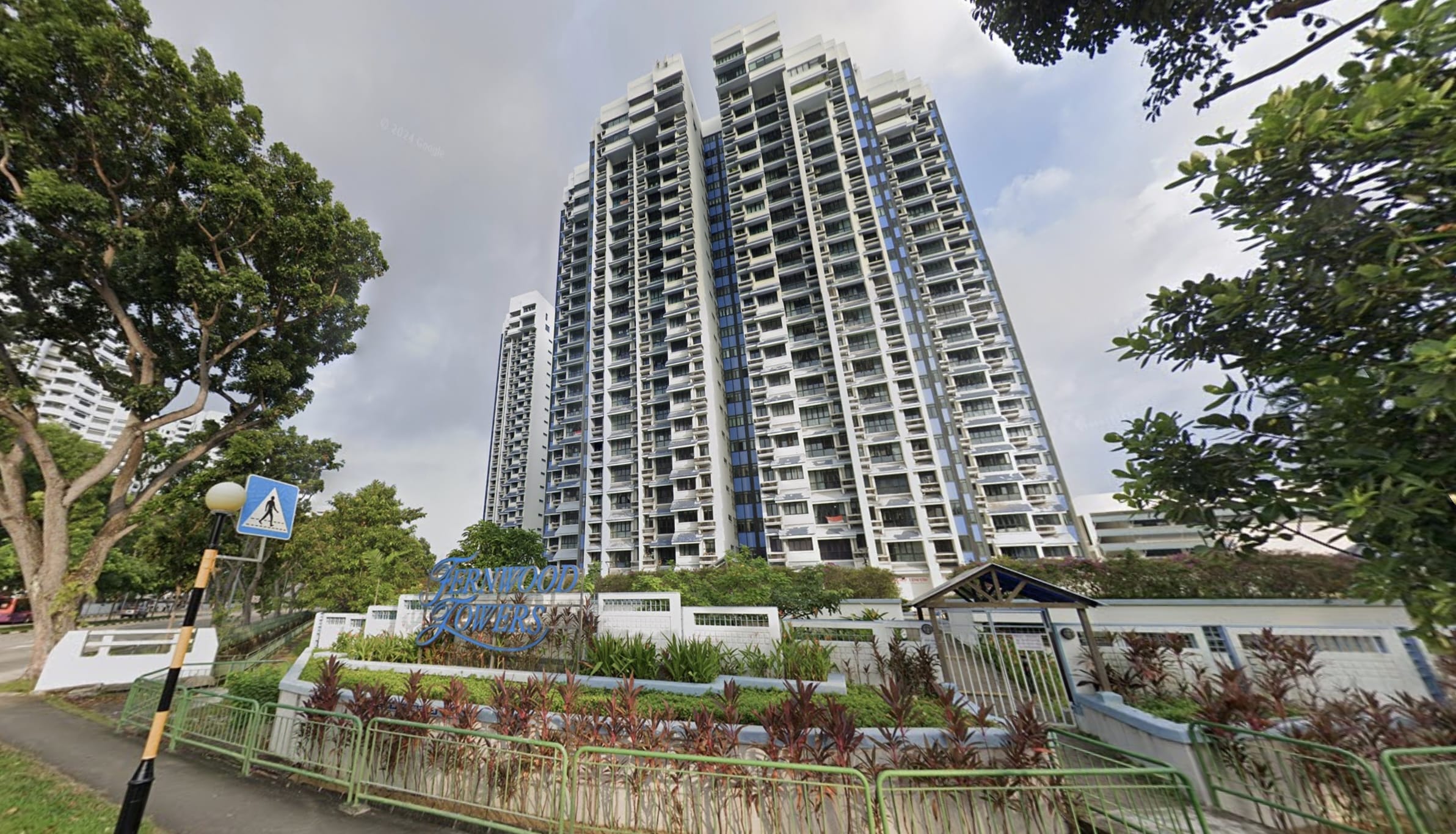
A chunk of concrete the size of a fist shears off a third-floor balcony parapet and lands on the walkway below. Nobody is standing there — this time. This is the scenario that should be running through your head when you look at a 30-year-old condo with a freshly renovated kitchen and a price tag that seems too good to be true.
For buyers shopping older Singapore condos, the gap between what a listing photo shows and what a building actually is has never been wider. Renovation budgets go into kitchens, bathrooms and feature walls — the parts you can see and photograph. The parts you can't see, the parts that decide whether the building is genuinely safe, are shared property. They're paid for collectively, decided by committee, and frequently deferred.
Understanding the risk of a condo fall — falling concrete, failing façade panels, a lift that drops, a fire system that doesn't respond — is not about being paranoid. It's about knowing which questions to ask, which documents to demand, and which answers should end the deal.
This guide walks through how Singapore's regulatory safety net actually works, what the Management Corporation Strata Title (MCST) is legally obliged to do, how to run your own safety audit on a weekend site visit, and the specific questions that separate a well-run older development from a liability with a swimming pool.
Why "Condo Fall" Is a Real Risk in Older Singapore Condos
Singapore's private residential stock is ageing. A large share of condominium developments were completed during the property boom years of the 1980s, 1990s and early 2000s. Those buildings now sit at the age where building systems — not finishes — start demanding serious money.
Here's what happens to a building as it ages:
- Reinforced concrete carbonates. Over decades, carbon dioxide penetrates the concrete cover and the protective passive layer around steel reinforcement breaks down. The steel rusts, expands to several times its original volume, and literally pushes the concrete off from the inside. That's spalling concrete — the classic "condo fall" hazard.
- Chloride attack accelerates near the coast. Developments in Districts 15, 16, 4 and 5 — East Coast, Marine Parade, Telok Blangah, Sentosa and Pasir Panjang — deal with salt-laden air that accelerates corrosion of reinforcement and metal fixtures.
- Waterproofing membranes expire. Roof decks, planter boxes, pool decks, bathrooms and balconies rely on membranes with a realistic service life measured in decades, not forever. When they fail, water gets into the structure.
- Mechanical systems reach end of life. Lifts, water pumps, generators, fire alarm panels and auto-gates all reach a point where maintenance costs more than replacement.
- Façade elements loosen. Tiles, cladding panels, planter box skirts, air-con ledges, signage and external light fittings are all potential falling-object risks if not inspected and secured.
The critical point for a buyer: none of this shows up in a listing photo, and almost none of it shows up in a standard property agent's presentation. It shows up in the building's inspection reports, the MCST's accounts, and the maintenance contracts.
What Singapore Law Already Requires: The Safety Net You Can Check
Singapore has a genuinely robust building safety regime. The problem is not the rules — it's whether a given MCST has actually complied with them, and whether you, as a prospective buyer, can verify it.
Structural Inspections: The 10-Year Cycle
Under the Building Control Act, administered by the Building Code and Building Control arm of BCA, buildings are subject to Periodic Structural Inspection (PSI).
For residential buildings, the regime broadly works like this: the first PSI falls due around 10 years after the Temporary Occupation Permit (TOP), and subsequent inspections follow roughly every 10 years thereafter. Non-residential buildings face a shorter cycle.
During a PSI, a Professional Engineer inspects the building's structural elements and submits a report to BCA. If defects are found, the building owner — in a strata development, the MCST — must engage an engineer to carry out repairs, and BCA tracks completion.
For a buyer, this is the single most valuable document you can ask for. A PSI report tells you, in engineering language, exactly what state the building's bones are in and what repairs were ordered.
Façade Inspections: The Newer Layer
Since 2020, BCA has also operated a Periodic Façade Inspection (PFI) regime. Buildings that cross certain age and height thresholds — broadly, those at least two decades old and taller than about 20 metres, which covers the vast majority of condominium blocks in Singapore — must have their façades inspected by a Competent Person on a recurring cycle of roughly seven years.
The PFI inspects external elements: cladding, tiles, planter boxes, ledges, appendages and anything else that could detach and fall.
This is directly relevant to condo fall risk. A building that has passed its PFI with documented rectification of loose elements is a materially safer proposition than one with no façade records at all.
Fire Safety, Lifts and Water: The Annual Drumbeat
Beyond structural checks, a stack of recurring obligations applies:
- Fire Safety Certificate (FSC). Under the Fire Safety Act, buildings must hold a valid FSC, renewed annually with SCDF. Larger developments must appoint a Fire Safety Manager. No valid FSC means the building is operating outside the law.
- Lifts and escalators. Under BCA's lift maintenance regulations, lifts must be maintained by an approved contractor on a routine schedule — typically at least monthly — and examined periodically by an Authorised Examiner, a specialist professional engineer. Lift maintenance records are the fastest way to judge whether an MCST takes its obligations seriously.
- Electrical installations. Periodic servicing by EMA-licensed electrical workers, including testing of standby generators and main switchgear.
- Water tanks. Public health regulations require periodic cleaning, disinfection and water sampling of storage tanks serving buildings. Slipped schedules are a hygiene risk and a sign of a distracted MCST.
- Insurance. Under the Building Maintenance and Strata Management Act (BMSMA), an MCST must insure the building to its full replacement value against fire and other specified perils. Ask for the certificate — and check the insured sum against current rebuild costs, which have risen sharply.
The Full Compliance Checklist at a Glance
| System | Governing Regime | Rough Frequency | Who Pays |
|---|---|---|---|
| Structure | Building Control Act / BCA PSI | ~10 years after TOP, then ~10-yearly | MCST, via sinking or management fund |
| Façade | BCA Periodic Façade Inspection | ~7-yearly for older tall buildings | MCST |
| Fire safety | Fire Safety Act / SCDF | FSC renewed annually | MCST |
| Lifts & escalators | BCA lift maintenance regulations | Routine maintenance at least monthly; periodic examination | MCST |
| Electrical systems | EMA-licensed workers | Periodic servicing | MCST |
| Water tanks | Public health regulations | Periodic cleaning and testing | MCST |
| Insurance | BMSMA | Annual renewal | MCST |
| Unit interiors, windows, air-con | Owner's responsibility | As needed | Individual owner |
The table is the easy part. The hard part is that compliance is self-reported by the MCST. BCA and SCDF will chase a non-compliant building, but a development can limp along for years with overdue reports, patch repairs and an overstretched committee — and buyers won't know unless they ask.
The Paper Trail: Documents That Reveal More Than Any Showflat
Before you ever step into a unit, request the paperwork. A well-governed MCST will have it organised. A poorly governed one will produce excuses — and that itself is your answer.
Documents to request through the seller or the seller's agent:
- Latest PSI report and any BCA repair orders, plus evidence the ordered works were completed.
- Latest PFI report, if the building is old and tall enough to require one.
- Valid Fire Safety Certificate.
- Lift maintenance and examination records for the last 12–24 months, including downtime logs.
- The MCST's audited financial statements for the last two to three years.
- Sinking fund balance and the last three years' contributions.
- A copy of the current maintenance plan or 10-year capital works forecast, if one exists.
- Minutes of the last two Annual General Meetings and any Extraordinary General Meetings.
- Current by-laws, including any restrictions on short-term rental, renovation hours or pet ownership.
- Insurance certificate showing the insured sum and public liability cover.
- Details of any ongoing litigation, Strata Management Tribunal claims, or disputes with the developer or contractor.
- Any approved special levy that has been raised but not yet fully collected.
Under BMSMA, MCST records are available for inspection, and in practice a serious seller will facilitate access. If you're told the minutes are "confidential" or that "the management agent handles all that", treat it as a data point.
Reading the Financials Like an Auditor
You don't need an accounting background. You need four numbers:
- Sinking fund balance per unit. Divide the total sinking fund by the number of units. A development of 300 units sitting on a sinking fund of S$150,000 is sitting on S$500 per unit — nowhere near enough for a lift replacement programme, let alone façade works.
- Sinking fund contribution trend. Are contributions flat or rising? Rising contributions suggest a committee that has woken up to reality. Flat contributions over a decade suggest deferred pain.
- Arrears. What proportion of owners are behind on maintenance fees? High arrears starve the MCST of cash flow and often correlate with governance dysfunction.
- Special levies in the last five years. One levy might be bad luck. Three levies suggests the sinking fund has been systematically underfunded.
Walking the Ground: A Physical Safety Audit for Resale Condos
Paperwork can be incomplete. Your eyes can't be argued with. Do your site visit with an inspector's mindset — and go at the right time.
Timing matters enormously:
- Visit after heavy rain. Water ingress, ceiling stains, damp patches and pooling reveal themselves within hours. A dry-weather visit hides everything.
- Visit on a weekday morning. You'll see lift queues, hear the pumps running, and catch the estate in its normal working state rather than a Sunday afternoon gloss.
- Visit at night once. Lighting, security presence and the general feel of the common areas after dark tell you a lot about management priorities.
Structural and Façade Checks
Walk the entire perimeter and every common corridor. Look up.
- Spalling concrete — patches where the surface has popped off, revealing rusted reinforcement. Look at balcony soffits, the underside of slab overhangs, staircase undersides, car park ceilings, and the tops of parapet walls.
- Rust staining — brown streaks on white paint are the early warning sign of corrosion before the concrete actually falls.
- Cracks — hairline shrinkage cracks are usually cosmetic; wide, diagonal or stair-step cracks near openings and corners deserve an engineer.
- Loose façade elements — check planter box skirts, decorative fins, air-con ledges, external light fittings, signage and anything bolted to the outside of the building. Ask when these were last inspected.
- Balcony parapets — push gently where safe to do so, looking for movement, cracking at the base, or repairs that look cosmetic rather than structural.
- Car park — the most revealing place in any older development. Look at the ceiling slab for spalling, water stains, efflorescence (white powdery deposits) and exposed rebar.
Lift Checks
Lifts are the most-used, most-complained-about, and most-expensive-to-replace system in an older condo.
- How many lifts serve how many units? A 400-unit development with two lifts is a daily pain point and a single point of failure.
- Are the lifts original or modernised? A 1990s lift that has never been upgraded will need replacement, and full replacement across a development is a seven-figure exercise.
- Ask residents directly: how often does a lift break down? How long does it take to fix?
- Check the lift car for the posted maintenance and examination notices — the most recent dates should be recent.
Fire System Checks
- Is the Fire Safety Certificate displayed or available?
- Are common corridors clear? Obstruction of exit routes is both illegal and a genuine life-safety issue — and it tells you whether the MCST enforces by-laws.
- Do smoke detectors, alarms and sprinkler heads appear intact and unobstructed? Look for painted-over sprinkler heads, a classic sign of a cosmetic renovation of the common areas.
- Are fire extinguishers and hose reels within their service dates?
- Is the fire alarm panel in the management office showing faults? Ask.
Waterproofing and Water Checks
- Look for ceiling stains in the unit, especially under bathrooms and along the top floor slab. A top-floor unit under a leaking roof deck is an expensive hobby.
- Check planter boxes — these are notorious leak sources in older developments.
- Check the pool deck and surrounding areas for settlement, cracked tiles and water pooling.
- Ask about the age of the roof waterproofing and whether it has ever been redone.
Electrical and Mechanical Checks
- Standby generator: ask when it was last load-tested. In a blackout, this is the system that keeps the lifts, pumps and fire systems alive.
- Water pumps and tanks: ask about the last tank cleaning date and whether there have been pressure problems on upper floors.
- Auto-gates, intercom and CCTV: ageing access control systems are a security risk and a recurring cost.
Windows and Unit-Level Safety
Inside the unit, check:
- Window frames — older aluminium rivets corrode and can fail. Ask whether window rivets have been retrofitted with stainless steel versions, and inspect frames for corrosion, looseness and damaged friction stays.
- Air-con ledges — where are the condensers, and who is responsible for securing them?
- Balcony drainage — blocked outlets cause ponding and accelerate waterproofing failure.
MCST Duties: Who Is Actually Responsible for Safety
This is where most buyers are genuinely uninformed — and where the biggest surprises hide.
What the MCST Is Legally Obliged to Do
Under BMSMA, the MCST — the body corporate of all subsidiary proprietors — carries the legal duty to:
- Maintain and keep the common property in good repair. This is not optional. Common property includes the roof, external walls, structural elements, lifts, corridors, car park structure, pool, pumps and shared services.
- Comply with statutory requirements, including BCA inspection and repair orders, fire safety obligations, lift regulations and public health requirements.
- Maintain two funds — a management fund for day-to-day expenses and a sinking fund for major capital works — with a regulated minimum allocation going to the sinking fund.
- Insure the building to full replacement value.
- Keep proper records — minutes, accounts, contracts — available for inspection.
- Enforce by-laws reasonably and consistently.
- Hold an Annual General Meeting and allow owners to participate in decisions.
In practice, all of this is executed by an elected council (the committee of owners) and, usually, a managing agent — a professional firm paid to handle administration, accounting and contractor coordination.
That structure creates a well-known failure mode: a volunteer council with limited technical expertise, delegating to a managing agent on a thin fee, approving the cheapest quote every year, and slowly falling behind on capital works.
The Governance Red Flags
Watch for these:
- No 10-year capital works plan. A serious MCST forecasts lift replacement, repainting cycles, waterproofing and structural works years in advance. If the answer to "when was the building last repainted" is a shrug, be concerned.
- Chronic under-collection. Maintenance fees that haven't risen in a decade despite rising costs mean the shortfall is being paid later, with interest.
- Constant managing agent turnover. Three agents in four years suggests either an impossible committee or an impossible building.
- Low AGM attendance. Few owners engaged means few owners watching the money.
- Deferred maintenance as an en-bloc strategy. This one is subtle and worth understanding. When owners are hoping for a collective sale, there is often an unspoken policy of spending as little as possible on the building. The result can be years of patch-up work, an ageing physical plant, and a building that becomes genuinely unsafe while waiting for a buyer who may never arrive.
- Litigation. Check whether the MCST is suing a contractor over defective works — or being sued. Either way, it's money out of the sinking fund.
- A very low maintenance fee for the age of the building. Low fees look attractive. In an older development, they're usually a warning, not a bargain.
Where the Buyer's Leverage Actually Lies
You cannot inspect the MCST's decisions, but you can price the risk. If the sinking fund is thin, the lifts are original, and the roof has never been redone, you should be modelling special levies into your numbers — potentially tens of thousands of dollars over the next decade on a large unit. That's a negotiating position, not just a deal-breaker.
Money, Age and Lease: The Triple Squeeze on Older Condos
Older condos look attractive for reasons that are entirely rational. They're often bigger, better located, and priced at a lower PSF than new launches. But three forces compress together as a building ages, and safety is only one of them.
1. Maintenance Costs Rise Faster Than Fees
Older buildings have more systems to fail. Waterproofing expires, lifts wear out, pumps get replaced, façades need repair. Maintenance fees — and special levies — track that reality with a lag, which means the pain arrives in lumps.
2. Lease Decay Affects Your Financing
Almost all condominiums built in Singapore sit on 99-year leasehold land. That clock starts at the land lease, and it never stops.
Remaining Lease on a 99-Year Leasehold Condo by TOP Year (as at 2026)
Lease decay matters for two very practical reasons:
- CPF usage. Under CPF Board rules for private property, the remaining lease must meet minimum requirements — broadly, at least 20 years remaining and enough to cover the youngest buyer to age 95 — for CPF savings to be used. A building with 60 years left behaves very differently from one with 85.
- Bank financing. Banks apply progressively stricter loan-to-value limits as remaining lease shortens. At certain thresholds, financing options narrow sharply — which shrinks your buyer pool later.
3. The Market Has Pushed Buyers Toward Older Stock
Private residential prices climbed steeply through the early 2020s before cooling.
URA Private Residential Property Price Index — Annual Change (%)
Source: URA private residential property price index, annual change.
After that run, older resale units became one of the few ways to get a large, well-located home without paying new-launch pricing. That's a sound instinct — but it means more buyers are walking into buildings where the physical plant is at or past mid-life, and where the MCST's competence matters more than the marble countertops.
Safety and value are not separate conversations. A building with a funded sinking fund, current inspections and proactive repairs holds its value and finances cleanly. A building with deferred maintenance and an overdue structural report does neither.
Questions to Ask Before Buying a Resale Condo
Print this. Bring it to every viewing. The quality of the answers matters as much as the content.
On structure and inspections
- When was the building's last Periodic Structural Inspection, and can I see the report?
- Were any repairs ordered? Have they been completed and signed off?
- Has the building had a Periodic Façade Inspection, and what did it find?
- Has any part of the building been declared unsafe or had areas cordoned off for falling-object risk?
- Has spalling concrete been repaired in the last five years, and where?
On lifts and mechanical systems
- How many lifts serve the development, and how old are they?
- Have any lifts been modernised or replaced?
- How many lift breakdowns were logged in the last 12 months, and what was the average downtime?
- When was the standby generator last load-tested?
- When were the water pumps last replaced?
On fire safety
- Is the Fire Safety Certificate current? Can I see it?
- Does the development have a Fire Safety Manager, and is the appointment current?
- When was the fire alarm system last tested end-to-end?
On water and waterproofing
- When was the roof waterproofing last renewed?
- When were the water tanks last cleaned and tested?
- Are there known recurring leaks in any block or stack?
On the MCST and money
- What is the current sinking fund balance, and what is it per unit?
- What are the current monthly maintenance fees, and when were they last raised?
- Were any special levies raised in the last five years, and for what?
- Is the MCST servicing any loan, and what is the outstanding balance?
- Has the MCST adopted a long-term maintenance or capital works plan?
- Are there any ongoing disputes, tribunal claims or litigation?
On the estate and lifestyle reality
- What is the current occupancy mix — owner-occupied or heavily rented?
- Are there any pending collective sale discussions?
- What by-laws exist on renovation, short-term rental and common area use?
If the seller or agent can't answer questions 1, 3, 11, 17 and 21, you're not buying a home with a management structure. You're buying a lottery ticket on somebody else's deferred decisions.
How to Run the Audit Without an Engineer
You don't need to be a professional engineer to screen well. You need discipline.
Step 1 — Request documents before the viewing. Ask for the papers listed above at the point of first serious interest. Sellers who are confident will produce them quickly.
Step 2 — Do a wet-weather walkthrough. Look at ceilings, corridor walls, car park slabs and lift lobbies. Water tells the truth.
Step 3 — Talk to residents, not just the agent. Knock on a couple of doors or loiter at the lift lobby. Ask: How often do the lifts break? Is the estate clean? Did you get hit with a levy? How responsive is the management office?
Step 4 — Walk the whole estate, not just your block. Other blocks share the same systems and the same sinking fund.
Step 5 — Look up. Balcony undersides, ledges, planter boxes, external fins, signage, air-con supports.
Step 6 — Consider a professional condition survey. For a high-value unit in a building that's 30+ years old, an independent building surveyor or engineer's condition report can be worth every dollar. Compare it against the MCST's own inspection records — discrepancies are informative.
Step 7 — Price the risk. If you decide to proceed despite identified issues, negotiate. Deferred capital works have a number attached, and you can reasonably ask for some of it to come off the price.
Food for Thought
1. If maintenance fees in an older condo look cheap, who is paying the difference — and when does the bill arrive? Low fees in a 30-year-old building are rarely efficiency. They're usually a loan taken from the future, and you might be the one holding it when it's called.
2. How much of your decision is being driven by the en-bloc dream? Plenty of buyers overpay for ageing developments on the assumption a collective sale will bail them out. Meanwhile, the building keeps ageing, the lifts keep failing, and the sinking fund keeps being spent on patch-ups. If the en-bloc never happens, is the building still a good place to live — and to resell?
3. Would you buy a car without checking its service history? Most people wouldn't. Yet many buyers will commit seven figures to a building without reading a single inspection report. The asymmetry is worth sitting with.
4. When a development's owners vote down a maintenance fee increase, what exactly are they protecting? Often, they're protecting a monthly number that feels comfortable and trading away the building's safety and future value. Which side of that vote would you be on?
5. Should the state mandate publication of a building's safety and maintenance record at the point of sale? Singapore's inspection regime is strong, but the information flows to the MCST, not to buyers. A standardised disclosure pack — PSI status, façade status, FSC validity, sinking fund per unit, outstanding levies — would transform buyer behaviour overnight. The question is whether the market wants that transparency, or benefits from its absence.
The Bottom Line
Older Singapore condos offer something the new-launch market increasingly can't: space, location and value per square foot. But they also come with a physical plant that has a history, a committee that has made decisions, and a set of statutory obligations that may or may not have been met on time.
The good news is that none of this is hidden, if you know where to look. Periodic Structural Inspections, façade reports, fire safety certificates, lift records, audited accounts and sinking fund balances are all documented. The work is in asking — early, specifically, and in writing — and in treating a vague answer as a genuine answer.
Safety in an older condo isn't a mystery you solve at the viewing. It's a paper trail you follow before you ever make an offer.