For three nights each year, the roads around Marina Bay stop being roads. Raffles Avenue straightens into a launch pad, Republic Boulevard becomes a braking zone, and the stretch of tarmac between the Singapore Flyer and the Padang turns into one of the most photographed sporting arenas on earth. Then, within about a week, the barriers come down, the asphalt is repainted, and the district goes back to being a financial centre with unusually good views.
Every September or October, the same questions resurface in property forums, WhatsApp groups and brokerage newsletters: does the F1 Singapore Grand Prix property prices story hold up? Do condos near the circuit command a rental premium? Should you buy into an event-centric district while the world's media is pointed at it?
The honest answer is more interesting than the hype in either direction. The race does move money — but it moves it in a very specific, narrow channel, and it is almost never the channel that individual condo owners can access. Here is what the structure of Singapore's rental market, the geography of the circuit, and the long-run supply story around Marina Bay actually imply for buyers and landlords.
The Circuit Is Also a Property Boundary
The Singapore Grand Prix has been run on public roads around Marina Bay since 2008, when it became the first Formula One race held at night. The layout has been revised over the years; in recent editions it has run to roughly 4.94 km and 19 turns, threading through the Downtown Core and the fringes of Beach Road. The current hosting agreement reportedly runs through 2028.
That geography matters, because the circuit does not sit in a single planning district. It slices through several:
| Planning district | Neighbourhoods touched by the circuit | Dominant property type |
|---|---|---|
| D1 | Raffles Place, Marina Bay, Marina Centre | Prime luxury condos, Grade A offices, hotels |
| D2 | Tanjong Pagar, Chinatown, Anson | Mixed-use, older condos, shophouses |
| D6 | City Hall, Clarke Quay, High Street | Heritage, hotels, boutique residential |
| D7 | Bugis, Beach Road, Middle Road, Nicoll Highway | Newer city-fringe condos, HDB in Kampong Glam/Crawford |
| D4 (fringe) | HarbourFront, Keppel, Telok Blangah | Waterfront condos, older leasehold stock |
If you own a unit in Marina Bay Suites, The Sail @ Marina Bay, Marina One Residences, South Beach Residences, Duo Residences or Midtown Modern, you are inside or within a few hundred metres of the Circuit Park. If you own in Tanjong Pagar or Bugis, you are on the edge of the closure zone. That distinction — inside versus adjacent — drives almost everything that follows.
What the crowd numbers actually look like
Attendance figures reported in the media give a sense of scale, though sources differ slightly on definitions and totals, so treat these as approximate:
Reported Three-Day Attendance at the Singapore Grand Prix
The pattern is a post-pandemic spike in 2022, followed by a settling at the 260,000–270,000 level across three days. That is a crowd roughly the size of a mid-sized Singapore town descending on a district that normally holds a few tens of thousands of office workers and residents on a weekend.
Zoom out, and the race sits inside a broader tourism recovery that has been reshaping Singapore's accommodation market:
Singapore International Visitor Arrivals (millions)
Visitor arrivals climbed back to roughly 16.5 million in 2024, according to tourism board figures, still short of the 2019 peak. The F1 weekend is a concentrated, high-yield slice of that demand: a few days in which every hotel room in the city is effectively a scarce commodity.
The "Short-Term Rental Boom" Is a Hotel Boom, Not a Condo Boom
This is the single most important thing to understand before you start underwriting an F1 rental premium into a condo purchase. In Singapore, short-stay accommodation is a licensed activity, not a property right.
| Accommodation type | Minimum stay requirement | Who can operate it |
|---|---|---|
| Hotel | 1 night | Licensed hotel operators |
| Serviced apartment | 7 consecutive nights | Licensed/approved operators |
| Private residential property | 3 consecutive months | Owners (URA rule) |
| HDB flat | 6 months | Flat owners (HDB rule) |
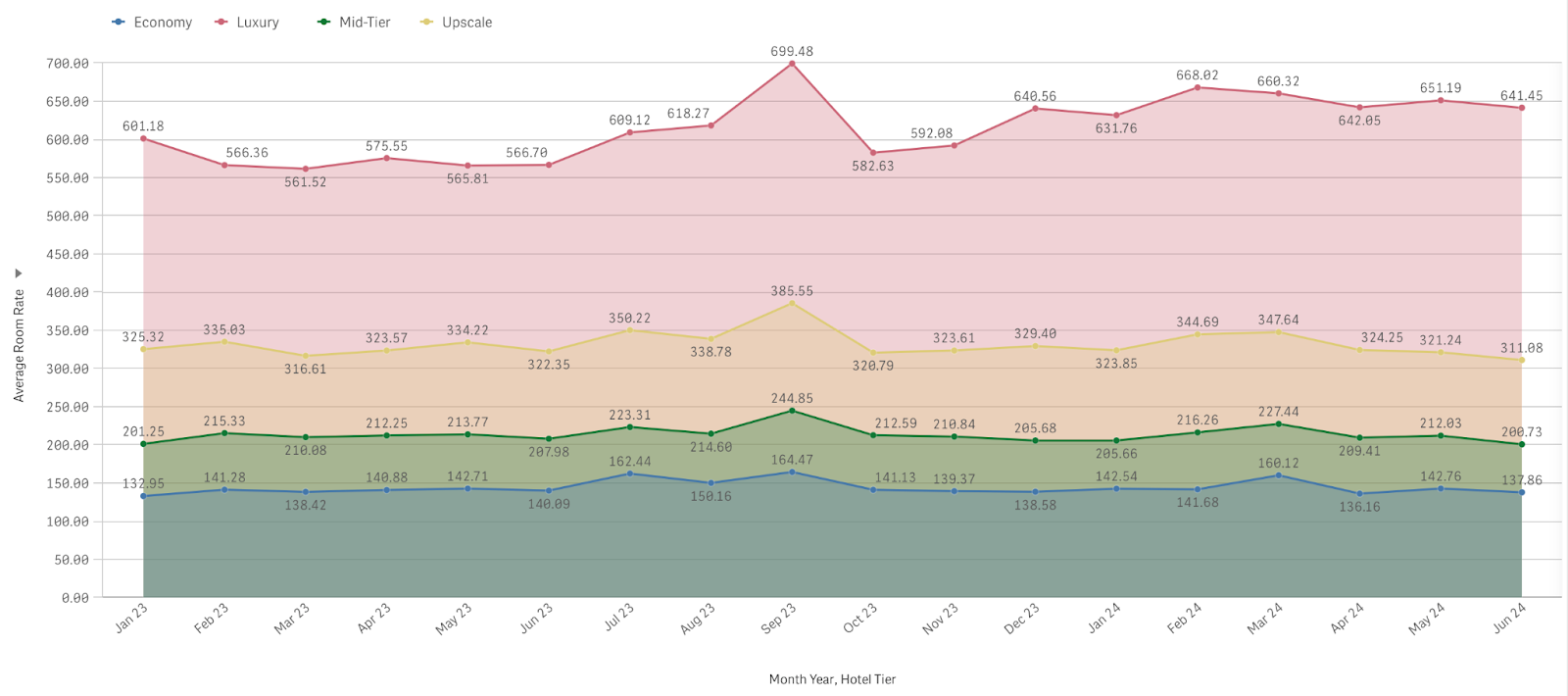
So when you read about a "rental boom" around the F1 weekend, what is actually happening is that hotels and licensed serviced apartments are repricing their entire inventory for a handful of nights. Reports from industry participants in recent race weeks have described average room rates at Marina Bay and City Hall hotels running at multiples of their normal levels — in some cases two to four times the same month's baseline — with city-wide occupancy reportedly pushing into the high 80s and low 90s.
Your condo cannot legally participate in that. If you sign a lease for less than three consecutive months in a private residential unit, you are in breach of URA rules, and landlords have been prosecuted for it. For HDB flats, the floor is six months.
The legal channel that does exist
That does not mean there is zero owner-side upside. There are legitimate, slower-moving ways the race touches residential leasing:
- Corporate and team leases. F1 teams, sponsors, broadcasters and event contractors need office space, storage, hospitality venues and long-stay accommodation in the weeks around the race. These are typically ordinary corporate leases measured in months or years, not nightly rentals — and they are usually intermediated by relocation firms and serviced-residence operators.
- Serviced-apartment operators as tenants. Some operators lease whole floors or blocks of private residential units on multi-year master leases. Their ability to capture event-week pricing flows through as a stable, contracted rent to the owner — with the operator taking the occupancy risk.
- Lease commencement timing. If you are re-letting a city-fringe unit, aligning a fresh lease start with the August–October corporate relocation window can mean less vacancy and firmer asking rents. It does not mean a special F1 premium, but the seasonal demand curve is real.
Annualising the F1 Rental Premium: The Arithmetic Kills the Hype
Here is the calculation that most F1 property pitches quietly skip. Suppose you own a two-bedroom unit near Marina Bay that could, in a hypothetical world where nightly letting were legal, command S$700 a night during race week against a normal hotel-equivalent rate of, say, S$250.
- Incremental nightly premium: S$450
- Nights captured: 5 (a realistic race-week window for a single unit, not all seven)
- Total incremental revenue: S$2,250
Against a base monthly rent of roughly S$7,500, that uplift is about 30% of one month's rent — and roughly 2.5% of a full year's gross rent, before you account for cleaning, turnover, furnishing wear, platform fees and the small matter that it is not legal.
<table> <tr><th>Scenario</th><th>Incremental revenue</th><th>As % of one month's rent</th><th>As % of annual gross rent</th></tr> <tr><td>5 nights at 2x normal rate</td><td>S$1,250</td><td>~17%</td><td>~1.4%</td></tr> <tr><td>5 nights at 3x normal rate</td><td>S$2,500</td><td>~33%</td><td>~2.8%</td></tr> <tr><td>7 nights at 4x normal rate</td><td>S$5,250</td><td>~70%</td><td>~5.8%</td></tr> </table>Even the most aggressive row in that table — seven nights at four times the normal rate, which would put a two-bedroom at nearly S$1,000 a night — produces a figure that is dwarfed by ordinary variables: whether you are vacant for two extra weeks a year, whether your maintenance fee rises, whether the interest rate on your loan moves 50 basis points.
There is a second, subtler point. In a city where the rental market is a 12-month market, a handful of exceptional nights does not change what a tenant is willing to pay for the other 358. Landlords negotiate annual leases against annual comparables. A tenant does not pay 3% more for the year because the lifts were busy in September.
The money that the F1 weekend genuinely creates flows to:
- Hotel owners and operators, who can reprice their entire inventory for the event.
- Licensed serviced-apartment operators, who can capture the corporate overflow.
- F&B, retail and nightlife operators inside the Circuit Park and immediately around it, whose takings reportedly spike hard over race week.
- Event, logistics and hospitality suppliers, who are engaged on contract terms rather than nightly rates.
For an individual condo owner, the F1 premium is best treated as zero in a valuation model. Anything you do capture is a bonus, not a basis.
Do Event-Centric Districts Command Higher Capital Values?
Yes — but almost certainly not because of the race.
Marina Bay, Raffles Place, City Hall and Bugis are among the most expensive places to buy residential property in Singapore. It is tempting to draw a line from that to the Grand Prix. The line does not really exist, and here is why.
The real drivers of Marina Bay pricing
- Scarcity of freehold and 99-year prime stock. The number of units that can ever be built on Marina Bay-facing land is tightly capped.
- Transit connectivity. Marina Bay MRT is on the North-South Line and, since the Thomson-East Coast Line opened in stages, is a genuine interchange. Bayfront and Downtown sit on the Downtown Line. This is a connectivity profile few districts can match.
- Employment density. The CBD, Marina Bay Financial Centre and the broader Raffles Place/Tanjong Pagar office cluster put tens of thousands of high-income jobs within walking distance.
- A long-dated supply story. The Greater Southern Waterfront — the redevelopment of the former city port terminals, with Marina South and the surrounding area planned for thousands of new homes — is arguably the single largest urban transformation in Singapore. Separately, the Long Island reclamation concept off the East Coast contemplates substantial new land and homes over a multi-decade horizon. The Marina Bay/Keppel/Tanjong Pagar corridor sits at the centre of both narratives.
- Civic and lifestyle infrastructure. Gardens by the Bay, Marina Barrage, the promenade, the museums, the National Day Parade at the Padang, and the upcoming Founders' Memorial at Bay East Garden.
The F1 race is a consequence of Marina Bay being Singapore's showcase district, not the cause of its pricing. If the race moved to another part of the island tomorrow, Marina Bay would still be Marina Bay.
Indicative pricing around the circuit
The table below gives a sense of where resale pricing has been sitting in recent quarters. These are indicative ranges, not valuations — individual stacks, floor levels, facing and lease decay move numbers meaningfully, and you should always check live transactions.
| Project | District | Indicative PSF range | Notes |
|---|---|---|---|
| Marina Bay Suites | D1 | S$2,500 – S$3,200 | Prime Bay-facing, limited stock |
| Marina Bay Residences | D1 | S$2,400 – S$3,000 | Large 1–4 bed mix, strong investor base |
| The Sail @ Marina Bay | D1 | S$2,200 – S$2,900 | High transaction volume, rentable studio/1-bed stock |
| V on Shenton | D1 | S$2,500 – S$3,200 | Newer, walkable to Raffles Place |
| Marina One Residences | D1 | S$2,500 – S$3,000 | Integrated with Grade A offices |
| South Beach Residences | D7 | S$3,000 – S$3,800 | Above the South Beach development |
| Duo Residences | D7 | S$2,200 – S$2,700 | Integrated with Bugis MRT interchange |
| Midtown Modern | D7 | S$2,600 – S$3,000 | Newer completion, Guoco Midtown node |
| City Gate | D7 | S$2,200 – S$2,700 | Smaller units, popular with investors |
| Reflections at Keppel Bay | D4 | S$1,900 – S$2,400 | Waterfront, longer lease states differ |
The ABSD counterweight
There is one more factor that cuts against the "F1 brings the world's buyers" narrative. Following the April 2023 round of cooling measures, the Additional Buyer's Stamp Duty payable by foreigners purchasing any residential property is 60%. Entities face 65%. That is a formidable barrier, and it means the buyer pool for prime city-centre stock is now overwhelmingly Singaporean and PR.
The Grand Prix does drive global visibility — the broadcast and media footprint is enormous, and the race has been a fixture of Singapore's destination-marketing strategy for over 15 years. But visibility does not translate into foreign residential demand when the tax code says otherwise. If you are buying prime city-centre property today, your exit buyer is almost certainly local. That should shape what you pay and what unit type you buy.
The Nuisance Factor: What Living Inside the Circuit Actually Costs
Here is the part that rarely makes it into an investment brochure.
For roughly two to three weeks a year, the district around Marina Bay becomes a construction site, then a stadium, then a demolition site. In recent editions, parts of the circuit have been progressively closed to traffic in the lead-up to race week, with the full loop shut for the race weekend itself and reopened within days afterwards. Organisers and authorities have said they continue to work on shortening the closure window, but the disruption is structural: you cannot build temporary grandstands, lighting rigs, barriers and broadcast infrastructure without closing roads.
What that means in practice for residents:
- Access passes. Residents inside the closure zone typically need passes to drive in and out, and access routes change daily.
- Noise. The night race means the loudest hours run into the evening. Free practice, qualifying and the race itself generate sustained noise that carries well beyond the barrier line.
- Delivery and visitor restrictions. Groceries, food delivery and guests become logistics exercises.
- Commercial split. F&B and retail inside the zone report very strong race-week takings; businesses on the wrong side of a closure, or in a district whose customers avoid the area entirely, have publicly complained about losing trade. Both things are true at once.
None of this is fatal to a purchase decision — plenty of people happily live in Marina Bay, Bugis and City Hall and treat race week as a novelty or a well-timed holiday abroad. But it is a real cost, and it is the reason some buyers specifically avoid stacks that face the circuit. If you are viewing a unit, ask which side of the barrier it sits on and how close the nearest grandstand or lighting rig is.
What Other Grand Prix Host Cities Tell Us
Singapore is not the only city to host a race on its own streets, and the comparisons are instructive precisely because the outcomes differ so much.
- Monaco. The archetype of the genre. A permanent street circuit in an extremely supply-constrained micro-state. Property values are famously extreme — but Monaco is a tax and residency story first, a motor-racing story a very distant second, and its 2 sq km of land makes it a poor model for anything.
- Melbourne. The Albert Park circuit runs through parkland rather than dense residential blocks, so the residential nuisance channel is far weaker. Melbourne's inner-city apartment market is driven by migration, construction cycles and interest rates — not by four days of racing.
- Abu Dhabi. Yas Marina is purpose-built, with hotels, residences and entertainment clustered deliberately around the circuit. Here, the event really is part of the land value proposition — but the model is a master-planned destination, not a grid of existing homes.
- Las Vegas. Since 2023, the Strip has hosted a night race that has generated both enormous revenue and genuine resident and business frustration over road closures and disruption. It is an unusually clear case study in how a marquee event can generate huge gross receipts while creating concentrated local costs.
The pattern across all four is consistent: where the circuit sits on purpose-built or parkland land, the residential price effect is weak; where it sits on the doorstep of dense housing, the price effect is still weak but the nuisance effect is strong. The value accrues to the accommodation and hospitality sector, and to the city's brand, not to the individual apartment owner.
An Investor's Playbook for Event-Centric Districts
If you are considering a purchase in D1, D2, D6, D7 or the D4 waterfront, here is a disciplined way to think about it. Notice that almost none of the steps depend on the race.
Step 1: Underwrite the base case without the event
Compute the deal on 12 months of ordinary rent, with a vacancy allowance. A simple worked example:
| Input | Assumption |
|---|---|
| Purchase price (1,000 sq ft at S$2,700 psf) | S$2,700,000 |
| Monthly rent | S$9,000 |
| Gross annual rent | S$108,000 |
| Gross yield | 4.0% |
| Less maintenance, tax, vacancy, furnishing | ~1.0–1.5% |
| Net yield | ~2.5–3.0% |
If the numbers do not work at the base case, they will not be rescued by five nights of race-week pricing.
Step 2: Stress-test the rent
What happens to your cash flow at 3% gross yield instead of 4%? Prime city-centre rents are not immune to the supply cycle. There has been a substantial wave of private residential completions landing in the 2024–2026 window across the island, and URA's rental index for private residential property has reflected a softer tone after the sharp increases of 2022 and 2023. Landlords in well-supplied submarkets have had to compete on price.
Step 3: Assess nuisance exposure honestly
Which stacks face the circuit? Is the unit on a low floor where noise reflects off adjacent buildings? Is the entrance on a road that closes? Ask residents, not agents.
Step 4: Check the supply pipeline
Marina South and the Greater Southern Waterfront will bring meaningful new residential supply to the very area you are buying into over the coming decade. That is positive for amenity and connectivity, and it is also a competitive consideration for rental stock. Understand what is coming.
Step 5: Decide on unit type
Smaller units rent more easily and liquidate to a broader buyer pool, but they also suffer most from new supply. Larger three- and four-bedroom units in genuinely scarce stacks — direct Bay views, high floors, quiet facing — are harder to replace.
Step 6: Understand your exit
Remember the stamp duty and financing environment you are operating in:
- ABSD at 60% for foreigners and 65% for entities following the April 2023 measures, with tiered rates for citizens and PRs buying subsequent properties.
- Seller's Stamp Duty on residential property disposed of within three years of purchase.
- Loan-to-value limits of 75% for a first housing loan, dropping for second and third loans, with TDSR and MSR thresholds to clear.
- Three-year minimum holding period implied by SSD, which is roughly the horizon over which a rental strategy should be judged anyway.
Food for Thought
- If the F1 weekend generates spectacular hotel revenue but is legally inaccessible to condo owners, why do so many event-week marketing pitches still appear in residential property advertising — and who benefits from you believing them?
- Marina Bay's pricing is anchored by connectivity, employment density and a multi-decade waterfront transformation. If those fundamentals stalled, would the race alone hold values up?
- A street circuit imposes two to three weeks of disruption per year on thousands of households in exchange for a few days of concentrated economic activity. How should that trade-off be reflected in what buyers are willing to pay for units inside the closure zone versus just outside it?
- With foreign buyer ABSD at 60%, the global exposure the race generates has limited direct channels into residential demand. Is the F1's real property value in the short-term accommodation sector and the city's brand — and if so, should investors be looking at hospitality and serviced-residence exposure rather than condos?
- Serviced apartments require a seven-night minimum stay, hotels one night, private homes three months. If that regulatory line shifted even slightly, how quickly would the F1 rental premium become genuinely material to condo owners — and what would that do to the neighbourhoods around Marina Bay?
The Bottom Line
The F1 Singapore Grand Prix is a genuine economic event with a real, measurable effect on hotel occupancy, room rates, F&B takings and Singapore's global standing. It is not, however, a residential rental strategy.
For anyone weighing a purchase in Marina Bay, Raffles Place, City Hall, Bugis or the Keppel waterfront, the race should be treated as one line item in the due diligence — arguably a footnote. The variables that will actually determine your returns are the ones you can model: connectivity, employment density, the supply pipeline, the lease, the financing cost, and the price you pay relative to recent transactions. Race week is three nights. Your mortgage is 25 years.