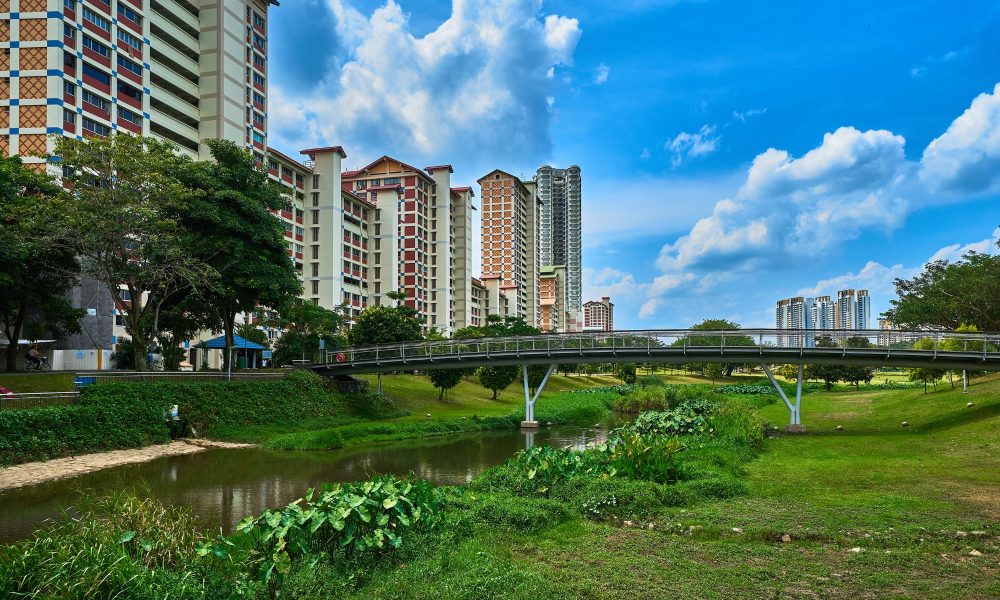
Ang Mo Kio property has quietly become one of Singapore's most interesting stories for young buyers — a mature, leafy heartland town that is about to be stitched into three MRT lines, still trades at a noticeable discount to Bishan and Toa Payoh, and keeps producing new flats from a land bank most buyers assumed was exhausted. If you are 25 to 40, navigating your first (or second) purchase and wondering whether the "boring" central-north town is actually undervalued, this piece is for you.
But "goldmine" is a loaded word. Ang Mo Kio is not a guaranteed win. It is a town with ageing leases, lumpy BTO supply, and a resale market that has already repriced some segments. What follows is a clear-eyed walk through the transport upgrade, the supply pipeline, the affordability stack of grants and loans, and the risks that rarely make it into the glossy brochures — so you can decide for yourself whether Ang Mo Kio deserves a place on your shortlist.
Why Ang Mo Kio Is Suddenly Interesting Again
Ang Mo Kio is one of Singapore's oldest HDB towns. Construction began in the mid-1970s, the town was largely built out by the 1980s, and for two decades it was known mainly for three things: the North-South Line, Ang Mo Kio Hub, and a lot of very old flats.
That reputation is now outdated for a simple reason — infrastructure.
The three-line town
Ang Mo Kio sits at the intersection of a set of rail projects that are unusual for a single HDB town. Its planning area is served, or will be served, by:
- The North-South Line (NSL) — Yio Chu Kang and Ang Mo Kio stations, in operation since 1987.
- The Thomson-East Coast Line (TEL) — Lentor, Mayflower and Bright Hill stations, which opened with TEL Phase 2 in August 2021.
- The Cross Island Line (CRL) Phase 1 — Teck Ghee station plus interchanges at Ang Mo Kio and Bright Hill, targeted for completion around 2030.
The practical effect is that a town that once had two MRT stations will have roughly six stations in or immediately around it, including two interchanges. That is a structural change, not a cosmetic one — and structural transport changes are one of the few things in Singapore property that reliably move the needle over a decade.
MRT Stations In Or Around Ang Mo Kio Planning Area
Where the town sits economically
Ang Mo Kio is not just a bedroom community. It hosts a substantial industrial base — Ang Mo Kio Industrial Park 1, 2 and 3 — with strengths in precision engineering, electronics and light manufacturing, plus a dense layer of SMEs. ITE College Central and Nanyang Polytechnic are both in or adjacent to the town, which keeps a steady stream of students, staff and rental demand in the area.
It also sits just south of the Seletar Aerospace Park corridor and within reach of the broader North Coast innovation push that links Woodlands, Seletar, Sengkang and Punggol. For a young buyer, that matters less as a headline and more as a floor under rental demand if you ever need to lease out a room or relocate.
The amenity base is genuinely mature
Unlike a new town where you wait a decade for a hawker centre, Ang Mo Kio already has the full stack:
- Ang Mo Kio Hub and Djitsun Mall for retail and groceries
- Multiple hawker centres, including the well-known Blk 724 Ang Mo Kio Food Centre and Kebun Baru Market & Food Centre
- Bishan-Ang Mo Kio Park, one of Singapore's largest and most popular parks, with the naturalised Kallang River
- Ang Mo Kio Public Library, Ang Mo Kio Polyclinic, and Ang Mo Kio–Thye Hua Kwan Hospital
- Lower Peirce Reservoir and the Central Catchment Nature Reserve on your doorstep
- A dense cluster of schools, including CHIJ St Nicholas Girls' School, Anderson Secondary, Presbyterian High and a long list of primary schools
That combination — mature amenities plus new rail — is exactly the profile that tends to attract upgrading buyers from newer towns and downgraders from the city fringe.
The Connectivity Story, Decoded
If you take one thing from this article, take this: the Ang Mo Kio transport story has two distinct phases, and they will affect two different kinds of buyer.
Phase 1: The TEL dividend (already priced in, mostly)
When TEL Phase 2 opened in August 2021, it added Lentor, Mayflower and Bright Hill to the network. Blocks within a short walk of Mayflower and Bright Hill saw a visible lift in interest, and Bright Hill in particular became a genuine interchange node — it is the TEL's connection point to the Cross Island Line.
Some of that uplift has already been absorbed into resale prices. If you are buying today near Bright Hill, you are buying into an established premium, not a pre-announcement discount.
Phase 2: The CRL dividend (still unfolding)
The Cross Island Line Phase 1 is targeted for around 2030. Within Ang Mo Kio, the relevant stations are:
- Bright Hill — an interchange with the TEL
- Teck Ghee — a new station serving the Teck Ghee/ Cheng San side of the town
- Ang Mo Kio — an interchange directly with the NSL
The CRL is not just a convenience upgrade. It is a direct link to the eastern half of Singapore — Punggol Digital District, Tampines North, Pasir Ris and eventually the Changi Aviation Park cluster. Historically, someone living in Ang Mo Kio who worked in the east faced a long, multi-line commute. From around 2030, that changes materially.
If you are buying with a 10-year horizon, you are buying into a town whose network map gets better, not worse. That is a relatively rare property in Singapore's mature estates.
What Your Money Actually Buys in Ang Mo Kio
Here is where the "goldmine" framing needs discipline. Ang Mo Kio's resale market is not uniformly cheap — it is bimodal. Older blocks with short remaining leases trade at genuinely accessible levels; newer blocks, high floors, and anything close to an MRT station command a clear premium.
The table below sets out broad, indicative bands to help you frame your search. These are deliberately wide because actual prices swing significantly on remaining lease, floor level, orientation, renovation condition and distance to rail. Always verify current transacted prices on HDB's resale portal before you commit to a budget.
| Flat type | Typical profile in Ang Mo Kio | Broad indicative resale band | Notes for young buyers |
|---|---|---|---|
| 3-room | Mostly 1970s–80s blocks, compact layouts | Roughly $380k–$520k | Cheapest entry point; check lease carefully |
| 4-room | The workhorse of the town; widest supply | Roughly $550k–$800k | Best balance of space, loan eligibility and liquidity |
| 5-room | Fewer in number; popular with upgraders | Roughly $750k–$1.0m | Watch MSR — the instalment constraint bites here |
| Executive | Larger, older, often maisonette layouts | Roughly $900k–$1.2m+ | Strong space value, but lease decay is real |
A few structural realities sit behind those numbers.
Lease decay is the single biggest variable
A large share of Ang Mo Kio's stock was built between the late 1970s and the mid-1980s. That means many flats currently have somewhere in the region of 55 to 70 years of lease remaining.
This matters in three ways:
- CPF usage. To use your full CPF Ordinary Account balance and take an HDB loan, the flat's remaining lease must cover the youngest buyer up to at least age 95. If it does not, your usable CPF and loan tenure are pro-rated. A 30-year-old buying a flat with 55 years left will not get the full benefit.
- Bank financing. Banks typically will not lend on flats with very short remaining leases, and tenure shrinks as the lease shortens.
- Exit liquidity. When you eventually sell, your buyer pool narrows as the lease falls. This is not a reason to avoid older flats — it is a reason to price them correctly.
The million-dollar question
Ang Mo Kio has recorded million-dollar resale transactions in recent years, but they remain a small minority of overall volume — concentrated in larger, better-located, higher-floor units. For most young buyers, the town's appeal is not "will I get a million-dollar flat" but "can I get a well-located 4-room with a decent lease without stretching to my maximum."
Ethnic Integration Policy and SPR quotas
A practical detail that trips up buyers: HDB applies Ethnic Integration Policy (EIP) and Singapore Permanent Resident quotas at the block level. In a mature, Chinese-majority town like Ang Mo Kio, some blocks may show "no quota" for certain buyer profiles. Always check the block's quota status on HDB's portal before you sign an Option to Purchase. If you are an SPR household, this could meaningfully narrow your options in specific blocks.
The BTO Pipeline: Plus, Prime and the Long Game
For first-timer couples, the BTO route is almost always the cheapest way to own in Ang Mo Kio — with the trade-off of a multi-year wait and, increasingly, tighter resale conditions.
What Ang Mo Kio BTOs look like today
Ang Mo Kio has historically been a lumpy BTO town. Unlike Punggol or Tengah, where HDB can release large contiguous parcels, Ang Mo Kio sites typically become available when older blocks are cleared, industrial land is released, or small infill parcels surface. Launches therefore come in waves rather than a steady stream.
The most-discussed example is Central Weave @ AMK, launched in August 2022 under the Prime Location Public Housing (PLH) model — the predecessor to today's Plus/Prime framework. PLH and its successors impose:
- A 10-year minimum occupation period instead of the usual 5
- A subsidy clawback on the resale price
- Restrictions on renting out the whole flat
- A tighter income ceiling for applicants
That project drew heavy oversubscription, which tells you something important: when a well-located Ang Mo Kio BTO appears, demand is intense.
Under the framework introduced with the October 2024 BTO exercise, new flats are classified as Standard, Plus or Prime. Sites near MRT stations and the town centre are the most likely candidates for Plus or Prime treatment. For a young buyer, that means a future Ang Mo Kio BTO in a prime spot is likely to come with a 10-year MOP rather than 5 — a real cost if your life plans might change.
BTO or resale? A decision framework
A rule of thumb that many young buyers find useful:
- If you are 25–30, financially stable, and can live with your parents or rent cheaply for a few years — BTO is usually the strongest value, provided you accept the MOP and clawback conditions.
- If you are 32–40, planning children in the next two to three years, or need to move out now — resale in Ang Mo Kio can be worth the premium, especially if you buy a unit with a long enough lease to avoid pro-rating.
- If your combined income is close to the BTO ceiling — check whether you qualify for grants on the resale route, because the calculus can flip.
The Affordability Stack: Grants, Loans and the Numbers Young Buyers Miss
This is the section people skim — and it is the section that most often determines whether a purchase actually works.
Step 1: The grants
For a first-timer Singapore Citizen household buying a resale flat, you can potentially stack several grants:
| Grant | Who it is for | Maximum amount | Key condition |
|---|---|---|---|
| Enhanced CPF Housing Grant (EHG) | First-timer families | Up to $80,000 | Household income ceiling of $9,000; tapers with income |
| Family Grant | First-timer families, resale flat | $50,000 (4-room or smaller); $40,000 (5-room or larger) | SC/SC or SC/SPR household |
| Proximity Housing Grant (PHG) | Families living with or near parents/child | $30,000 (living together); $20,000 (nearby) | Within 4km for the "nearby" tier |
For single Singapore Citizens aged 35 and above, a reduced tier of support applies — a smaller Singles Grant plus a lower EHG ceiling. The exact quanta depend on flat size and income, so confirm current figures with HDB before you plan your budget.
The EHG is the one worth understanding properly, because it is steeply tapered. It is effectively linear: the grant falls by roughly $5,000 for every $500 of additional average gross monthly household income, from $80,000 at $1,500 or below, down to $5,000 at $8,501–$9,000.
Enhanced CPF Housing Grant Taper By Household Income
Two things stand out from that taper:
- The jump from $9,000 to $9,001 is brutal. Cross the income ceiling by a dollar and you lose the entire grant. If you are near the line — for example, because of a bonus or a mid-year increment — it can be worth timing your application carefully.
- Lower-income buyers in Ang Mo Kio get a genuine leg-up. A household earning $3,000 a month buying a $450,000 resale flat could pair a $65,000 EHG with a $50,000 Family Grant, before any PHG. That is transformative on a small budget.
Important caveat: if you accept a CPF Housing Grant on a resale flat, you serve a 5-year minimum occupation period and must sell to eligible buyers afterwards. The grant is not free money — it is a commitment.
Step 2: The loan rules
| Rule | What it means | Current parameter |
|---|---|---|
| Loan-to-Value (LTV) | Maximum you can borrow | 75% for HDB loans and bank loans on HDB flats |
| Downpayment | Minimum you must fund | 25%, of which at least 5% cash applies to bank loans |
| Mortgage Servicing Ratio (MSR) | HDB flats and new ECs only | Monthly housing instalment capped at 30% of gross monthly income |
| Total Debt Serving Ratio (TDSR) | All property loans | Total monthly debt capped at 55% of gross monthly income |
| Stress-test floor rate | Used to compute MSR/TDSR | 3% for HDB loans; 4% for bank loans |
| HDB concessionary loan rate | Pegged at CPF OA rate + 0.1% | 2.6% p.a. |
The MSR is the constraint that surprises most young couples. It applies only to HDB flats and new ECs, and it is stricter than TDSR. On a combined income of $9,000, your maximum monthly housing instalment is roughly $2,700 — which, at a 2.6% rate over 25 years, supports a loan of roughly $600,000 and therefore a purchase price of roughly $800,000 with a 25% downpayment. That is a real ceiling in a town where 5-room and executive flats can push past it.
Step 3: The instalment sensitivity
Here is the part that most buyers underestimate: small interest rate moves produce meaningful instalment changes.
Monthly Instalment On A $400,000 Loan Over 25 Years
The gap between 2.0% and 3.5% on a $400,000 loan is about $307 a month, or roughly $92,000 over the full 25-year term. That is why the choice between a bank loan and the HDB concessionary loan is not a formality.
A simple way to think about it:
- The HDB loan is stable, pegged at 2.6%, comes with no early repayment penalties, and is more forgiving if your income dips. It is the default recommendation for most first-timers.
- Bank loans float or fix below the HDB rate when rates are low, but expose you to rate cycles. If you take a bank loan, plan for the instalment at the stress-tested rate, not the promotional one.
The financing flow, visualised
Step 4: The paperwork you cannot skip
Since 9 May 2024, you need a valid HDB Flat Eligibility (HFE) letter before you can even negotiate seriously on a resale flat — it confirms your eligibility to buy, your grant amounts, and your loan options in one go. Get it early. Turning up at viewings without one wastes everyone's time, including yours.
Also budget for the cash components that grants and CPF cannot cover:
- Cash Over Valuation (COV), if the seller wants more than the valuation
- Buyer's stamp duty (BSD), which scales with price
- Legal fees, valuation fees and agent commission
- Renovation, which in an older Ang Mo Kio flat can be substantial if the unit has never been updated
The Case Against: Risks Nobody Puts in the Brochure
A responsible case for Ang Mo Kio has to include the counterarguments. Here are the four that matter most.
1. Lease decay is not a theoretical risk
If you buy a 1978-built flat with 52 years left, you are buying a depreciating asset in lease terms. Flats near the end of their lease can face financing restrictions, CPF restrictions and a shrinking buyer pool. The usual mitigation is simple: buy the longest lease you can afford, even if it means a smaller flat or a less fashionable block.
2. BTO supply is genuinely lumpy
Ang Mo Kio does not have a Tengah-style pipeline. New supply appears unpredictably, driven by land clearance and industrial land release. That cuts both ways: it limits competition for your resale unit, but it also means you cannot plan around a specific future launch.
3. Prime and Plus classification changes the maths
If future Ang Mo Kio BTOs in good locations are classified Plus or Prime, the 10-year MOP and subsidy clawback will reduce their attractiveness for buyers who might need to move within a decade. That pushes more demand toward resale — which pushes resale prices up — which is good if you already own, and harder if you are trying to get in.
4. Prices have already moved
The TEL dividend, in particular, is largely reflected in today's prices. Ang Mo Kio is no longer a hidden gem in the way it might have been in 2015. If you are buying purely on the expectation of a CRL-driven jump by 2030, be aware that markets tend to price in infrastructure years before the trains run.
A Practical Playbook for Young Buyers Eyeing Ang Mo Kio
If you have decided Ang Mo Kio deserves a serious look, here is how to approach it.
1. Fix your budget from the constraint backwards, not the price forwards. Calculate your maximum monthly instalment using MSR at 30% of gross income, with the stress-test rate applied. Then work backwards to a purchase price. Do not look at listings first.
2. Decide your lease floor before you view anything. A useful rule: the remaining lease should cover the youngest buyer to at least age 95 for full CPF usage, and ideally leave you with at least 60 years remaining at the point you intend to sell.
3. Weight the MRT map differently depending on your timeline. If you are buying to hold past 2030, blocks near Teck Ghee and the Ang Mo Kio interchange are worth a closer look than their current pricing might suggest. If you are buying for the next five years, prioritise stations that already operate.
4. Check block-level EIP and SPR quotas before you shortlist. This takes ten minutes on HDB's portal and can save you weeks.
5. Get your HFE letter before your first serious viewing. It tells you your grant quantum and loan ceiling. Negotiating without it is negotiating blind.
6. Stress-test the flat against a life change. Job loss, a child, a parent needing care, a move overseas. Does the flat still work for at least three of those scenarios? If not, you may be over-committing.
7. Compare before you commit. Ang Mo Kio's closest competitors for a young buyer's dollar are Bishan (more central, more expensive), Toa Payoh (more central, more expensive), Serangoon (NEL and CCL, comparable vibrancy), Hougang (cheaper, less connected) and Sengkang/Punggol (newer flats, longer leases, longer commutes). Ang Mo Kio's pitch is the middle: mature amenities, improving connectivity, and a price point below the central mature estates.
Food for Thought
- If the Cross Island Line arrives in 2030, when exactly is the market pricing it in — and are you buying before or after that point?
- Would you rather own a large older flat with 55 years left, or a smaller flat with 85 years left, at the same price? Your answer reveals whether you are optimising for space or for exit liquidity.
- If a future Ang Mo Kio BTO near the MRT comes with a 10-year MOP and subsidy clawback, is it still a better deal than a resale flat you can sell in five years?
- How much of Ang Mo Kio's appeal is genuine, and how much is simply that it is cheaper than Bishan? The difference matters when the price gap narrows.
- If you had to live in the flat for ten years instead of five, would you still choose this block? Most buyers underestimate how long they will actually stay.
The Bottom Line
Ang Mo Kio is not a goldmine in the sense of a guaranteed windfall. It is something more useful for a young buyer: a mature, well-amenitised town with a genuinely improving transport map, a resale market that spans a wide range of budgets, and a supply pipeline constrained enough to protect existing stock.
The catch is that the opportunity is not evenly distributed. Lease remaining, distance to the right station, block-level quota status, and the interaction between your income and the grant taper will determine whether a given Ang Mo Kio flat is a good buy or an expensive lesson. The town rewards buyers who do the arithmetic.