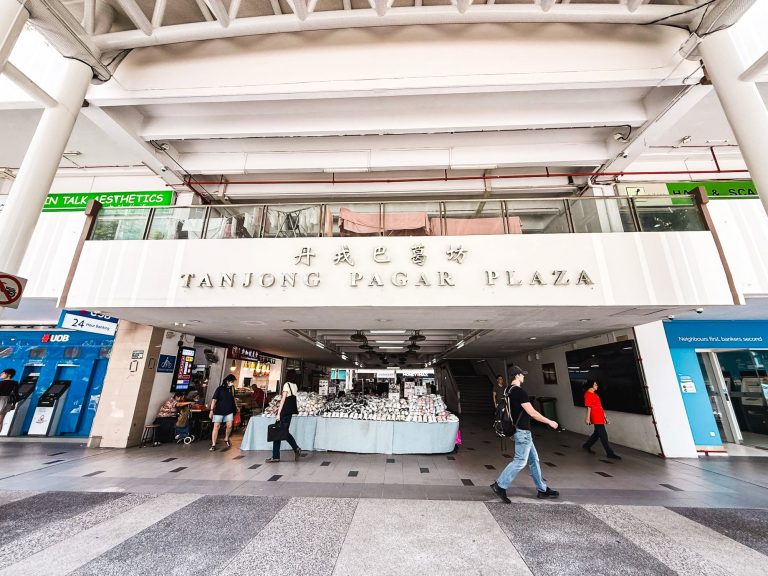
It is a quarter past ten on a weeknight, and the wet market side of the neighbourhood centre has already pulled its shutters down. But the fried chicken counter at the corner is lit up like a small airport, there are eight people in the queue, three delivery riders parked in a loose fan by the loading bay, and a family of four is finishing dinner at a table that was, twenty minutes ago, occupied by two students sharing a drink.
That scene is the output of a quiet, decades-long contest over some of the most contested retail real estate in Singapore: HDB shop space. Not Orchard Road, not Marina Bay — the humble ground-floor unit under a block of flats, the one with the grease trap out the back and the queue spilling onto the concourse.
Fast-food chains are not in the heartlands by accident. They bid, they wait, they take whatever unit frees up. And when they land, they change what it feels like to live in an estate — and, at the margin, what people will pay to live there.
This article unpacks that contest: how HDB shop space is allocated, which estates have the deepest F&B clusters, what an anchor chain does to neighbourhood amenities, and how much of it actually shows up in HDB resale flat demand.
The Scarcity at the Heart of the Heartlands
About eight in ten resident households in Singapore live in HDB flats, according to HDB's own published figures. That single statistic explains almost everything about the commercial layer of the heartlands.
Because HDB isn't just a landlord of homes. It is, by stock, one of the largest managers of neighbourhood retail in the country — reportedly on the order of 15,000 shops, plus more than a hundred eating houses and markets spread across the island's towns. Do the arithmetic against roughly a million-plus flats and you land on a fairly thin ratio: something in the order of one shop for every 70-odd homes. That ratio is not the product of demand. It is the product of planning.
That distinction matters enormously.
- Malls add space when rents justify it. A developer with a strong catchment can build, expand, or reconfigure. Supply responds, however slowly, to price.
- HDB shop space does not work like that. Commercial units in HDB estates are planned years — sometimes decades — in advance as part of a town's master plan, and they sit inside a broader social brief: markets, clinics, supermarkets, eating houses, and only then the discretionary retail.
- The result is structural scarcity. A specific unit in a specific block, at a specific corner of a concourse, is effectively one of one. There is no substitute three streets away if that site already has a coffee shop and a convenience store.
Add to this that many older HDB shops were sold off decades ago on leases of varying length. Some of those units now carry only a couple of decades of remaining tenure, which shapes who can sensibly lease them and for how long. Meanwhile, new shops in BTO projects arrive in much smaller numbers than the flats that surround them.
So the ground floor of a mature HDB estate is a genuinely constrained asset class — and the tenants competing for it now include brands that, twenty years ago, wouldn't have looked at anything without a mall atrium.
Why Every Fast-Food Chain Wants a Prime HDB Shop Space
Fast-food expansion in Singapore has, for years, been dominated by the same handful of players. Reported outlet counts put McDonald's at well over a hundred restaurants islandwide and KFC at roughly 80, with Burger King, Subway, Pizza Hut, Long John Silver's and a lengthening list of Asian QSR brands filling out the field. None of them can grow by opening in malls alone — there simply aren't enough viable mall locations, and the ones that exist are both expensive and increasingly contested by the same brands.
The heartlands offer something different.
The rent gap is real, if rarely published
Retail rents in prime Orchard Road and top-tier suburban malls are reported in the tens of dollars per square foot per month. HDB neighbourhood-centre units, whether rented directly from HDB or leased from a shop owner, generally sit well below that — the gap varies enormously by node, and nobody should treat the comparison as a simple percentage. But the direction is consistent, and it matters because a fast-food outlet's economics are unusually rent-sensitive: high staff count, heavy equipment, thin unit margins, and long operating hours.
The catchment is captive in a way malls are not
A neighbourhood centre typically serves a few thousand households within a short walk. A town centre like Toa Payoh Central, Tampines or Bedok can draw from a catchment several times that size, layered on top of bus interchanges, MRT stations and markets. Those households aren't choosing between your outlet and a dozen competitors in an air-conditioned atrium — they're choosing between your outlet, the coffee shop downstairs, and cooking at home.
The demand curve runs past midnight
One underestimated driver: HDB estates generate demand at hours malls cannot serve. A mall with a 10pm closing cannot capture the 11pm supper crowd, the shift worker finishing at midnight, or the delivery-app order at 1am. An HDB shophouse unit with its own frontage can.
The trade mix itself is a signal
HDB curates what goes into its commercial developments, and a brand that clears that process has effectively been vetted as an amenity contribution rather than a nuisance. For a chain, that is worth something beyond the rent.
| Dimension | Mall unit | HDB neighbourhood centre unit |
|---|---|---|
| Rent per sq ft | Higher, and escalates with mall performance | Generally lower; wide variance by node |
| Footfall source | Shared mall traffic, including destination shoppers | Captive residential catchment, plus transit and market traffic |
| Operating hours | Constrained by mall hours | Much greater freedom, including late night |
| Trade mix control | Developer controls and protects category | HDB controls permitted trades; less category protection |
| Fit-out and grease trap | Landlord-managed, standardised | Often tenant's problem, more variables |
| Delivery and pick-up | Loading bay protocols, sometimes restricted | Street frontage, kerbside activity, rider congregation |
| Lease structure | Typically 2–3 years plus options | Tenancy or sublease; varies widely by owner |
How an HDB Shop Unit Actually Reaches a McDonald's
Here's where most people's mental model goes wrong. There is no single pathway. There are at least two, and they produce very different outcomes.
For new commercial developments — the neighbourhood centres packaged with BTO projects, integrated developments and new town centres — HDB generally retains the units that deliver an essential service: the eating house, the supermarket, sometimes the clinic. Those are rented out on tenancy agreements, typically of a few years, with renewals subject to performance and continued need. The remaining shops are generally sold on 30-year leases through open tender, and the winning bidder may be an operator, an investor, or a family office.
What follows is a chain of leases and subleases. The brand you see on the signboard often isn't the entity that holds the tenure.
For older HDB shophouse units, the picture is messier and, frankly, more interesting. Many were sold to individuals and small businesses long ago. Some are still held by the original family. Others have changed hands repeatedly, and the resale market for HDB shops trades on remaining lease, frontage, and the presence of an existing tenant. A shop with a long-standing anchor tenant and a lease covenant is worth more than a vacant unit, even at the same address.
This produces a quirk that shapes the whole market: the chain that lands in a mature estate usually inherits a site someone else assembled. It didn't outbid a rival at a tender. It outbid a rival for a tenancy assignment, or it bought the shop outright. That is a slower, more relationship-driven game than mall leasing — and it explains why the same brands cluster in the same few nodes for years.
Tender reality check
When HDB does tender a shop, bids are assessed primarily on price, with the tenancy agreement specifying permitted trades. Practically, that means a high bid for a unit in a genuinely prime node can only be justified by revenue that only a high-volume operator can generate. Which is precisely how fast food, pharmacies, and telco or banking branches end up winning the best corners.
Mapping the F&B Clusters: Where Chains Land in HDB Estates
F&B intensity is not evenly spread. It concentrates around three things: transit interchanges, wet markets and hawker centres, and sheer residential density. Estates that have all three are the ones where you'll find the longest queues, the most delivery riders, and the widest choice after dark.
Some nodes below are HDB-managed commercial units; others are mall or private developments sitting inside predominantly HDB towns. From a resident's point of view, the distinction barely matters — what matters is what's within a five-minute walk.
| Estate / Town | Anchor F&B nodes | F&B intensity | Character of the cluster |
|---|---|---|---|
| Toa Payoh | Toa Payoh Central, Lorong 4 and 6 markets, HDB Hub precinct | Very high | The archetypal heartland cluster: mature, transit-heavy, saturated |
| Ang Mo Kio | AMK Hub precinct, Ave 8 market blocks, Ave 4 nodes | Very high | Dense, with lunchtime inflow from nearby industrial and office catchments |
| Bedok | Bedok Interchange hawker centre, Bedok 85, Bedok North blocks | Very high | The east's supper belt; genuinely late-night economy |
| Tampines | Tampines Round Market, Tampines Mart, town centre | High | Regional centre with an enormous, multi-generational catchment |
| Yishun | Yishun Park Hawker Centre, Northpoint precinct, Ave 9 nodes | High | North belt; strong after-dark and weekend demand |
| Woodlands | Marsiling Mall, Woodlands Civic Centre precinct, 888 Plaza | High | Commuter flows, including cross-border traffic |
| Jurong West / Boon Lay | Boon Lay Place Market, Jurong West Street 41 | High | University and industrial catchment creating all-day demand |
| Hougang / Kovan | Kovan heartland, Hougang Ave 4 nodes | High | Walkable, established, resistant to mall gravity |
| Queenstown | Margaret Drive, Holland Drive, Tanglin Halt precinct | Moderate to high | Mature but in transition; renewal changing the node |
| Punggol / Sengkang | Waterway Point, Sengkang Grand, Oasis Terraces | Moderate | Planned and mall-centric; fewer street-front shophouse units |
| Tengah / Bidadari | New town-centre precincts | Emerging | Brand-new catchments; chains are signing early |
Three patterns jump out.
First, maturity wins. The deepest F&B clusters sit in estates that have had fifty years to accumulate footfall, informal food culture, and — crucially — older leases that let operators run a durable business. Toa Payoh and Bedok are not popular because they were designed to be. They are popular because they've been busy for generations.
Second, new estates are structurally different. Punggol and Sengkang were built around larger, more consolidated commercial nodes, often integrated with malls and MRT stations. That produces fewer, bigger amenity points rather than a long tail of small street-front units. It's more efficient. It is also less characterful, and residents who grew up in mature estates often notice the difference.
Third, the new towns are the growth story. Tengah and Bidadari are being watched closely by F&B operators precisely because they represent a fresh catchment with no incumbents. In a market where prime HDB shop space is capped, a brand-new town centre is one of the very few places where supply is actually being created.
What an Anchor Chain Actually Does to a Neighbourhood
Ask residents whether they want a fast-food outlet at the void deck corner and you will not get a uniform answer. The support and the objections are both grounded in real experience.
The case for
- Late-night amenity. In estates where the coffee shop closes by 9pm, an outlet open until midnight or later changes what's possible for shift workers, students, and anyone arriving home late.
- Footfall spillover. Anchor tenants pull traffic past adjacent shops. Smaller outlets — the optical shop, the bakery, the minimart — often report better evenings after a strong F&B neighbour opens.
- Consistency and comfort. Air-conditioned seating matters in Singapore's climate, particularly for older residents and families with young children.
- Jobs. These outlets employ locally, often on flexible shifts that suit residents in the estate.
- Perceived safety and activity. Lights, people and movement at 11pm make a concourse feel less empty.
The case against
- Congestion. Delivery riders, parked cars, and queue spillover can clog a concourse designed for pedestrians, not for a 40-order-per-hour operation.
- Litter and pest pressure. Bin capacity, grease traps, and bin-centre management become live estate issues very quickly.
- Noise and smell for the immediately adjacent stacks. The blocks directly above an F&B node carry a real cost that the whole estate doesn't share.
- Competitive pressure on hawkers and small operators. A chain with scale can absorb cost pressures that a single-stall operator cannot.
- Homogenisation. When the same six brands appear in every town centre, estates lose some of what made them distinct.
| Impact | Who benefits most | Who bears the cost |
|---|---|---|
| Late-night food access | Shift workers, students, young families | — |
| Increased footfall | Adjacent retailers, transport operators | Residents near loading areas |
| Air-conditioned seating | Elderly, families, hot afternoons | — |
| Noise and odour | — | Immediately adjacent stacks, low floors |
| Rider and vehicle congestion | Delivery customers | Pedestrians, parents with prams |
| Commercial competition | Consumers | Independent hawkers and small stalls |
The honest summary is that an anchor F&B outlet is net positive at the estate level and net negative for a small number of specific households. Estate-level pricing tends to reflect the first effect. Individual unit pricing reflects the second.
Do F&B Clusters Move HDB Resale Flat Demand?
This is the question every buyer eventually asks, and it deserves a careful answer rather than a confident one.
Start with the market backdrop. HDB resale prices have moved sharply over the last six years, and volumes have swung just as dramatically — although the two don't move in lockstep.
HDB Resale Price Index: Annual Change (%)
As the chart shows, price growth decelerated through 2022 and 2023 before re-accelerating in 2024 — reportedly to around 9.6% for the year. That is a national index. It tells you nothing directly about whether the McDonald's downstairs added $20,000 to your flat.
For that, look at transactions.
HDB Resale Flat Transactions (Units)
Volume peaked in 2021 at just over 31,000 units and cooled to roughly 26,700 by 2023, before reportedly recovering to around 29,000 in 2024. What that shape tells you is that the market has been driven primarily by financing conditions, grant changes, BTO supply and post-pandemic demand — factors that operate at the national level and swamp anything a single shop unit can do.
So where does amenity fit in?
Amenity is a secondary driver with a real, localised effect
Housing analysts broadly treat the following as the primary drivers of a resale flat's value, roughly in this order of influence:
| Driver | Typical influence | How it shows up |
|---|---|---|
| Location relative to MRT / LRT | Very high | Consistent, measurable premium at 400–500m rings |
| Remaining lease and flat age | Very high | Steep discount curve beyond 60–70 years remaining |
| Town-level supply and BTO pipeline | High | MOP waves depress or lift entire towns |
| Floor level, orientation, condition | Moderate to high | Unit-level variance, often ±5–10% |
| Amenity depth — markets, hawker centres, F&B clusters | Moderate | Shows up in town-centre proximity premiums |
| Grants and financing conditions | High, cyclical | Shifts the whole market, not individual projects |
Amenity sits in the middle. It rarely makes or breaks a valuation on its own, but it is one of the reasons two 4-room flats of similar age, five kilometres apart, can transact at meaningfully different prices.
The distance curve is not linear
There is a pattern that experienced agents describe consistently, and it makes intuitive sense: the relationship between distance to a busy F&B cluster and unit price is not a straight line. It's closer to an inverted U.
- Directly above or adjacent to the node — you get the noise, the smell, the riders and the queue. Some buyers discount these stacks.
- Three to six minutes' walk — you get full convenience with none of the operational mess. This is often where the amenity premium is cleanest.
- Beyond ten minutes — the amenity is effectively irrelevant to your daily routine, and the premium fades.
What this means for buyers
If you are buying for owner-occupation, a strong F&B cluster is close to unambiguously good — it makes daily life easier, and it tends to hold its appeal because the underlying scarcity doesn't go away. If you are buying for investment or resale liquidity, the calculation is more nuanced: you want to be near the node, not in it, and you want to understand whether the node is a permanent structural advantage or a temporary one.
The Coffeeshop Squeeze: Chains, Rents and Stallholders
No discussion of HDB shop space is complete without the coffee shop — the HDB eating house that anchors almost every neighbourhood centre in Singapore.
Over the past decade, ownership of these eating houses has consolidated. Listed and institutional operators, including Kopitiam, Koufu, Kimly and Fei Siong, have steadily accumulated HDB and private coffeeshops, and individual units have reportedly transacted in the tens of millions of dollars in some cases. From an operator's perspective this is rational: scale buys procurement leverage, and a coffeeshop in a mature estate with an ageing population and steady footfall is a durable cash flow.
From a resident's perspective, the consequences are more mixed.
- Stall rentals have risen, and stallholders have publicly raised concerns about subletting arrangements and the cost of taking over a stall.
- Price sensitivity is sharp. Coffeeshop food prices are a politically salient topic in Singapore in a way that mall food court prices simply are not.
- Authorities have signalled closer scrutiny of how eating houses are transacted and how stall rents are set, with a focus on keeping heartland food affordable.
- The chains are not the villains of the story. A fast-food outlet at a neighbourhood centre and a $4.50 bowl of noodles in the coffee shop are, functionally, competing for the same stomach at the same time of day — and the outcome for residents depends far more on the number of options available than on who owns the signboard.
The structural point is this: HDB shop space is public infrastructure dressed as commercial real estate. Every time a unit changes hands, it changes what a neighbourhood can eat, when it can eat, and how much it pays — and those changes propagate into how attractive the estate is to live in.
What to Watch Over the Next Few Years
New commercial supply in new towns. Tengah and Bidadari are the rare cases where genuinely new HDB-adjacent F&B capacity is being created. Watch which brands sign early — early movers in a fresh catchment often establish decade-long positions.
Policy on eating house transactions and stall rents. Any tightening here affects the entire neighbourhood food ecosystem, including how aggressively chains bid for adjacent units.
Delivery versus dine-in. If delivery continues to grow as a share of QSR revenue, the value of a physically prominent HDB frontage may fall relative to a lower-rent back-of-house location. That would be the single biggest change to this market in twenty years.
Estate renewal programmes. Upgrading and renewal works can reposition a tired node almost overnight, and they tend to attract chains back into estates that had been written off.
Short-lease shop units. As remaining tenures on older HDB shops run down, some nodes will face a period of uncertainty — and possibly opportunities for operators willing to accept a shorter horizon.
Prime Location Public Housing and BTO policy. Anything that changes which estates are considered "prime" changes where demand — and therefore F&B operator interest — flows next.
Food for Thought
1. If HDB shop space is public infrastructure, should it be priced by open tender? The highest bidder for a prime corner is usually the operator with the deepest pockets — not necessarily the one residents would choose. Is there a version of this market that optimises for amenity rather than rent?
2. Is a neighbourhood's food identity worth protecting? When the same six brands appear in every town centre, the estates become more efficient and less distinctive. Does that trade-off show up anywhere in resale prices, or do buyers simply not care?
3. How much of an "amenity premium" is real, and how much is storytelling? Every agent has a story about a block that jumped in value after an MRT station or a mall opened. Disentangling that from financing conditions and lease decay is genuinely hard. What evidence would convince you either way?
4. Who should bear the cost of a busy F&B node? The estate gets the benefit; the second-floor unit directly above the exhaust duct gets the smell. Should there be a mechanism — in pricing, in compensation, in design — that reflects that asymmetry?
5. If delivery keeps growing, does frontage still matter? A dark kitchen two blocks away and a prime corner unit produce the same bowl of fried chicken at your door. If that becomes the dominant channel, what happens to the rental premium on HDB shop space?
The Bottom Line
Prime HDB shop space is one of the most quietly contested asset classes in Singapore. It is scarce by design, it cannot be quickly replicated, and it sits at the intersection of two things Singaporeans care about intensely: where they eat, and what their flat is worth.
The chains are not the story in themselves. They are the visible tip of a market that runs on tenders, tenancies, subleases and remaining lease tenures — a market where a single unit changing hands can shift what an entire block feels like at 11pm. And while a McDonald's or a KFC will never be the reason a flat transacts at one price instead of another, the cluster of amenities around it is one of the reasons two otherwise similar estates five kilometres apart don't price the same.