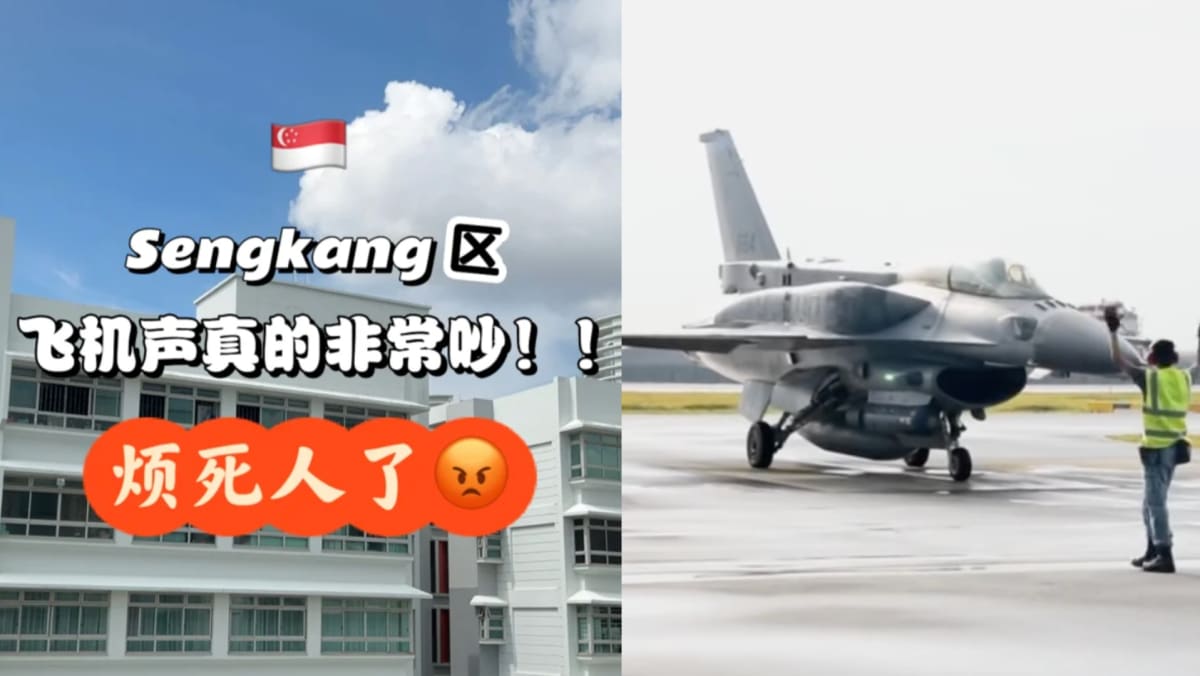
Ask a Singaporean buyer what they scrutinised before signing an Option to Purchase and you'll hear a familiar list: remaining lease, distance to the MRT, which primary school is within 1km, whether the living room faces the afternoon sun. Almost nobody says: "I checked the flight path."
Yet aircraft noise near Singapore airports — from Changi's overnight long-haul departures to Paya Lebar's fighter jets and Seletar's turboprops — is one of the very few neighbourhood characteristics you cannot renovate away. You can redo a kitchen. You can install a new air-con. You cannot move a runway.
And in Singapore's east and north-east, the noise geography is about to change more than at any point in decades. Paya Lebar Air Base is slated to leave. Changi is building Terminal 5 and a third runway on reclaimed land. Seletar, once a sleepy general aviation field, now hosts a full aerospace cluster and a steady stream of regional turboprop services.
For anyone aged 25–40 weighing a first BTO, an HDB resale flat, or a condominium in Tampines, Pasir Ris, Hougang, Sengkang, Punggol or Yishun, this is not an abstract question. It affects how much you pay, how easily you resell, and how well you sleep on a Tuesday night.
Why Aircraft Noise Is Back on Singapore's Property Radar
Three things have converged to push aircraft noise back into the property conversation.
1. The Paya Lebar Air Base (PLAB) clock is ticking. The relocation of the air base to Changi was announced at the 2013 National Day Rally, with the move originally targeted around 2030. The site is roughly 800 hectares — an area larger than many HDB towns — sitting in the middle of Singapore's east. Its departure removes a military flying operation from the doorstep of Eunos, Kaki Bukit, Hougang, Serangoon and MacPherson, and unlocks land for redevelopment.
2. Changi keeps growing eastward. The Changi East development — which includes Terminal 5 and a third runway on reclaimed land — is the largest aviation infrastructure project in Singapore's history. Terminal 5 is expected in the mid-2030s, with reported additional capacity of around 50 million passengers per annum.
3. Seletar has quietly become a real airport again. Turboprop services were shifted from Changi to Seletar in late 2018 and 2019, and the surrounding Seletar Aerospace Park has grown into a cluster reportedly hosting dozens of aerospace firms. That means more movements — and more noise — over a part of Singapore that was, for years, comparatively quiet.
The tension is straightforward. Aviation is a strategic industry and a major employer. Residential land is scarce, so homes get built closer and closer to aerodromes. And aircraft noise is a classic "negative externality": the cost lands on households rather than the operator.
The Three Aerodromes Shaping Singapore's Noise Map
Singapore effectively has three noise sources, and they behave very differently.
| Changi Airport | Paya Lebar Air Base | Seletar Airport | |
|---|---|---|---|
| Traffic type | Commercial passenger & cargo | Military (RSAF fighter and transport aircraft) | Turboprops, business/general aviation, aerospace testing |
| Operating pattern | Around the clock; no night curfew | Mostly weekday daytime training and sorties | Daytime-weighted; training and scheduled turboprop services |
| Noise character | Frequent, moderate-to-high; continuous background | Less frequent, very high peak (fighter jets) | Less frequent, moderate; propeller pitch distinctive |
| Nearby towns | Changi, Loyang, Pasir Ris, Tampines | Eunos, Kaki Bukit, Ubi, MacPherson, Hougang, Serangoon, parts of Sengkang/Punggol | Seletar, Yio Chu Kang, Jalan Kayu, Sengkang, Punggol, Yishun |
| Planned change | T5 and third runway; traffic back to pre-COVID levels | Relocation to Changi, targeted in the 2030s | Continued aerospace cluster growth |
Two structural facts matter more than most people realise.
First, Changi runs 24 hours. Unlike many major airports constrained by night curfews, Changi's noise footprint includes the small hours. If your flat sits under a departure corridor, your quietest window may not exist.
Second, PLAB noise is intermittent but violent. A C-130 or an F-15SG produces a peak that no double-glazing fully disguises. But those peaks are less frequent than commercial traffic, and they cluster on weekday working hours rather than at 2am.
How Aircraft Noise Travels From Runway to Living Room
Understanding the mechanism is what separates a panicked buyer from a well-informed one.
Aircraft operate into the wind. That single fact determines which runway is active on any given day, which in turn determines which neighbourhoods sit under approach and departure paths. Changi's parallel runways are oriented roughly north-north-east to south-south-west (designated 02L/20R and 02C/20C, with a third runway forming part of the Changi East development). When the north-east monsoon blows between roughly December and March, the pattern of runway use — and therefore the pattern of noise — flips relative to the south-west monsoon months.
The practical implication is significant: noise exposure is directional and seasonal, not uniform. A buyer who views a flat once, on a windless Saturday afternoon, may learn nothing at all about what that same flat sounds like on a February weekday morning.
The ICAO "Balanced Approach" framework
International aviation noise management is guided by ICAO's Balanced Approach, which rests on four pillars. Singapore applies versions of all four:
- Reduction at source — quieter engines and airframes, driven by international certification standards
- Land-use planning — zoning and buffer controls that keep sensitive uses away from contours
- Noise abatement operational procedures — preferred routes over water, continuous descent approaches, restrictions on certain procedures
- Operating restrictions — measures such as limiting particular aircraft types or operational windows
Changi, for instance, has long used flight procedures designed to route traffic over water where geography allows, and noise contour studies published in connection with the Changi East environmental assessment have informed how surrounding land is planned.
What determines noise inside your unit
Two homes 300 metres apart can experience completely different noise loads. The variables that matter most:
- Orientation — bedrooms facing the flight path versus a service yard that shields them
- Floor level — higher floors are often exposed to more direct line-of-sight to aircraft, though ground-level reflections and screening from neighbouring blocks complicate the simple story
- Glazing — single-glazed casement windows versus laminated or double-glazed systems
- Building layout — whether the block itself or an adjacent block acts as a barrier
- Distance and intervening terrain — hills, dense tree cover and industrial buildings all attenuate sound
What Aircraft Noise Actually Does to Property Prices
The international evidence
Reviews of hedonic pricing studies — the standard academic method for isolating how much a single attribute contributes to a property's price — have generally found that aircraft noise imposes a measurable discount.
According to published reviews of this literature, the effect is commonly estimated in the region of roughly 0.5% to 1% per decibel of noise exposure above a threshold, typically around 55–65 dB Lden. Applied to a home exposed to, say, 10 dB above the threshold, that implies a discount in the mid-single-digit to low-double-digit percentages. These findings vary enormously by market, vintage of the study, and how well the research controls for neighbourhood quality — so treat them as directional rather than precise.
Why Singapore's numbers look different
Singapore is not a clean laboratory for that generic result, for at least four reasons.
Land scarcity compresses discounts. In cities where buyers can simply move to a quieter suburb at little cost, noise discounts are large. In Singapore, the alternative to a flat near Paya Lebar is not an equally convenient quiet flat — it is a smaller flat further from work, or a more expensive one. When substitutes are limited, the discount shrinks.
Airports bring employment. Changi Airport Group, the airlines, ground handlers, and the Seletar aerospace cluster collectively employ tens of thousands of people, many of whom value living close to work. That demand pushes up on rents and prices in the same areas that noise pushes down.
Height restrictions cut both ways. Planning controls tied to airport obstacle limitation surfaces cap how tall buildings can be in some areas near aerodromes. That suppresses redevelopment and en-bloc potential — but it also preserves low-rise character, which in enclaves like the Seletar Hills and Jalan Kayu area is precisely what buyers pay a premium for.
The noise discount is often a stack discount, not a town discount. At the town level, aircraft noise is diluted by distance, intervening blocks, and the sheer number of units. At the unit level — a top-floor, unglazed, flight-path-facing stack on a noisy corner — it can be very visible, both in the transacted price and in how long the unit sits on the market.
Resale vs Rental: Two Different Reactions to the Same Noise
Resale buyers and renters respond to aircraft noise in measurably different ways — and this matters if you are buying for yield.
Resale buyers are pricing in a decade or more of exposure. They weigh the noise against lease decay, exit liquidity, school proximity and future supply. In a soft market, noise becomes a highly effective bargaining lever: sellers of noisy stacks often accept a wider spread or wait longer. In a hot market, that leverage evaporates, and the discount can narrow to near nothing.
Renters are pricing in months, not decades. Two opposing forces are at work:
- Aviation and aerospace staff — including crew on irregular schedules — often accept or even prefer proximity to the airport. For someone finishing a shift at 2am, a 10-minute commute can outweigh a noisy afternoon.
- Tenants with young children or remote-work arrangements are far more sensitive, and are more likely to churn.
The practical consequence for landlords: rental demand near airports is often resilient in quantum but fragile in mix. You may find tenants quickly, but the tenancy profile — shorter stays, shift workers, higher turnover — can differ from an equivalent flat in a quieter pocket.
A note on the "buffer zone" effect
Areas on the edge of a noise contour often behave differently from both the core noisy zone and the quiet zone. They are close enough to share in the employment and connectivity benefits, but far enough that aircraft are a distant rumble rather than a conversation-stopper. In practice, these fringe locations frequently show the strongest relative demand — the benefit without the cost.
Changi: Growth, Terminal 5, and a Footprint That Moves Over Water
Changi Airport is Singapore's aviation flagship, and its traffic trajectory has been dramatic.
Changi Airport Passenger Traffic (million passengers)
As the chart shows, Changi's traffic collapsed during the pandemic and has since climbed back to within a whisker of its 2019 record, according to figures reported by Changi Airport Group.
Changi Passenger Traffic as % of 2019 Level
For residents in Pasir Ris, Tampines, Loyang and Changi, the recovery means noise exposure has effectively returned to pre-pandemic norms.
What changes with Terminal 5 and the third runway
The Changi East project is the most consequential change to Singapore's aviation noise geography since Changi opened in 1981. Two features matter for homeowners:
- The new runway is on reclaimed land to the east. Approach and departure corridors are generally expected to sit further over water and away from densely populated areas than would be the case if capacity were added to the west.
- Terminal 5 adds substantial capacity. More capacity means more movements, but concentrated at a facility purpose-built with modern noise management in mind.
The honest caveat: adding runways and terminals changes flight path distributions, and some neighbourhoods may find themselves under a path they were not under before. Flight path information associated with the Changi East environmental assessment is public, and it is worth consulting rather than assuming.
Paya Lebar Air Base: The Noise Discount With an Expiry Date
If there is one place in Singapore where aircraft noise is a genuinely investable theme, it is the ring of estates around Paya Lebar Air Base.
Who is affected today
PLAB's noise reaches a wide band of the east and north-east, depending on runway direction and sortie patterns:
- Eunos, Ubi, Kaki Bukit, MacPherson — closest, most directly exposed
- Hougang and Serangoon — regularly under approach and departure corridors
- Parts of Sengkang and Punggol — exposed on certain runway configurations
- Bedok, Aljunied and Geylang — fringe exposure, largely seasonal and directional
The three-part investment case
1. Noise removal is a one-way improvement. When PLAB departs, the noise does not come back. That is fundamentally different from a new MRT line (which can be rerouted or delayed) or a new mall (which can fail). Noise removal is a permanent, non-reversible upgrade to the ambient environment of a large swathe of Singapore's east.
2. Height restrictions lift. Buildings currently capped by the air base's obstacle limitation surfaces — visible in the low-rise industrial and residential pockets across the eastern fringe — become candidates for higher development. For owners of older low-rise property in these zones, that is a meaningful optionality.
3. Land supply creates a new node. The ~800-hectare site sits adjacent to Paya Lebar Central, already designated a growth commercial hub. URA's long-term planning work has identified the area for substantial future residential and employment use. New supply is a double-edged sword — it can dilute scarcity value in surrounding older stock — but new amenity, connectivity and jobs typically raise the floor for an entire district.
The risks to that thesis
- Timeline slippage. The relocation has already been discussed as occurring in the 2030s rather than precisely in 2030. Buyers should not treat the date as contractual.
- Slow pricing. Markets tend to price major infrastructure shifts gradually and then all at once. Buying "early" can mean years of flat performance.
- New supply cannibalisation. A large new residential district nearby can compete directly with ageing stock in Eunos and Ubi.
Seletar: Small Airport, Big Overlap With New Towns
Seletar is the most under-appreciated of the three noise sources, because it sits closest to some of Singapore's newest and most heavily subscribed housing.
The airport handles turboprop regional services and business aviation, and the broader Seletar Aerospace Park is now a genuine employment node. Turboprop consolidation from Changi to Seletar in 2018–2019 was a pivotal shift — aircraft that used to be someone else's problem became Seletar's neighbours' problem.
Geography of exposure
- Jalan Kayu and Seletar Hills — closest residential areas, including substantial landed housing stock
- Yio Chu Kang and parts of Ang Mo Kio — under certain approach corridors
- Sengkang and Punggol — the fastest-growing HDB towns in the north-east sit within reach of some Seletar flight paths
- Yishun — fringe exposure
Why homeowners here should pay attention
Two reasons stand out.
Landed property sensitivity. Seletar Hills and the Jalan Kayu area contain a large stock of semi-detached and detached homes. For this buyer segment, aircraft noise is often a decisive variable — landed buyers are typically paying for amenity and liveability, and they have quieter alternatives (albeit more expensive ones).
Diplomatic and regulatory history. Implementation of instrument landing procedures at Seletar generated cross-border discussion in 2018–2019, widely reported at the time. That episode is a reminder that noise at Seletar is not purely a domestic planning question; the airport's operational procedures can be shaped by factors outside the property market's control.
On the positive side, Seletar's employment base supports rental demand in Sengkang and Punggol, and the area's low-rise character — partly a function of airport height controls — gives the surrounding landed enclaves a scarcity quality that newer, denser estates cannot replicate.
How to Check Aircraft Noise Before You Buy: Noise Maps and Site Visits
This is the section worth screenshotting.
Step 1 — Consult published noise information
- Noise contour maps and environmental assessments published in connection with airport expansion projects (notably the Changi East environmental assessment) show modelled exposure bands.
- Aircraft noise exposure forecast contours distinguish areas of differing exposure intensity, and are the closest thing to an official "noise map".
- Land-use planning documents from URA show which areas carry airport-related height controls and buffer designations.
Step 2 — Match the map to the actual flight paths
Contours tell you the intensity; flight paths tell you the direction. Both are needed. A unit can sit outside a high-exposure contour and still be directly under an approach centreline.
Step 3 — Visit at the right times
One viewing is not enough. Go at:
- A weekday morning, 7–9am — peak commercial departures
- A weekday afternoon — military sortie windows for PLAB
- A weekend — when military flying typically drops but commercial traffic does not
- An evening, 8–11pm — Changi's long-haul departure bank
Stand at the window. Stand on the balcony. Open the windows, then close them.
Step 4 — Interrogate the building itself
- Are the windows single or double glazed? Are they laminated?
- Which side of the block do the bedrooms face?
- Is there intervening stock — another block, a multi-storey car park, a hill — between you and the path?
- What is the floor level, and does it have unobstructed sightlines toward the aircraft?
Step 5 — Ask the neighbours
Resale buyers have an advantage that new-launch buyers do not: the current residents have already lived through the full seasonal cycle. Ask them directly what the worst hours are.
Mitigation: What Operators, Planners and Owners Can Actually Do
Noise mitigation operates at four levels, and knowing which levers exist helps you judge how a problem might ease — or not.
| Level | Measure | Who controls it |
|---|---|---|
| Source | Quieter aircraft generations, engine technology | Regulators and airlines |
| Operations | Preferred routes over water, continuous descent approaches, runway use preferences, training windows | Airport operator and air traffic control |
| Planning | Zoning buffers, height controls, land-use separation | URA and other planning authorities |
| Building | Acoustic-rated glazing, laminated glass, layout design that places bedrooms away from exposed facades, acoustic seals | Developers and homeowners |
For individual owners, the practical levers are the building-level ones. Retrofit acoustic glazing and proper sealing can make a substantial difference to interior noise, particularly for higher-frequency turbine and propeller sound. Structure-borne low-frequency noise from heavy aircraft is harder to defeat, but it is also less constant.
Where mitigation has limits: nothing an individual owner does changes which runway is in use, how many flights there are, or how late they operate. That is why a buyer's due diligence should focus first on location and configuration, and only second on what can be fixed with glass.
Food for Thought
-
Is aircraft noise already priced in, or is the market slow to notice? If noise contour maps are public and flight paths are observable, why do so many buyers still discover the problem only after moving in?
-
What happens to prices around Paya Lebar when the noise actually stops? Markets tend to price expectations gradually. If everyone knows the air base is leaving, has the eventual benefit already been captured — or are there pockets where the discount persists simply out of habit?
-
Does Terminal 5 make Pasir Ris and Tampines better or worse? More capacity on reclaimed land could route flights further over water. It could also change flight path distributions in ways that only become clear after operations begin. How should a buyer price that uncertainty?
-
Should Singapore consider night restrictions at Changi? Many major airports have them. Singapore's status as a global hub depends on round-the-clock connectivity. Whose interests should prevail — and who compensates the households that lose sleep?
-
Is proximity to Seletar a feature or a bug? For aerospace workers and their families, a short commute may be worth more than a quiet afternoon. For landed homeowners seeking tranquillity, the equation may run the other way. Can the same address be both?
The Bottom Line
Aircraft noise near Singapore airports does not produce a simple, uniform discount. It produces a configuration-specific one. At the town level, the effect is often diluted to the point of invisibility — Changi's employment magnet, PLAB's imminent departure and Seletar's aerospace cluster all push demand in the opposite direction. At the unit level, on the noisiest stack with single glazing and a bedroom facing the approach path, the effect can be real, persistent, and negotiable.
The buyer who understands flight paths, monsoon-driven runway direction, contour maps and window specifications has a genuine informational advantage. In a market where almost everyone checks the same three things, that advantage is worth something.