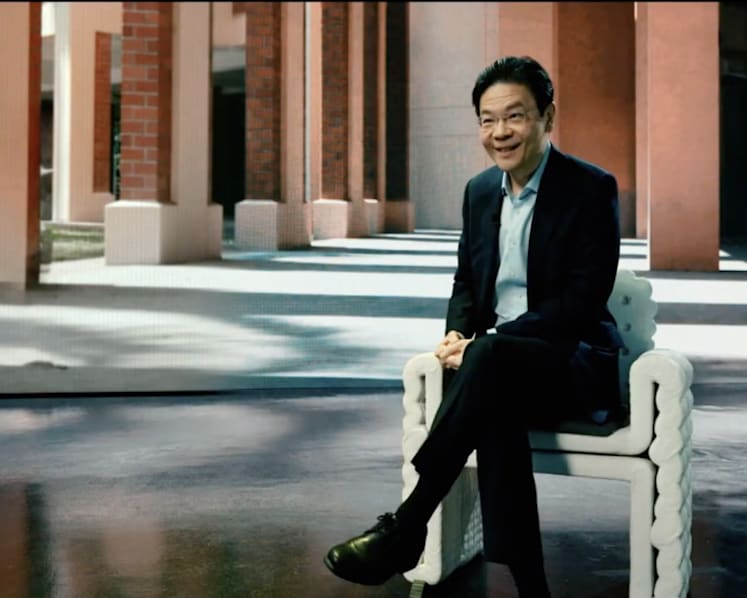
Ask a Singaporean in their late twenties or thirties what keeps them up at night, and housing is rarely far from the top of the list. But the question itself has quietly changed. Five years ago it was, "Will I ever get a flat?" Today, under Lawrence Wong's housing agenda, it is a more complicated set of questions: Which category of flat can I buy? How long am I locked in for? What does the resale market look like on the other side? And is renting — for longer, and more deliberately — actually a rational choice now?
Since taking office as Prime Minister in May 2024, Wong has presided over one of the most significant restructurings of Singapore's public housing system in two decades. The mature/non-mature estate binary that framed every BTO decision since the 1990s has been retired. A new classification — Standard, Plus and Prime — took effect with the October 2024 BTO exercise. Loan rules were tightened. Grants were enlarged. Singles got a meaningful unlock on where they can buy.
This article walks through what has actually changed, what the data says about the market these policies are operating in, and — most importantly — what it means if you are a first-time buyer, a young couple, or someone still deciding between renting and buying.
Figures below are drawn from HDB, URA and Ministry of National Development public releases, Budget statements, and media reports citing that data. Where a number is an estimate or a rounded approximation, it is flagged as such.
The Big Picture: Why Housing Sits at the Centre of This Government's Plan
Housing in Singapore is not just a property market. It is the mechanism through which the state delivers asset appreciation, social stability, and family formation. Roughly 80% of resident households live in HDB flats, and the vast majority of those own their homes. That makes public housing simultaneously a welfare programme, an investment vehicle, and a political contract.
That contract has been under strain. Between 2020 and 2022, HDB resale prices climbed sharply, million-dollar resale flats went from a curiosity to a regular headline, and BTO application rates in popular estates spiked into the double digits for some projects. For a cohort entering the market in their late twenties, the sense that the goalposts were moving was real.
Lawrence Wong's response has been structural rather than cosmetic. Instead of tinkering with grants alone, the government has:
- Redrawn the flat classification system, replacing mature/non-mature estates with Standard, Plus and Prime flats
- Tightened the maximum loan-to-value ratio for HDB loans from 80% to 75%, aligning it with bank loans
- Increased the Enhanced CPF Housing Grant to as much as $120,000 for first-timer families
- Opened 2-room Flexi BTO flats in all locations to singles aged 35 and above
- Kept BTO supply elevated, as part of a commitment to launch up to 100,000 flats between 2021 and 2025
Each of these moves is defensible on its own. Together, they represent a shift in philosophy: the government is deliberately decoupling "affordable" from "high-growth." Flats in the most desirable locations now come with longer lock-ins and subsidy clawbacks, precisely so that they can be priced within reach without becoming lottery tickets.
From "Mature vs Non-Mature" to Standard, Plus and Prime
The single biggest conceptual change is the new flat classification, announced at the 2024 National Day Rally. Here is how it works.
The distinction matters enormously for anyone thinking about a 10-year horizon:
| Feature | Standard | Plus | Prime |
|---|---|---|---|
| Minimum Occupation Period | 5 years | 10 years | 10 years |
| Subsidy recovery on first resale | No | Yes | Yes |
| Income ceiling for buyers | $14,000 | $14,000 | $14,000 |
| Rent out whole flat | Allowed after MOP | Not allowed | Not allowed |
| Resale buyer eligibility checks | Minimal | Yes | Yes |
| Typical location | Most towns | MRT-adjacent, city fringe | City centre, Greater Southern Waterfront |
For a 30-year-old buying a Plus flat today, the practical implication is that you are committing to live there until you are roughly 40 before you can sell into the open market. That is not a bug — it is the design. The government is explicitly pricing in the location premium and recovering it on exit, so that the subsidy goes to the occupant rather than to the first reseller.
A Quick Timeline of How We Got Here
BTO Supply: More Flats, Shorter Waits, and the End of the Lottery Era
If there is one lever that determines everything else in Singapore housing, it is supply. Price growth from 2020 to 2022 was driven substantially by construction delays during the pandemic and a mismatch between when people wanted flats and when flats were actually completed.
The Context: What Happened to Prices
HDB's Resale Price Index moved dramatically over the past five years.
HDB Resale Price Index: Annual Change (%)
The shape of that chart tells the story: a 12.7% surge in 2021, followed by a moderation to 4.9% in 2023 as supply caught up, and then a re-acceleration to around 9.6% in 2024. That last jump is the uncomfortable one. It suggests that even with record BTO launches, the resale market has not fully cooled — partly because resale buyers who cannot wait three to four years for a BTO have limited alternatives.
The Supply Response
HDB's response has been to build at a scale not seen in years:
- A commitment to launch up to 100,000 BTO flats between 2021 and 2025
- Annual launch volumes in the region of 20,000 to 23,000 flats in recent years
- A deliberate push to launch flats in more attractive locations, including city-fringe and MRT-adjacent sites
- New growth areas coming online, including Bayshore and the first residential parcels in the Greater Southern Waterfront
The effect on the queue has been visible. Where the most oversubscribed projects in 2021–2022 saw first-timer application rates in the high single digits or beyond, most recent launches have cleared with far lower ratios. That is a meaningful change: it means the BTO route is becoming less of a lottery and more of a decision you can plan around.
Waiting Times
Waiting time remains the biggest practical friction. HDB has been working to bring the average down, and a growing share of launches now come with shorter waiting times of roughly three years or under, with some projects marketed specifically as shorter-waiting-time flats. The government has also been converting some sites and redeveloping older estates to speed up delivery.
For a couple in their early thirties, this matters. A three-year wait plus a 10-year MOP on a Plus flat means a 13-year commitment. That is not a reason to avoid the route — but it is a reason to model it honestly rather than assuming you will be able to upgrade within five years.
Affordability: Grants, Loans, and the New Rules of Engagement
Supply fixes the market over a decade. Affordability measures fix it for the person applying this year. The Wong government has moved on both.
Grants: Bigger, But More Conditioned
The most significant grant change came in Budget 2024, when the Enhanced CPF Housing Grant (EHG) was raised substantially for first-timer households.
Enhanced CPF Housing Grant: Maximum Amount
A first-timer family buying a BTO or resale flat can now receive up to $120,000 in EHG, with singles receiving up to $60,000. Importantly, the EHG is income-tiered — the closer you are to the income ceiling, the less you get. A couple earning $9,000 a month does not receive the same amount as a couple earning $4,000.
Beyond the EHG, the broader grant stack for first-timers includes:
| Grant | Typical Maximum | Applies To |
|---|---|---|
| Enhanced CPF Housing Grant | Up to $120,000 (families) / $60,000 (singles) | BTO and resale |
| CPF Housing Grant for Resale Flats | Up to $50,000 (4-room or smaller) | Resale only |
| Proximity Housing Grant | Up to $30,000 (live with parents/child) | Resale and some BTO |
| Singles Grant | Broadly half the prevailing family grant | Resale, 2-room and some 3-room |
The direction of travel is clear: grants are getting larger but more targeted. The government is comfortable subsidising the household that needs help, and less comfortable subsidising the household that is buying a second property or unlocking a windfall.
The LTV Cut: Small Percentage, Big Signal
In August 2024, the maximum loan-to-value ratio for HDB loans was reduced from 80% to 75%, bringing HDB loans in line with bank loans. On a $500,000 flat, that shifts the minimum cash-and-CPF outlay from $100,000 to $125,000.
Why do this when affordability is the stated priority? Three reasons:
- It dampens demand-side pressure. Lower leverage means buyers can bid less aggressively, which cools resale prices over time.
- It reduces household risk. A 75% LTV borrower has more equity cushion if prices fall or income is interrupted.
- It removes a market distortion. For years, HDB loans offered both a lower interest rate and higher leverage than bank loans — a combination that quietly encouraged stretching.
The trade-off is real for cash-poor buyers. A couple who could previously scrape together a down payment now needs roughly 25% more upfront capital. That is a genuine barrier, and it is the main reason the LTV change generated pushback despite its prudential logic.
The Monthly Instalment Reality
Two ratios govern how much you can actually borrow:
- Mortgage Servicing Ratio (MSR): your monthly housing payment cannot exceed 30% of gross monthly income, for HDB flats and Executive Condominiums
- Total Debt Servicing Ratio (TDSR): all your monthly debt obligations cannot exceed 55% of gross monthly income
The MSR is the binding constraint for most young buyers. On a combined income of $8,000 a month, your maximum monthly housing instalment is roughly $2,400. Working backwards with prevailing HDB loan rates over a 25-year tenure, that supports a loan in the region of $450,000 to $500,000 — which, combined with grants and CPF, puts a 4-room resale flat in a non-central estate firmly within reach, and a Plus or Prime flat in a trickier position.
Who Gets What: Singles, Couples and the Rules That Reshape the Queue
The most quietly consequential reform of the past two years was not about money. It was about eligibility.
The Singles Unlock
From the October 2024 BTO exercise, singles aged 35 and above can apply for 2-room Flexi BTO flats in any location, not just in non-mature estates. Previously, a single buyer in their late thirties was effectively confined to a narrower set of towns.
The significance is more than geographic:
- It gives single buyers access to the same location premium that couples have enjoyed
- It acknowledges that marriage timing and home ownership timing have decoupled in Singapore
- It applies to 2-room Flexi flats specifically — so the trade-off is size, not just location
For a 36-year-old single professional earning $6,000 a month, the maths now works differently: a 2-room Flexi BTO in a Plus estate becomes a genuine option, subject to the income ceiling of $7,000 for singles buying 2-room Flexi flats. The catch, again, is the 10-year MOP if the flat is in a Plus or Prime location.
The Lock-In Trade-Off
Here is the decision that most first-timers now face, laid out plainly.
The honest assessment: the Plus and Prime categories are excellent deals for people who genuinely intend to stay put. The subsidy is real, the location is good, and the 10-year lock-in is not a burden if you were not planning to move anyway. They are poor deals for someone who expects to upsize, relocate for work, or sell within seven years.
Income Ceilings Worth Knowing
| Scheme | Income Ceiling |
|---|---|
| BTO flats (families) | $14,000 |
| BTO flats (extended/multi-generation) | $21,000 |
| 2-room Flexi BTO (singles) | $7,000 |
| Executive Condominiums | $16,000 |
| Plus / Prime resale buyers | $14,000 |
That last row is new and easy to miss. If you buy a Plus or Prime flat, you are not just locking yourself in — you are also restricting the pool of people who can buy it from you later. That is another reason the resale price is expected to grow more slowly than a comparable Standard flat.
The Rental Market: Where Policy Meets the Pressure Valve
The brief for this government's housing agenda explicitly includes rental reform, and it is worth separating two very different rental markets that get conflated constantly.
Public Rental: The Social Safety Net
HDB's public rental scheme serves households that cannot afford to buy. Policy shifts here have been about expanding supply and tightening the transition into ownership:
- Continued building of new rental flat blocks, with supply being increased over the coming years
- The Fresh Start Housing Scheme, aimed at helping families in public rental move into home ownership with additional grants and support
- Longer leases and stability measures for families with children, so that rental housing is not a revolving door
The philosophy is that public rental should be a temporary floor, not a destination — a safety net with a ladder attached.
Private and HDB Open-Market Rental: A Genuine Reset
The story is different in the open market. After a sharp run-up in 2022 and 2023, private residential rents have eased since peaking in 2023, as a wave of new completions came onstream and expatriate demand normalised. URA's rental index for private homes has softened across several consecutive quarters — a reversal that surprised many landlords who had priced in permanent escalation.
For young Singaporeans, the practical effects are:
- Negotiating power has shifted slightly back to tenants in the private market, particularly in areas with heavy new supply
- HDB whole-flat rents remain supported by demand from households waiting for their BTO to complete
- Plus and Prime flats cannot be rented out whole, even after MOP — which removes a whole class of future rental supply from those estates by design
Rental Rules That Catch People Out
| Property Type | Minimum Rental Period | Occupancy Cap | Whole-Flat Subletting |
|---|---|---|---|
| HDB flat (Standard) | 6 months | 6 persons (4 for smaller flats) | Allowed after MOP, with approval |
| HDB flat (Plus/Prime) | 6 months | 6 persons | Not allowed |
| Private residential | 3 months | Up to 8 for larger units | Allowed, subject to rules |
| Short-term (Airbnb-style) | Not permitted | — | Not permitted |
The 6-month minimum for HDB flats and the outright ban on short-term rentals are the two rules that most often trip up new landlords and tenants alike. They are also the rules most actively enforced.
What It Means in Practice: Three Reader Profiles
Policy is abstract. Here is how it lands for three plausible readers.
Profile 1: The 28-Year-Old Single, Earning $5,500
- BTO route: Not yet eligible — singles need to be 35. Two-room Flexi in a non-mature estate at 35 remains the mainstream path.
- Resale route: Eligible now for a resale flat under the singles scheme, though constrained on size and grant quantum.
- Rental route: Private rental is genuinely more negotiable than it was in 2023. HDB whole-flat rental in a suburban estate remains the cheaper option, but you are competing with BTO-waiting couples.
- The call: Renting for another five to seven years and saving aggressively is defensible, especially if income growth is likely.
Profile 2: The 32-Year-Old Couple, Combined Income $9,000
- BTO route: Strong candidate. EHG will be moderate given the income level. Expect a three- to four-year wait.
- Standard vs Plus decision: This is the crux. A Plus flat near an MRT line means a 10-year MOP. If a child is planned within three years, the space and school-proximity calculations change quickly.
- Resale route: Faster, but with cash-over-valuation and renovation costs on top, and a smaller grant stack.
- The call: If both partners are stable in their jobs, a Standard BTO in a maturing estate is often the highest-value move — five-year MOP, full rental flexibility later, and no subsidy clawback.
Profile 3: The 38-Year-Old Family, One Child, Combined Income $13,000
- BTO route: Still eligible for family BTO up to $14,000, but EHG will be minimal or nil at this income.
- Plus/Prime route: Attractive on location, but the 10-year MOP plus clawback is a heavy commitment at this life stage.
- Resale route: The realistic path. Focus on remaining lease — flats with under 60 years left are harder to finance and harder to exit.
- The call: Prioritise lease length and financing certainty over location premium. At this income, the binding constraint is the MSR, not the grant.
The Trade-Offs Nobody Puts on a Poster
It is worth naming the tensions in this agenda honestly, because they are the things that will determine whether it works.
1. Supply takes time; resentment does not. The flats launched in 2024 will complete around 2027–2028. The buyer feeling the pinch today does not experience that supply as relief.
2. The 10-year MOP is a real cost. It transfers flexibility from the household to the system. For mobile careers, that is a meaningful constraint — and it is not compensated in the sticker price in a way that is easy to quantify upfront.
3. The LTV cut hits cash-poor households hardest. Higher grants help, but grants are income-tested and capped. A household just above a grant threshold but below the cash-rich line gets squeezed from both directions.
4. Rental easing is uneven. New supply is concentrated in certain districts. Tenants in areas without completions have not experienced the reset at all.
5. The resale market is still the release valve. As long as BTO waiting times run to three or four years, resale demand has a floor. Supply is the only durable answer, and it is a multi-year project.
Food for Thought
-
If a Plus flat comes with a 10-year MOP and a subsidy clawback, is the discount you receive actually a discount — or a deferred payment? Run the numbers on a realistic resale scenario at year 11 and see whether the Plus premium survives the clawback.
-
The government has decoupled "good location" from "fast appreciation." Is that a feature or a penalty for the household that plays by the rules? If you buy a Prime flat, live in it for a decade, and sell at a modest gain, did the policy help you or the system?
-
Singles can now buy 2-room Flexi flats anywhere — but only from age 35, and only up to a $7,000 income ceiling. Does that reflect a deliberate social policy about family formation, or an assumption about single households that is increasingly out of step with how people actually live?
-
If private rents are softening and BTO waits are three to four years, is renting-and-investing now a legitimate long-term strategy rather than a holding pattern? What would have to be true for that to beat buying-and-holding?
-
What happens to the resale market when the first cohort of Plus and Prime flats hits its 10-year MOP around 2034? Will buyers accept the eligibility restrictions, or will those flats trade at a persistent discount that nobody has modelled yet?
The Bottom Line
Lawrence Wong's housing agenda is best understood as an attempt to restore the link between public housing and social stability — at the cost of some of the speculative upside that crept in over the past decade. More supply, larger but more targeted grants, tighter leverage, longer lock-ins in desirable locations, and a genuine opening for singles.
For young Singaporeans, the practical takeaway is that the decision has become more consequential, not less. The gap between a Standard flat and a Plus flat is no longer just a location premium; it is a completely different set of rules about how long you stay, who can buy from you, and whether you can ever rent it out.
That means the analysis you do before applying matters more than it used to.