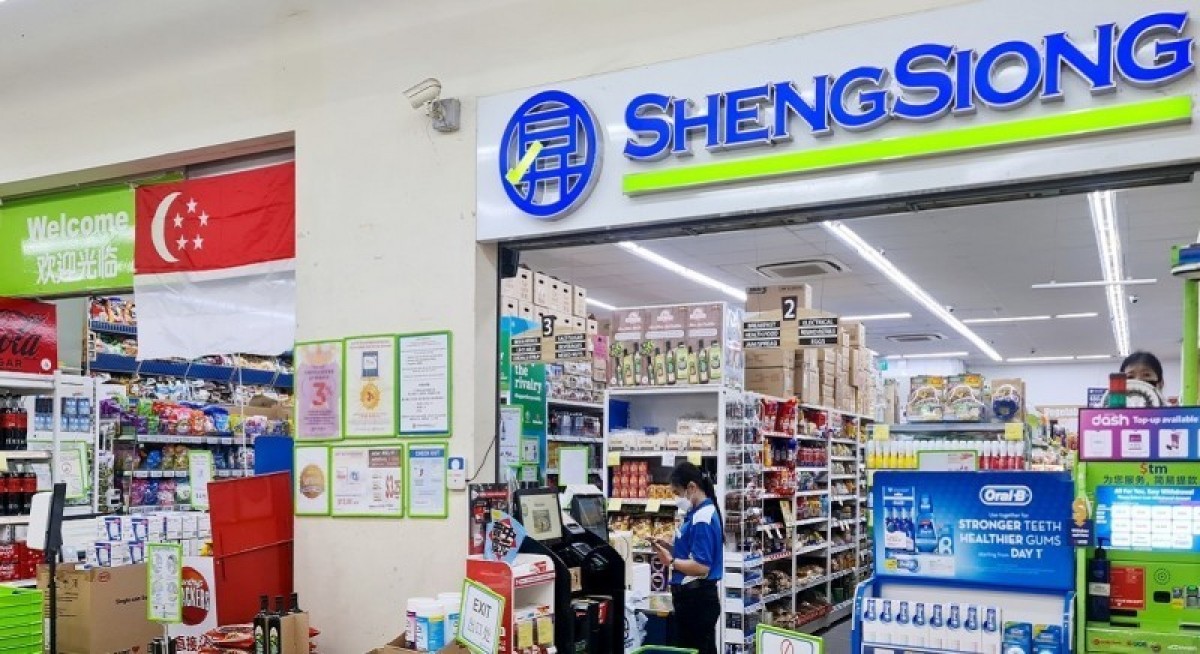
A new supermarket opening rarely makes the news. There is no ribbon-cutting ceremony broadcast live, no ministerial soundbite, no queue of investors. Yet for anyone tracking HDB resale dynamics in Singapore, the quiet arrival of a Sheng Siong outlet at a neighbourhood centre is one of the more revealing signals a heartland estate can send — about liveability, about footfall, and eventually about the price a flat can command.
Sheng Siong's expansion is not simply a grocery story. Over four decades, the homegrown chain has grown from a single provision shop in Ang Mo Kio into one of the largest supermarket networks in Singapore, with the large majority of its outlets sitting inside HDB towns and neighbourhood centres. That placement matters. Every new store is also a small piece of urban infrastructure — one that reshapes how a precinct functions, what tenants want to be next to it, and how buyers price everyday convenience into a resale flat.
This article unpacks that chain of effects: how Sheng Siong's footprint has grown, why supermarket anchors carry disproportionate weight in amenity scoring, what the surrounding HDB resale data suggests, and how the same dynamics play out in the retail property market where neighbourhood centres, suburban malls and shophouse landlords all compete for the same grocery dollar.
Sheng Siong's Footprint: The Grocery Anchor of Singapore's HDB Estates
From one Ang Mo Kio shop to a heartland network
Sheng Siong was founded in 1985 by the Lim brothers, starting with a single store in Ang Mo Kio — a location that says everything about the chain's DNA. From the outset, Sheng Siong positioned itself where Singaporeans actually live, not in the CBD or in high-rent prime malls.
The group listed on the Singapore Exchange in 2011, and has since expanded steadily. Based on company annual reports and press coverage, its Singapore store count has roughly tripled since listing, crossing the 70-outlet mark in recent years. Revenue has scaled alongside it, with the group reporting annual turnover in the region of S$1.4 billion, supported by a grocery-led model with heavy exposure to fresh produce, wet-market-style live seafood counters, and price-sensitive daily staples.
Sheng Siong outlets in Singapore (approximate)
The figures above are approximate and indicative, drawn from reported corporate disclosures and media coverage over the years. The trajectory, however, is not in dispute: a slow, deliberate, estate-by-estate creep across the island.
Where the stores actually are
Sheng Siong's network is unusually concentrated in the places that matter for HDB resale analysis:
- HDB neighbourhood centres and precinct shop clusters, where the group is often the single largest tenant by floor area and footfall
- Suburban shopping centres in non-mature and mature estates, where it functions as a daily-needs anchor
- Integrated developments and town centres, including newer estates where amenity infrastructure is still filling in
- A small overseas footprint in Kunming, China, which is immaterial to the Singapore property story
For property purposes, the defining feature is that Sheng Siong's stores are overwhelmingly located where HDB blocks are — in towns such as Ang Mo Kio, Bedok, Clementi, Toa Payoh, Yishun, Woodlands, Hougang, Tampines, Sengkang and Punggol. That geographic overlap is what makes the chain's expansion legible as a property signal.
What a supermarket needs to survive
Supermarkets are a useful proxy for neighbourhood viability because they are ruthlessly quantitative about location. An operator like Sheng Siong is, in effect, running a continuous bet on household density and walk-in traffic within a defined catchment.
As a broad industry rule of thumb — one that operators apply with plenty of local variation — a full-size suburban supermarket needs a catchment of roughly 10,000 to 20,000 households within a 1 to 2 kilometre radius, plus either strong foot traffic or adequate parking, to sustain the volumes that justify the rent. In HDB terms, that means a catchment built on a handful of high-density blocks and, ideally, a location on the walking route between a transport node and residential clusters.
That rule of thumb is why a new Sheng Siong outlet is informative. The chain is not opening stores on sentiment. It is opening them where it believes a viable, sustainable base of daily grocery demand already exists or is about to arrive.
How a Supermarket Anchor Moves HDB Resale Demand
The amenity hierarchy that buyers actually pay for
Amenity scoring in property is often treated as a vague, feel-good concept. In practice, HDB buyers respond to a fairly consistent hierarchy of everyday needs, roughly in this order of weight:
| Tier | Amenity | Why it matters for resale |
|---|---|---|
| 1 | MRT / LRT access | Dominant determinant of price band and buyer pool |
| 2 | Daily grocery (supermarket, wet market) | Determines whether errands require a bus trip |
| 3 | Food options (coffeeshops, hawker centre) | Daily spend, social function, foot traffic |
| 4 | Schools, clinics, banks, post office | Life-stage driven; strong for family buyers |
| 5 | Lifestyle retail, gyms, cafés | Marginal for resale value; helps newer estates |
Tier 1 gets all the attention. Tier 2 is the quiet workhorse — and it is the tier Sheng Siong occupies almost single-handedly in many precincts.
The reason is behavioural. Most households shop for groceries two to four times a week, not once a month. A supermarket within a comfortable walking distance — commonly cited as roughly 400 to 500 metres, or about a five- to seven-minute walk — converts a chore into a habit. A supermarket 1.5 kilometres away converts the same chore into a drive, a bus ride or a delivery order. That difference shows up in the lived experience of an estate long before it shows up in a price index.
The transmission mechanism
A new supermarket anchor does not lift prices directly. It works through a chain of neighbourhood effects.
Each link in that chain is observable, and each has a different timeline. Footfall shifts within weeks. Tenant mix shifts within lease cycles — typically one to three years. Price effects, if any, are slowest of all, because they are mediated by the broader market cycle, interest rates and the individual attributes of each flat.
Why the supermarket is the hardest amenity to substitute
Three features make grocery anchors unusually sticky:
- Frequency: daily or near-daily use, unlike a mall or a cinema
- Necessity: demand is close to recession-proof, which is why supermarkets are prized anchor tenants
- Non-substitutability: a coffeeshop can be replaced by another coffeeshop, but the nearest supermarket is the nearest supermarket
For HDB resale, that last point is the crucial one. When you buy a flat, you are buying into a fixed set of walking distances. Those distances do not improve with renovation.
Reading the Numbers: HDB Resale Price Trends Across the Expansion Era
The macro backdrop dominates
Before attributing anything to groceries, the honest framing: the overall HDB resale market has been the overwhelming driver of prices since 2019, and no amenity effect can be read off without first stripping out the market cycle.
According to HDB's Resale Price Index — where 2009 Q1 = 100 — resale prices climbed across the period that also saw Sheng Siong's estate-level expansion accelerate.
HDB Resale Price Index (Q4 of each year, 2009 Q1 = 100)
The cumulative move is striking: from roughly 131.5 at the end of 2019 to around 197 at the end of 2024, the index gained approximately 50 per cent in five years. That is a market-wide tide, and it lifted every estate — amenity-rich and amenity-poor alike.
Volume tells a different, useful story
Transaction volume is often a better early indicator of amenity-driven demand than price, because volumes respond faster and are less sticky. Rounded to the nearest thousand, HDB resale transactions have moved in a wide band over the same period.
HDB resale transactions per year (approximate)
Two things stand out. First, 2021 was an outlier year in volume, driven by pandemic-era demand, low rates and a wave of upgraders and downgraders. Second, volumes have since normalised at a level that is still historically healthy — a sign that demand is broad-based rather than concentrated in a few hot precincts.
What the amenity effect looks like once you control for the cycle
The honest finding from the Singapore literature and from market observation is this: proximity to a supermarket anchor is consistently positively correlated with resale values within the same town, but the effect is typically smaller than proximity to an MRT station or differences in remaining lease. Reported premiums in the low single-digit percentages — not double digits — are a reasonable expectation for a well-anchored precinct versus an otherwise comparable one without a nearby supermarket.
That does not make it unimportant. In an HDB market where flat-to-flat differences of a few per cent translate into tens of thousands of dollars, a persistent low single-digit amenity premium compounds quietly over a holding period. And crucially, it also affects liquidity — how quickly a flat sells and how many buyers turn up on the first weekend of viewings.
The sequencing matters for buyers and sellers. Someone selling within six months of a new anchor opening is unlikely to capture much of the benefit. Someone buying then is arguably buying the amenity at a discount.
Town by Town: Where the Amenity Effect Bites Hardest
Mature estates: the floor is already high
In mature towns such as Ang Mo Kio, Bedok, Clementi or Toa Payoh, amenities are largely saturated. A new Sheng Siong outlet there mostly replaces or upgrades an existing grocer rather than introducing grocery access for the first time. The marginal amenity gain is small; the marginal effect on resale is correspondingly small.
What does change in mature estates is quality of the retail mix. An upgraded anchor can lift surrounding shophouse and coffeeshop activity, which in turn raises the perceived quality of the precinct — a soft variable that is hard to price but easy to feel during a viewing.
Non-mature estates: the marginal gain is largest
The largest amenity gains occur in towns where infrastructure is still catching up with the housing stock. In newer estates, the first supermarket anchor in a precinct can shift household behaviour materially:
- It reduces the number of residents who drive or take a bus to a distant mall
- It makes the precinct viable for residents without cars — often a younger buyer profile
- It signals that the town's commercial build-out has reached the residential clusters, which affects buyer confidence in the estate's trajectory
That is where Sheng Siong's expansion is most consequential as a property signal. In newer HDB towns, an incoming supermarket anchor is often the first visible confirmation that an area has crossed the threshold from "construction site" to "neighbourhood".
Estates in transition: the under-appreciated case
There is a third category that gets less attention: older estates receiving new neighbourhood centre or Neighbourhood Renewal Programme investment. When a precinct gets a refreshed centre with a modern supermarket anchor, the effect is not just convenience — it is a visible rebuttal of decline. For a 40-year-old estate with ageing blocks, that matters for how buyers perceive lease decay and long-term liveability.
Reading an estate the way an operator would
If you want to apply grocery-operator logic to your own search, ask three questions:
- How many supermarket options sit within a 500-metre walk? Two or more indicates a genuinely dense catchment.
- Is the anchor new, upgraded, or at risk of closure? A single-anchor precinct is more exposed to a single tenant decision.
- Does the walking route pass through shaded, well-used space? A 400-metre walk through a covered linkway is functionally shorter than the same distance along an open service road.
Retail Property: Neighbourhood Centres, Mall Footfall and Anchor Economics
Why landlords want a grocery anchor
For retail landlords, supermarkets are the closest thing to a utility. They generate predictable, high-frequency footfall across all seven days and both peak and off-peak hours — something that few other retail categories can do. A supermarket trades from early morning until late evening, and its customers often spill over into adjacent units before or after shopping.
That is why supermarkets typically negotiate longer leases, larger footprints, and lower rents per square foot than specialty retail. They are paid for in footfall, not in rent density. The economics only work for the landlord if the anchor lifts the performance of the surrounding units.
HDB neighbourhood centres: the anchor is a policy decision too
Many HDB neighbourhood centres lease space through HDB tenders, which means the supermarket anchor in a heartland precinct is partly a function of public leasing policy. When HDB or a town council refreshes a centre, the supermarket that wins the tender becomes the demand engine for the entire cluster of shops around it — the bakeries, the clinics, the tuition centres, the optical shops and the F&B units.
This creates a two-way relationship worth understanding:
- A strong anchor makes surrounding units easier to lease and supports their rents
- A weak or departing anchor can hollow out a centre quickly, because there is no substitute source of daily traffic
Suburban malls: footfall in a thin-margin environment
In suburban shopping centres, the anchor supermarket does much of the heavy lifting on weekday traffic. Grocery shoppers arrive on weekdays in a way that fashion and lifestyle shoppers simply do not, and mall operators rely on that base to keep the centre viable during off-peak periods.
The competitive pressure, however, is intense. Online grocery, delivery platforms and the rise of smaller-format convenience retail have all eroded the assumption that a suburban supermarket automatically owns its catchment. That makes the anchor decision more consequential, not less.
Shophouses and HDB shops: the spillover effect
The most direct retail property beneficiary of a supermarket anchor is often the low-rise shop cluster around it. Coffeeshops, provision shops, hardware stores and clinics in the immediate vicinity gain from the footfall the anchor generates — and in the HDB context, that footfall is remarkably stable because it is anchored to residential density rather than discretionary spending.
The owner-occupier angle
Sheng Siong is, in a small but growing number of cases, both tenant and landlord — the group has purchased premises from which it trades, converting leasehold occupancy into property ownership. For investors, that is a useful signal: an operator with deep insight into a catchment's long-run viability is willing to put capital, not just rent, behind the location.
The Competitive Map: Who Else Is Fighting for the Heartland Basket
Sheng Siong does not operate in isolation. The grocery landscape it competes in shapes both its expansion choices and the amenity value of the precincts it enters.
| Player | Positioning | Heartland presence |
|---|---|---|
| NTUC FairPrice | Broadest network; co-operative model; strong in HDB towns and malls | Very high |
| Sheng Siong | Value-led, fresh-produce heavy, wet-market format | Very high, heavily HDB-weighted |
| DFI Retail Group brands | Premium and mid-market formats across suburban malls | Moderate to high, mall-weighted |
| Don Don Donki | Experiential, imported goods, high-visibility malls | Low in pure heartland terms |
| Online grocery and delivery platforms | Convenience-led, increasingly price-competitive | Not location-dependent |
Two implications follow for property watchers:
First, the presence of multiple competing supermarkets in one precinct is a sign of catchment depth. Operators do not cluster without reason; where they cluster, household density and spending power are usually strong.
Second, the risk of an anchor leaving is real but asymmetric. In a precinct with one anchor, a closure is a genuine amenity shock. In a precinct with two or three, the loss of one is absorbed. That asymmetry is not always reflected in how buyers assess an estate — but it should be.
Risks and Counterpoints: Where the Supermarket Thesis Breaks Down
A balanced read requires acknowledging the limits of the amenity argument.
Amenity effects are real but modest relative to location. MRT proximity, remaining lease, floor level, facing, renovation condition and block age typically outweigh grocery access in determining transaction price. Treating a new supermarket as a primary investment thesis is a mistake.
Correlation is not causation. Estates receiving new supermarkets are usually also receiving other investment — new BTO supply, transport improvements, town centre upgrades. Disentangling the supermarket's specific contribution from the broader upgrade wave is genuinely difficult.
Retail oversupply is a live risk. Singapore has a large and growing stock of retail space, and e-commerce continues to erode physical retail demand in categories other than groceries. A supermarket anchor protects daily-needs footfall; it does not protect the broader retail cluster from structural change.
Anchor concentration cuts both ways. A precinct optimised around a single large grocer is efficient but fragile. Lease expiries, corporate strategy shifts or consolidations can change a neighbourhood's amenity profile faster than most residents expect.
Newer estates may take years to mature. A supermarket opening ahead of full residential occupancy can trade thinly for a while, and the surrounding retail cluster may take several lease cycles to fill in. The amenity is real; the price effect is slow.
How to Use This as a Buyer or Seller
If you are evaluating an HDB resale flat and want to apply the amenity logic without over-weighting it, a simple sequence helps.
Practical checklist:
- Count your grocery options within a walk. One anchor is adequate; two or more suggests a deep catchment.
- Time the walk, not the distance. Covered linkways, crossings and slopes change the experience materially.
- Check the centre's age and tenancy mix. A freshly renovated centre with strong tenants signals continued landlord investment.
- Look for planned upgrades. New neighbourhood centres and renewal programmes are often announced well before they are built — the discount period is before construction, not after.
- Do not pay a supermarket premium. Treat amenity access as a filter for shortlisting, not as a justification for a price above the estate's comparable range.
- Check supply pipeline. In estates with heavy incoming BTO supply, short-term amenity improvements may be offset by medium-term resale competition.
For sellers, the mirror image applies. If your precinct has recently gained or upgraded an anchor, the benefit is more likely to show up in marketing reach and viewing volume than in an immediate price premium — which is exactly what makes a well-anchored flat easier to sell in a softer market.
Food for Thought
- If a supermarket anchor is worth a low single-digit premium, how much of that is already priced into the estate's median PSF — and how would you ever know?
- Sheng Siong's expansion has been deliberate and profitable. If the group ever slows its openings or closes outlets, what does that say about the catchments it is retreating from — and would buyers notice in time?
- Singapore has spent decades layering amenities into HDB towns. Is there a point at which additional retail amenity stops adding resale value and simply redistributes footfall from one centre to another?
- If online grocery eventually captures a materially larger share of the heartland basket, does a supermarket anchor still function as a proxy for liveability — or does the proxy break?
- When two precincts within the same town are otherwise identical but one has a fresher retail centre, is the price gap buyers pay a rational reflection of convenience, or an aesthetic preference dressed up as amenity value?
Conclusion
Sheng Siong's growth is a useful lens precisely because it is unglamorous. Supermarkets do not create hype; they respond to household density, walking patterns and daily routine. When a chain with decades of heartland operating experience commits to a location, it is making a commercial judgment about the long-run viability of a catchment — and that judgment overlaps heavily with what makes an HDB estate pleasant, and therefore more resilient, to live in.
The price evidence is more modest than the narrative suggests: within the market-wide rise of roughly 50 per cent in the HDB Resale Price Index between end-2019 and end-2024, the supermarket effect is a small, persistent, second-order variable. But small and persistent is a meaningful combination over a decade-long holding period, particularly when it also improves how quickly a flat sells.