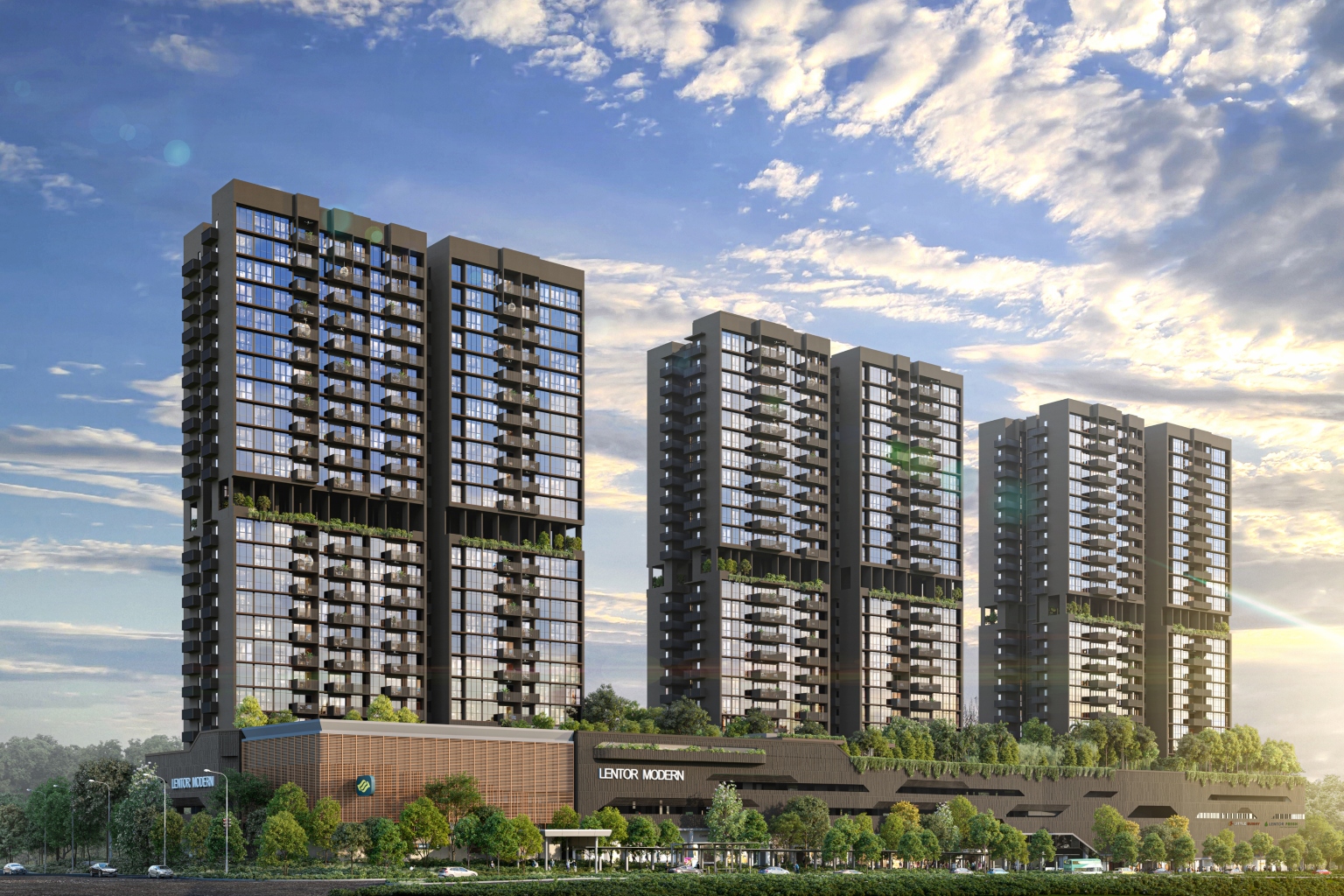
Picture this: a typical Singapore Friday evening. The sky opens up at 6.45pm, and the entire island seems to move in that uniquely Singaporean shuffle — umbrellas out, shoes sacrificed, Grab surge pricing kicking in. Meanwhile, someone takes the lift down from their 18th-floor condo, walks 30 metres through an air-conditioned mall, and boards the MRT without ever touching rain.
That is the "integrated lifestyle premium" in its purest form — and it is one of the most seductive ideas in Singapore's property market. Condominiums built above or directly beside shopping malls and MRT stations are marketed as the ultimate convenience play: groceries downstairs, bubble tea downstairs, cinema downstairs, and a train platform that might as well be in your own lobby.
But seduction is not the same as sound investment. Paying a premium at the showflat is easy. Recouping it at the resale stage is a different question entirely. Does the convenience premium attached to integrated developments — the homes tied to malls like Clementi Mall, Compass One, Northpoint City and Waterway Point — actually persist through property cycles? Or does it fade like the novelty of a new mall smell?
The answer, as with most things in property, is layered. Let's unpack what this premium really buys, how it behaves across ten years of market ups and downs, and the honest checklist you should run through before paying up for a home that sits above a shopping centre.
What Do We Mean by "Integrated" — and Why the Definition Matters
Before we talk about value, we need to be precise about what kind of property we are analysing. In Singapore's urban planning vocabulary, an integrated development usually means a single mixed-use site combining residential, retail, and transport infrastructure — most commonly a shopping mall sitting directly above an MRT station or bus interchange, with residential blocks rising above or attached to it.
But there are actually several distinct patterns of mall-linked living, and they perform very differently in the resale market. Understanding which category a project falls into is more important than the marketing brochure's label.
| Pattern | What it looks like | Examples |
|---|---|---|
| Stacked living | Private residences sit directly above a retail podium, which itself sits above an MRT/LRT station or bus interchange. The "zero-walk" experience. | North Park Residences above Northpoint City and Yishun MRT; Woodleigh Residences above The Woodleigh Mall and Woodleigh MRT; The Orchard Residences above ION Orchard |
| Same-site or linked living | Condominium shares the larger town-centre site with a mall or is physically bridged to it, but you may still take a lift down, cross a sheltered link, and walk 100–200 metres to the station. | J Gateway linked to Westgate and Jurong East MRT; Watertown connected to Waterway Point and Punggol MRT/LRT; Hillion Residences at Bukit Panjang |
| Short-walk halo | A conventional condo built a few minutes from an integrated mall-MRT hub, where the mall is the headline amenity rather than part of the same development. | The Clement Canopy near Clementi Mall; condominiums in the catchment of Compass One at Sengkang |
One clarification is worth making. Singapore's most famous transport-retail hubs — Clementi Mall and Compass One — are technically integrated developments in the planning sense, because the mall sits above the MRT station and bus interchange. But neither has private residential units stacked on top. Clementi Mall, which opened in 2011 above Clementi MRT on the East-West Line, is a town-centre hub serving the surrounding HDB estate and nearby condos. Compass One, which began life as Compass Point in 2002 before a major asset enhancement in 2018, performs the same role above Sengkang MRT and the Sengkang bus interchange.
These hubs still create an amenity halo for nearby homes — the question is how far that halo reaches and whether buyers pay lasting premiums for it. Meanwhile, true "condo-above-mall-above-MRT" projects are far rarer, because they require a specific combination of land parcel size, zoning, and developer appetite.
Singapore's integrated developments are also a fairly recent phenomenon. The first high-profile private residential project to sit directly above a mall-and-MRT complex was The Orchard Residences, which opened above ION Orchard at Orchard MRT in 2009. The wave that followed — J Gateway at Jurong East, Watertown at Punggol, DUO Residences at Bugis, North Park Residences at Yishun — was largely completed between the mid-2010s and early 2020s. That means we now have almost a decade of resale history to examine the premium's behaviour.
What the Premium Is Actually Paying For
Ask any buyer of an above-mall condo why they paid the premium, and you will hear some version of the same sentence: "It's just so convenient." Convenience, however, is a bundle of smaller benefits, and each one can be priced separately in your head. Let's break it down.
The components of the integrated premium:
- Weather immunity. In a tropical climate where it rains 170 days a year, a fully sheltered route from your front door to the train platform is a genuine quality-of-life asset. This is arguably the most durable part of the premium — it is experienced daily and cannot be replicated by a competing development elsewhere.
- The weekly-errand dividend. Groceries, pharmacy, clinic, childcare, gym, haircut, dry-cleaning — when these are one lift ride away, a household recovers hours every week. For families with young children or elderly parents living with them, those hours matter enormously.
- F&B and entertainment on demand. Friday night dinner without a reservation trek, the cinema without a Grab ride, dessert at 11pm because the mall is still open. For young professionals, this is the "third place" that makes urban living feel urbane.
- Perceived safety and life. Malls in Singapore are well-lit, security-patrolled, and populated until late evening. A home above one rarely feels deserted, and the "eyes on the street" effect extends into the evening hours around the residential lobby.
- Rental appeal. Tenants — especially young professionals, expatriates, and dual-income households without cars — consistently rank proximity to MRT and amenities at the top of their search criteria. A landlord can reasonably expect stronger, more consistent rental demand for a unit stacked above a mall.
- The status and self-image dividend. Let's be honest: there is a mild prestige to giving your address as "above the new mall." Developers know this and price it into every launch.
What you are paying for, in short, is time and friction reduction. The premium is essentially the capitalised value of a thousand small conveniences spread across the years you live there.
But here is the catch. Convenience benefits are experienced in small daily doses — 10 minutes saved here, a dry shirt there — while the premium is paid once, upfront, in a very large lump sum, and later absorbed into your monthly mortgage. The human brain is terrible at comparing those two things. At the showflat, the rain-proof lifestyle feels priceless. Ten years later, when you sell, the market will calmly tell you what it was actually worth.
How Singapore's Mall-Top Condos Came of Age
To understand whether the premium persists, it helps to look at how this product category evolved. Each generation of integrated development reflects a different phase of Singapore's urban planning philosophy.
The early 2000s hubs — Compass Point and later Clementi Mall — proved that Singaporeans would flock to a mall stacked directly on top of a transport node. These developments became the living rooms of their towns. But the commercial model of putting private housing on top only emerged when the Government began releasing larger white sites with mixed-use zoning.
The 2010s wave was shaped by a few landmark deals. M+S Pte Ltd — a joint venture tied to the Malaysia-Singapore land agreements — developed DUO Residences at the Bugis/Ophir-Rochor area, adding hundreds of homes above a retail galleria linked to Bugis MRT. Around the same time, the Jurong Gateway and Punggol town centre sites produced J Gateway and Watertown, tying condominium living to freshly built regional malls. Later, North Park Residences rode the redevelopment of Yishun's Northpoint City, and the second-generation projects at Woodleigh, Sengkang and Pasir Ris brought the model to the 2020s.
What this timeline shows is that integrated developments have moved from novelty to norm in Singapore's newer towns. Each new town essentially gets one major integrated hub — Punggol has Waterway Point, Sengkang has Sengkang Grand, Yishun has Northpoint City, Bukit Panjang has The Hillion, and Pasir Ris is getting Pasir Ris Mall. In that sense, the integrated development is less a special product than it is the end-state of Singapore's compact-city planning model.
That has implications for resale value. When a feature becomes standard across new towns, its scarcity premium can decline — but the quality of each specific hub still determines how much of the premium survives.
Does the Integrated Lifestyle Premium Survive a Full Market Cycle?
This is the core question. A premium is only real if it shows up in resale transactions years later. Let's consider the forces pulling in each direction.
The forces that erode the premium
- Novelty depreciation. Every lifestyle product suffers from the "new car" effect. The first year of living above a mall is delightful; by year five, you may barely notice the mall is there. Resale buyers are not paying for your delight — they are pricing the mundane reality of the unit. If the novelty has worn off for you, it has likely been discounted by the market too.
- Competition from new supply. Integrated developments are scarce, but they are not unique. When Sengkang Grand launched and Pasir Ris 8 hit the market in the early 2020s, they competed directly with older integrated projects for the same buyer pool. Every new integrated hub that opens reshuffles the "best convenience address" rankings across the island.
- Retail obsolescence. Malls age. Tenants change, anchor stores leave, food courts get renovated, and a mall that felt premium at launch can feel dated a decade later — especially if the developer sold its stake or the asset changed hands. A condo's value is partly hostage to a retail operator's competence.
- The rise of delivery culture. For the 25–40 demographic, the equation has shifted. Why pay a premium to live above a supermarket when groceries arrive at your door in 20 minutes? Food delivery, online shopping and telehealth have reduced the necessity of living above retail — though they haven't eliminated the pull of the MRT link itself.
- Crowd fatigue. Weekend crowds, mall events, long lift queues at the residential lobby during peak mall hours, and the occasional smell of fried food wafting through common areas are real frictions that many buyers don't anticipate at the showflat. These frictions can put a ceiling on the premium — the home is convenient, but it is also in the middle of things.
The forces that sustain the premium
- Land scarcity and irreplaceability. The most important factor in the premium's favour: they are not making more city-centre MRT stations. The transport node beneath a mall-linked condo is essentially fixed infrastructure. A future competitor can build a nicer mall, but it cannot rebuild a train station underneath your block. That physical monopoly is the anchor of the premium.
- Rain-proof commuting is timeless. Weather immunity never goes out of style. In a market where MRT proximity consistently commands a price uplift, the integrated development offers the most extreme version of that proximity — from your bedroom to the platform in under ten minutes, never once exposed to the elements.
- Demographic tailwinds. Singapore's ageing population and persistent preference for car-lite living favour integrated hubs. For elderly residents who no longer drive, having a clinic, supermarket and train downstairs can mean the difference between independent living and reliance on others. Families with young children similarly value the contained, safe environment of a mall podium.
- Rental resilience in down-cycles. When prices fall, rental demand for well-located convenience units typically holds up better than for far-flung larger units. Landlords of integrated units can often ride out soft markets with fewer vacant months — which supports the resale value even during slow periods.
- The "one-stop hub" network effect. Malls attached to MRT stations + bus interchanges attract a critical mass of services — banks, clinics, childcare centres, tuition centres — that smaller suburban malls cannot support. The richer the service mix, the more the development functions as a genuine town centre rather than a strip of shops.
What ten years of market cycles suggest
Since these projects began completing in earnest in the mid-2010s, Singapore's private property market has swung through several distinct phases: the cooling-measure era and 2013 TDSR hangover, a slow grind in the mid-2010s, a sharp rebound from 2017 to 2018, the pandemic-era surge of 2021–2022, and the rate-driven slowdown of 2023–2024. Those cycles moved all boats — but integrated developments showed a consistent pattern: their premiums compressed in broad down-markets and re-expanded in up-markets, but rarely disappeared entirely.
The conceptually honest interpretation is that the integrated premium behaves like a floor rather than a rocket. During strong up-cycles, mall-linked condos do not necessarily outperform comparable non-integrated projects — general market momentum drives prices, and buyers are less discriminating when sentiment is hot. But in soft markets, when buyers become picky and tenants become scarce, the convenience and rental resilience of these projects tends to protect their values from the steepest declines. In other words, the premium is defensive rather than offensive.
A caveat matters here. Not all integrated developments enjoy equal protection. The premium is strongest for projects where the MRT link is physically integral — where the development and station were built as one piece — and weakest where the "integration" is really just a marketing word for "there's a mall two streets away."
Which Types of Mall-Linked Homes Hold Resale Value Best?
If you are considering paying the premium, the single most useful exercise is to separate the type of mall-link from the type of unit. Let's compare the three patterns we identified earlier.
| Criterion | Stacked (home above mall above MRT) | Same-site or linked | Short-walk halo |
|---|---|---|---|
| Convenience experience | Best-in-class; fully sheltered journey | Excellent, with a short exposed stretch possible | Good but not distinctive |
| Uniqueness/scarcity | Very high — few such sites exist | High | Low — many condos are near a mall |
| Principal downside | Noise, crowds, shared infrastructure, higher maintenance fees | Same but diluted | Least "integrated" lifestyle; weakest premium |
| Typical buyer profile | Owner-occupiers who value time; tenants | Mix of families and investors | Value-seeking buyers |
| Premium persistence | Strongest where mall is well-managed | Moderate | Weakens fastest as new supply arrives |
A few patterns are worth teasing out.
First, the pure "stacked" model holds the most durable value — but only if the mall itself remains healthy. A condo that shares its foundation with an MRT station has a built-in demand driver that no suburban mall can replicate. Yet that value is joint with the retail asset. If the mall suffers from poor management, declining footfall, or a dated tenant mix, the residential blocks above it will feel the effects — residents resent living above a "dead mall" more than living far from a vibrant one.
Second, projects linked to essential services fare better than those anchored to discretionary retail. A mall with a strong supermarket, a 24-hour clinic, childcare and a bank branch is a daily-needs machine. A mall dominated by fashion boutiques and restaurants is more vulnerable to changing consumer habits. When shopping moves online, the fashion mall loses relevance; the supermarket mall does not.
Third, the premium is stickiest for the "first-mover" hub in each town. In Punggol, Waterway Point was the first integrated hub and remains the centre of gravity for the entire town. A second integrated development later in the same town is unlikely to command the same scarcity premium, because the "best location" title is already taken. This is a crucial point for anyone buying into newer projects — the premium is partly a function of being the hub, not just a hub.
Fourth, unit orientation matters enormously in the resale market. Two units in the same above-mall condo can have very different resale trajectories. Units facing the mall's rooftop planters, or positioned above F&B exhaust areas, may suffer from noise and odour issues that depress their value relative to identical units on quieter, higher floors. At the resale stage, buyers know exactly which stacks face which mechanical equipment, and they price accordingly. The "integrated premium" is really a per-unit premium, not a project-wide blanket.
Finally, tenure decay is the quiet killer. Most integrated developments in Singapore are 99-year leasehold, with the lease clock typically starting at the land sale — often years before the mall opens and the condos are completed. A family buying a "fresh" integrated condo at TOP may already be several years into the lease. As the development ages, the lease decay interacts with mall ageing, and the premium can erode faster than in freehold or newer-leasehold projects.
The Hidden Costs of Living Above Retail
Before writing the cheque for the premium, it's worth walking through the costs that don't appear on the marketing brochure. Some are financial; some are purely experiential.
Maintenance fees and sinking funds. Mixed-use developments have complex common property — shared lobbies, loading bays, podium gardens, and infrastructure that the public often passes through. Maintaining that is more expensive than maintaining a standard condo's facilities. Owners in integrated developments typically pay higher monthly maintenance fees, and the sinking fund needs to be robust for big-ticket replacements like lifts servicing the mall, escalators, and mechanical ventilation systems.
Strata complexities. A project with retail and residential components often operates with separate strata subdivisions — or a single management corporation with very different stakeholders. Disagreements between retail operators and residents over loading schedules, air-conditioning hours, event noise and security arrangements can arise. Well-structured developments insulate residents from these issues; poorly structured ones make residents feel like they live above a workplace rather than a home.
Logistics and congestion. Weekend and promotional periods bring crowds, delivery lorries and ride-hailing traffic to the mall's loading bays and drop-off points — often right beside the residential entrance. Residents may face lift lobbies shared with shoppers heading to upper-level car parks, or long waits for service lifts during peak mall hours.
Noise, odour and light. Living above a mall means living above its mechanical heartbeat. Rooftop cooling towers, F&B exhaust ducts, and the hum of escalators never stop entirely. Malls also generate light spill at night and occasional after-hours loading noise. High-quality developments mitigate this with buffer floors and acoustic design; budget ones don't.
Security trade-offs. A mall-linked condo has more entry points to manage, more public footfall near the residential core, and more complexity in separating public and private circulation. Security here is generally excellent — Singapore's integrated developments are very safe — but the perception of porousness can matter to some buyers and slightly narrow the buyer pool.
None of these costs are fatal, but they all factor into the resale market's valuation. The buyer paying the premium today is essentially underwriting the long-term management of a mini-city. If the management is good, the premium holds. If it isn't, the discount can be brutal.
Before You Pay the Premium: A Practical Checklist
So how do you decide whether an integrated lifestyle premium makes sense for you — and whether the specific project you're eyeing will hold its value?
Beyond that decision tree, here are the specific checks to run before committing:
- Trace the actual route. Walk it. From the residential lobby to the train platform, time yourself and note every stretch of exposed walkway. The premium should be proportional to the actual, physical integration — not to the developer's description of it.
- Ask what sits directly beneath your unit. If your future bedroom is above a food court, restaurant exhaust or rooftop plant, investigate the buffer design. Ask about the floors between the unit and the mall, the acoustic treatment, and whether any maintenance complaints or noise issues have been reported.
- Study the mall's tenant mix, not just its photos. Is there a full supermarket, clinic, pharmacy and childcare centre? Essential retail anchors matter more than trendy boutiques for long-term footfall — and footfall sustains the value of the homes above.
- Check who owns and operates the mall. A committed, experienced landlord who keeps investing in the asset is worth paying for. If the mall has been sold to a passive investor or has changed hands repeatedly, the retail experience — and your premium — may not be maintained.
- Read the remaining lease carefully. For a 99-year development, calculate how many years had already elapsed when the project was completed. A "new" condo that took five years to build from land sale has five fewer years of lease than the showflat suggests.
- Compare transaction history. Look at resale transactions for identical unit types on different stacks — ones facing the mall versus ones facing away, low floors versus high floors. The spread between them tells you how the market actually prices the mall experience.
- Time the purchase. The premium is fattest at launch, when the lifestyle marketing is at full volume, and leanest a few years after TOP, when early sellers set the resale benchmark. If you want to buy the integrated lifestyle at the most honest price, the resale market from years three to seven of a project's life often offers the most realistic entry points.
- Consider your exit buyer. Ten years from now, who will buy your unit? A young family? An elderly couple downsizing? An investor renting to professionals? Make sure your unit would appeal to that future buyer — because that is who determines whether your premium is returned to you.
- Be clear about the opportunity cost. The premium you pay for the integrated lifestyle is money you are not using for a larger flat, a better district, or lower debt. Be honest about whether the convenience actually transforms your life, or whether it's a nice-to-have that you could achieve with a 200-metre walk and a good umbrella.
Food for Thought
These are the questions we keep coming back to when weighing integrated developments against other options:
- If food delivery and e-commerce continue to reduce the need for physical retail, how much of the above-mall premium rests on a convenience model that younger generations may value less — or value differently?
- When you project the value 15 years out, which would you rather own: a premium condo above a well-run mall with 60 years of lease remaining, or a larger freehold condo a 10-minute walk from the same train station?
- Singapore's newer integrated developments are increasingly clustered in outlying towns like Sengkang, Pasir Ris and Punggol. Is the convenience they offer worth the distance from the city centre — or does the "integrated lifestyle" work harder in the suburbs than it does in the core?
- The premium at launch is typically at its highest, and the premium in the resale market is set by rational buyers who don't get the showflat champagne. Would you rather pay for the lifestyle with your own sentiment at launch, or inherit it at a market-disciplined price later?