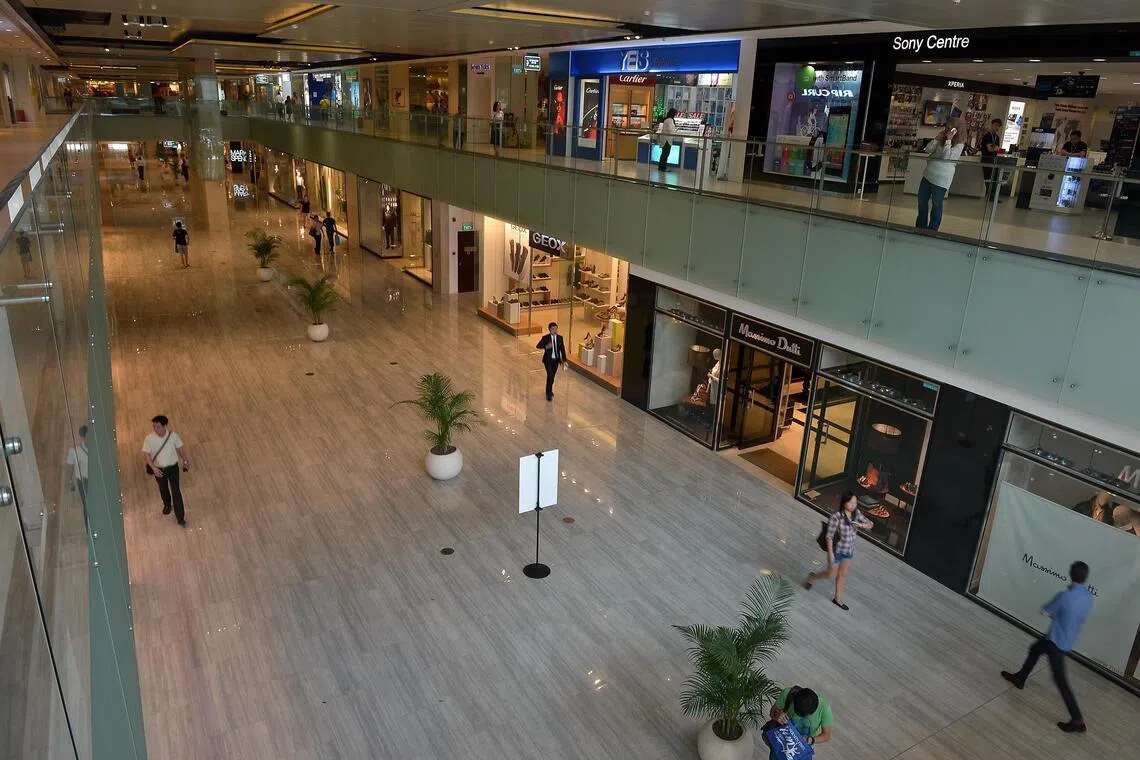
Marina Square has been part of Singapore's Marina Bay waterfront since the late 1980s — long enough to feel permanent. Generations of office workers have queued for lunch there. Tourists have wandered through its air-conditioned corridors after visiting the nearby hotels. Families have treated it as a convenient weekend stop-off before heading to Suntec City or the Esplanade.
So when the news of the Marina Square closure began to ripple through the property market, many people thought of it as nostalgia. Tenants and landlords, however, heard something else: a large chunk of the Marina Bay retail market is about to be displaced, and the winners and losers will be decided in the next few lease cycles.
For property owners, retail tenants, and investors watching the CBD, the impending Marina Square closure is more than a mall shutting its doors. It is an opportunity to understand how retail rents actually move in Singapore — and why a single anchor site can re-shape demand across an entire district.
This article looks at what the Marina Square closure could mean for retail rents around Marina Bay, which malls are best placed to absorb the displaced tenants, and how property owners may need to recalibrate their portfolios in response.
The Marina Square Closure: An Ending That Was a Long Time Coming
Marina Square opened in 1986 as part of the Marina Centre complex, alongside the Pan Pacific Singapore and Mandarin Oriental hotels. At the time, it was a bold bet on a waterfront that had yet to become a financial district. It offered something unusual for Singapore back then: a large, integrated environment where hotel guests, convention delegates, shoppers, and office workers shared the same podium.
The mall served as a de facto town square for Marina Centre. Its proximity to the old convention facilities, and later to Suntec City across the road, made it one of the busiest retail nodes in Singapore's downtown core. For decades, Marina Square acted as a bridge between the hotel quarter and the expanding office towers around Raffles Place.
That role changed as Marina Bay evolved. When Marina Bay Sands opened in 2010, the retail gravity of the waterfront shifted southward. Newer mixed-use developments around Marina One and the Marina Bay Financial Centre offered polished, digitally-savvy shopping environments. The suburban mall scene also tightened its grip on family spending. Marina Square, with its ageing infrastructure and layered configuration, gradually became a supporting player rather than the main event.
Still, the planned closure represents a significant moment. A shopping centre occupying such a central position in the city is not just a building. It is a node that directs footfall through underground links, bus stops, and taxi stands. When a node of that size goes dark, nearby malls gain some of that footfall — but not all of it.
Market watchers are keeping an eye on the actual transition timetable, which has not been fully confirmed. Whether the closure happens in phases or as a single shutdown, the practical problem for tenants is the same: spaces need to be found, fit-out budgets need to be reworked, and customer patterns need to be rebuilt.
How Retail Rents Work in Singapore's CBD
Before sizing up the impact of the Marina Square closure, it helps to understand the mechanics of retail rents in Singapore.
Retail rents in Singapore are typically quoted on a per-square-foot basis, either per month or per year. In the CBD, it is common to see rents quoted per square foot per month. A prime ground-floor unit along a busy connector can command significantly more than an upper-floor unit that relies on a mall's escalator network and directories.
Landlords and tenants negotiate several layers of payment:
- Base rent — the guaranteed monthly amount.
- Service charge — covers air-conditioning, cleaning, security, and common-area maintenance.
- Marketing or promotion fund contributions — pooled for mall-level advertising.
- Turnover rent — an additional rent component based on a percentage of the tenant's sales, often triggered after sales cross an agreed threshold.
These layers matter because a headline rental number can be misleading. A mall may advertise a lower base rent but charge higher service charges and design fitting-out requirements that push up the tenant's total occupancy cost.
Two additional market forces shape retail rents in the Marina Bay area:
- Office daytime population — CBD malls rely on lunch crowds and after-office convenience. On weekends, many of these malls quieten, unless they are close to tourist attractions or entertainment venues.
- Tourist flows and hotel guests — The Marina Square catchment sits between major hotels and the waterfront attractions. When tourist numbers are strong, nearby retailers benefit.
The Marina Square closure affects both of these variables at once. The mall currently captures a certain portion of the office lunch crowd, a certain portion of hotel guests, and a certain portion of families attending events at nearby venues. When it closes, those visitor streams do not simply vanish. They are redistributed to other buildings in the vicinity.
Retail Footfall Sources in Marina Bay Catchment
The chart above is a stylised illustration of the footfall mix that anchors a mall like Marina Square. Even without exact figures, the message is clear: a closure does not erase demand; it creates a footfall migration problem.
Marina Square Closure and Retail Rents: Supply Shock vs Footfall Shock
When a major retail property closes, two competing dynamics affect rents.
The supply-side argument: fewer shops, firmer rents
On paper, the removal of a large volume of retail space should tighten the market. If tenants want to remain in the Marina Bay catchment, they will need to bid for space in the malls that remain. That competition can push rents up, at least for contiguous and well-located units.
In Singapore's CBD, available retail space with good visibility and strong pedestrian links is not abundant. Much of the ground floor in Raffles Place is tied up by banks and F&B outlets. Basement spaces are often reserved for quick-service food courts and convenience retail. The closure of Marina Square could produce a short-term squeeze for certain tenant types, especially those needing large floor plates and food-service infrastructure.
The demand-side argument: fewer crowds, softer rents
There is also a counterforce. A mall is not just a collection of shops; it is an attraction in itself. Some visitors go to Marina Square because it offers a diversity of choices under one roof. With that roof gone, total shopping traffic in the immediate area may dip. Surrounding malls may inherit some of the traffic, but not all of it. Commuters who used to cut through the mall to reach the bus interchange, taxis, or hotel lobbies may now take different routes.
If overall footfall in the Marina Square sub-market falls, tenants may become less willing to pay current rents. Retailers measure rent as a proportion of sales. If sales per square foot drop because fewer people wander into the area, their capacity to pay high rent diminishes.
This tension — supply removed versus footfall lost — is why the retail rents of the surrounding area may not simply rise. The likely pattern is a two-speed market: prime spaces with naturally strong pedestrian flow will command higher rents, while secondary spaces that depended on Marina Square's drawing power may struggle.
Displaced Tenants: Who Moves Where?
Not all tenants respond to a mall closure in the same way. The choices they make determine the next chapter of the Marina Bay retail market.
There are broadly four categories of affected tenants:
1. National and regional chains
These are brands with multiple outlets across Singapore. For them, the Marina Square closure is a portfolio decision. They may have leases at Suntec City, Marina Bay Sands, or Raffles City already. Adding one outlet or relocating it can be planned without panic.
Their priority is to retain the same customer segments — office workers, tourists, hotel guests — and to protect brand visibility. Many will try to negotiate with nearby malls for a unit that comes with existing footfall clauses or marketing support.
2. Anchor tenants with large floor plates
Large-format players — cinemas, entertainment operators, fitness centres, and department store-style concepts — face the hardest search. In Singapore's CBD, very few landlords can offer 20,000 or 30,000 square feet of contiguous retail space with high ceilings and heavy power load.
For them, the Marina Square closure may accelerate a move out of the immediate Marina Centre area. Some may opt for mixed-use buildings with purpose-built entertainment spaces, rather than squeezing into a traditional shopping mall.
3. Food and beverage operators
F&B is the strongest category in Singapore's CBD retail market today. Breakfast kopitiams, lunch bistros, after-work cocktail bars, and weekend brunch spots all compete for the same limited units.
F&B tenants need more than floor space. They need drainage, exhaust systems, grease traps, water supply, and approval from authorities. A mall that has been configured for F&B is far more attractive than one that requires expensive retrofitting.
Marina Square has long housed significant F&B capacity. When those food tenants scatter, the malls that can accommodate their technical requirements will capture the lion's share of the relocation wave.
4. Service-oriented tenants
Beauty salons, clinics, and tuition centres usually prefer back-of-house units with lower rent. They are less dependent on high walk-past traffic and more dependent on repeat bookings and convenient MRT access.
For them, the key metric is not footfall but convenience for their existing client base. This makes them easier to relocate, but also means they may not pay a premium for a high-visibility unit.
Which Malls Are Likely to Win in the Tenant Race?
Geographically, the natural beneficiaries are malls within walking distance of Marina Square. The table below summarises how each location is likely to compete for the displaced tenant pool.
| Destination Mall | Positioning | Likely Tenant Type | Main Advantage | Main Limitation |
|---|---|---|---|---|
| Suntec City | Mainstream, events-oriented | F&B, fashion, entertainment | Direct competition catchment, big floor plates | Already heavily occupied |
| Millenia Walk | Lifestyle, design-led | Flagship retail, showrooms, dining | Quieter space, premium visual identity | Smaller footfall base |
| Raffles City | Office-concourse retail | Quick service, convenience | Strong office crowd, MRT link | Limited expansion space |
| Marina Bay Sands Shoppes | Luxury, landmark tourism | Premium fashion, fine dining | Global tourist traffic | High rents and exclusive image |
| South Beach Avenue | Boutique, creative | Concept stores, cafes | Proximity to Esplanade | Lower mainstream footfall |
Suntec City: The most natural fit
Suntec City has been through a major asset enhancement exercise in the past decade. Its retail layout is broader and more open than before, and it benefits from an established convention and event audience. Tenants that served Marina Square's office and hotel crowd will find a comparable demographic at Suntec.
There is also a physical proximity that matters. Walking between Marina Square and Suntec City is easy. If a tenant's customers are already in the area, a move across the road is the least disruptive option.
The catch is that Suntec City has limited vacancies. Spaces that open up there will likely be bid on by multiple displaced tenants, giving landlords greater negotiating power.
Millenia Walk: The quiet competitor
Millenia Walk is only a short stroll away. Its architecture is strikingly different from Marina Square. High ceilings, wide boulevards, and an open layout give it a more exclusive feel. The mall has struggled at times to maintain high visibility, but a wave of new tenants could change its rhythm.
For brands that want to elevate their image and obtain a larger-than-usual space, Millenia Walk could be an attractive option. Its restaurant wing and riverside periphery are capable of supporting destination dining.
Raffles City: Convenience over size
Raffles City operates with a strong office clientele from the surrounding Raffles Place towers. It is less suited to luxury or entertainment tenants, but very suited to food courts, pharmacies, and service retail. The mall's connection to City Hall MRT acts as a natural funnel of commuters.
If Marina Square's closure creates a shortage of small food-and-beverage spaces, Raffles City may see increased leasing activity.
Marina Bay Sands and The Shoppes
Marina Bay Sands operates at a different price point. Its retail rents, management standards, and marketing expectations are high. Not all Marina Square tenants can make the numbers work there.
However, for luxury brands and destination dining concepts, The Shoppes may be the only location in Singapore with the required prestige. If the Marina Square closure pushes high-end brands to reassess, The Shoppes could capture a few flagship relocations.
Retail Rents in the Wider CBD: A District-Level View
The impact of the Marina Square closure will not be evenly spread across the CBD. Rent movements will depend on micro-location.
Units immediately around City Hall, Esplanade, and Promenade MRT stations will see the most churn. Landlords with existing vacancies in these micro-locations are likely to receive more enquiries. In the short term, they may hold rents firm, or even push them slightly higher, because they know tenants face a limited menu of choices.
Further away — in the Raffles Place core, along the Singapore River, or towards Tanjong Pagar — the effect will be muted. Those sub-markets pull from different office clusters and are not direct substitutes for the Marina Square tenant base.
The exception is the basement retail network. Singapore's underground pedestrian links are an important part of the shopping experience. CityLink Mall, for example, connects City Hall MRT to Marina Square's vicinity. Tenants located along these corridors may capture a share of the footfall that used to pass through Marina Square.
How rents might adjust
In a market where supply is controlled by a small number of landlords, a major closure can cause an initial period of uncertainty. Landlords with vacant space may wait before committing to rental terms. Tenants, meanwhile, may postpone decisions in the hope of getting better deals later.
This kind of pause can be healthy in the long run, but it causes short-term volatility. Market watchers often advise looking at the effective rent — the rental after subtracting rent-free periods, fit-out contributions, and other sweeteners — rather than the headline number.
During a transition, effective rents may soften even when headline rents look stable. Landlords use incentives to secure tenants and reduce void periods. Tenants who can sign quickly and remain flexible are often in a stronger negotiating position.
The Portfolio Recalibration Question for Property Owners
For owners of commercial property — whether they hold a full shopping mall, a strata shop unit, or an office block with ground-level retail — the Marina Square closure is a reminder that property values are driven by more than building quality.
The value of a retail asset depends on net operating income, which is ultimately a function of tenant demand, rent levels, and occupancy. If the closure changes the footfall map of Marina Bay, it also changes the projected income stream of every nearby retail asset.
Recalibrating before the closure takes effect
Property owners should consider several questions:
- Who are my current tenants, and are they exposed to Marina Square traffic? A nail salon that relies on office workers may need a different strategy than a souvenir shop that relies on hotel guests.
- When do my leases expire? If a large number of leases expire around the same time as the Marina Square closure, it may be wise to renew early or secure replacement tenants proactively.
- Is my space technically suitable for displaced F&B tenants? Landlords with existing exhaust, water, and electrical infrastructure have an advantage. Adding such infrastructure can be costly but may unlock higher rent.
- What is the weekend-versus-weekday footfall balance? Malls with poor weekend numbers will need to work harder to attract tenants. Owners may need to invest in programming, events, or repositioning to broaden the tenant mix.
The opportunity within the disruption
The Marina Square closure also creates an opportunity for asset-enhancement works in neighbouring malls. Landlords can reconfigure spaces, improve common areas, and refresh tenant mixes to attract businesses that would otherwise leave the area.
Smaller independent retailers may benefit too. Because large chain tenants tend to stay in a district and negotiate with established landlords, they sometimes vacate middle-tier spaces. This gives independent operators the chance to move from suburban locations into the CBD at more accessible rents.
For investors, the lesson is to watch lease line activity rather than just headline price trends. The first signals of change come from tenant movements, not from valuation reports.
What the Marina Square Closure Means for the Larger Marina Bay Story
Marina Bay is one of the most planned urban precincts in Singapore. It has transformed from a deep-water port into a financial district, and it is still not finished. Development around Marina South is expected to add new residential and commercial density in the coming decades.
In that context, the Marina Square closure may mark the beginning of a much larger cycle of renewal. Old buildings and older layouts are gradually giving way to integrated, community-conscious developments. Retail space is no longer designed primarily for shoppers — it is designed for people who live, work and play in the same district.
The malls that thrive after the Marina Square closure will be those that can offer compelling reasons for people to stay. Experiential dining, events, fitness, entertainment, and co-working are all taking up space that used to belong to traditional merchandise retail.
For investors and young property owners, this shift is worth watching. The question is not just which mall gains temporary tenants. The bigger question is whether the entire Marina Bay retail ecosystem can recalibrate towards the habits of a younger, more experience-driven generation.
Why District 1 Still Matters
Despite the disruption, District 1 — Raffles Place and the Marina Bay area — remains one of Singapore's most important retail catchments. The office population, combined with a steady tourist stream, creates demand that very few suburban locations can match.
But the nature of that demand is changing.
Young professionals aged 25 to 40 now make up a large share of the CBD workforce. They are eating out less at traditional food courts and more at specialty cafes. They exercise before work or during lunch. They expect retail spaces to be accessible by MRT and bike paths, and they often shop online instead of browsing in department stores.
For landlords, this means the winning tenant mix is increasingly about service, food, and wellness, rather than fashion and electronics. Marina Square's newer tenants had already started leaning in this direction before the closure announcement. Their relocation choices will accelerate the same trend in surrounding malls.
A Practical Checklist for Business Owners and Tenants
If you are running a business affected by the Marina Square closure, the most valuable thing you can do is treat the transition as a strategic review rather than a rushed search.
Practical steps include:
- Map your customer base. If 60% of your customers come from nearby offices, prioritise locations that stay close to Temasek Avenue and Raffles Place. If hotel guests are key, proximity to hotel lobbies matters more than distance to MRT.
- Compare total occupancy cost, not just rent. A cheaper unit may come with higher service charges, more expensive fitting-out, and a less active common-area marketing campaign.
- Look at lease flexibility. During a redevelopment period, you may not want to sign a five-year lease. Some landlords offer shorter terms with renewal options at predetermined rents.
- Negotiate incentives. Rent-free periods, contributions towards renovation, and car park privileges are common in transitional markets. Ask for them explicitly.
- Plan for the reopening. When the Marina Square site eventually reopens as a new development, the surrounding retail market will change again. You may want to keep your options open so that you can return to the site.
Food for Thought
As young Singaporeans, this is not an abstract property story. The Marina Square closure affects where you may one day work, shop, invest, or live. These questions are worth considering:
-
What would you pay to live above a busy retail node? Marina Bay has a growing residential population, but the amenities near Marina Square and Suntec have always been work-oriented. Would you choose a home in District 1 if it meant better weekend food options?
-
How much is footfall really worth to a business? With online shopping so easy, a physical store needs a strong reason to exist. For a cafe or fitness studio, the right location creates a community. For a fashion outlet, it may no longer justify premium CBD rents.
-
Should landlords bet on young Singaporeans' changing habits? If you own a retail unit in the CBD, would you renovate your space for a yoga studio or a Korean beauty clinic instead of a traditional retail chain?
-
What role should data play in a retail decision? Before the Marina Square closure, could tenants have anticipated the change by monitoring footfall patterns, lease expiries, and demographic shifts? Or is disruption inherently hard to predict?
-
Could the closure make Marina Bay more attractive over time? Sometimes losing an older mall creates room for a better integrated development — one that strengthens the whole district. Would you be willing to tolerate construction disruption now for a better long-term outcome?
The Bottom Line
Malls close. Footfall shifts. Rents adjust. In the property market, disruption of this sort is never the end of the story. It is the beginning of a new equilibrium.