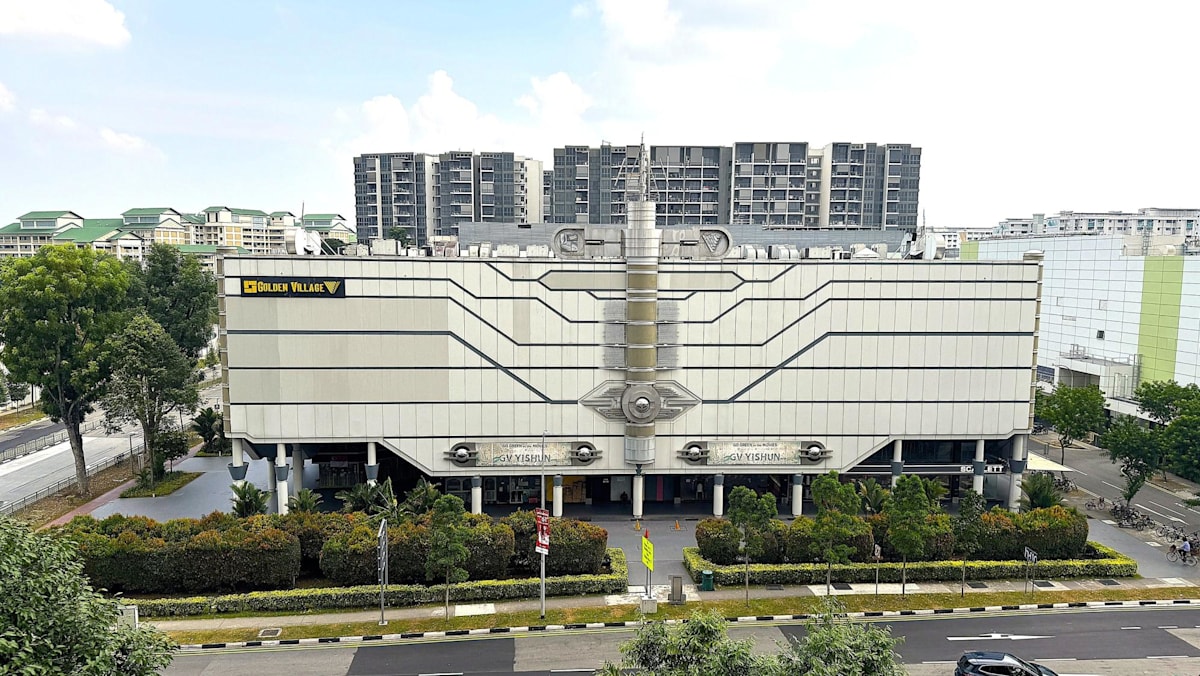
For years, the joke wrote itself. Mention Yishun at a dinner party and someone would inevitably bring up a viral news story, a wild animal sighting, or the town's odd reputation for "interesting" headlines. The memes were relentless — but somewhere along the way, the conversation quietly shifted from "what happened in Yishun this week?" to "what's the price of a flat in Yishun now?"
That shift has a name in property circles: the Yishun 10 effect.
The launch of Yishun 10 — a landmark new private project that has put District 27 back on the buyer's map — has forced a fresh question that would have sounded absurd a decade ago: Is Yishun the next property hotspot in Singapore? It's no longer a rhetorical question. Between the coming motorway-scale infrastructure upgrades, the spillover from cross-border connectivity projects, and a HDB resale market that keeps setting quiet records, the northern town is enjoying a level of attention it has never really had before.
But attention is not the same as substance. In this article, we'll dig into what the so-called Yishun 10 effect actually means, what the local data suggests about private and HDB prices, and whether this revival is a structural shift or just a seasonal narrative in search of a headline.
From Punchline to Price Line: The Unlikely Rise of Yishun
Let's start with a confession: Yishun was never supposed to be a hotspot.
Built largely from the 1980s onwards, the town grew up as a classic public-housing estate for families who wanted space, affordability, and proximity to the industrial belts of the north. For decades, its property story was simple: HDB-dominated, undervalued, and largely ignored by the analysts who preferred to focus on the central and eastern corridors.
That anonymity was reflected in the data. Yishun sits within District 27, which also covers Sembawang — a planning area that HDB still classifies as a Non-Mature estate. The terminology sounds vaguely insulting, but in HDB grant mathematics, it's actually a feature rather than a bug: first-time buyers purchasing BTO flats in Non-Mature towns typically qualify for higher subsidies than their counterparts in Mature estates. For upgraders, it also means resale prices have historically carried a discount relative to more established towns like Bishan or Ang Mo Kio — which is precisely what made Yishun attractive in the first place.
A Town of Contradictions
Here's the irony: Yishun has long had the bones of a well-served town, but the reputation of a neglected one.
Take the amenities. Yishun MRT station has been on the North-South Line since 1988, giving the town direct rail access to the city core. Northpoint City — the integrated development sitting right above Yishun MRT — has, since its phased opening across 2017 and 2018, become one of the largest suburban retail and transport nodes in the country. The town is home to award-winning healthcare infrastructure, including Khoo Teck Puat Hospital and the Yishun Community Hospital. There are parks, park connectors, reservoirs within a short drive, and enough hawker centres to keep even the hungriest household happy.
| Yishun at a glance | |
|---|---|
| District | 27 (shared with Sembawang) |
| HDB classification | Non-Mature estate |
| MRT access | Yishun station (North-South Line, opened 1988) |
| Retail anchor | Northpoint City, integrated with Yishun MRT |
| Nearest major transport projects | North-South Corridor; RTS Link via Woodlands |
| Typical train ride to City Hall | Roughly 35–40 minutes |
In other words, the infrastructure was already there. What was missing was a story — and, more importantly, a benchmark.
Every property market runs on anchors. Buyers instinctively compare any price against something they already understand: the last launch in the area, the neighbouring town's median, the "premium" that a new project commands over resale. For decades, Yishun had no modern anchor. The last time a sizeable private launch had tested the market's appetite for the north was a generation of projects ago — before the current wave of young families, before remote work, before the entire conversation about affordable OCR living really took off.
That's what makes Yishun 10 symbolically important. It is not just another condo launch. It is the first serious attempt in years to re-price Yishun in the minds of buyers — and that act alone can trigger a chain reaction across the entire local market.
What Exactly Is the "Yishun 10 Effect"?
The phrase "Yishun 10 effect" isn't an official metric. You won't find it in URA statistics or HDB's quarterly reports. It belongs to the same family as the "Lentor effect" or the "Canberra effect" — an informal shorthand for how a single catalyst project can re-rate an entire district's perceived value.
To understand the mechanism, you have to understand how Singaporeans actually buy property. Most buyers do not start with district heatmaps and transaction caveats. They start with a mental map: where can I afford something decent? For a young couple in their 30s who have outgrown their HDB flat, the answer used to be "somewhere ulu" or "somewhere very expensive." Yishun fell into the first bucket — a place you considered only if budget forced you there.
A flagship launch changes that calculation in three distinct ways:
1. The Demonstration Effect
When a new project launches at a meaningful price point, every seller in the vicinity suddenly has a new reference point. A HDB owner in Yishun watching a private launch a few kilometres away transact at a record price begins to ask: if that's what new homes cost here, what is my flat worth? The launch effectively raises the ceiling of what buyers are willing to pay for the town, and everything below it — resale condos, executive condominiums, even HDB flats — gets repriced in relation to the new anchor.
2. The Upgrader Chain
New private launches in a HDB town do not exist in isolation. They create a powerful upgrader loop: HDB owners who want to move into the new project need to sell their flats first, which increases the supply of resale HDB listings — but also brings in a fresh pool of HDB buyers who were previously priced out of other towns. The result is often a lift in HDB resale volumes and prices in the surrounding estate, as the demand filters down through the property food chain.
3. The Institutional Signal
Property is as much about expectations as it is about physical structures. When a developer takes the gamble of launching a major project in Yishun, it sends a signal to other developers, land-bankers, and eventually government agencies: the north is ready for a re-rating. That signal encourages more aggressive bids at future land tenders, which in turn justifies higher launch prices down the road. It becomes a self-reinforcing cycle.
That's the theory, anyway. The question is whether the underlying fundamentals — the infrastructure, the demographics, and the actual transaction data — support the story. So let's look at what's happening on the ground.
The Infrastructure Re-Rating: Roads, Rail and Regional Ambitions
If Yishun 10 is the spark, infrastructure is the fuel. And the north of Singapore has rarely had this much fuel at one time.
The North-South Corridor (NSC)
The single most significant piece of infrastructure in Yishun's recent history is the North-South Corridor (NSC) — a 21.5-kilometre expressway that will run from Woodlands through Sembawang, Yishun, Ang Mo Kio and Toa Payoh before connecting to the city. Unlike a conventional expressway, the NSC includes dedicated bus priority measures designed to make public transport genuinely competitive with private cars. LTA has projected travel time savings that could reach as much as half an hour per trip for commuters travelling the full corridor during peak hours.
Construction has been underway for several years, with completion expected in phases from around 2026 to 2029. For property owners, the significance is simple: an area that once felt like a 45-minute train ride from everything is about to become dramatically more accessible by road and by bus. Accessibility is one of the strongest long-term drivers of residential prices, and the NSC delivers it in one continuous project.
The RTS Link and the JB Factor
Just a few stops north of Yishun, another transformative project is taking shape. The Johor Bahru–Singapore Rapid Transit System (RTS) Link, connecting Woodlands North to Bukit Chagar in Johor Bahru, is scheduled to open around the end of 2026, with an eventual capacity of up to 10,000 passengers per hour in each direction.
Yishun is only about three MRT stops from Woodlands on the North-South Line. That places the town within easy reach of an international transport gateway — and, for many younger Singaporeans, within weekend-proximity of Johor's far cheaper food, shopping, and entertainment. While the RTS Link is unlikely to trigger a flood of cross-border commuters buying HDB flats, it does change the perception of the north as a region: no longer the "end of the line" but a well-connected corridor in its own right.
Retail, Community and the North Coast Innovation Corridor
Beyond transport, the wider regional vision is slowly coming into focus. URA's long-range planning has sketched out a North Coast Innovation Corridor — a plan to rejuvenate older industrial estates around Sembawang and Woodlands into spaces for new-economy businesses. Alongside this, Northpoint City continues to anchor Yishun's retail scene, while new community infrastructure — from healthcare to sports facilities — has been layered in over the past decade.
Here's the key point: most of this infrastructure was announced, funded, and under construction long before the first Yishun 10 showflat opened. Property markets tend to price in announcements early, but the realisation of a project — the moment when a new road or rail link actually opens — often produces a second wave of price adjustment. If the narrative around Yishun is speculative today, it will be supported by physical reality within the next few years.
Yishun Property Data: What the Numbers Show
Now for the part that separates genuine analysis from sales talk: the actual price data.
The HDB Resale Engine
Yishun's HDB resale market has been the quiet workhorse of the town's property story. By most estimates, the median resale price of a 4-room flat in Yishun has climbed from the mid-S$300,000s in 2019 to roughly S$500,000 and above in 2024 — a rise of close to 45% in about five years, broadly tracking the national HDB resale market's strong run through the pandemic years.
Approximate Yishun 4-Room HDB Resale Median (S$'000)
Note that these are town-level medians, rounded for readability, and the exact figure shifts quarterly depending on the mix of units sold. The direction, though, is unmistakable. A HDB owner who bought a 4-room flat in Yishun around 2019 at roughly S$360,000 could plausibly have sold it five years later for 50% more — a capital gain that many private property owners in the central region would quietly envy.
The more interesting question is what happens next. The Yishun 10 effect predicts that a fresh private benchmark in the town should pull HDB resale prices up further, as upgraders sell their flats to fund condo purchases and new buyers rush in to fill the gap. Early indications suggest this dynamic is indeed at work — transaction volumes in the estate have held up well, and listings near the MRT station and Northpoint City continue to command noticeable premiums over flats deeper in the estate.
The Private Market Gap
Where Yishun really stands out is in the gap between its private prices and the rest of the Outside Central Region (OCR).
The OCR — Singapore's suburban ring — has seen new launch prices climb steadily, with many projects crossing the S$2,000-per-square-foot (psf) mark in recent years. Against that backdrop, District 27's private resale market has looked almost sleepy by comparison. Resale condos in Yishun have generally transacted at prices that analysts would describe as a meaningful discount to the broader OCR average — sometimes in the range of 10% to 20% or more below comparable suburban projects.
Approximate District 27 Private Resale PSF Trend (S$)
Again, treat these as indicative district-level averages rather than precise project figures — private resale averages are sensitive to the mix of older and newer developments sold in any given quarter. But the trend tells a consistent story: District 27 prices have been catching up, yet they still sit below the OCR mainstream.
That discount is the entire investment thesis in one sentence. Yishun offers buyers the opportunity to own a private home in a well-connected regional town at a price that the wider market has not yet fully re-rated. If the infrastructure comes through as scheduled, and if the Yishun 10 effect triggers a genuine shift in buyer perception, the discount could narrow substantially over the next few years.
Rental Demand Beneath the Surface
Another under-appreciated aspect of Yishun's market is its rental demand. Community with the large HDB population, proximity to the industrial estates of Woodlands, Senoko and Seletar, and excellent access to the upcoming NSC have kept rental demand reasonably resilient. Market reports suggest that 4-room HDB flats in Yishun were renting in the high-S$2,000s to low-S$3,000s range through 2024, with private condos commanding correspondingly higher rents.
The rental angle matters because it attracts a different kind of buyer: the investor. A town with strong rental demand and a lower entry price tends to offer healthier gross rental yields than the ultra-expensive central districts. For buyers who are tired of the famously thin yields in CCR and RCR, Yishun's mathematics can look surprisingly attractive — especially if the purchase price still carries a discount.
Where the Comparison Gets Interesting: Yishun vs Its Northern Neighbours
To understand whether Yishun is genuinely being re-rated, it helps to compare it with towns that have already gone through their own "rediscovery" phases.
Take Canberra, one MRT stop towards Woodlands. When Canberra station opened in November 2019, it became the first new station on the North-South Line in years — and the surrounding HDB flats and condos enjoyed a noticeable price uplift as residents suddenly had doorstep rail access. Or take Sengkang and Punggol, which spent the 2010s transforming from "new town" jokes into genuine residential hubs as the LRT network matured and commercial infrastructure filled in.
The pattern in each case is similar:
- A transport catalyst changes the perceived distance to the city.
- A supply-demand imbalance emerges because new launches are few relative to buyer interest.
- A benchmark event (a popular BTO, a surprise land tender result, a successful condo launch) crystallises the new pricing.
- The gap with neighbouring towns narrows, sometimes faster than anyone expects.
Yishun today has all four ingredients. The NSC is its transport catalyst; the chronic shortage of private launches in District 27 is its supply-demand imbalance; Yishun 10 is its benchmark event. The only remaining variable is time.
| Catalyst | Canberra (2019–2021) | Yishun (2024–2026) |
|---|---|---|
| Transport event | New MRT station | North-South Corridor + RTS Link nearby |
| Private supply | Sparse | Sparse, with major new launch underway |
| Benchmark moment | Post-station price adjustments | Yishun 10 launch |
| HDB resale impact | Firming prices within walking distance | Upgrader chain effect in progress |
Is Yishun the Next Property Hotspot — or Just a Seasonal Story?
This is where we have to be honest: not every "next hotspot" story survives contact with the data.
There are genuine reasons to be cautious about the Yishun narrative. First, the town's Non-Mature classification cuts both ways. While it makes BTO flats more affordable and grants more generous, it also signals that the government still views the area as a developing town rather than a premium address. The resale price ceiling in Non-Mature estates tends to be harder to break through, because buyers mentally cap what they are willing to pay.
Second, there is the supply question. HDB continues to inject new BTO supply across the north, and if that supply grows faster than demand, the resale market could cool. The private market, by contrast, is supply-constrained — but that also means there are fewer comparables to anchor prices, making the market more volatile and more narrative-driven.
Third, interest rates and cooling measures remain the great levellers. The property market's recent strength has been partly fuelled by upgraders, and upgraders are the most sensitive segment to borrowing costs. If rates stay elevated or cooling measures tighten further, the upgrader chain that powers the Yishun 10 effect could slow to a walk.
A Data-Driven Reality Check
So what would genuinely confirm the Yishun story? Watch these signals:
- HDB resale volumes in Yishun: A sustained increase in transactions — not just prices — would show that the upgrader chain is real and not just a handful of aspirational listings.
- The next land tender result: When the government releases the next residential site in Yishun, the winning bid will tell you whether developers believe the re-rating is durable. A strong bid would validate the entire cycle.
- Rental absorption: If the new private units (and nearby BTO completions) are absorbed quickly into the rental market at firm rates, that signals genuine end-user demand rather than speculation.
- The gap vs OCR: If District 27's discount to the OCR average starts narrowing consistently over several quarters — not just one spectacular month — that is the cleanest evidence of a structural shift.
None of these signals is flashing red today. But neither is any of them conclusive yet. The most accurate summary of Yishun's situation is probably this: the market believes the story, and the infrastructure supports the story, but the price data is still in the early chapters.
What the Yishun 10 Effect Teaches Us About Property Psychology
Stepping back, the Yishun 10 effect is really a lesson in how property markets process information. Humans are terrible at valuing assets in isolation — we need anchors, comparisons, and stories. A launch like Yishun 10 does not physically change the town overnight. It changes the reference price in buyers' minds, and that alone is enough to shift behaviour across an entire district.
For HDB owners in Yishun, the lesson is practical: your flat's value is not determined solely by your block, your floor, or your remaining lease. It is also determined by the newest benchmark in your town. When a developer pays record land prices nearby, or a launch sets a new psf record, the value of everything around it shifts — whether or not you ever plan to sell.
For buyers, the lesson is more cautionary. Hotspot narratives are seductive precisely because they offer the promise of "getting in early." But the data only matters if you compare like with like. A resale condo in Yishun might look cheap against the OCR average — but is it cheap relative to its age, its remaining lease, its distance to the MRT, and the actual transactions in its immediate neighbourhood? Those are the questions that district-level averages cannot answer.
Food for Thought
Before we wrap up, here are a few questions worth sitting with — whether you're a buyer, seller, or just a fascinated observer of the Singapore property market:
-
If the Yishun 10 effect pushes up resale prices of older HDB flats near the MRT, who benefits — and who gets locked out? Rising prices are great for existing owners, but they also raise the entry barrier for first-time buyers who were drawn to Yishun precisely because it was affordable. At what point does a "revival" stop being inclusive?
-
When the North-South Corridor and RTS Link both open around 2026, will the perception of "distance to the city" change permanently? If a commute from Yishun to the CBD becomes genuinely comparable to one from, say, Tampines or Jurong East, should the north's price discount narrow to match? Or are there other factors — school preferences, social networks, lifestyle — that will keep the discount alive?
-
Could the JB factor become a double-edged sword? The RTS Link makes Johor's cheaper property and retail accessible from the north. Does that proximity pull some demand away from Yishun — particularly retirees or cost-sensitive households who might choose a bigger home across the causeway instead of an older flat in Singapore?
-
How much of the "Yishun 10 effect" is actually about Yishun, and how much is simply a macro trend wearing a local costume? The entire OCR market has risen over the past few years. If the broader market cools, will Yishun hold its gains better than other towns — or will its Non-Mature status make it more vulnerable?
-
What would have to happen for you to personally regard Yishun as a "hotspot"? Is it a psf milestone? A HDB resale record? A new MRT line? A particular school's ranking? Defining your own metric is the difference between investing with a thesis and simply following a crowd.
The Bottom Line
Yishun's transformation from meme to market story is one of the more interesting property narratives in Singapore right now. The town has real infrastructure momentum, a genuine supply shortage in the private market, and a HDB resale market that has proven its resilience through the pandemic boom. The Yishun 10 effect — whatever precise form it takes — has accomplished something important: it has forced buyers, sellers, and developers to take the north seriously as a place with its own price discovery, rather than a discount appendage to the rest of Singapore.
Does that make Yishun the next property hotspot? The honest answer is that the foundation is being laid, but the structure is not yet complete. The infrastructure is coming, the benchmark has been set, and the buyer psychology is shifting. What remains to be seen is whether the transaction data over the next few years will confirm the narrative — and whether the discount to the OCR average will close in an orderly, sustainable way, or in the kind of sudden surge that leaves latecomers chasing prices.
For a town that spent three decades as Singapore's favourite punchline, even being part of that conversation is a remarkable turn. Whether Yishun truly becomes the north's crown jewel or simply a well-served, reasonably priced town that quietly does its job, one thing is certain: the era of dismissing Yishun out of hand is over.