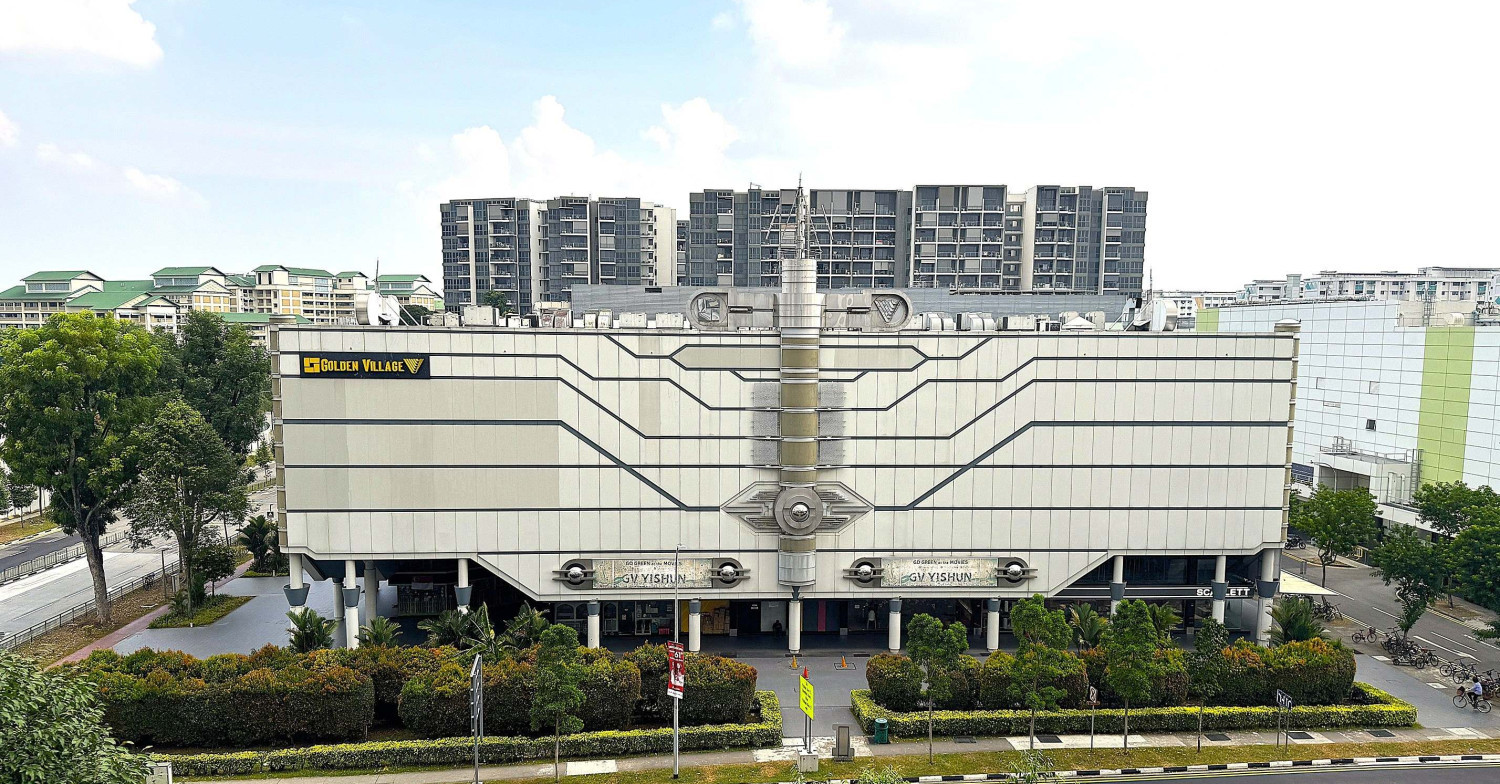
Every property launch has a moment before the preview brochures arrive when the market holds its breath. For Yishun 10, that moment feels louder than most. The launch of Yishun 10 has been a talking point across District 27 not only because of its size and location, but because buyers genuinely cannot decide whether it will be a sell-out or a slow burn.
Numbered project names have a strange effect on the Singapore property market. They suggest something methodical, almost guaranteed. But numbers do not sell flats — pricing does. And pricing is where the Yishun 10 launch conversation gets interesting.
As of this writing, the developer has yet to release an official price list. That makes this the ideal moment for a grounding exercise: to look at the land cost, the surrounding private and resale landscape, the recent behaviour of North Region launches, and the wider policy environment, then test what a realistic launch price band looks like and what sales performance buyers should actually expect.
This is an early-prediction piece, not a crystal ball. The numbers discussed below are scenario estimates and market benchmarks, not official figures. What we can do is strip away the hype and show you the arithmetic behind the launch psf — and the reality check that every buyer should run before the balloting queue starts forming.
Why the Yishun 10 Launch Feels Different
Yishun has been quietly shedding its old image for the better part of a decade. Once known mainly for HDB blocks, durian jokes, and the occasional viral animal sighting, the town has transformed into one of Singapore’s most complete regional centres. Northpoint City, sitting right next to Yishun MRT station, is the largest suburban shopping mall in the country. The town has an integrated bus interchange, a community club, sports facilities, hawker centres, schools, and a hospital nearby. It is, in short, a fully matured HDB heartland waiting for a larger private-housing injection.
That last point matters more than people realise. Yishun’s planning area is home to well over 200,000 residents, the majority of whom live in HDB flats. Yet the supply of private condominiums within Yishun itself has historically been thin compared with other mature towns of similar size. Many private-home seekers who grew up in Yishun have had to leave their family and friends behind to find a condo in Sengkang, Punggol, or further afield. A new integrated development in the heart of Yishun, literally steps from the MRT and the mall, changes that calculus.
The timing also matters. Singapore’s private property market has been through a remarkable upcycle since the pandemic. HDB resale prices have climbed substantially, giving tens of thousands of HDB upgraders a much larger war chest of sale proceeds than they had five years ago. Rental rates spiked, then softened, then found a new equilibrium. New launches in the Outside Central Region have been pricing at levels that seemed unthinkable a decade ago.
Yet this cycle has also made buyers more cautious. The days of blindly paying whatever the developer asks are over. Buyers today are more data-literate, more yield-conscious, and more likely to compare every launch psf against older resale condos nearby.
In that sense, Yishun 10 is not just another launch. It is a test case for whether District 27 can command the same kind of premium that buyers have accepted in places like Lentor, even though Yishun has a lower land-cost anchor and a much deeper pool of HDB upgraders.
The question on everyone’s lips is simple: will the Yishun 10 launch be priced like a regional centrepiece, or priced to move quickly?
What the Project Name Hints At
The name “Yishun 10” signals location and compactness. A 10-minute walk from the MRT is usually the golden rule in Singapore property marketing. The project is expected to rise within the Yishun town centre area, near existing amenities and transport nodes. If the development follows the standard integrated model, it will bring new retail space, residential towers, and possibly community facilities together in one masterplan.
The appeal is obvious. Yishun residents already know exactly where this project sits — they walk past the area every week to get to Northpoint or the bus interchange. There is none of the geographic uncertainty that plagues buyers of uncompleted projects in new estates. For HDB upgraders, the mental shift from living in a HDB flat to living in a condo five minutes from their parents’ flat is psychologically much easier when the location is already familiar.
That familiarity is a double-edged sword. Familiar buyers can also be more price-sensitive. They know how much their neighbour’s flat sold for, how much the old private condos around Yishun resell for, and how much their own HDB equity can stretch. This is a public who will compare, not just capitulate.
The Town-Centre Redevelopment Effect
Yishun is also part of a broader redevelopment story. Public agencies have been studying and releasing plans to refresh the Nee Soon area, with new public housing precincts, improved pedestrian links, and a more intense town centre. New BTO projects in the vicinity have been well received, showing that demand for housing in this part of Singapore remains strong.
The combination of an integrated transport hub, upcoming traffic improvements along the North-South Corridor, and the general maturation of the northern region all feed into the Yishun 10 launch story. Developers pricing such a project are essentially betting that Yishun has finally arrived as a location where private home buyers will pay an “integrated premium”.
What makes a buyer pay that premium? Location. Connectivity. Amenities. And the psychological assurance that comes with living at the centre of something.
Yishun 10 ticks all those boxes on paper. The crucial unknown is whether the price list will still allow enough headroom for future appreciation to interest both owner-occupiers and the smaller pool of investors watching District 27.
How Developers Arrive at a Launch psf for Yishun 10
Before we talk about what Yishun 10 “should” cost, it helps to look inside the sausage factory of Singapore property pricing. Developers do not simply pick a number that feels nice. They build the launch psf from the ground up using a stack of hard costs, soft costs, and margin assumptions.
The Land-to-Launch Price Stack
The most important input is the land cost, usually expressed in terms of per square foot per plot ratio, commonly rendered as psf ppr. For a 99-year leasehold residential site, the land rate sets the floor for everything else. The developer won the Yishun site through a government land sales process, and the exact bid matters less than the implied effective land rate once development charges, construction apportionment, and commercial components are factored in.
From the land rate, the developer adds construction costs. This is the single most volatile input in the current cycle because labour, materials, and compliance costs have all risen sharply since 2020. Then come financing charges, professional fees, marketing expenses, and the developer’s profit margin.
The sum of these inputs produces an internal break-even price. Launch prices are then set somewhere above that break-even, benchmarked against what the market will tolerate.
Here is a simplified view of the price-building process:
Notice the last arrow. In a rational market, the developer cannot simply announce whatever price they want. The ceiling is set by the nearby alternatives — the next-best condo the buyer could purchase for the same dollar.
What “Comparable” Really Means in Yishun
Yishun’s private condo stock is limited but not zero. Older condominiums in and around the town, plus the newer Executive Condominium projects converted to full privatisation, provide resale anchors. When a buyer looks at a new launch at, say, $1,700 psf, they will quickly measure it against a resale unit at $1,200 psf in an older but still liveable condo nearby.
That gap is the space where the developer’s margin lives.
If the gap is too small, the new launch price will not attract buyers away from resale options. If the gap is too large, buyers will simply wait for the next launch or pivot to a different district. The developer has to find the sweet spot between extracting maximum profit and ensuring a healthy launch-day sales percentage.
The Numbers Behind the Price
Since official pricing has not been announced, analysts tend to build a range based on an assumed land rate, typical construction costs, and recent launch behaviour in the broader North Region.
Using current market templates, a plausible break-even for a prime-town-centre integrated condo in Yishun would sit in the low-to-mid four-figure range per square foot. On top of that, developers routinely seek a margin that compensates them for the risk of holding land across a multi-year construction period. That margin, in the post-2022 environment, is often built into the launch psf itself rather than taken as a later upside.
What would that mean in practice?
- If the average launch price lands around $1,500 to $1,600 psf, the project would likely be positioned as a volume seller — attractive to HDB upgraders upgrading to their first private home.
- If the average launch price lands around $1,700 to $1,900 psf, the developer is betting on the integrated premium and the scarcity of private supply in Yishun itself.
- If the average launch price pushes above $2,000 psf, buyers will need to believe that Yishun has jumped into the same pricing tier as much more established private enclaves.
For what it is worth, the middle band — roughly $1,600 to $1,800 psf — feels like the most defensible starting point, given the surrounding resale data and the competitive landscape further north. But the final number depends on how confident the developer feels about launch-week demand, and that confidence is heavily shaped by what has happened to other North Region launches recently.
District 27 Comparables: The Reality Check for Yishun 10 Pricing
Here is where the article does a critical turn: dropping the enthusiasm and looking at the evidence from recent and current launches in the broader northern part of Singapore.
The North Region’s Pricing Journey
The North Region is not a monolith. It includes everything from the established landed enclaves of Upper Thomson to the newer condominium clusters in Lentor and Sembawang. But for the purposes of this comparison, the most useful data points are the suburban mass-market launches that appeal to the same HDB-upgrader demographic that Yishun 10 will target.
Recent launches in the northern stretch of Singapore have generally done well on launch day, but their sales performance has varied meaningfully depending on price discipline. Projects that launched below psychological thresholds generated frenzied queues. Projects that tested buyer tolerance with premium pricing saw respectable but slower absorption.
Across the broader Outside Central Region, average new-launch prices have moved upward over recent years, but that movement has come with a much wider spread of outcomes. Some OCR sub-markets now command prices that overlap with city-fringe locations, while others remain clearly positioned as value alternatives.
For Yishun specifically, the comparable situation is even more interesting. The scarcity of recent new launches within the town itself means there is pent-up demand. But there is also limited recent transaction data to justify aggressive pricing. Older resale condos in the vicinity have their own price ceiling, and new launches must respect the gap.
What Surrounding Projects Tell Us
Consider the typical alternatives available to a buyer in the Yishun area. On the resale market, there are condominiums from the 1990s and 2000s, many of which have large layouts and mature landscaping. On the new-launch side, the main competition would come from projects in nearby corridors where buyers can trade a slightly longer commute for a lower price psf.
This creates a natural pricing corridor:
| Comparison Point | Typical Buyer Expectation |
|---|---|
| Older resale condos in Yishun vicinity | Lower psf, larger living areas, ready to move in |
| Newer ECs nearing privatisation | Attract upgraders with budget constraints and private-condo aspirations |
| Recent OCR new launches | Higher psf, modern facilities, integrated lifestyle |
| Yishun 10 (estimated) | Town-centre convenience, integrated amenities, brand-new finish |
The buyer who chooses Yishun 10 is effectively paying a premium for three things: newness, location within the town centre, and convenience. The question is whether that premium is in line with what other OCR buyers have recently accepted.
To put the broader backdrop in perspective, look at the growth in HDB resale prices over the last several years. HDB resale price growth is the primary fuel for the upgrader segment — every dollar of HDB equity affects what buyers can afford at a private launch.
HDB Resale Price Growth — Annual % (Rounded from Official Data)
As the chart shows, HDB resale prices have compounded significantly since 2020. That means the average HDB upgrader in Yishun today has a stronger financial base than the same upgrader would have had in 2019. But it also means housing expectations have risen. The HDB flat they are selling may have appreciated 40 to 50 per cent over the past five years, making a new launch more affordable relative to income — yet the absolute quantum required for the upgrade remains substantial.
The Reality Check from Past North Region Launches
Here is the uncomfortable truth hidden in many new-launch success stories: a strong launch-day turnout does not guarantee strong resale profitability later. The history of Singapore launches is full of projects that sold well at launch, only to see their initial buyers struggle to flip at a profit after the standard three-year seller’s stamp duty window passed.
In the North Region, past launches have shown that:
- Larger integrated projects near MRT stations generally outperform because they attract both owner-occupiers and tenants.
- Mass-market launches that launch at a premium to their own predecessors risk stagnating in the resale market until surrounding infrastructure catches up.
- Scarcity alone is rarely enough to sustain price growth if the surrounding resale stock is much cheaper.
These are not forecasts; they are patterns observed across multiple property cycles. The buyer who buys Yishun 10 at the top end of the expected band must accept that the exit price five or ten years down the road will depend heavily on how the surrounding district redevelops and whether wider market conditions remain supportive.
The HDB Upgrader’s Trade-Up Math
For a typical Yishun HDB upgrader, the decision can be framed as a comparison:
- Sell a 4-room or 5-room HDB flat at current resale prices
- Add cash savings and perhaps a bank loan
- Compare the quantum against the launch psf and total unit price at Yishun 10
- Decide whether the new monthly mortgage is comfortable
Because new-launch prices are quoted in psf, buyers often focus on that single number. But the more meaningful figure is the absolute quantum of the largest unit they can afford. A smaller unit at a higher psf may be perfectly comfortable for a young couple, while a larger unit at a lower psf may stretch them beyond the Total Debt Servicing Ratio, or TDSR, framework.
This is why Yishun 10’s unit mix will be as important as its headline psf. If the project offers a healthy proportion of compact one- and two-bedders, the effective entry price will be lower and the buyer pool wider. If the mix skews toward larger family units, the developer is targeting upgraders with deeper pockets, and sales may take longer.
Will the Yishun 10 Launch Set Records? Sales Scenarios
Now we come to the part that buyers actually search for: what is the Yishun 10 launch price likely to be, and will it sell out?
Since no official price list exists at the time of writing, the most honest approach is to sketch out conditional scenarios. Each scenario combines an assumed average launch psf with expected buyer response, based on how similar launches have behaved in the surrounding districts.
Scenario 1: The Volume Play (Below $1,600 psf Average)
If the developer opens the launch below the psychological $1,600 psf barrier, Yishun 10 will likely generate the kind of queue that dominates property headlines. At this price point, the project becomes an obvious alternative to much further-flung launches. HDB upgraders in Yishun, Sembawang, Woodlands, and even parts of Ang Mo Kio would find the entry quantum attractive relative to the convenience on offer.
Sales performance in this scenario would probably be strong — units closest to MRT and with better views would go first, with overall absorption passing the 60 to 70 per cent mark on launch weekend. The risk for the developer is leaving money on the table, but the marketing momentum from a near-sell-out could justify a higher average price for the remaining units.
Scenario 2: The Balanced Premium (Around $1,600 to $1,800 psf)
This is the most likely band in my estimation. It allows the developer to justify the integrated-town-centre status while still keeping the mass-market audience engaged. Sales would probably be healthy but less frantic. Buyers would take time to compare layouts, analyse the facing units, and secure financing. Projects in this band in the North Region have typically achieved initial sales in the range of 40 to 60 per cent, followed by gradual absorption over the following months.
The catch is that buyers in this band are highly sensitive to micro-differences: distance to the MRT entrance, noise from the bus interchange, low-floor versus high-floor pricing, and the stigma — fair or not — attached to certain unit orientations.
Scenario 3: The Testament to Confidence (Above $1,800 psf)
If the developer launches Yishun 10 above $1,800 psf on average, the project will make headlines for its audacity. The developer would be arguing that Yishun is no longer a budget town but a full-blown regional hub in the same league as other integrated developments across the island.
At that level, the buyer pool narrows substantially. Investors would demand rental yields that current Yishun rents may or may not support. Owner-occupiers would wonder whether they are paying today for infrastructure that will only be completed in the 2030s. The launch-day sales percentage would likely be modest — perhaps under 30 per cent — and the developer would need to rely on gradual price adjustments and unit-tiering to move inventory.
Which Scenario Is More Likely?
Market conditions at the time of the actual launch will dominate this decision. If HDB resale prices remain firm, HDB upgraders have stronger budgets and can support a mid-to-high launch band. If mortgage rates remain elevated or cooling measures are tightened further, developers tend to price more conservatively to protect volume.
The base case, given Yishun’s fundamentals, is Scenario 2. But buyers should prepare for price-tiering even within that band — low-floor compact units may be priced more aggressively to boost first-day numbers, while premium high-floor units with unblocked views carry the upper end.
Let us visualise the buyer decision path.
The Policy Layer That Could Decide Yishun 10 Sales Performance
No launch-price prediction is complete without acknowledging the policy environment. The Singapore property market does not move purely by supply and demand; it moves within a framework of regulations designed to keep the market stable. Changes to these regulations can shift demand almost overnight, and buyers approaching a new launch should understand the current landscape.
The Cooling Measure Stack
The government introduced or tightened several measures across the last few years, and as of the latest published framework, buyers face a distinct set of constraints:
| Policy | Current Published Position | What It Means |
|---|---|---|
| ABSD for Singapore Citizen second property | 20% | Dampens investor demand for additional units |
| ABSD for foreign buyers | 60% | Makes foreign investment in this segment rare |
| Loan-to-Value limit for first housing loan | 75% | Buyers need at least 25% down payment |
| Total Debt Servicing Ratio | 55% | Caps monthly loan repayments against income |
These are broad public parameters, and buyers should always check the latest guidelines before making decisions. What matters for Yishun 10 is that the investor segment — historically a big chunk of launch-day buyers — is now sharply constrained. The project will therefore need to carry itself primarily on the demand from genuine owner-occupiers, especially HDB upgraders.
This is actually good news for the emotional stability of the launch. Owner-occupiers are less likely to flip immediately and more likely to build a stable community. But it also means the developer cannot rely on “specuvestors” to absorb the less desirable units in a hurry.
Interest Rates and the Mortgage Reality
Interest rates have moved through a turbulent cycle. Fixed-rate home loans in Singapore rose meaningfully from 2022 through 2023 before settling at more moderate levels. Even at a softer rate, the quantum involved in a private condo purchase means monthly mortgage payments will be several times what most HDB upgraders are used to paying.
A useful rule of thumb: buyers should stress-test their mortgage against a rate that is at least 1 to 2 percentage points above the current advertised rate. If the monthly payment still feels comfortable, the purchase is defensible. If it only works under the most optimistic rate assumption, that is a warning sign.
Rental yields also deserve attention. Yishun is an established rental market, but it does not command the same rents as more central districts. An investor looking at a $1,500 or $2,000 psf purchase should be very clear about the actual rent the finished unit can command, because the relationship between purchase price and rental income will determine whether the investment makes sense after all costs are accounted for.
The Resale HDB Factor
Oddly enough, the healthiest source of demand for Yishun 10 may come from the HDB resale market itself. When HDB resale prices rise, HDB owners feel wealthier and more confident about upgrading. This “asset enhancement” effect is not just psychological; it is mathematically real. A household that bought a 5-room flat for $400,000 a decade ago and sells it today for $600,000 has an extra $200,000 in equity to redeploy.
But there is a cap to this effect. If the gap between HDB resale prices and private new-launch prices widens too far, the upgrader market freezes. Buyers simply cannot bridge the jump, no matter how desirable the new condo might be. This is why developers of projects like Yishun 10 must pay careful attention not only to the absolute launch psf but also to the price gap relative to the downgrade of HDB average prices in the immediate vicinity.
Food for Thought
Before you queue up for the Yishun 10 launch preview — or before you dismiss it as overpriced and move on — consider these questions:
-
What is the true comparison set? Are you comparing Yishun 10 to older Yishun condos, to other new OCR launches, or to the city fringe? Each comparison will give you a different sense of whether the launch price is reasonable.
-
Would you rather own a small unit in an integrated town-centre development or a larger unit in a less convenient location? The answer reveals more about your lifestyle than about the property market. If you eat out often, value the MRT, and dislike driving, Yishun 10 makes sense even at a premium. If you need space for a growing family and rarely use the mall, a different trade-off may be smarter.
-
Can you hold the property through a weak resale patch? New-launch buyers accept the risk that the first few years after TOP may not deliver significant price upside. If you cannot comfortably hold the mortgage during a market downturn, the launch-day euphoria is not worth it.
-
How much of the future is already priced in? When you pay an integrated premium, you are paying for infrastructure that mostly exists today. That is actually safer than paying for a future that has not been built. But if the surrounding BTO supply increases significantly in the coming years, the scarcity story weakens.
-
What would your portfolio look like if you skipped this launch? For first-time buyers, the alternative to a new launch is not simply “waiting”. It could be a resale condo with immediate rental income, or a BTO flat with a much lower financial burden. The opportunity cost of a 25-year mortgage is not zero.
These questions matter more than any headline psf.
The Bigger Picture for Yishun 10
Let’s pull everything together into a distilled view.
Yishun 10 is shaping up to be one of the most significant launches in the northern region in recent memory. Its location, integrated nature, and the depth of local demand all favour a successful launch. The realistic launch pricing band, based on the factors above, likely sits between roughly $1,600 and $1,800 psf at average level, with entry-level units possibly priced more aggressively to generate buzz and premium units carrying the higher end.
Sales performance will depend on how far the actual launch price deviates from that band. If the developer holds discipline and keeps the entry quantum attractive, a launch-weekend sell-out or strong first-week absorption is plausible. If they price above the band to test market confidence, expect a slower but more measured selling curve in the months that follow.
The deeper story here is that Yishun is maturing as a private-property destination. For decades, it was a place where Singaporeans grew up before moving somewhere more exciting. Now it is a place where they want to stay. Yishun 10 represents that generational shift. Whether it becomes a benchmark for the district’s future pricing will depend on the numbers the developer finally prints on the price list — and on the willingness of a new generation of buyers to see value in the town their parents knew all along.