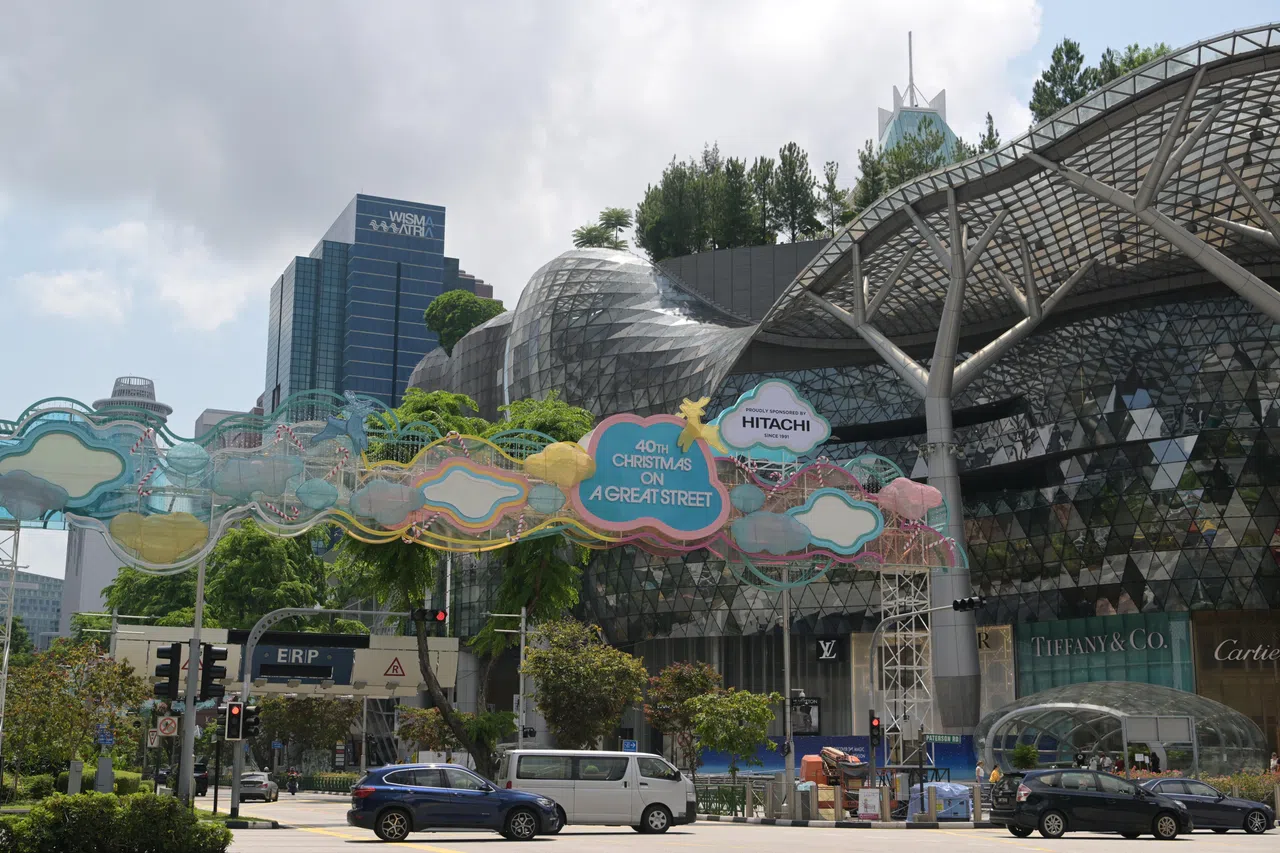
Picture a Saturday evening on Orchard Road. The taxi meter is climbing, the bus lanes are packed, and a stream of cars crawls past ION Orchard at walking pace. Now imagine that every one of those drivers — and every taxi idling in the drop-off bay — first had to pay for the privilege of entering the shopping belt at all. That is the prospect of Orchard Road congestion pricing: a policy that Singapore's transport authorities have reportedly been studying, made possible by the satellite-based ERP 2.0 system that is slowly replacing physical gantries.
For commuters, the question is about time and money. For property investors, the question is bigger. A congestion charge is, at its core, a price placed on access — and access is the raw material from which property values are built. Retail rents along a shopping belt are a function of who can reach the shops and what they spend. Office rents are tied to how easily talent and clients can arrive. Residential values in Districts 9 and 10 are shaped by the trade-off between prestige, convenience, and the cost of getting around. If the Singapore authorities ever pull the trigger on congestion pricing along Orchard Road, the ripple effects could show up in everything from footfall counts and retail rental yields to the resale prices of nearby condos.
This article explores that hidden variable. We'll look at what the policy could actually look like, how it might reshape retail and office demand along the boulevard, and where the winners and losers might sit — without pretending that any of it is certain. Because the only thing more dangerous than a speculative property thesis is one that ignores the infrastructure changing beneath it.
What Is Orchard Road Congestion Pricing (and Why Now)?
A brief history of paying to drive in Singapore
Singapore didn't invent congestion pricing, but it perfected it. In 1975, the government introduced the Area Licensing Scheme — a paper-based system requiring drivers to buy a licence before entering the CBD during morning peak hours. In 1998, that system was replaced by Electronic Road Pricing (ERP), using overhead gantries that automatically deducted charges from in-vehicle units as cars passed beneath.
ERP was a genuine worldwide pioneer. Cities like London, Stockholm, and Milan later borrowed the idea. But gantries have a physical limitation: they can only charge at fixed, point locations. That meant ERP could manage a cordon around the CBD or a specific expressway bottleneck, but it couldn't easily price a zone or charge based on distance travelled within it.
That limitation is now disappearing.
ERP 2.0: the satellite upgrade
From around 2023 onward, the Land Transport Authority (LTA) has been progressively installing new satellite-based onboard units (OBUs) in Singapore vehicles. The hardware listens to GPS signals and is designed to support more flexible charging models:
- Distance-based pricing — pay based on how far you actually drive, not just how many gantries you pass
- Zone-based pricing — define a virtual boundary and charge vehicles for entering or moving within it
- Dynamic timing — vary charges across fine-grained time windows rather than fixed half-hour blocks
- No physical infrastructure — roads avoid the visual clutter of gantries
The LTA has stated that the physical gantries will eventually be removed. What replaces them is the interesting part. Media reports over the past year have indicated that the authorities are studying whether to use the new system to introduce congestion pricing on Orchard Road, where heavy car and taxi traffic regularly chokes one of Southeast Asia's most famous shopping streets.
Here's the important nuance for property watchers: this is not yet a decided policy with published rates and boundaries. It is a study, a feasibility exercise, and a capability demonstration. But the direction of travel is clear, and infrastructure of this kind tends to arrive eventually — even if the timeline stretches into the late 2020s or early 2030s.
What the actual scheme could look like
No official design has been announced, but based on how congestion pricing works in other cities and Singapore's own ERP history, a likely Orchard Road scheme would involve one or more of these features:
- A cordon zone covering the main retail strip from roughly Dhoby Ghaut to Tanglin, with charges for vehicles entering during defined hours
- Time-based charging focused on weekend afternoons and weekday evenings, when Orchard Road's recreational traffic peaks — rather than the classic morning commute
- Exemptions or rebates for certain vehicles, such as buses, emergency vehicles, and potentially electric vehicles or residents of the zone, depending on how policymakers balance fairness and behaviour change
- Commercial vehicle charging that affects deliveries, which would have its own downstream consequences for retail tenants
The design decisions matter enormously for property. A charge that only applies on Saturday afternoons affects leisure retail differently from a charge that runs all day. A scheme that exempts taxis protects the tourist trade but does nothing to discourage ride-hail congestion. A scheme that charges delivery vans hits F&B and logistics-heavy tenants directly.
Why Orchard Road, and why now?
Orchard Road is the natural test bed for this technology for three reasons. First, it is a destination rather than a commute corridor — people choose to drive there for shopping, dining, and entertainment, which makes it a better candidate for demand management than a highway that workers need to use. Second, it has chronic congestion during leisure peaks, when the road's capacity is overwhelmed not by through-traffic but by people circling for parking. Third, it has world-class transit alternatives — multiple MRT stations thread the corridor, which means charging cars wouldn't trap people without options.
For property investors, the timing also matters. This proposal lands at a moment when Orchard Road's retail landscape has already been reshaped by e-commerce, by changing tourism patterns, and by a post-pandemic preference for experiences over goods. Congestion pricing could accelerate, blunt, or redirect those trends. The real question isn't whether the toll is annoying. It's whether it changes who shows up, how long they stay, and what they spend — because those are the variables that ultimately set rents and property values.
The Property Logic: Why a Toll Is Also a Rent Signal
Before diving into asset classes, it's worth understanding the mechanism that connects a traffic policy to a property valuation.
At the most basic level, real estate is priced on location. But "location" isn't an absolute — it's a bundle of conveniences. A great location means easy access to jobs, shops, schools, and leisure. When you make access more expensive, the bundle changes. Some people will pay the new price and continue to drive. Others will shift to public transport. Still others will switch destinations entirely — shopping at a suburban mall, working in a fringe office node, or renting a condo one MRT stop away.
That behavioural shift is what moves property prices. Landlords don't set rents based on traffic counts; they set rents based on the expected revenue of a tenant, and a tenant's revenue depends on customer flow. A congestion charge doesn't tax landlords directly, but it filters the customer base, changes delivery costs, and alters the appeal of being physically present on the boulevard.
The chain looks like this:
There are three important implications hidden in that diagram.
First, congestion pricing is not a tax on all property equally. A car-dependent luxury boutique and a lunch-serving F&B outlet that draws office workers will respond completely differently to the same charge. The policy's effect is felt through each asset type's customer profile, not through an across-the-board property tax.
Second, the surrounding area matters as much as the priced zone itself. In every city that has introduced congestion pricing, there are "boundary effects" — activity shifts to the edges of the zone where parking is free and the toll can be avoided. For Orchard Road, that could mean strengthening the appeal of nearby retail clusters such as Plaza Singapura's fringe, Tanglin's quieter end, or even Somerset's mid-strip stretch, depending on where the virtual line is drawn.
Third, a cleaner, calmer street is itself a premium amenity. A congestion charge that successfully reduces car traffic could make Orchard Road more pleasant to walk, which is exactly the kind of environment where high-spend retail and café culture thrive. Investors too often assume that any restriction on cars is bad for property. Sometimes the restriction is what upgrade the street's desirability.
Retail Impact: Will Orchard Road Congestion Pricing Hurt Retail Rental Yields?
Retail is ground zero for this policy, because Orchard Road is, above all, a shopping address. It is home to some of Singapore's most iconic malls — ION Orchard, Ngee Ann City, Paragon, 313@Somerset, Wisma Atria, Mandarin Gallery, and Plaza Singapura, among others. By most measures, the strip commands some of the highest retail rents in Singapore, and its malls are among the most valuable retail assets in the country.
Congestion pricing could affect those assets in at least four distinct ways.
1. The drive-in customer
The most obvious risk is to spending that arrives by car. Luxury retail historically depends on customers who value privacy, convenience, and the ability to transport purchases — a demographic that skews toward driving. If a driver must pay a charge every time they enter the Orchard zone, some portion of that demographic will:
- Shift their shopping to malls outside the charge zone, such as those in the Orchard fringe, Bukit Timah, or even Marina Bay
- Consolidate trips — driving to Orchard less often but spending more per visit
- Shift to ride-hailing, in which case the cost of the toll is bundled into the fare and spread across a single journey
The degree of impact depends on the price point of the charge. A small, ERP-style charge of a dollar or two is unlikely to deter a luxury shopper spending thousands. But it introduces a friction cost — a reminder that the destination is gated. Over time, friction influences habit.
2. The delivery and logistics squeeze
Retail isn't just about customers arriving — it's about goods arriving. Every shopping mall on Orchard Road relies on a steady flow of delivery vans, lorry movements, and service vehicles. If commercial vehicles are charged (or if their operators pass on higher costs), the impact lands unevenly:
| Retail format | Customer dependency | Delivery sensitivity | Likely exposure to congestion pricing |
|---|---|---|---|
| Luxury flagships (ION, Paragon) | Drive-in and tourist heavy | Low (mall handles logistics) | Moderate — customer friction but high spend |
| Mass-market fashion (Somerset stretch) | Transit and youth heavy | Low | Low — MRT-driven footfall |
| F&B outlets and restaurants | Mixed, evening heavy | High (fresh goods, waste removal) | High — margin pressure |
| Grocery and daily-needs retail | Walk-in and nearby office | High | High — operational cost squeeze |
| Electronics and bulky goods | Transit and drive-in mix | Medium | Moderate |
F&B deserves special attention. Restaurants run on thin margins, and they are disproportionately sensitive to any increase in delivery or waste-removal costs. If landlords absorb those costs through higher service and conservancy charges passed on by mall operators — or if tenants simply face worse terms — the rent that F&B can support could come under pressure. That matters because F&B is the anchor tenant of the modern mall, the traffic generator that fills the rest of the retail floors.
3. The tourist equation
Orchard Road's retail health is tied to tourism, and tourism arrives by coach, taxi, and increasingly, ride-hail. A congestion charge applied to commercial coaches or tour vehicles would ripple into itinerary planning — tour operators might schedule shorter Orchard stops or swap in other shopping districts. Yet the same policy could improve the experience for the tourists who do come: fewer cars, cleaner air, easier walking between malls.
The net tourism effect is ambiguous. Cities like London introduced congestion charging without destroying their tourism economy; tourist activity is relatively price-inelastic for transport because it is a small share of a trip's total cost. But Singapore's tourism mix leans heavily on regional visitors who buy in volume — the so-called "shopping tourist." If a coach tour is charged a significant sum for every Orchard Road visit, the arithmetic changes.
4. The pedestrian dividend
Here is the contrarian case for retail landlords. Orchard Road's congestion problem is not just cars on the road — it's crowded footpaths, idling taxis, and a streetscape that too often feels like a car sewer rather than a boulevard. Congestion pricing is one of the few tools that can take cars off the street without banning them, converting a choked shopping belt into a smoother pedestrian corridor.
Evidence from other cities suggests that traffic restraint rarely kills retail streets — stagnation does. Where car access is reduced but footfall quality improves, dwell time tends to rise, and dwell time is what drives spending in experience-led retail. Malls on Orchard Road that already skew young and transit-dependent, such as those around Somerset, could benefit from a faster, safer, more pleasant street environment. Luxury destinations, with their valet and drop-off culture, are more exposed.
What this means for retail rental yields
The honest answer is that the effect on retail rents and yields will depend on three design variables:
- How high the charge is — symbolic friction or genuine deterrent
- When it applies — weekend leisure peaks vs. all-day
- Who gets exempted — taxis, residents, commercial vehicles, EVs
Investors should not assume congestion pricing automatically lowers retail property values. In the right design, it could increase the value of transit-oriented retail assets by improving the pedestrian environment and filtering out the least productive car trips. The bigger risk is for mid-tier malls that depend on regional drive-in shoppers and lack MRT connectivity — the worst of both worlds, exposed to charges without the compensating footfall.
Office and Commercial Property: A New Calculus Along the Boulevard
Orchard Road is often thought of as a retail address first, but it is also a significant office node. The corridor is dotted with commercial buildings hosting financial advisers, medical suites, corporate headquarters, and professional services. District 9 office space commands a premium for its prestige, and the area's F&B and retail amenities make it attractive for businesses that entertain clients.
How would congestion pricing affect this office market?
Commuting costs are the least interesting part
The vast majority of office workers along Orchard Road commute by MRT or bus. For them, a driver congestion charge is irrelevant to their daily cost structure. Even for employees who drive, a few dollars a day of extra tolls is a modest line item relative to salaries and rents — unless no alternative transport exists, which it does along this corridor, in abundance.
The more interesting effects are structural:
- Client-facing businesses — law firms, wealth managers, luxury-adjacent consultancies — will weigh how their clients arrive. A charge that complicates client visits is a cost, but clients who fly into Singapore for a meeting are unlikely to abandon a District 9 address over a toll.
- Medical and wellness tenants — Orchard Road is home to a dense cluster of aesthetic clinics, dental groups, and specialist practices. These businesses serve a clientele that skews older, wealthier, and more likely to arrive by car or taxi. If taxis are exempt, impact is muted; if not, drive-time friction could push some medical tenants toward the fringe.
- Back-office and support functions — any business that regularly receives deliveries, samples, or couriers will see marginal logistics costs rise. In a concentrated office market, marginal costs are rarely decisive, but they add to the premium tenants must justify to stay.
The prestige factor
There is a subtle psychological channel at work. A congestion-priced zone signals that an area is in demand — that space there is scarce enough to require rationing. In real estate, restricted supply often reinforces pricing power. London's congestion charge zone covers the West End and the City, which remain among the most expensive office locations in the UK. The charge did not hollow out those markets; it made driving less attractive while leaving the underlying locational advantages intact.
For Orchard Road offices, the equivalent logic applies. The address remains central, prestigious, and amenity-rich. Congestion pricing doesn't change the buildings. It changes the journey — and for most office users, the journey was already by rail.
The fringe effect
Office tenants are more footloose than retail tenants in one respect: they don't depend on street-level footfall, so they have more flexibility to relocate. If congestion pricing ever made Orchard Road feel punitive to drive to, the nearby fringe — Dhoby Ghaut, Newton, Tanglin, and even River Valley — would look more attractive to car-dependent businesses. These areas offer lower rents, easier parking, and adjacency to the same talent pool.
In practice, this would manifest as a cooling of rental growth at the margin rather than an exodus. Orchard Road's office stock is small relative to Raffles Place and the Marina Bay financial district, so its pricing is driven more by prestige and quality than by transport costs. The likely outcome is that congestion pricing becomes one more factor in a tenant's location scorecard — important, but rarely decisive on its own.
Residential Impact: Condos Along the Congestion-Priced Corridor
Now to the question most private property investors will care about most: what happens to the condos and apartments along and around Orchard Road?
The corridor sits within District 9, one of Singapore's most prestigious residential districts, overlapping with parts of District 10 toward Tanglin. The residential stock ranges from landmark luxury condos to older freehold apartments tucked behind the shopping malls. Prices in this area have historically been supported by scarcity, prestige, and proximity to the city's best retail and dining.
The resident's dilemma
A homeowner in a District 9 condo who drives daily to work faces the possibility of a new recurring cost: a charge every time they enter the Orchard Road zone. Depending on the scheme's boundaries, some residents would effectively pay a toll to come home. That is a real, if modest, hit to household budgets — and, critically, to the perceived cost of living in the area.
For buyers and investors, the channel works through the price achievability of the asset. A block of flats where every car-owning household pays S$2–S$4 per entry is a block that must discount to some degree for car-dependent buyers — unless the charge is paired with resident exemptions, as is common in cities with residential zones inside congestion charging areas.
The design question again dominates. In London, residents inside the congestion zone received a 90% discount on the daily charge, which neutralised most of the residential downside. Singapore's policymakers would almost certainly consider similar exemptions for permanent residents of the zone, given the political sensitivity of charging people to access their own homes.
The transport-rich counterweight
Here is the bullish case for residential property on Orchard Road: the corridor is already exceptionally well served by public transport. Several MRT stations sit directly on or within walking distance of the strip, and the bus network is dense. For a household that doesn't own a car — or uses one only occasionally — congestion pricing is not a cost at all. It is a benefit, because it makes the street quieter, cleaner, and more pleasant.
That reframes the investor's question. Instead of asking "will this hurt prices?", ask "what kind of buyer will this attract or repel?"
| Buyer profile | Reaction to congestion pricing | Net effect on demand |
|---|---|---|
| Car-dependent luxury buyer | May pay toll or seek fringe properties | Mildly negative |
| Transit-first professional couple | Indifferent, maybe positive (better streetscape) | Neutral to positive |
| Investor renting to expats | Passes through as cost or absorbs it | Neutral |
| Retiree who drives weekly | Negative if no resident exemption | Negative |
| Empty-nester who wants city living | Positive if walking improves | Positive |
The most likely residential outcome is a case of haves and have-nots divided by parking. Condos with poor MRT access and high car dependency could see softening demand. Condos that are genuinely walkable to the MRT — and there are many along this belt — could strengthen their relative position. Yield investors should note that tenants are generally less car-dependent than owner-occupiers, so the rental impact is likely smaller than the resale impact.
The boundary game
One of the most transferable lessons from congestion pricing worldwide is the boundary effect on residential property — homes just outside the priced zone have historically gained appeal as drivers seek to avoid the charge while staying close to the action. If the Orchard Road zone is drawn tightly around the main retail strip, we could see:
- Fringe street condos (River Valley, Cairnhill, Newton) becoming more attractive to car owners who want proximity without the toll
- Parking-rich developments at the zone's edge capturing drivers who park-and-ride into the shopping belt
- Freehold prestige units inside the zone holding value on scarcity, regardless of toll costs
Investors who can anticipate where the boundary will be drawn — and that's a genuine unknown — could position ahead of the announcement.
A note on prestige
For what it's worth, prestige usually trumps friction. District 9 addresses are not bought on transport-cost minimisation. The buyer of a luxury freehold unit on Orchard Road is purchasing a lifestyle, a status symbol, and a locked-in location in one of Asia's most desirable cities. A congestion charge measured in single dollars per entry is unlikely to change that calculus. What it could change is the marginal decision of a budget-conscious family considering a mid-tier condo in the area — and those marginal buyers are exactly the ones who set transacted prices in softer market segments.
The Investor Playbook: Data Points to Watch
For investors who want to stay ahead, the wise move is not to guess the policy outcome but to build a monitoring framework. Here is what to track if congestion pricing moves from study to announcement.
Policy design signals
- Announced boundaries — where the virtual line is drawn; check whether your target property sits inside, outside, or adjacent to the zone
- Charging hours — whether pricing targets weekend leisure peaks or weekday commutes
- Exemptions — resident discounts, taxi treatment, commercial vehicle policy, EV incentives
- Charge levels — published ERP-style rates and how dynamic they are
Market indicators
| Indicator | What it tells you | Where property impact shows up first |
|---|---|---|
| Street-level footfall counts | Whether the policy changes visitor numbers | Retail tenancy demand |
| Visitor mix (tourist vs local, transit vs car) | Which retail segments win or lose | Mall revenues and rents |
| URA retail and office rental indices | Direction of rent at the Orchard submarket level | Landlord income and yields |
| District 9/10 transaction volumes and PSF | Confidence in the residential corridor | Resale and new-launch pricing |
| Rental yields in nearby fringe districts | Whether activity shifts outside the zone | Fringe condos and shop units |
| Parking occupancy and charges | Whether driving habits actually change | Future parking revenue assumptions |
How to stress-test a property
Suppose congestion pricing is announced for Orchard Road. Run every shortlisted property through a simple framework. Ask: What is the car dependency of this asset's likely users? Then ask: What is the transit alternative within a five-minute walk? Properties that combine high car dependency with poor transit access are the most exposed. Properties that combine low car dependency with strong transit access are the most resilient.
A decision tree for the individual investor might look like this:
The important discipline is to avoid binary thinking. Congestion pricing is not "bad for Orchard Road" or "good for Orchard Road" — it is a mechanism that will sort assets into winners and losers depending on their tenant base, accessibility, and positioning.
Food for Thought
As the policy discussion evolves, here are some questions worth chewing on:
-
If congestion pricing made Orchard Road significantly more pleasant to walk, would you pay more to live or work there — even if you drove less? The answer reveals whether you believe environmental quality is a priced amenity or just a nice-to-have.
-
Where would you draw the zone boundary if you were the transport minister? Consider how your answer changes the investment case for properties on either side of the line.
-
Luxury retail has historically depended on drive-in customers. Is that dependency weakening as younger, wealthier shoppers embrace transit, ride-hail, and online-first purchasing? If yes, the risk of congestion pricing to high-end Orchard Road malls may be lower than it appears.
-
The retail market has already shifted toward experience spending after the pandemic. Does a calmer, car-free-leaning Orchard Road accelerate that shift — and what does it mean for traditional anchor tenants like department stores?
-
Singapore's property market is famously policy-responsive. If congestion pricing is framed as a green, liveable-city measure, could it actually lift sentiment and prices on the corridor, similar to how recent transit investments have boosted nearby precincts?
There are no clean answers to these questions — yet. That is precisely why they are worth holding in mind as the study progresses.