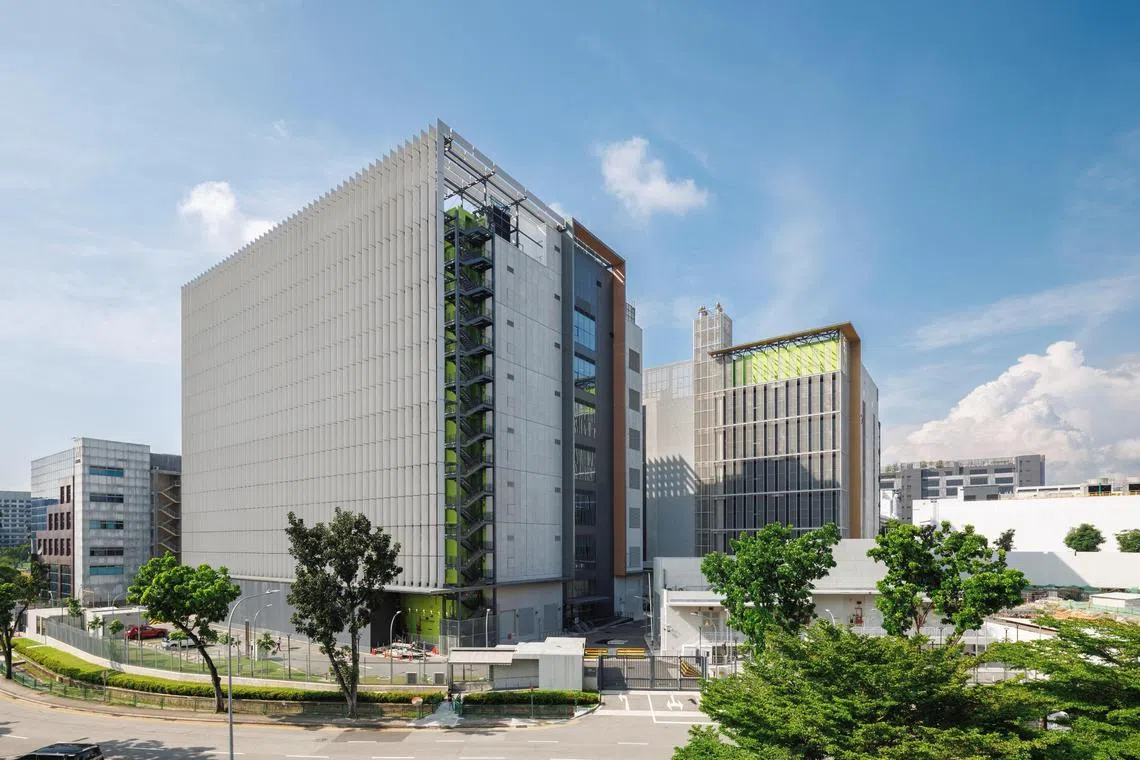
When most Singaporeans picture property investment, they think of gleaming condominiums, heritage shophouses, or humble industrial units in Jurong and Woodlands. Almost nobody pictures a windowless concrete building humming with servers at 3am. Yet data centres in Singapore have quietly become one of the most tightly supplied, strategically important, and fiercely sought-after property types on the island — and the investment world has taken notice.
These "boring boxes" are anything but boring to the portfolios that hold them. Global hyperscalers, sovereign funds, private equity giants and listed real estate investment trusts (REITs) are pouring tens of billions into digital infrastructure. Singapore, despite being one of the smallest nations on earth, sits at the centre of this boom — punching far above its weight as a regional data centre hub. The question for everyday investors is no longer whether data centres matter, but how to get a piece of the action.
This guide breaks down why Singapore became a data centre heavyweight, the dramatic policy journey from moratorium to a 1.2 gigawatt expansion, the demand engines fuelling growth, and the practical ways investors can gain exposure — via REITs, operator equity, or direct industrial property. Along the way, we'll look at the rising importance of sustainability certifications, because in Singapore's data centre market, being green is no longer a nice-to-have. It's increasingly the price of admission.
Why Singapore Became a Data Centre Powerhouse
Singapore is roughly half the size of Greater London, has no natural energy resources, and imports almost all of its electricity fuel. On paper, it's a strange place to host some of the world's most energy-hungry buildings. In practice, Singapore has become one of the most important data centre markets in Asia Pacific — and industry estimates suggest the island hosts more than 70 data centres, along with a large share of Southeast Asia's total colocation capacity.
What explains the paradox?
Location, Connectivity, and Trust
First, there's geography. Singapore sits at the crossroads of major Asian sea and cable routes, within a few hours' flight of nearly every major Southeast Asian economy. It's the natural gateway for companies wanting to serve the region — and the region is growing fast.
Second, there's connectivity. Singapore is connected to the rest of the world by more than 20 submarine cable systems, making it one of the most wired places on the planet. For a data centre, connectivity is everything: the whole point is to be close to the cables that carry data between continents.
Third, there's the less glamorous stuff that investors actually care about: political stability, strong rule of law, reliable regulation, and world-class physical infrastructure. Data centre operators are making 20- to 30-year bets on physical assets. They need certainty — and Singapore offers it in abundance.
Read the list below and you'll see why global operators like Equinix, Digital Realty, and ST Telemedia Global Data Centres have all established major presences here:
- Strategic location at the centre of Southeast Asia's fastest-growing digital economies
- Excellent international connectivity via submarine cables and regional internet exchanges
- Stable government and transparent, predictable regulation
- Reliable power grid and advanced cooling infrastructure, despite resource constraints
- Strong talent pool for engineering, operations, and data centre management
- Mature financial ecosystem — capital, REITs, and institutional investors all present locally
The result? Singapore has historically accounted for a dominant share of Southeast Asia's data centre capacity. Industry trackers have estimated Singapore's share at roughly 60% of the region's capacity — a remarkable concentration for such a small country.
Southeast Asia Data Centre Capacity Share (Approximate)
Shares are approximate industry estimates and shift as neighbouring markets such as Johor ramp up their own supply.
But here's the tension: Singapore's advantages are precisely what created its constraints. Land is scarce. Energy is imported. Water is a national security issue. These constraints forced the government to make a dramatic decision in 2019 — one that reshaped the data centre market for years to come.
The Policy Rollercoaster: Moratorium, Roadmap, and the 1.2GW Expansion
If you're new to this asset class, the policy story is essential context, because government decisions — not just market forces — have dictated the supply and value of data centres in Singapore.
The 2019 Moratorium
In 2019, Singapore announced a moratorium on new data centre developments. The reasoning was blunt: data centres consume enormous amounts of electricity and water, and Singapore could not afford to let unaudited growth strain its grid and its carbon commitments. At the time, data centres were reported to already account for around 7% of Singapore's total electricity consumption — a huge share for a category of buildings most people never notice.
The moratorium sent shockwaves through the industry. Planned projects were shelved. Global operators scrambled. And crucially, because supply was frozen while demand kept climbing, the value of existing data centres in Singapore jumped. If you owned a data centre when the moratorium was announced, you suddenly owned something far scarcer than before.
The 2022 Pilot: A Controlled Reopening
After the moratorium, the government didn't simply open the floodgates. In January 2022, the Infocomm Media Development Authority (IMDA) launched a pilot Data Centre Call for Application (DC-CFA) — a competitive process that would award a limited amount of new capacity — reportedly around 80 megawatts (MW) — to applicants best able to meet strict criteria.
This wasn't a free market. It was a beauty contest. Applicants were judged on:
- Energy efficiency and best-in-class Power Usage Effectiveness (PUE)
- Innovation, including use of green energy and advanced cooling
- International connectivity and contribution to Singapore's digital economy
- Economic spillovers, such as job creation and industry development
In July 2022, awards were reportedly made to operators including Equinix, Digital Realty, GDS, and AirTrunk. The message was clear: Singapore would still welcome data centres — but only the greenest, most efficient, most valuable ones.
The 2024 Green Data Centre Roadmap
In May 2024, the government went further. It launched the Green Data Centre Roadmap, which committed Singapore to at least 300MW of additional capacity in the near term while setting an ambition for data centres to draw 50% of their energy mix from green energy sources. The roadmap framed data centres not as a burden on the grid, but as a strategic industry — one that powers AI, finance, and the digital economy — provided it could grow sustainably.
The 2025 Bombshell: 1.2 Gigawatts
Then came the big one. In May 2025, IMDA announced a new Call for Proposal that would progressively make available a massive 1.2 gigawatts (1,200MW) of additional data centre capacity. To put that in perspective, that is roughly four times the roadmap's near-term target and many times the 2022 pilot.
The message: Singapore wants to remain the region's data centre capital, and it's betting that green, high-efficiency, AI-ready data centres can square the circle of economic growth and climate commitment.
What This Means for Property Investors
The policy arc matters because it tells you something fundamental about supply. Data centre supply in Singapore is not determined by the market. It is determined by the government. That means supply will remain disciplined, land zoned and approved for data centre use will stay scarce, and existing assets — especially those with strong green credentials — are likely to remain in high demand.
Additional Data Centre Capacity Announced by Singapore (MW)
The stark jump from 80MW to 1,200MW shows how dramatically official sentiment has shifted — and how aggressively Singapore is now courting the data centre industry.
The Demand Engine: AI, Cloud, and a Digital Economy That Runs on Servers
Supply is only half the story. The other half is demand — and demand for data centres in Singapore has never been stronger.
The Digital Economy Is the Economy
Look at the headlines and you'd think Singapore's economy is all about semiconductors, financial services, and biotech. But underneath all of it runs a growing layer of digital infrastructure. Singapore's digital economy — covering everything from e-commerce and fintech to cloud services and software — was estimated by IMDA to contribute roughly S$106 billion to the economy in 2023, about 17.7% of GDP, up from around S$58 billion in 2017. Every dollar of that digital activity ultimately touches a server in a data centre somewhere.
Singapore Digital Economy Contribution (S$ Billion)
Source: IMDA estimates. The digital economy's contribution to GDP has grown dramatically in under a decade.
Three Demand Engines Powering the Boom
1. Cloud adoption. Singapore is a regional hub for cloud services. AWS, Microsoft Azure, Google Cloud, and Alibaba Cloud all operate or have announced regions here or in the surrounding region. Enterprises across Southeast Asia are shifting workloads to the cloud, and those workloads need physical homes. Cloud providers typically lease large blocks of capacity from data centre operators on long-term contracts — the kind of contracts that underpin stable REIT income.
2. Artificial intelligence. The AI wave has changed everything. Generative AI models like ChatGPT and its competitors require enormous compute power — far more than traditional web hosting or enterprise IT. Training a single frontier model can involve tens of thousands of specialised chips running for months. That demands data centres with far higher power density than the ones built a decade ago. AI is not just adding demand; it's redefining what a modern data centre needs to be: higher power capacity, advanced liquid cooling, and closer proximity to cloud hubs.
3. Financial services and connectivity. Singapore is Asia's leading wealth management and forex trading centre. Low-latency connectivity is a competitive advantage for trading firms, and data centres are where that connectivity physically happens. Every stock trade, every payment transaction, every banking app request — they all route through digital infrastructure.
The Result: A Very, Very Tight Market
Singapore's data centre vacancy rates have been persistently low for years. REITs with data centre exposure, such as Keppel DC REIT and Digital Core REIT, have repeatedly reported high occupancy rates across their portfolios — often above 95% — and data centres typically operate on long leases measured in years or even decades, with built-in rental escalations.
When supply is controlled by the government, demand is growing at double-digit rates, and existing buildings are nearly full, the economics tend to be favourable to landlords. That's the fundamental investment case in one sentence.
How to Invest: REITs, Operators, and the Illusion of "Direct" Ownership
So you're convinced data centres are compelling. How do you actually invest?
Here's the first honest reality check: you probably can't buy a data centre the way you buy a condo. Most data centres in Singapore are single-user, purpose-built facilities owned by operators, institutional funds, or REITs. Unlike industrial strata units in places like Woodlands or Tuas, data centres are rarely subdivided and sold to retail buyers. The capital requirements, technical complexity, and lease structures don't fit the standard "buy a unit, rent it out" model.
That leaves three realistic paths.
Path 1: Listed REITs — The Most Accessible Route
For most retail investors, REITs are the simplest way to gain exposure to data centre assets, and Singapore happens to have one of the deepest REIT markets in Asia.
| REIT | Data Centre Profile | Notes |
|---|---|---|
| Keppel DC REIT | Pure-play data centre REIT | The first pure-play data centre REIT listed in Asia (December 2014); portfolio spans Singapore, the region, and Europe |
| Digital Core REIT | Pure-play, sponsored by Digital Realty | Listed in 2021; primarily US and European data centres with long leases to a major global operator |
| Mapletree Industrial Trust (MINT) | Diversified industrial REIT with significant DC component | One of Singapore's largest industrial REITs; has expanded its data centre exposure, including US assets |
| CapitaLand Ascendas REIT (CLAR) | Large industrial/logistics REIT with DC exposure | Diversified across business parks, industrial, and data centre assets in Singapore and abroad |
Why invest via REITs?
- Liquidity: You can buy and sell on the Singapore Exchange any trading day
- Dividend income: REITs distribute most of their taxable income to unitholders, typically paying quarterly or semi-annual distributions
- Low entry cost: You can start with a few hundred dollars, not millions
- Professional management: The REIT manager handles leasing, maintenance, and asset enhancements
- Diversification: A single REIT may hold data centres across multiple countries and tenants
But REITs are not without risks, which we'll get to shortly.
Path 2: Operator Equity and Private Funds — For the Well-Connected and Well-Heeled
Below the REIT layer sits the world of operators and private capital. Companies like Equinix, Digital Realty, ST Telemedia Global Data Centres (STT GDC), AirTrunk, and Princeton Digital Group have raised billions from sovereign wealth funds, pension funds, and private equity firms. Many of these deals are entirely out of reach for retail investors, but some global listed companies (like Equinix, which is listed in the US) provide indirect exposure through their stock.
If you have substantial capital and access to private market platforms, data centre funds and joint ventures can offer direct exposure to development profits and operating income. For the average reader, treat this path as informational — it shows where the big money is flowing.
Path 3: Direct Industrial Property — Harder Than It Looks
What about buying industrial property and hoping for a data centre windfall? It's a thought that crosses many investors' minds when they hear about "digital infrastructure" — and it's usually a mistake.
A few things to understand:
- Data centres are not like factories. They require massive electrical capacity, specialised cooling, reinforced flooring, redundant connectivity, and strict security. Most existing industrial buildings cannot be converted without extensive and costly retrofits.
- Zoning and approvals matter. Even where an industrial site could theoretically host a data centre, approval processes and infrastructure constraints (especially power) are significant hurdles.
- The government's allocation model favours operators. Since 2022, new capacity has been awarded through competitive Calls for Proposal to major operators — not sold as strata units to retail investors.
- Land scarcity means competition. When JTC does release industrial land suited to data centre use, it tends to attract fierce bidding from institutional players with deep pockets.
That said, there is an angle for industrial property investors: industrial REITs. If you want exposure to the broader industrial property market including data centres, MINT and CLAR give you that mix without the headache of sourcing and operating a single-use asset. For most readers, this is the sweet spot between property exposure and sensible risk.
A Quick Comparison
| Investment Route | Minimum Capital | Liquidity | Yield Profile | Complexity | Fit for Retail Investors? |
|---|---|---|---|---|---|
| Listed data centre REITs | Low | High | Rental distributions | Low | Yes |
| Diversified industrial REITs | Low | High | Rental distributions | Low | Yes |
| Operator/private funds | Very high | Low | Development + operating | High | Rarely |
| Direct single DC ownership | Very high | Very low | Long-term leases | Very high | Essentially no |
The Green Premium: Sustainability Certifications Are the New Price of Admission
If you take away one new idea from this article, let it be this: in Singapore's data centre market, green is not a marketing slogan — it's a licence to operate.
What Makes a Data Centre "Green"?
The most common metric is Power Usage Effectiveness (PUE) — the ratio of total energy used by the facility to the energy actually consumed by the IT equipment inside it. A perfect PUE would be 1.0, meaning every watt goes to computing. Older, poorly designed data centres might run at 1.6 or higher. Best-in-class new facilities aim for PUEs of around 1.2 to 1.3 — and Singapore's competitive allocation processes have pushed operators toward these demanding standards.
Other green considerations include:
- Green energy mix: The share of electricity sourced from renewables or low-carbon imports
- Water usage effectiveness: How much water is used for cooling, especially relevant in water-scarce Singapore
- Cooling technology: Advanced liquid cooling and use of tropical climate design
- Waste heat recovery: Capturing heat from servers for other uses
- Embodied carbon: The emissions associated with construction materials
Singapore's Green Mark: A Local Standard with Global Weight
Singapore's Building and Construction Authority (BCA), together with IMDA, has developed Green Mark certification frameworks that specifically cover data centres. These benchmarks look at energy efficiency, water efficiency, sustainable operations, and more.
Why should investors care? Because the government's capacity awards explicitly favour operators that meet or exceed these standards. The 2022 pilot evaluated applicants on energy efficiency and innovation. The 2024 Green Data Centre Roadmap set a target of 50% green energy in the near term. The 2025 Call for Proposal reportedly raised the bar further, with new facilities expected to be among the most efficient in the world.
The Investment Implication: Green Assets, Stronger Cash Flows
As an investor, the practical takeaway is straightforward. Data centres with strong sustainability credentials are:
- More likely to win capacity approvals in future government allocations
- More attractive to hyperscale tenants with their own net-zero commitments
- More resilient to future regulation on energy and carbon
- Better positioned for higher occupancy and rental growth as green leasing becomes mainstream
In short, the green premium isn't just about doing good — it's about protecting and growing the value of the underlying real estate. When you evaluate any REIT with data centre exposure, ask about the average PUE of its portfolio, the share of green-certified assets, and the operator's plans for decarbonisation.
You can see this in action across the major REITs: Keppel DC REIT, for example, has publicly emphasised sustainability in its portfolio strategy, while Digital Core REIT's sponsor Digital Realty is one of the industry's largest procurers of renewable energy. These aren't coincidences; they're investment signals.
Risks and Considerations: Look Before You Leap
Every asset class has risks, and data centres are no exception. A balanced view requires acknowledging the downsides alongside the upside.
Policy risk. Singapore's government controls data centre supply. It imposed a moratorium once; it could do so again, or redirect capacity to other markets. Policy shifts can change the value of existing assets overnight — as the 2019 moratorium demonstrated in reverse.
Technology risk. Data centres are physical assets with a long life, but the technology inside them changes quickly. A facility designed for traditional enterprise servers may struggle to meet the power-density demands of AI workloads. Older assets could become stranded — still leased, but facing rising vacancy or costly retrofits as tenants upgrade.
Energy and water costs. Electricity is a data centre's largest operating expense. Rising energy tariffs or carbon costs can squeeze margins, especially for less efficient facilities.
Tenant concentration. Many data centre REITs lease to a small number of hyperscale or enterprise tenants. A large tenant deciding to build its own facility could create vacancy risk.
Interest rate sensitivity. REITs are income assets; when interest rates rise, their valuations typically fall. Data centre REITs are not immune to this basic law of finance.
Regional competition. Singapore's constraints are neighbouring markets' opportunities. Johor, Malaysia has emerged as a major data centre destination, attracting huge investments since the early 2020s thanks to cheap land, abundant power, and proximity to Singapore. Indonesia's Batam and other locations are also vying for a slice of the pie. Singapore's strategy is to compete on quality, connectivity, and green standards — but regional supply growth may eventually put downward pressure on pricing power.
A Balanced Scorecard for Evaluating Data Centre Investments
| Factor | What to Look For |
|---|---|
| Occupancy | Consistently high, ideally 95%+ |
| Lease duration | Long weighted average lease expiry (5+ years) |
| Tenant quality | Hyperscalers, global operators, investment-grade tenants |
| Energy efficiency | Portfolio PUE at or near industry best-in-class |
| Green certification | Green Mark or equivalent certifications on key assets |
| Market position | Assets in strong connectivity hubs with barriers to entry |
| Financial health | Prudent leverage, manageable refinancing profile, sustainable payout |
Food for Thought
As you digest all of this, consider a few questions — the kind that separate thoughtful investors from crowd-followers:
-
Would you pay a premium for a greener data centre REIT? If two REITs offer similar yields but one has a meaningfully better portfolio PUE and green energy mix, which one is truly the better investment over a 20-year horizon?
-
How do you feel about tenant concentration? A data centre REIT with one or two hyperscale tenants may have rock-solid leases today — but what happens when those leases expire and the tenant has built its own facility down the road?
-
Is the 1.2GW expansion a growth story or a dilution story? More supply in Singapore means more product — but will demand from AI and cloud keep up, or will the market become more competitive for existing landlords?
-
What if you could convert an existing building into a data centre? Would the cost of upgrading power and cooling systems make sense? Most investors conclude it doesn't — but the few who succeed often create enormous value.
-
Is regional competition a threat or a sign of a rising tide? Johor's boom might seem like competition for Singapore — but it also signals that Southeast Asia's digital economy is growing fast enough to support many hubs. Does that change your view on the long-term outlook?
These questions don't have neat answers. That's what makes the asset class interesting.
The Bottom Line
Data centres in Singapore occupy a rare position in the property market: an asset class with structurally limited supply, powerful secular demand, and a strategic role in the national economy. The journey from the 2019 moratorium to the 2025 announcement of 1.2GW of new capacity tells you everything about how far official thinking has come — and about how valuable the government considers digital infrastructure to be.
For investors, the most accessible route is through listed REITs — both pure-play data centre REITs like Keppel DC REIT and Digital Core REIT, and diversified industrial REITs like Mapletree Industrial Trust and CapitaLand Ascendas REIT. Direct ownership of a data centre in Singapore, by contrast, remains the preserve of institutions and operators, and conversion of ordinary industrial property into a data centre is far harder in practice than it sounds in theory.
Sustainability is the lens through which the whole sector is now being viewed. Singapore's capacity awards reward efficiency and green energy. Tenants increasingly demand certified, low-carbon space. And investors who ignore the green premium do so at their own risk. As the sector matures, the assets that will hold their value — and command the strongest rental growth — are the ones that can claim genuine, verifiable green credentials.
Underneath all the excitement, though, data centres are still property. They're buildings. They sit on land, draw on infrastructure, and trade on yield, lease quality, and location. The fundamentals that govern every other real estate investment — supply and demand, capital costs, and operational efficiency — govern them too. The buildings are just louder, hotter, and far more interesting than they look.