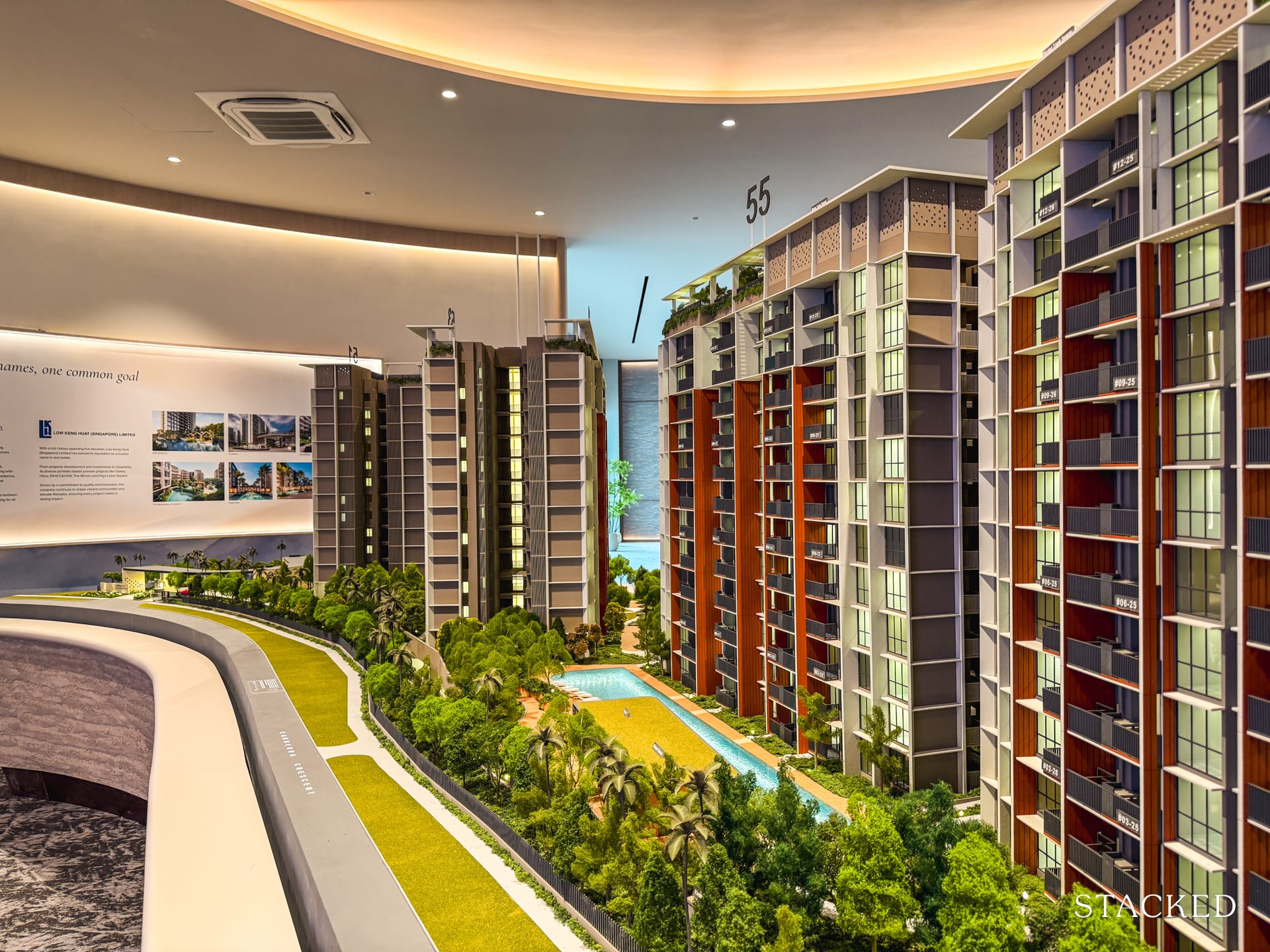
Collecting the keys to a brand-new condominium should be one of the happiest milestones in a Singaporean's property journey. For the first buyers at Canberra Residences, an executive condominium in the Canberra precinct of Sembawang, the moment arrived with an uninvited guest: a mounting list of defects. According to media reports and residents' accounts, water seepage crept through walls, hollow floor tiles echoed underfoot, hairline cracks reappeared across ceilings, and in at least one unit, a plasterboard ceiling reportedly gave way. The episode became a cautionary tale that rippled through property forums and reshaped how buyers treat the humble "snagging" exercise.
That is the reality of a proper condo quality check: it is not a formality or a half-day stroll through your unit. It is your only structured, cost-free window to compel the developer to fix problems on their own dime — and the Canberra Residences case shows precisely what happens when that window is mishandled, delayed, or missed. Whether you are collecting keys next month, waiting for a Build-To-Order flat, or weighing an executive condo launch two years down the road, understanding Singapore's mandatory defect warranty — the developer's implied duty, often abbreviated as DID — and knowing how to run a rigorous quality check can be the difference between a dream home and a money pit.
What Canberra Residences Taught Singapore Buyers About Condo Quality
Canberra Residences sits in the northern fringe of Sembawang, in a pocket that has quietly become an executive condo heartland. The development was completed around 2019, at a time when the nearby Canberra MRT station on the North-South Line was newly opening and young families were flooding into the area for its relative affordability and space. For many buyers, it was a first home — a launch-condo purchase signed years earlier, paid for through progressive payments, and finally ready for the sofa and the smart TV.
What they found after key collection, however, was not the pristine home in the brochure. Residents who spoke to the press described recurring water seepage in bedrooms and bathrooms, floor tiles that sounded hollow when tapped, and hairline cracks that seemed to reappear no matter how many times they were patched. The most serious account involved a section of plasterboard ceiling that collapsed in a resident's home — a failure that moved the conversation from cosmetic annoyance to outright safety.
The aftermath followed a pattern familiar to anyone who has tracked Singapore's defect disputes. Rectification works were arranged, but residents reported delays, repeat visits that left the same problems half-fixed, and a slow erosion of trust. Some owners worried openly about resale value — after all, who wants to buy a unit in a project known for leaking ceilings? Others simply wanted the building to stop making new noises at night.
Lessons that should travel with every buyer
- A brand-new unit is not a defect-free unit. Even a freshly completed condo can have systemic workmanship issues buried behind fresh paint.
- The quality check window is finite. In Singapore, the mandatory defects warranty runs on a clock. Miss the window and the developer's obligation largely evaporates.
- Rectification speed varies wildly. Some developers respond within days; others stretch simple fixes across months of back-and-forth.
- Safety issues change the game. When a ceiling collapses or a lift misbehaves, the Building and Construction Authority (BCA) can step in — but you have to report it.
- A defect history follows the property. Resale buyers search project names before making offers. A publicised defect saga can depress demand for years.
Canberra Residences is not an outlier. In recent years, projects such as Midwood at Hillview have also made headlines over ceiling collapses, and countless quieter complaints about seepage and hollow tiles surface in forums and Facebook groups every month. The common thread is that quality failures in Singapore's new homes are far more common than marketing materials suggest — which is exactly why a systematic quality check belongs in every buyer's playbook.
Why Brand-New Condos Still Fail a Quality Check
It is tempting to assume that a condo built in 2020 is better built than a condo from 1990. After all, construction technology, waterproofing membranes, and quality management systems have all advanced. Yet the reality is more complicated. Singapore's construction industry operates under intense time and cost pressure, and those pressures show up in the details of a unit.
The economics of construction
Most developers do not build with their own workers. They award contracts to main contractors, who in turn subcontract the actual labour to a chain of specialist firms — the tiler, the plumber, the drywall crew, the electrician. Every layer in that chain is under pressure to deliver quickly and cheaply. When margins are thin, the fastest way to preserve profit is to cut corners that are difficult to see: a thinner skim coat of plaster, waterproofing applied in one pass instead of two, grout that was never properly finished.
The labour crunch factor
Singapore's construction sector has long relied on a foreign workforce with high turnover, and the past few years of pandemic-related disruptions only worsened the skills shortage. Projects were rushed to catch up on delays, and in some cases, the most experienced supervisors were spread across multiple sites. Quality control, in short, becomes a numbers game — and the buyer is the last person in line to inspect the output.
Design and material complexity
Modern condos are also simply more complex than older ones. Curtain walls and large-format windows, drywall partitions and false ceilings, hidden air-conditioning units and integrated floor traps — every additional system introduces another place where water can sneak, metal can flex, and plaster can crack. A bathroom with a poorly laid floor trap, for example, can leak for years without being visible from the unit above.
The benchmark that matters: CONQUAS
Because buyers cannot see inside a developer's quality-management meetings, BCA provides a public signal: the Construction Quality Assessment System, or CONQUAS. It is Singapore's national scoring scheme for building quality, assessing completed projects across three areas.
How CONQUAS Scores Are Weighted (%)
As the chart shows, the score is split between structural, architectural, and mechanical & electrical (M&E) works. The national average CONQUAS score for completed projects has hovered in the mid-to-high 80s in recent years — which sounds respectable, until you remember that a score of 86 or 87 still represents deductions for real, measurable defects. Some developers proudly advertise their projects' CONQUAS scores above 90; others quietly omit the number. Before you buy, it is worth looking up the CONQUAS record of the developer's recent projects. It is not a guarantee that your unit will be flawless, but it is a far more honest signal than a showflat.
The Common Defects Every Condo Quality Check Should Hunt For
Every unit is different, but the defects that plague Singapore condos fall into remarkably consistent categories. Knowing what to look for is half the battle; knowing where to look is the other half.
| Defect type | Typical locations | Common signs | Severity |
|---|---|---|---|
| Water seepage | Toilets, bathrooms, balconies, external walls, window jambs, basement carparks | Damp patches, mould, paint peeling, musty smell, ponding water | High |
| Hollow tiles | Living room floors, kitchen, bathroom walls | "Drum" sound when tapped; loose grout; tiles that rock slightly | High |
| Plasterboard & ceiling issues | Living room false ceilings, drywall partitions, beam edges | Sagging boards, hairline cracks at joints, popped nail heads | High |
| Door & window defects | Main door, bedroom doors, sliding windows, window frames | Misalignment, gaps, stiff operation, water ingress during rain | Medium |
| M&E failures | Power sockets, light switches, air-con units, water heater, concealed piping | Dead sockets, tripping breakers, dripping pipes, noisy air-con compressor | Medium |
| Finishing defects | Skirting, paint, kitchen cabinets, countertops | Bubbling paint, chipped edges, swollen chipboard, uneven joints | Low to medium |
The "big three" that deserve the most attention
Water seepage is the single most damaging defect category in Singapore's tropical climate. Because rain is frequent and humidity is constant, even small failures in waterproofing — a window jamb not sealed properly, a balcony floor without the correct slope, a toilet floor trap laid too high — can lead to mould, stained walls, and damage that spreads to your neighbour's unit below. When you test, do not just eyeball. Pour water onto bathroom floors and balconies and watch whether it drains or ponds. Run taps and showers at full pressure. Check the corners of ceilings for yellowish tide marks that signal previous flooding.
Hollow tiles are the most common cosmetic-defect-turned-safety-issue. A tile that is not fully bonded to the substrate sounds hollow when you tap it with a coin or a key. At first, it is merely annoying. But over time, hollow tiles crack, lift, and become a tripping hazard — and they are expensive to replace after you move in because matching tiles may no longer be available. Walk every room methodically, tap every tile, and mark the hollow ones with masking tape.
Plasterboard ceiling failure is the defect that made headlines at both Canberra Residences and Midwood. Singapore's standard "drywall" false ceilings are essentially plasterboard panels screwed to a metal frame and finished with compound. When the screws are insufficient, the frame is poorly anchored, or water leaks saturate the board from above, the ceiling can sag, crack, and — in the worst cases — collapse. Look for sagging, visible seams, and any brown discolouration; and if the unit above you has reported seepage, treat your ceiling as a priority.
A quick floor-by-floor checklist
- Living and dining: tap all floor tiles; check the ceiling for cracks and sagging; open and close all windows; check the balcony floor trap and drainage; test every power socket.
- Bedrooms: check walls for hairline cracks, especially at 90-degree corners; check the air-con for leaks and cooling performance; inspect the wardrobe doors and tracks.
- Bathrooms: pour water over the floor and watch drainage; check the shower screen seals; run the tap and inspect under the sink for drips; check toilet flush and fittings.
- Kitchen: test the sink tap, under-sink piping, and dishwater drainage; check cabinet doors align; inspect the countertop seams; check the hood and hob functions.
- Hose and any exterior areas: look for cracking or spalling on concrete; inspect weep holes and drainage outlets for blockages.
Singapore's Mandatory Warranty: The Developer's Implied Duty (DID)
All of this inspection work only matters because of Singapore's mandatory defects warranty. Under the standard Sale & Purchase Agreement (S&P) that every private condo and executive condo buyer signs — a form regulated under the Housing Developers (Control and Licensing) Act — the developer carries an implied duty to hand over each unit properly completed and free of defects attributable to workmanship or materials. This is the developer's implied duty (DID), and it is not optional. It is written into the contract, which means it cannot be contracted away.
In practical terms, the DID is enforced through the Defects Liability Period (DLP) — a 12-month window that begins when you receive vacant possession, which for most projects means the day you collect your keys at TOP (Temporary Occupation Permit) or after the Certificate of Statutory Completion (CSC). For the first 12 months of your ownership, the developer is obliged to make good any defects you report in writing, at no cost to you.
What the DID/DLP covers
- Defects arising from poor workmanship — misaligned doors, hollow tiles, uneven skirting.
- Defects arising from inferior materials — peeling paint, swelling chipboard, warped timber.
- Defects in common property — the lobby, corridors, lifts, and basement carpark, which the developer is responsible for rectifying during the DLP even after the Management Corporation Strata Title (MCST) has been formed.
What the DID/DLP does not cover
- Damage from your own renovations. If your contractor hammers through a waterproofing layer or chips tiles, that is on you — which is why you should document existing defects before renovation begins.
- Normal wear and tear. Scuffed paint after a year of daily life is not a defect.
- Unauthorised alterations. If you removed a wall or relocated a pipe, the developer will rightly disclaim responsibility for the consequences.
- Items under separate manufacturer warranties. Appliances, water heaters, and some fittings may have their own warranty terms.
How the defect process works
The moment you receive your keys, the clock starts. The flow below is the standard journey for a defect claim.
Two rules matter above all else. First, report in writing — email or the developer's defects portal — never rely on a verbal promise to the site office. Second, keep reporting throughout the full 12 months, not just at key collection. Some defects, especially seepage, only reveal themselves after the first heavy rain or after the building settles. The DLP does not expire for defects you have already reported — the developer must still fix those — but defects that you fail to report before the 12-month mark generally fall outside the developer's obligation.
The 12-month journey at a glance
What about defects that appear after Year One?
The DID/DLP is your primary shield, but not your only one. For defects that pose a safety risk — a collapsing ceiling, a failing structural element, a dangerous electrical fault — BCA has powers under the Building Control Act to investigate and issue a rectification order to the developer or builder. This is how some high-profile post-TOP defect sagas were eventually resolved.
For latent defects that are not safety-critical but still amount to a breach of contract, you may have legal recourse against the developer. Realistically, though, this means lawyers, expert reports, and limitation periods — a slow, expensive path that most homeowners would rather avoid. That is precisely why the 12-month DLP is precious: it is the only period during which the developer's obligation is clear-cut, free, and fast.
Do some developers offer more?
Yes. While 12 months is the mandatory baseline in the standard S&P, some developers market enhanced peace of mind with extended defect liability windows of 18 or 24 months. These are voluntary sweeteners — often used to differentiate a launch in a competitive market — and they should be confirmed in writing before you commit.
Typical Defects Liability Periods Offered (months)
If an extended warranty is dangled at a showflat, ask for it in the S&P itself, not in a brochure. And remember: a longer warranty is no substitute for a thorough initial check — it just gives you more time to find the problems.
How to Run a Condo Quality Check: DIY vs Professional Inspectors
Armed with the right checklist, you can catch the majority of visible defects yourself. But there is a reason professional home inspection is a growing industry in Singapore: developers' staff and site contractors are used to dealing with homeowners who miss the subtle signs.
Before key collection: your first quality check starts at the showflat
A well-informed buyer starts researching quality long before the keys arrive. Check the developer's track record — not just the slick Instagram account, but past projects' defect stories, forum discussions, and any publicised disputes. Look up the CONQUAS scores of the developer's recently completed projects. Note whether the developer has a reputation for responding to snag lists quickly or for stalling until the DLP runs out. If you are buying in a launch, this research is part of your due diligence. If you are buying a completed or resale unit, walk the project and ask residents — current owners are usually happy to tell you whether the ceilings leak.
DIY inspection: your toolkit and approach
You do not need a laser level to catch most defects, but a few tools help:
- A torch — essential for peering into dark corners, under cabinets, and behind pipes.
- A coin or key — for tapping tiles to detect hollow ones.
- A phone charger and a power bank — to test every socket and confirm the wiring is live.
- A water bottle — for drainage tests on floors and balconies.
- Masking tape and marker — to mark defects as you find them.
- A notepad or spreadsheet — for the formal defect list you will submit.
Work room by room, from the wet areas to the dry areas, and do not be shy about being thorough. The developer's site team may be standing nearby; that is exactly the point. Every defect you identify before a rectification team arrives is one less argument later.
Making your defect list count
When you submit your snag list, do it formally:
- Write it down. An organised, itemised list — ideally with unit, room, location, and description for each defect — is taken far more seriously than scattered WhatsApp messages.
- Photograph everything. Date-stamped photos with a reference marker (a coin or ruler for scale) give your claim teeth.
- Prioritise water-related and safety defects. Seepage, ceiling issues, and electrical faults should be flagged as urgent; paint chips can wait.
- Follow up in writing. If rectification stalls, send a polite but firm email referencing your original submission date.
- Time your final sweep. Do a last full inspection a month or two before the DLP expires, and submit a "catch-all" list of anything new.
Should you engage a professional inspector?
If the thought of crawling around a floor trap with a torch does not appeal — or if you simply want the confidence of independent expertise — a professional inspection is a smart investment. Here is when it makes the most sense.
When to hire: Ideally, within the first weeks of key collection, before you submit your first defect list. A professional report carries weight in negotiations because it is systematic, evidence-based, and framed in industry terms. Some homeowners also hire an inspector again near the end of the DLP for a final sweep — a "second pair of eyes" that often catches issues that were missed during the chaos of moving in.
What a professional inspection includes: A thorough visual inspection of all rooms, plus specialist tools such as moisture meters to detect hidden damp, thermal imaging cameras to trace seepage paths behind walls, and borescopes to see inside pipe chases and false ceiling voids. The deliverable is a detailed report with photographs, severity ratings, and recommended actions — a document that gives the developer's rectification team little room to quibble.
What it costs: Expect to pay a few hundred dollars for a standard unit — typically in the range of $300 to $700 depending on size and inspection depth. Relative to the price of a condo, it is a fraction of a percent. Relatively speaking, it is the cheapest insurance you will ever buy in Singapore property.
How to choose an inspector:
- Look for qualifications and experience — certification from building, engineering, or surveying institutions such as SISV or RICS, or a background in construction supervision.
- Ask for a sample report. If the report is a single-page checklist, walk away. A good report is detailed, photographic, and actionable.
- Check reviews and ask how many condos they have inspected.
- Avoid inspectors who are tied to renovation contractors — the same company inspecting and then quoting you for repairs is a conflict of interest.
- Confirm they are independent of the developer. (Yes, it needs saying.)
The honest limits of inspection: No inspector can see through concrete. Some defects — especially water leaks that only manifest under specific conditions — will remain invisible no matter how sophisticated the equipment. A professional inspection reduces risk dramatically; it does not eliminate it. Treat it as one layer of protection alongside the DID/DLP, your own vigilance, and good insurance coverage.
Protecting Your Investment After the Quality Check
Once your snag list is submitted and the rectification works begin, the story is not over. How you manage the following months determines whether your quality check pays off.
- Do not renovate before documenting existing defects. If your contractor chips a tile or cuts through a waterproofing layer, the developer will blame them — and may not be wrong. Document the original condition, submit your defects, and only then bring in the renovation crew.
- Store every record. The original defect list, emails, dates of rectification visits, and photos form an evidence trail that matters if a defect reappears after the DLP or if you sell the unit later.
- Act on seepage immediately. Water damage is progressive. A small stain in month three can become a collapsed plasterboard in year two — and by then, the DLP clock has run out.
- Know your escalation routes. Start with the developer's customer service, escalate in writing to senior management, and if the issue is consumer-facing, the Consumers Association of Singapore (CASE) offers mediation. For safety-related defects, report to BCA directly.
- Buy home insurance with water damage cover. Standard home insurance does not cover wear-and-tear or gradual defects, but sudden water damage — a burst pipe, a leaking roof after a storm — can be covered. Read the policy wording carefully.
- Think about the next buyer. At resale, a documented history of prompt defect resolution is an asset. A murky, unresolved defect saga is a discount factor.
The bigger picture: quality starts before you sign
Here is the uncomfortable truth that the Canberra Residences saga makes clear: the best quality check is the one that never has to find serious defects. That begins with buying from developers who take quality seriously — which, in turn, begins with data. Before you commit to a launch, look at the developer's past projects, CONQUAS scores, defect complaints, and the actual resale performance of their earlier condos. A developer whose five-year-old project still prices well in the resale market is signalling something different from a developer whose brand-new project is already in the news for all the wrong reasons.
Food for Thought
The Canberra Residences case raises questions that every buyer, owner, and would-be investor should sit with for a moment:
- Is 12 months of warranty enough? Waterproofing failures and plasterboard issues often surface in years two and three. Should Singapore's mandatory DID cover a longer period for wet areas and ceilings — and if it did, would developers simply raise prices?
- How much weight do you give a CONQUAS score vs a developer's past defect history? A high score on one project tells you about that project. Would you pay a premium for a developer with a consistently clean track record across a decade?
- Would you live through a defect dispute to save money? A brand-new EC may undercut a comparable private condo by hundreds of thousands of dollars. If defects surface, is the discount worth the hassle — or is peace of mind the true premium?
- When should a small defect be ignored? Not every hairline crack deserves a claim. Where is your personal threshold between "normal settlement" and "worth an email to the developer"?
- If you were buying a resale unit from a defect-plagued project, what would you ask the seller? What documentation would you want to see before you made an offer?