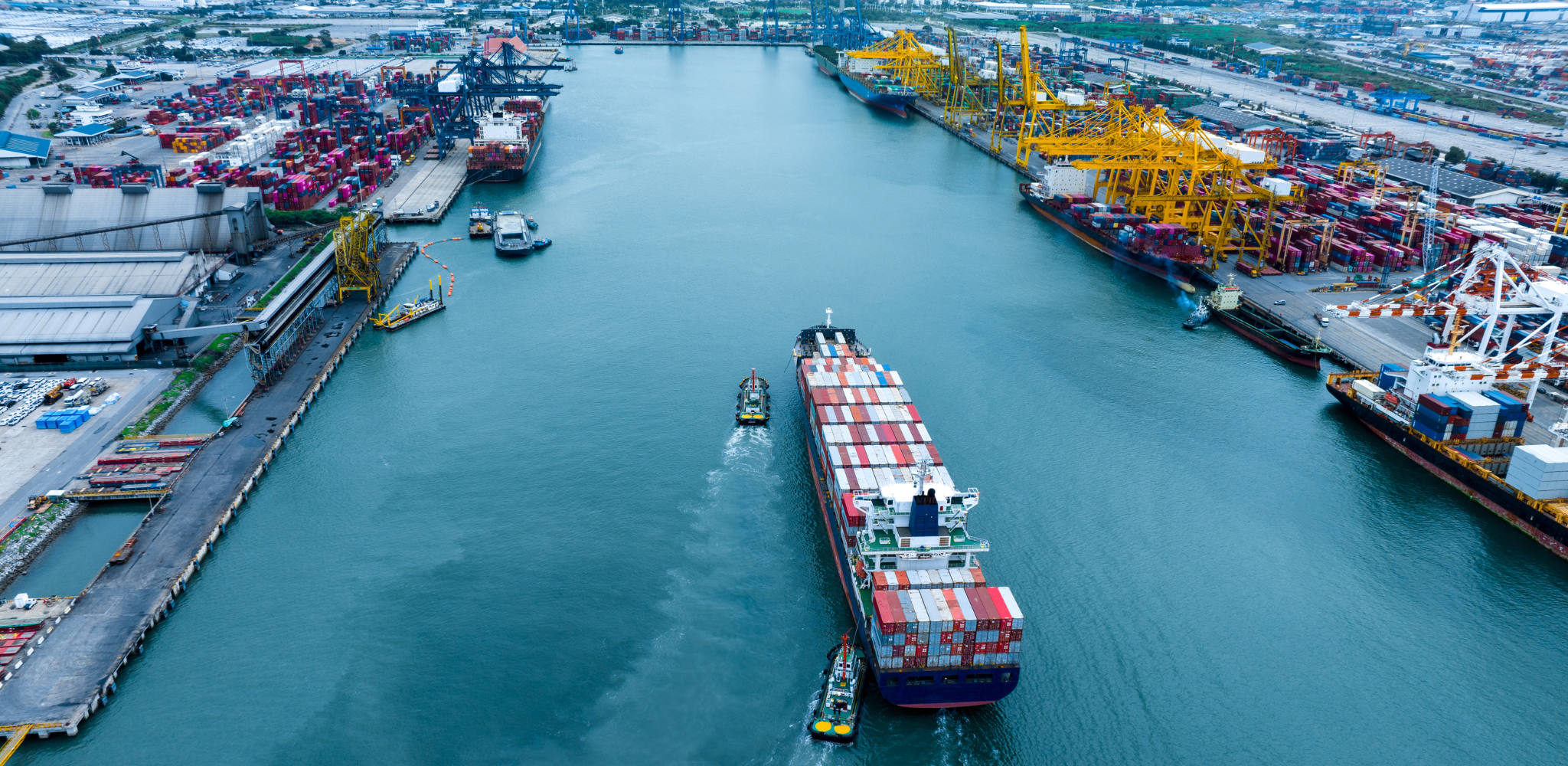
Picture a container vessel longer than three football fields gliding into Tuas Port on a Tuesday morning. Cranes pluck hundreds of boxes off its deck with mechanical precision. Within hours, many of those containers are hoisted onto a different ship bound for Jakarta, Chennai or Rotterdam. The cargo never formally "arrives" in Singapore — it simply passes through. This is transshipment, and it is the quiet engine driving a surprising corner of the property market: industrial real estate.
Singapore's port growth fuels industrial property demand in ways most homebuyers never think about. While residential headlines obsess over BTO wait times and the latest cooling measures, a different property story unfolds in Tuas, Jurong, Pioneer and Tampines — where warehouses, logistics hubs and business parks are expanding to keep pace with the world's busiest transshipment corridor. In 2024, the Port of Singapore moved 41.2 million TEUs (twenty-foot equivalent units), an all-time record, according to the Maritime and Port Authority of Singapore (MPA). That record is not just a shipping statistic. It is a demand signal for every square metre of industrial space that handles, stores, or redistributes those boxes — and for the investors who understand the chain that connects them.
This article unpacks how Singapore's transshipment dominance translates into industrial property demand: the port's record-breaking decade, the massive Tuas Port transition, the logistics sectors competing for scarce industrial land, and the districts where growth is most concentrated. Whether you are a tenant looking for warehouse space, an investor eyeing industrial yields, or simply someone who wants to understand what really drives Singapore's economy, the port is where the story begins.
The Port That Moves the World
A choke point of global trade
Geography made Singapore a maritime giant long before anyone built a container terminal. The island sits at the southern entrance of the Strait of Malacca, one of the most critical maritime passages on Earth. An estimated one-quarter to one-third of global seaborne trade and roughly 80% of China's crude oil imports pass through these waters annually, according to industry estimates. Ships plying the Asia-Europe and Asia-Middle East routes have little reason to skip Singapore: it offers deep water, stable regulation, efficient refuelling and a geographic position that makes it the natural midpoint between the Indian Ocean and the South China Sea.
But geography alone does not explain Singapore's status. The modern story began in 1972, when Tanjong Pagar opened as Southeast Asia's first container terminal. From that point, a deliberate national strategy converted a small entrepôt into a logistics superpower. Today, the Port of Singapore consistently ranks as the world's second-busiest container port, trailing only Shanghai — and in 2024, it briefly reclaimed the global top spot on a monthly basis during the Red Sea crisis, according to MPA data.
What is transshipment, exactly?
Most people imagine a port as a place where goods enter a country. Transshipment is different: it is the movement of cargo from one vessel to another at an intermediate port, without the goods formally entering the local economy. A container made in Shenzhen, bound for Hamburg, might be offloaded in Singapore and loaded onto a larger "mother ship" for the long haul to Europe. That box never crosses a customs border into Singapore.
This distinction matters for property because transshipment creates a very specific kind of economic activity. Around 90% of Singapore's container throughput is transshipment cargo, according to MPA and industry sources — one of the highest shares of any major port in the world. Transshipment volume drives demand for:
- Port-side logistics facilities — container depots, empty-container yards and freight stations built within trucking distance of the terminals
- Value-added logistics hubs — warehouses where cargo is consolidated, re-packed, quality-checked or re-labelled before continuing its journey
- Refuelling and marine services — the bunkering industry that supplies ships, which itself needs storage and distribution space onshore
- Cold chain infrastructure — temperature-controlled warehousing for perishables that move through the transshipment network
In other words, a transshipment hub does not just need cranes; it needs land. And in Singapore, land is the scarcest commodity of all.
The record-breaking decade
The numbers tell a striking story. After a brief COVID-era dip in 2020, container throughput has climbed steadily, crossing the 40-million-TEU mark for the first time in 2024. MPA data shows the trajectory:
Singapore Container Throughput (Million TEUs)
As the chart above shows, growth accelerated sharply between 2022 and 2024. The Red Sea crisis, which began in late 2023 when Houthi attacks forced container lines to reroute away from the Suez Canal, played an unexpected role. Vessels diverted around the Cape of Good Hope, adding days to voyages — and many of them called at Singapore for fuel, crew changes and cargo reassembly. The result: a surge in port activity and a record 54.9 million tonnes of bunker fuel sold in Singapore in 2024, cementing its position as the world's largest refuelling hub.
The port's rise is not accidental. It is underpinned by a state-driven vision to make Singapore an indispensable node in global supply chains — and that vision has a physical footprint. Which brings us to the biggest industrial property story of the next two decades: Tuas Port.
The Tuas Port Transition: A Once-in-a-Generation Shift
Building the world's largest automated port
The single most important structural event in Singapore's industrial property market is the consolidation of all container operations at Tuas Port by the 2040s. Located on Singapore's southwestern coast, Tuas is being developed in four phases by PSA Singapore. When fully completed, it will have an annual handling capacity of 65 million TEUs, making it the largest container port in the world by throughput capacity.
The scale is almost incomprehensible: 65 million TEUs is roughly 60% more than the Port of Shanghai handled in 2024. Tuas Port is also designed to be highly automated, with remote-controlled cranes, automated guided vehicles and an intelligent yard management system that reduces human intervention from gate to berth. The first berths became operational in 2022, and Phases 1 and 2 — comprising 21 deep-water berths — are slated for completion around 2027.
The timeline below maps out the major milestones:
What happens to the old terminals?
As operations shift west to Tuas, the existing terminals at Tanjong Pagar, Keppel and Brani — the historic heart of Singapore's port — will be progressively phased out and returned for redevelopment. By the late 2020s and through the 2030s, this land will be transformed into the Greater Southern Waterfront, a new city district with housing, offices, parks and waterfront recreation. Pasir Panjang terminal will operate in parallel with Tuas for a time before eventually winding down.
This transition has profound implications for industrial property:
-
Logistics relocation: Port-centric logistics operations that once clustered near Tanjong Pagar and Alexandra — container depots, trucking yards, freight forwarding offices — are already gravitating west toward Tuas and Jurong. When the old terminals close, the remaining stragglers will follow.
-
A new industrial corridor: Tuas, Pioneer, Jurong and Penjuru are becoming a unified logistics corridor, supported by JTC Corporation's industrial land planning and new road infrastructure such as the Tuas West Extension of the East-West MRT line.
-
Land release for the city: The Greater Southern Waterfront will redevelop roughly 1,000 hectares of prime land — a massive long-term supply of residential and commercial space, but also a reminder that industrial land is being moved rather than created. The total amount of industrial land in Singapore remains tightly capped.
Congestion, resilience and the case for more space
The Red Sea crisis also exposed a durability problem: when global shipping is disrupted, Singapore becomes both a safe haven and a bottleneck. In the first half of 2024, vessel arrivals spiked, and container berths at Pasir Panjang and Tuas faced congestion, with ships waiting longer for berths. For logistics operators, the lesson was clear: resilience requires buffer capacity — extra warehouse space, backup distribution routes and more flexible multi-tenancy facilities.
This is a classic supply-demand squeeze in real estate terms. Demand for industrial space becomes more volatile and crisis-prone, while supply of land remains finite. Industrial property owners with quality, well-located warehouses gain pricing power precisely because they provide the buffer that supply chains need.
From Berth to Balance Sheet: How Port Activity Becomes Property Demand
The causal chain
Understanding the port–property link is essentially understanding a chain of dependencies. Each step in the logistics process consumes physical space, and space in Singapore is a scarce, priced asset. Let's trace the chain:
Each node in this chain translates into a specific kind of industrial property:
- Container depots and empty-container yards are typically open, paved land with high fencing and security — they are the first land-user after the berth.
- Freight stations and consolidation centres are warehouses fitted with dock-level doors, wide turning radii and high floor-loading capacity.
- Value-added logistics hubs require more sophisticated buildings: taller clear ceilings (9 to 12 metres), ramp-up accessibility, temperature-controlled zones and office space embedded within the warehouse.
- Distribution centres near Changi Airport or major expressways serve the air cargo and last-mile delivery segments.
The multiplier effect
Economists like to talk about multipliers — how one dollar of activity generates additional activity downstream. Ports have an outsized multiplier because they touch nearly every sector: manufacturing imports raw materials, retailers import finished goods, food companies import perishables, and pharma firms import temperature-sensitive biologics. Every one of those imports eventually sits in a warehouse, even if only briefly.
Consider the e-commerce effect. When a Singaporean orders a product from a regional platform, it may arrive via a regional fulfilment centre in Jurong or Tampines. That centre does not exist by accident. It exists because Singapore's port and airport make it efficient to consolidate regional inventory here, then redistribute it to Malaysia, Indonesia and Thailand within days. The port is the upstream enabler; the fulfilment centre is the downstream beneficiary.
Land as the binding constraint
Here is the crucial real-estate insight: port capacity can be expanded by technology and automation, but land cannot be expanded at all. Singapore has reclaimed land at Tuas, but even that has limits. JTC's industrial land programme allocates plots through a combination of direct sale, tender and built-to-suit developments. Vacancy rates for logistics and warehouse space consistently run lower than the overall industrial market, and in tight years, warehouse rents have posted mid-single-digit annual growth, according to JTC's quarterly market reports.
For property investors, this is the structural thesis: as long as Singapore remains a transshipment powerhouse, demand for well-located warehouse and logistics space will be underpinned by a force far larger than the local economy. The port essentially exports demand for Singapore's industrial land to the rest of the world.
The Demand Drivers Behind Industrial Rent Growth
Port growth is the foundation, but several accelerators are compounding demand for industrial space. Here are the four forces shaping the market today.
1. E-commerce and regional fulfilment
Southeast Asia is one of the fastest-growing e-commerce markets on Earth, with platforms such as Shopee, Lazada and TikTok Shop expanding aggressively. Singapore has positioned itself as the region's logistics nerve centre — home to regional headquarters, upscale fulfilment operations and high-value cross-border trade. Major global logistics players, including DHL, FedEx and local giants like SingPost and Ninja Van, all maintain significant Singapore footprints.
The property consequence is twofold. First, demand for modern, high-ceilinged fulfilment centres is rising, especially in locations with fast access to the port, the airport and major expressways. Second, the rise of same-day and next-day delivery is pulling warehouse demand closer to population centres — think Tampines, Paya Lebar and Kallang — where last-mile logistics can reach homes quickly.
2. Cold chain and the 30x30 food vision
Food security has become a national priority. Singapore currently imports over 90% of its food, and the government's "30x30" vision aims to produce 30% of nutritional needs locally by 2030 — through urban farming, aquaculture and agri-tech. Alongside local production, the cold chain that moves imported food from port to plate is being transformed by the Food Safety and Security Act, which mandates greater traceability and cold-chain integrity.
Cold chain logistics is one of the most demanding property types. It requires insulated warehouses with precisely controlled temperature zones (ambient, chilled and frozen), backup power systems, and sophisticated monitoring technology. Cold storage is notoriously expensive to build and operate, which means its rents are typically 30-50% higher than conventional warehouse space, according to industry estimates. That premium is attracting developers and investors.
The cold chain also creates a spillover effect: even companies that do not need cold storage need cross-docking facilities where chilled goods quickly transfer from one vehicle to another, minimising temperature exposure.
3. Data centres and the AI buildout
The technology sector has become an unexpected tenant of industrial property. Data centres — energy-hungry facilities housing servers and computing infrastructure — are typically built on industrial land, often in business parks or on B2-zoned sites where power and cooling infrastructure is available. Singapore's moratorium on new data centres, imposed in 2019 to manage resource constraints, was partially lifted in 2022 with a pilot programme focused on "green" data centres. More recently, the government has signalled continued support for AI-ready data centre capacity, subject to energy-efficiency and sustainability criteria.
The data centre boom matters for industrial property for three reasons. First, data centres consume large land parcels — a single campus can occupy several hectares. Second, they drive demand for adjacent electrical infrastructure, which in turn shapes where industrial development can occur. Third, data centres are essentially long-term, creditworthy tenants with 10-to-20-year leases, making them attractive to institutional investors seeking stable industrial income.
4. The Johor-Singapore Special Economic Zone
In January 2025, Singapore and Malaysia signed the Johor-Singapore Special Economic Zone (JS-SEZ) agreement, creating an integrated economic zone across the Causeway. The pact includes 24-hour cargo clearance at the Tuas checkpoint, joint investment promotion, and a framework for businesses to combine Singapore's strengths in logistics, finance and technology with Johor's abundant land and labour.
For industrial property, the JS-SEZ is a double-edged sword. On one hand, some observers fear that manufacturing and logistics will migrate to cheaper land in Johor, hollowing out demand for Singapore industrial space. On the other hand, the SEZ is likely to strengthen Singapore's role as the gateway and orchestrator for the region: high-value logistics, quality control, cold chain management, fintech and regional headquarters functions tend to stay on the Singapore side, while volume processing shifts to Johor. The net effect, most analysts believe, is a larger regional pie — and Singapore's logistics nodes, especially in the western corridor near Tuas, will be the connector.
A visual snapshot of the drivers
These four drivers converge on the same outcome: sustained growth in industrial property take-up, particularly at the higher-quality end of the market. Here is how the drivers stack up:
Key Demand Drivers for Singapore Industrial Space (Illustrative Share)
The chart above is illustrative rather than an official statistic — it reflects how industry analysts typically weigh demand drivers — but the broad hierarchy is well established. E-commerce and port-centric logistics lead, with data centres rising fast.
Where the Action Is: Industrial Districts to Watch
Not all industrial property is created equal. Location determines everything: proximity to the port, the airport, expressways and labour supply. Here are the key districts and what drives each one.
| District / Zone | Property Types | Key Demand Drivers | Outlook |
|---|---|---|---|
| Tuas | B2 heavy industrial, warehouses, logistics hubs | Tuas Port consolidation, bunkering, JS-SEZ cargo clearance | Strongest long-term growth from port relocation; land reclamation ongoing |
| Jurong / Pioneer | Logistics, B2, business park | Port adjacency, Jurong Island connection, Jurong Innovation District | High demand; tight vacancy for modern logistics |
| Jurong Innovation District | Advanced manufacturing, robotics, R&D | Proximity to NUS, NTU; government push for Industry 4.0 | Emerging hotspot for high-value industrial |
| Tampines / Changi | Logistics, air cargo, business parks | Changi Airport, e-commerce fulfilment, Changi East | Rising with airport mega-hub and SEA logistics |
| Tai Seng / Kaki Bukit | Light industrial (B1), showrooms | Fashion, automotive, F&B distribution | Steady; redevelopment upside |
| Paya Lebar | Business park, commercial | Urban logistics, last-mile delivery | Limited new supply; premium rents |
| Woodlands / Senoko | Manufacturing, logistics | Proximity to Johor, Causeway trade | Linked to JS-SEZ and cross-border flows |
| Loyang / Changi North | Heavy industrial, airfreight | Aviation services, freight forwarding | Niche but resilient |
The West is the new centre of gravity
If there is one takeaway from the table above, it is that Singapore's industrial centre of gravity is shifting west — toward Tuas and Jurong. The port consolidation, the JS-SEZ cargo complex at Tuas, and the extensive JTC land bank in the west combine to make this corridor the most important industrial geography in the country for the next two decades.
The eastern region retains its own logic. Changi Airport's transformation — Terminal 5, Changi East urban district, expanded air cargo capacity — makes the east a hub for air logistics and high-value, time-critical goods. Some logistics companies will deliberately maintain dual footprints: one in the west for sea cargo, one in the east for air cargo.
What This Means for Buyers, Investors and Tenants
Industrial property: the yield alternative
For investors, industrial property offers a fundamentally different risk-return profile to residential. Market estimates put gross yields on Singapore industrial property in the 5-7% range, compared with roughly 2.5-3.5% for private residential — though industrial properties also carry different risks, including tenant concentration, lease expiries and leasehold depreciation.
A key structural feature: most Singapore industrial land is leasehold — typically 30-year or 60-year land tenures from JTC, or shorter terms on private industrial land. This is not a flaw but a feature of the system. It keeps land productive and prevents speculation, while aligning the landlord's interest with Singapore's industrial policy. Investors must understand the lease decay embedded in industrial assets: as the land lease shortens, the asset's value mechanically declines unless the land is redeveloped or the lease extended.
Strata industrial vs REITs
Investors can participate in industrial property in two broad ways:
- Direct purchase of strata industrial units: Small warehouse units, flatted factories and ramp-up buildings in developments like those in the Tampines, Kaki Bukit and Pioneer areas. Entry ticket can be relatively low (from the high six figures), and yields are often attractive, but liquidity is thinner than residential and financing terms are stricter (often capped at shorter tenures with lower loan-to-value ratios).
- Industrial REITs: Listed real estate investment trusts such as Mapletree Industrial Trust, ESR-LOGOS REIT and AIMS APAC REIT (all subject to market performance) allow investors to gain diversified exposure to large portfolios of logistics, business park and data centre assets, with the added benefit of daily liquidity.
Each approach suits a different investor. The direct route rewards hands-on operators who can add value through leasing and asset management; the REIT route is better suited to passive, yield-focused investors.
A decision framework for space users
For businesses deciding what type of industrial space they need, zoning is the first sorting mechanism. Singapore's industrial zones are broadly:
Choosing the wrong zoning is an expensive mistake. A company that buys a B1 unit and later discovers it needs heavy power for manufacturing equipment may have to relocate entirely. Conversely, a business that only needs light assembly may be paying B2-level rents without needing the heavier infrastructure.
Risks on the horizon
No market story is complete without a look at the risks. The industrial property market's exposure to global trade means it is sensitive to:
- Global economic slowdowns: Recessions reduce container volumes, e-commerce spending and manufacturing output — all of which soften warehouse demand.
- Shipping disruptions and alternative routings: The Red Sea crisis boosted Singapore, but a full reopening of Suez would unwind some of that emergency demand. Similarly, the rise of Arctic shipping routes or the Trans-Pacific trade realignment could gradually shift volumes.
- Supply pipeline: JTC and private developers continue to release new industrial space. An oversupply in any given year can cap rental growth.
- Interest rates: Industrial assets are typically financed with debt; higher-for-longer rates compress yields and cap capital values.
- Land use competition: As Singapore pivots toward services, housing and climate adaptation, industrial land may shrink or be repurposed, which is bullish for existing assets but limits the market's overall size.
Food for Thought
As you mull over the port's influence on Singapore's property market, here are a few questions worth pondering:
-
Will Tuas Port's centralisation make the western corridor the next investment hotspot — or is the best opportunity already gone? With land at Tuas being reclaimed and released in phases, the window for securing port-proximate industrial assets may stay open for another decade, but pricing will reflect that scarcity.
-
How much of Singapore's industrial demand is truly "port-driven" versus e-commerce-driven? If the port's share of global trade declines due to supply chain diversification, can e-commerce and data centres alone sustain industrial rents? The two forces are linked, but they are not identical.
-
What happens to industrial property values when the Greater Southern Waterfront replaces the old terminals? The shift of logistics westward will create a void in the south — but also a once-in-a-generation redevelopment of prime city land. Could that raise the long-term value of all scarce land, including industrial?
-
Does the JS-SEZ ultimately complement or compete with Singapore's industrial market? If Johor becomes the region's factory floor, Singapore's industrial space may pivot even harder toward high-value logistics, cold chain and data centres. Would you bet on that pivot succeeding?
-
Should a young investor prefer industrial REITs over direct warehouse ownership? Leasehold decay, financing limits and tenant management are real burdens. Is the yield premium worth the operational complexity?
The Bottom Line
Singapore's port has quietly become one of the most powerful structural forces in its property market. The record 41.2 million TEUs moved in 2024, the consolidation of all container operations at Tuas, and the accelerating demands of e-commerce, cold chain and data centres are rewriting the map of industrial real estate. For tenants, the lesson is to secure well-located, appropriately zoned space early. For investors, the lesson is that industrial property offers a yield and a logic very different from residential — one tied to global trade rather than local demographics.
The port will keep growing. The land will not. That single fact will shape the industrial property market for the next two decades.