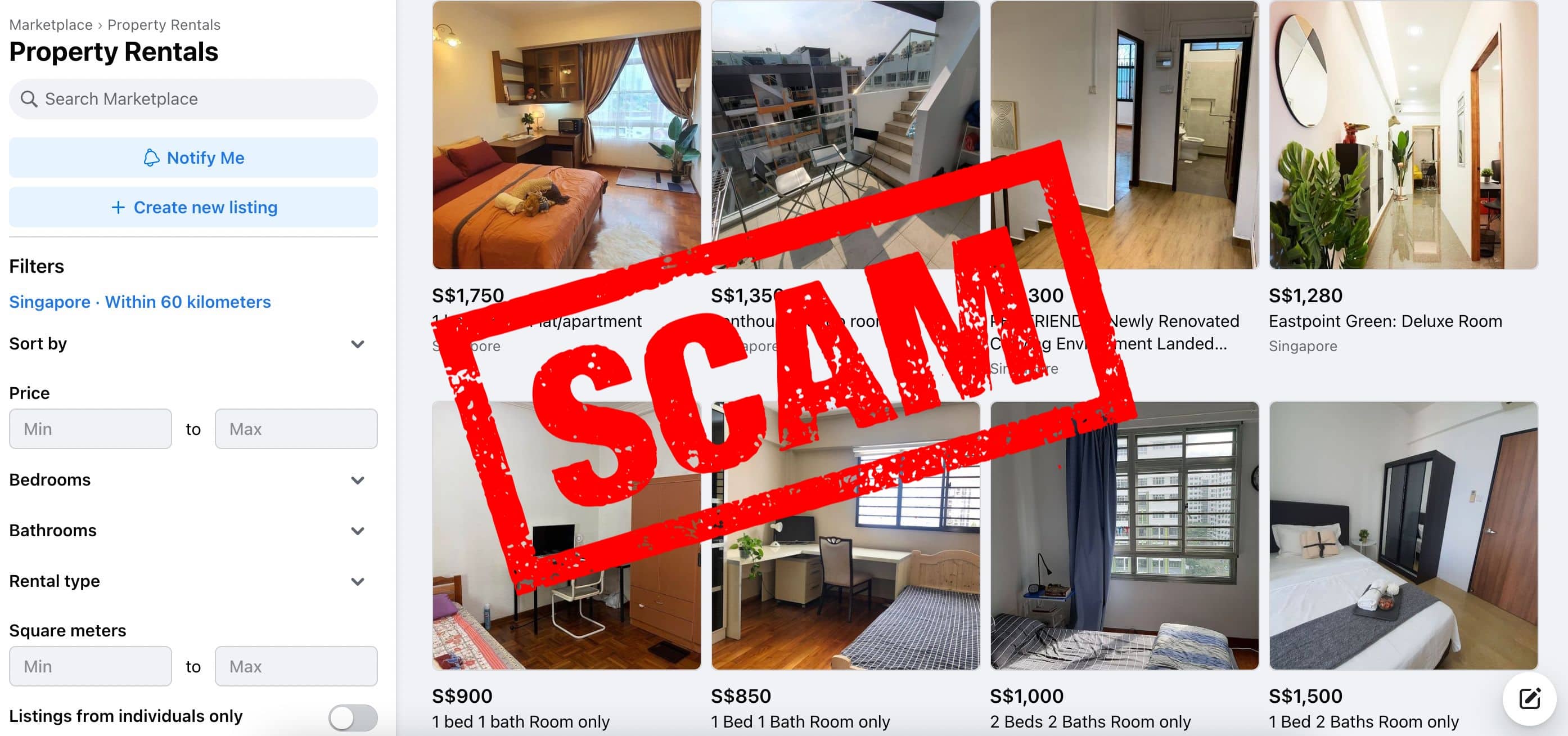
A two-bedroom condo in District 15, fully furnished, listed at $1,500 below the going rate. The photos look like they came straight out of a showflat brochure. The "landlord" is friendly, responsive, and already "overseas for work" — which is exactly why they can't meet you for a viewing. There are, they say, three other applicants ready to place a deposit today. All you need to do is transfer one month's rent to "secure the unit," and the keys will be mailed to you.
It sounds urgent. It sounds like a steal. It is, in fact, the most common opening move in property scams in Singapore — and every year, it works on hundreds of people.
Property scams are not a rounding error in Singapore's crime picture. According to the Singapore Police Force's annual scams report, total scam cases rose from 23,931 in 2021 to 52,271 in 2024 — more than double in four years — with total losses hitting a record S$775.9 million in 2024. Property-related fraud is a slice of that figure, but it is one of the most personally devastating slices. A rental deposit, an option fee, a downpayment: these are not impulse purchases. They sit right at the centre of the largest transfers of money most of us will ever make.
This article breaks down how property scams in Singapore actually operate, why they are so hard to spot, the five most common schemes targeting buyers and renters right now, and the practical verification steps that can keep your savings — and your home — safe.
The Size of the Problem: Scam Numbers in Singapore
Before we look at the property-specific playbooks, it helps to understand the scale of the scam economy in Singapore. The number of reported scam cases has climbed sharply in recent years:
| Year | Scam cases reported | Total amount lost (S$) |
|---|---|---|
| 2021 | 23,931 | 633.3 million |
| 2022 | 31,728 | 660.7 million |
| 2023 | 46,563 | 651.8 million |
| 2024 | 52,271 | 775.9 million |
Source: Singapore Police Force annual scams statistics
Scam Cases Reported in Singapore (2021-2024)
As the chart shows, the number of scam cases has more than doubled in four years. The total amount lost dipped slightly in 2023 before climbing to a fresh record in 2024. But those headline numbers only cover what gets reported. The real figure — including victims too embarrassed to come forward — is almost certainly higher.
Property scams sit at the intersection of several scams that the police track separately. A fake rental listing might be recorded as an e-commerce scam. An agent impersonation scam might be logged as a job scam or a phishing case. A buyer tricked into paying a "law firm" that doesn't exist could be classified under investment or impersonation scams. That makes property fraud harder to measure — but no less real.
In 2023, the top five scam categories reported by SPF were:
Top Scam Categories in Singapore, 2023 (Reported Cases)
Notice what these categories have in common: they are all contact-based, trust-based, and payment-based. Scammers don't need access to your home or your documents. They need access to your attention — and, eventually, your bank account.
Why Property Is a Scammer's Dream
Property transactions have a set of characteristics that make them unusually attractive to fraudsters.
- The sums are huge. Even a "small" rental deposit in Singapore runs to thousands of dollars. An option fee on a private property can be six figures. Scammers don't need many victims to make a fortune.
- Decisions are made under time pressure. Leases expire. Completion dates loom. Buyers competing in a hot market feel they cannot afford to hesitate. Scammers weaponise that pressure.
- There are many moving parts. Agents, agencies, bankers, lawyers, HDB officers, CPF, the Singapore Land Authority. Every handoff is a gap a fraudster can slip into.
- Property information is semi-public. Listings, floor plans, photos, even agent profiles are all cloneable. A scammer can copy a legitimate ad in minutes and repost it with a fake price.
- The market is emotional. Buying or renting a home is not like buying a phone. People make decisions with their hearts, which means they sometimes skip the checks they would never skip at work.
There is also a market-context angle. With HDB resale prices hovering near record highs and private rents having climbed steeply in recent years before leveling off, many younger Singaporeans are desperate for a deal. Scammers know this. The "too good to be true" listing is not an accident — it is a test. The scammer is looking for people who want the deal so badly that they skip the verification.
The Anatomy of a Property Scam: How the Script Runs
Almost every property scam follows the same five-act structure, even as the props change. Once you recognise the script, you start seeing it everywhere.
Let's walk through each step, because the psychology matters more than the technology.
Act one: The lure. The listing is priced noticeably — but not absurdly — below market. If it were absurdly cheap, nobody would believe it. The sweet spot is 10-20% below comparable listings: enough to feel like a genuine find, not enough to trigger suspicion.
Act two: The trust build. The scammer sends photos, a copy of an NRIC (often stolen or doctored), a "tenancy agreement" template, and screenshots of "other interested parties." They may even schedule a viewing — and then cancel at the last minute, claiming an emergency. The cancellation is deliberate. It creates sympathy and lowers your guard.
Act three: The pressure. "My landlord wants a decision by tonight." "Another couple offered the full deposit this morning." "If you want the unit, you need to pay now to hold it." Legitimate agents do create genuine urgency in Singapore's competitive rental market — which is exactly why this tactic works. Scammers mimic the market, and the market feels familiar.
Act four: The payment. The victim is asked to transfer the deposit via PayNow or bank transfer to a personal bank account. Sometimes the scammer dresses it up as a "trust account" or "agency holding account." In reality, there is no tenant, no landlord, and no unit — or if there is a unit, the real owner knows nothing about the listing.
Act five: The vanishing. Once the money lands, the scammer withdraws it, deletes the listing, and blocks the victim. The phone number goes dead. The WhatsApp account vanishes. The police report is filed, but tracing a mule account with funds already withdrawn is slow and often fruitless.
The pattern is identical whether the victim is a renter losing a $4,000 deposit or a buyer losing a $200,000 option fee. Only the stakes change.
Total Amount Lost to Scams in Singapore (S$ Million)
The 5 Most Common Property Scams in Singapore
Property fraud comes in more flavours than most people realise. Here are the five schemes that Singapore buyers and renters are most likely to encounter.
| Scam type | How it works | Who it targets |
|---|---|---|
| Fake rental listings | Clone a real ad, below-market rent, "overseas landlord," deposit to secure | Renters, especially young professionals |
| Agent impersonation | Hack or copy a real agent's WhatsApp/identity; collect fees into a fake account | Buyers and renters |
| Payment redirection | Intercept email threads with lawyers; send fake invoice with changed account | Buyers close to completion |
| Title tampering | Forge IDs to impersonate owners; attempt to sell or mortgage property | Property owners |
| En-bloc / investment fantasy | "Guaranteed" profits on collective sales or flipping syndicates | Sellers and investors |
1. Fake Rental Listings and the Vanishing Deposit
This is the entry-level scam, and it is the one most young Singaporeans will encounter first. Scammers take a real listing from PropertyGuru or 99.co — photos, descriptions, floor plans — and repost it on another platform (Carousell, Telegram, Facebook) at a price below market. The "landlord" is always overseas, always in a different time zone, and always chatty on WhatsApp but never available for a real viewing.
The victim is asked to pay a deposit to "hold" the unit. The scammer may even send a receipt and a signed-looking tenancy agreement. Days later, the victim arrives at the condo with bags, and the security guard has never heard of the "landlord." In one variant, victims are told the unit cannot be viewed because the "current tenant" is still inside — a story that conveniently explains away every excuse.
What makes this scam dangerous is how normal it looks. In a competitive rental market, paying a deposit quickly to secure a property is exactly what thousands of legitimate tenants do. The scammer is not trying to be perfect. They only need to be convincing enough, for long enough, to receive one transfer.
2. Impersonating Real Property Agents
A step up in sophistication: scammers don't invent a fake agent — they steal a real one. In the "WhatsApp takeover" variant, the scammer hacks or gains access to an actual property agent's WhatsApp account, reviews the chat history, and then messages a client mid-conversation: "The landlord has switched agencies. Please transfer the deposit to this new account instead." The number looks right, the chat history is genuine, and the request is buried in months of real conversation.
In another variant, the scammer copies a real agent's profile photo, name, and CEA registration number, then sets up a fake WhatsApp or Telegram account and posts a listing that doesn't exist. The victim checks the agent's name against the public register, finds it valid, and assumes the listing is legitimate. The registration number is real. The person behind the account is not.
If you receive any request to change where you send money in the middle of an active transaction, treat it as an emergency. Verify using a channel you started — not a number or link from the suspicious message.
3. Payment Redirection at the Legal Stage
This is the one that frightens property lawyers most, because it targets buyers at the most vulnerable moment: when they are about to transfer an option fee, a downpayment, or the balance of a purchase price.
The scammer intercepts or spoofs the email thread between the buyer, the property agent, and the conveyancing lawyer. At the perfect moment — usually just before a deadline — an email arrives that appears to come from the law firm: "Our firm has changed its conveyancing bank account. Please transfer the funds to the following account..." The email looks authentic. It carries the law firm's letterhead. It may even thread into the real conversation.
In reality, the account belongs to a mule. The buyer transfers hundreds of thousands of dollars into it, and by the time the real lawyer asks why the payment is overdue, the money is long gone.
The golden rule: law firms do not arbitrarily change bank accounts mid-transaction. If you receive any notification about an account change, call your lawyer on a number you already have — not the number in the email — and confirm before transferring so much as a cent.
4. Title Tampering: When Fraud Targets Ownership Itself
The most extreme form of property fraud is not a fake listing — it's a fake owner. In late 2022, the Singapore Police Force arrested two men in connection with an alleged scheme to impersonate the owners of Good Class Bungalows using forged documents, in an attempt to take over and sell properties they did not own. The case sent a shockwave through the private property market, because it showed that even the title system could be attacked.
Title tampering works like this: the scammer obtains or forges a victim's identity documents, then approaches a conveyancing lawyer pretending to be the rightful owner. They instruct the lawyer to sell the property or take out a mortgage against it. If the lawyer's identity checks are weak, the transaction proceeds — and the real owner only discovers the fraud when a letter about the new "mortgage" or "sale" arrives.
Singapore's authorities have responded seriously. Parliament passed amendments to the Land Titles Act to allow the Singapore Land Authority (SLA) to restore a fraudulently transferred title to its true owner, and conveyancing practice now requires more rigorous identity verification. But the defence can't stop at the government's doorstep. Owners should guard their NRIC and Singpass credentials fiercely, and should periodically check their property records with the SLA. A fraudulent caveat or mortgage lodged on your title is a warning sign that should never be ignored.
5. The "Guaranteed Profit" Fantasy
Not every property scam involves a roof and four walls. Some involve the promise of property wealth — and those tend to take the largest amounts.
The script varies: a "secret en-bloc deal" that requires a fee to join; a "flipping syndicate" that guarantees 30% returns from overseas properties; a "VIP early access" to a new launch that demands a deposit be paid directly to the agent's personal account; or a "collective sale consultant" who needs an advance to cover legal costs for a sale that never happens. Legitimate developers do not sell new launches through personal bank accounts. Legitimate en-bloc consultants do not ask homeowners to pay cash upfront for expenses that should be billed to the collective sale committee.
These scams target the same instinct as the fake rental listing — the desire to get in on a good thing before everyone else. When a property "opportunity" comes with guaranteed returns, no risk, and a deadline, it is not an investment. It is a trap.
Property Scam Red Flags: 10 Signs Before You Transfer
Scammers are getting better, but they still leave tracks. Here are the warning signs that should slow you down — and usually make you walk away.
- The price is noticeably below market. If a rental or sale price is 10-20% below comparable transactions in the same project, demand an explanation. Not a story — evidence.
- A deposit is required before a physical viewing. Legitimate landlords and agents can and do collect earnest deposits — but rarely before you have stepped foot in the unit.
- "The landlord is overseas." This is the single most overused excuse in the scam playbook. It conveniently explains away every refusal to meet, video-call, or hand over keys.
- Payment to a personal bank account. Rent and option fees go to named agencies, law firms, or HDB-designated channels. A personal account — no matter how convincing the story — is a signal.
- Pressure: "there are other buyers." Real urgency exists in Singapore's market, but a legitimate agent will let you read the tenancy agreement or OTP before demanding money.
- Refusal to provide written documents. An agent who can't produce a tenancy agreement, OTP, or seller's consent has something to hide.
- The agent's CEA registration number is missing or can't be verified. Every estate agent in Singapore must be registered with the Council for Estate Agencies. Look it up.
- Requests for your NRIC, Singpass password, or bank OTP "for verification." No legitimate property transaction requires your Singpass password. Ever.
- Communication only on WhatsApp or Telegram. No office, no official email domain, no agency letterhead. A real agent has an agency behind them.
- A "changed bank account" at the last minute. Whether it's the landlord, the agent, or the law firm — any change in payment instructions is a reason to stop, not to rush.
If you spot two of these signs, slow down. If you spot three, walk away. The cost of losing a deal is a missed opportunity. The cost of losing a deposit is money you may never see again.
Your Anti-Scam Toolkit: How to Verify Before You Pay
Prevention is the only reliable cure. The good news: in Singapore, the official channels for verification are excellent — you just have to use them. Run every payment through this decision path:
Here is the full toolkit, step by step.
Verify the agent (five minutes)
Every estate agent in Singapore must be registered with the Council for Estate Agencies (CEA). The public register at cea.gov.sg lets you search by name or registration number. Cross-check three things:
- The agent's registration number matches their name.
- Their registered agency matches the agency they claim to represent.
- Their phone number on the register matches the number they use to contact you.
Then call the agency's official line and ask for the agent by name. Two minutes on the phone can expose an impersonation that would otherwise cost you months of salary.
Verify the property
Ask for the property's ownership details and verify them through official channels. For HDB flats, you can check the flat's basic information through HDB's official portal. For private property, your conveyancing lawyer will conduct a title search — but you can also check records with the Singapore Land Authority, including whether any caveats have been lodged on the property.
If you are renting, ask to see the owner's identification and, if possible, cross-check the owner's name against the property's address records. A legitimate landlord will understand. A scammer will be evasive.
Verify the price
This is where data becomes your sharpest weapon. Scammers rely on you having no idea what a genuine price looks like. If a listing sits far outside the range of recent comparable transactions in the same project or street, that is not a "good deal" — it's a red flag dressed as a bargain.
Look up actual transaction history: HDB resale prices are published, URA caveats are public, and platforms like Hiva break down per-project pricing so you can see what comparable units in the same development actually transacted for. When a price deviates sharply from the project's real range, the anomaly stands out clearly. The most expensive mistake in a property scam is trusting a number that came from the scammer. Verify every price against an independent source.
Verify the money route
Never transfer a deposit to a personal bank account. For rentals, the money should go to the agency's escrow account or, if dealing directly with a landlord, to an account you can verify against official records. For purchases, option money and downpayments should go through the conveyancing lawyer's client account.
Before you transfer any large sum:
- Check the payee name against the account number carefully.
- Use PayNow's name-mismatch warnings as an alarm, not an inconvenience.
- For large sums, consider bank features like "Money Lock" or similar self-protection tools that restrict how much can be transferred out digitally.
- If you receive a last-minute account change, stop. Call your lawyer or agent on a number you looked up — not one from the suspicious email or message.
Protect your identity
The most valuable thing scammers can take is not your money — it's your identity. Once they have your NRIC, your selfie, and your Singpass credentials, they can impersonate you in the kinds of property transactions described above.
- Never share your Singpass password or OTP with anyone, including people claiming to be from HDB, IRAS, banks, or the police.
- Never send photos of your NRIC over WhatsApp or Telegram.
- Enable two-factor authentication everywhere.
- Be suspicious of any "verification" process that asks you to take a video or selfie as part of a rental application. Legitimate landlords don't need your biometric data.
You've Been Scammed: The First 24 Hours
If the worst happens, time is your only real asset. Scam networks move money fast — usually within minutes of receiving it. Your priority is to slow them down.
Step one: call your bank. Do not email. Do not fill in a form. Call the 24-hour hotline and tell them you are the victim of a scam. Ask them to stop the payment, recall the transfer, and freeze the receiving account if possible. Singapore's anti-scam centre works with banks to freeze mule accounts — but every minute counts.
Step two: call 1799. The ScamShield helpline, operated by the National Crime Prevention Council, connects you with trained specialists who can advise on the next steps and coordinate with banks and law enforcement.
Step three: file a police report. You can do this online via the police's e-services portal or in person at a neighbourhood police centre. Bring every piece of evidence: screenshots of the conversation, the listing, the bank transfer receipt, the agent's profile, phone numbers.
Step four: report the listing and the agent. If the scam involved a listing on PropertyGuru, 99.co, or Carousell, report it so the platform can take it down and warn others. If an agent was involved — convicted or impersonated — report it to CEA as well.
Step five: preserve everything. Do not delete conversations. Do not "confront" the scammer. Do not try to recover the money by playing along. Every message you keep is evidence that could help the police trace the mule network behind the scam.
One honest note: recovery is rare. Singapore's government and banks have introduced measures like the Shared Responsibility Framework for phishing scams, under which banks and telcos may compensate victims if they fail in their duties. But that framework does not cover every scam type, and it certainly does not guarantee you will get your money back. The system is designed to catch scammers, not to refund victims. That is why every prevention step in this article matters more than any recovery step.
Food for Thought
Before you close this article, sit with a few questions. Answering them honestly might be worth more than any checklist.
-
Would you actually slow down if a deal was 15% below market — or would FOMO push you to pay fast? The scam script depends entirely on your answer.
-
When was the last time you checked an agent's CEA registration number? For most of us, the answer is: never. Yet it takes five minutes and it is the single easiest verification step in this entire article.
-
Do you know what your own property records say? If you own a home, when did you last check its title or caveats with the Singapore Land Authority? Once a year is not paranoid. It's maintenance.
-
Who is authorised to change your payment instructions? In your next property transaction, agree upfront: no changes to bank accounts will be accepted except through a phone call to a pre-agreed number. Would you be willing to make that rule?
-
If you lost your deposit tomorrow, could you recover financially? Most first-time buyers and young renters cannot. That is precisely why prevention matters more than any recovery mechanism.
The Bottom Line
Property scams in Singapore are not going away — they are evolving. Fake listings, cloned agent identities, spoofed legal invoices, and even attempts to tamper with titles: the common thread is that scammers use speed, pressure, and the confusion of a complex transaction to bypass your judgment. The defences are not complicated. Verify the agent. Verify the property. Verify the price. Verify the account. Protect your identity. Every one of those steps takes minutes — and every one of them is a wall the scammer has to climb.