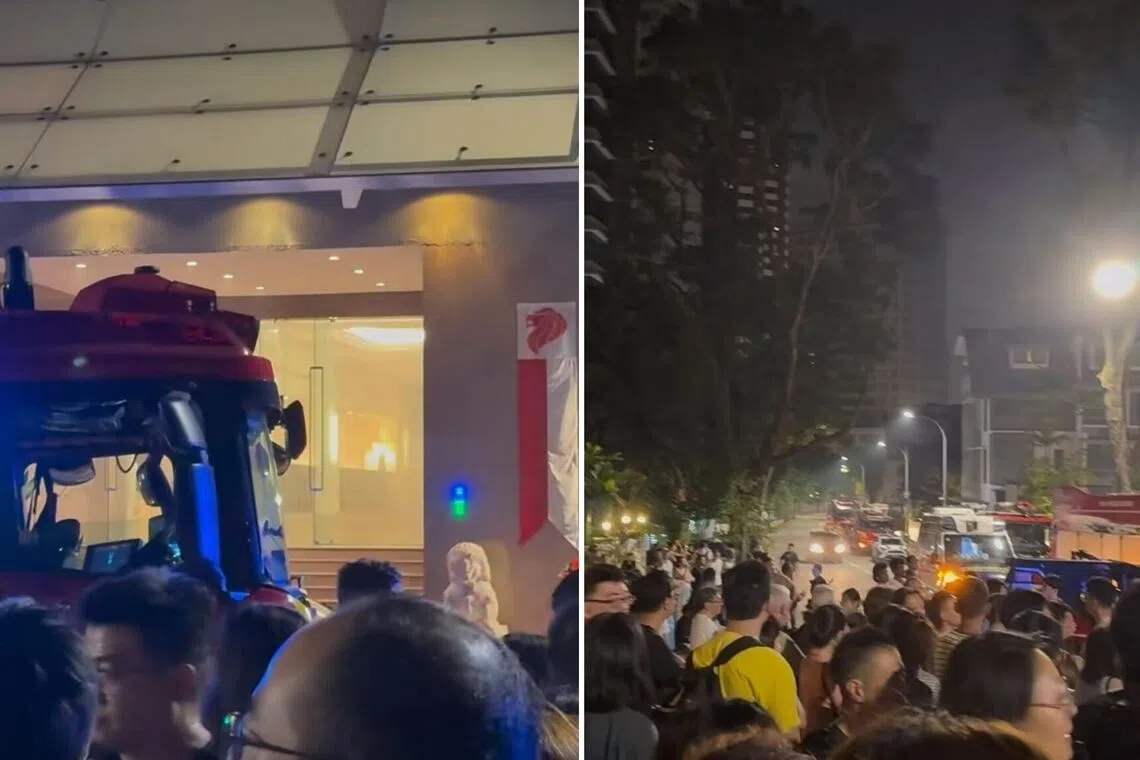
The York Hotel kitchen blaze was the kind of headline that makes you read twice. A fire in a hotel kitchen — arguably one of the most fire-protected spaces in any building — at one of Singapore's best-known heritage hotels, sitting quietly on Mount Elizabeth just minutes from Orchard Road. The blaze reportedly brought Singapore Civil Defence Force (SCDF) crews to the scene, filled parts of the property with smoke, and forced the hotel to suspend operations. No serious injuries were reported. But the incident left a nagging question hanging in the air: if a professionally managed commercial kitchen with sprinklers, fire-rated walls, and trained staff can catch fire, how prepared is the rest of us — the condo dwellers, the HDB flat owners, the tenants in ageing walk-up apartments?
The York Hotel fire is a reminder that fire safety in older Singapore buildings is not a theoretical concern. It is a ticking, practical one. Singapore has one of the world's safest built environments, but safety is not automatic. It is the product of regulations, inspections, maintenance, and — in the privacy of our own homes — personal responsibility. This article unpacks what the York Hotel incident tells us about fire risk in Singapore, what the regulatory framework actually requires, and what you can do tonight to make your own home safer.
The York Hotel Fire: What Happened and Why It Matters
York Hotel has been a fixture on Mount Elizabeth since the early 1970s, part of a wave of hotel construction that followed Singapore's independence and the early boom in tourism. For decades, it has been a favourite among Japanese business travellers and tour groups, prized for its quiet location, old-school service, and proximity to Orchard Road. It is, in other words, exactly the kind of institution Singaporeans assume will always be there.
That is precisely why the kitchen blaze was so jarring. Hotels are among the most intensively regulated buildings under Singapore's fire safety regime. The Fire Code requires hotels to maintain fire alarm systems, automatic sprinklers, hose reels, emergency lighting, and clear escape routes. Large hotels must employ a designated Fire Safety Manager (FSM), conduct regular fire drills, and renew a Fire Safety Certificate every 12 months. Commercial kitchens, meanwhile, are subject to specific rules on cooking equipment, exhaust ductwork, and the storage of flammable materials. A mid-sized hotel kitchen is not a wild frontier — it is a controlled environment.
And yet fires still happen. According to SCDF's published incident statistics, fires in non-residential premises — which include hotels, restaurants, offices, and shops — occur hundreds of times a year. Many are minor and contained to equipment. Some, like the York Hotel kitchen blaze, make the news because they strike at a place where the public believes they are safe.
The age factor
What makes the York Hotel fire especially relevant to the broader conversation about fire safety in older Singapore buildings is the age of the property. A building built in the early 1970s predates most of the modern Fire Code. Its original electrical wiring, kitchen ducting, and fire protection systems were designed under older standards. Over the years, systems get retrofitted and upgraded — but they age nonetheless.
The same is true across Singapore's housing stock:
- Many HDB flats in towns like Toa Payoh, Queenstown, and Ang Mo Kio are 40 to 50 years old, some from the 1960s and 1970s.
- A large share of private condominiums were built in the 1980s and 1990s, meaning their common-area fire systems and risers are entering their third or fourth decade.
- Walk-up apartments and older landed homes often still run on original electrical wiring designed for a time when air conditioners were a luxury and induction hobs did not exist.
Age does not automatically mean danger. But age combined with poor maintenance, unauthorised renovations, and overloaded circuits is a well-documented recipe for fire. The York Hotel blaze is a reminder that even the best-regulated old building can fail — and that multiply it by the thousands of unregulated private homes in Singapore, and the risk profile shifts dramatically.
The Data: Where Fires Really Happen in Singapore
If the York Hotel fire made you feel uneasy, consider this: fires in hotels are actually the exception, not the rule. The places where fires truly cluster are homes — specifically, residential premises.
SCDF's annual fire statistics consistently show that fires in homes outnumber fires in commercial buildings by a wide margin. The table below shows approximate annual fire incidents by premises type, based on SCDF's published incident statistics in recent years. The figures are rounded to give a sense of scale rather than precision.
| Premises Type | Approximate Annual Fires | Share of Premises Fires |
|---|---|---|
| Residential premises | ~1,150 – 1,250 | ~60 – 70% |
| Non-residential premises | ~450 – 550 | ~25 – 30% |
| Vehicles | ~200 – 250 | ~10% |
| Other (vegetation, rubbish, etc.) | ~250 – 350 | ~15% |
Approximate Annual Fire Incidents by Type in Singapore (SCDF data, rounded)
The takeaway is uncomfortable: the place most likely to catch fire in Singapore is your own home. SCDF has said repeatedly that unattended cooking is the single leading cause of residential fires, typically involved in roughly one in four to one in five home fires. Electrical faults, the improper disposal of lit materials, and fires involving personal mobility device batteries complete the usual list of culprits.
The causes behind the numbers
Looking at residential fire causes offers a clearer picture of where the risk concentrates:
Approximate Causes of Residential Fires in Singapore
Three things stand out from this data:
- Unattended cooking is the top killer of fire safety. A pan left on the stove while you scroll through your phone is the single most common ignition event in Singapore homes.
- Electrical faults cluster in older buildings. As insulation degrades and circuits age, the risk of short circuits and overheating rises. This is why old wiring matters.
- Most fires are preventable. SCDF's own public education campaigns hammer this point year after year — because it is true.
Compare this with the commercial sector. Hotels, malls, and offices collectively record far fewer fires despite being exposed to high energy loads, cooking operations, and 24-hour activity. The reason is not that commercial buildings are invincible — the York Hotel fire proves otherwise — but that they are inspected, maintained, and held accountable in ways that private homes simply are not.
Who Regulates Fire Safety in Singapore — and Who Doesn't
A common misconception surfaced in discussions after the York Hotel fire: the idea that the Building and Construction Authority (BCA) is responsible for enforcing fire codes. In fact, fire safety regulation in Singapore sits with SCDF, under the Fire Safety Act and the Fire Code. BCA's role is different: it oversees structural safety and building works under the Building Control Act. Both agencies matter for older buildings, but they watch over different things.
What the Fire Code demands of commercial buildings
For a hotel like York, the Fire Code is extensive. Among the key requirements:
- A Fire Safety Manager — a trained, designated individual responsible for fire safety in the building. Larger buildings must have one on site.
- A Fire Safety Certificate — renewed annually — certifying that fire protection systems have been inspected and maintained.
- Automatic sprinkler systems and fire alarms covering the whole premises, with regular testing.
- Kitchen-specific requirements, including flame-arresting filters, automatic fire suppression systems over cooking equipment, and periodic cleaning of exhaust ducts to prevent grease build-up.
- Evacuation plans and fire drills, so staff and guests know how to respond when an alarm sounds.
Compliance is not optional. SCDF conducts regular inspections, and buildings that fail to maintain their certificates face penalties. In short, a hotel in Singapore is one of the safest places to be in a fire — before the fire even starts.
The regulatory gap: your home
Now look at the other side of the diagram. Inside your own unit — whether it is a 40-year-old HDB flat or a 15-year-old condo — there is no Fire Safety Manager, no annual certificate, and no inspector coming to check your wiring. The fire safety of your home is, for the most part, up to you.
The Fire Code does mandate smoke detectors in newer residential buildings. Since the code was amended, new residential developments have been required to include smoke detectors. But older flats built before the requirement are a different story. If you live in a flat that predates the rule, you may have no smoke detector at all unless you installed one — or unless your block was upgraded under the HDB Home Improvement Programme (HIP), which includes replacing ageing electrical wiring and installing smoke detectors in eligible older blocks.
For condo dwellers, the picture is split. The MCST (management corporation strata title) is responsible for maintaining fire protection systems in common areas — the hose reels, sprinkler risers, fire alarms, and escape staircases. But the moment you close your front door, the regulatory coverage ends. Your unit is a gap in the system.
This is the central irony of the York Hotel fire: the buildings with the most fire protection are the ones where fires least often occur, and the buildings with the least protection are the ones we live in.
Why Kitchens Are the Common Denominator
Whether it is a hotel kitchen in Mount Elizabeth or a five-room flat in Punggol, the kitchen is where fire risk concentrates. The York Hotel blaze was a kitchen fire. So are most residential fires in Singapore. There is a reason for that common thread.
The anatomy of a commercial kitchen fire
Commercial kitchens run hot, literally and figuratively. Cooking oils have high flash points but when overheated, they ignite explosively. Grease-laden vapours accumulate on surfaces and inside exhaust ducts, turning decades of cooking into a thin film of accelerant. A single spark — an electric motor short, a stray flame, a pan of oil left unattended even for minutes — is all it takes.
That is why modern Fire Code requirements for commercial kitchens are so strict:
- Automatic suppression systems (often wet chemical) are installed over fryers and ranges, designed to douse a fire within seconds of ignition.
- Exhaust hoods must have grease filters, and the ductwork must be cleaned on a schedule to prevent grease build-up.
- Fire-rated separation ensures that a kitchen fire does not spread to guest floors.
But these systems only work if they are maintained. Grease filters need washing. Suppression systems need inspection. Old ductwork in an old hotel kitchen may have decades of residue that no amount of surface cleaning can fully remove. Age and maintenance are everything.
The household kitchen: closer than you think
Now consider the average home kitchen. The most common cause of residential fires in Singapore is, according to SCDF, unattended cooking. You put oil in a wok, get drawn into your phone, a knock on the door, a crying child — and minutes later, the oil is past its smoke point and on its way to ignition.
The most dangerous mistake a homeowner can make in that moment is to throw water on it. Water on a grease fire causes the burning oil to sputter and scatter, spreading the fire and risking severe burns. The correct response is simple, but most people have never practised it:
The mnemonic that fire safety educators use: turn, smother, cover. Turn off the heat, smother the flames with a lid, and cover the pan until it cools. Never use water. Never move the pan. And if you are in doubt for even a second, get out and call 995 — property is replaceable, lives are not.
Kitchen habits that lower risk
Beyond the emergency response, there are everyday habits that sharply reduce kitchen fire risk:
- Never leave cooking unattended — even for "just a minute." Most cooking fires start during a lapse of attention.
- Clean your range hood filters regularly. Grease build-up in the filter is a fire hazard that most homeowners forget.
- Keep flammable items away from the stove — tea towels, paper towels, recipe cards, and even loose sleeves.
- Use the back burners when possible, with pot handles turned inward to avoid accidental knocks.
- Check your appliances. A frayed cord on a rice cooker or a toaster that heats unevenly is a risk, not a quirk.
- Store a fire blanket and a small extinguisher in the kitchen, not in the storeroom. If a fire starts, you will have seconds, not minutes, to act.
Living in an Older Building: The Hidden Fire Risks of Age
The York Hotel fire invites a broader question for homebuyers and homeowners: what does age do to a building's fire safety? The answer, unfortunately, is that time degrades everything — wiring, insulation, fire doors, smoke seals, and the human systems of maintenance.
Ageing electrical wiring
Electrical faults are consistently among the top causes of residential fires in Singapore, and the risk rises with building age. Original wiring from the 1970s and 1980s was designed for a much lighter electrical load. Today's households run air conditioners, induction hobs, electric ovens, multiple computers, and battery chargers around the clock. Older circuits — especially in kitchens and living rooms — can be pushed well past their design capacity.
Warning signs that your wiring may be struggling include:
| Warning Sign | What It Suggests |
|---|---|
| Frequent tripping of circuit breakers | Circuits overloaded or insulation degrading |
| Warm or discoloured wall sockets | Loose connections or overheated wiring |
| Flickering or dimming lights | Faulty or loose wiring |
| Burning smell near sockets or DB box | Insulation breakdown — call a licensed electrician immediately |
| Cracks or peeling paint on walls near circuits | Possible heat damage behind walls |
If you live in a flat or condo built before the 1990s, and the unit has never been rewired, it is worth engaging a licensed electrician to assess the condition of the wiring, especially if you have added high-load appliances. This is one of those costs that feels optional until it becomes a catastrophic one.
Renovation risks
Another age-related risk in older buildings is the history of renovation works. Older units have changed hands many times, and not every previous owner engaged licensed contractors. Poorly done electrical work — undersized wires, ungrounded sockets, junction boxes hidden in false ceilings — is a legacy hazard that a fresh coat of paint cannot hide.
For condo dwellers, there is also a subtle governance angle. The MCST maintains common property, including the electrical risers and fire protection systems, but individual units are the owner's responsibility. Before buying a resale condo, it is worth asking the managing agent for the building's fire safety certificate history and any records of common-area electrical upgrades. That due diligence is rarely done — and it is exactly the kind of thing that matters after a headline like the York Hotel kitchen blaze.
Government programmes that help
The good news is that Singapore has recognised the ageing-building problem. For public housing, the Home Improvement Programme (HIP) provides upgrading for older HDB blocks, including the replacement of ageing pipes and electrical wiring, and the installation of smoke detectors. If you live in an older block, it is worth checking whether your block has been selected for HIP or has already completed it. For private buildings, the onus is on the MCST and owners — which makes individual awareness even more important.
A Practical Fire-Safety Audit for Your Home
Forget the statistics for a moment. Here is a practical, actionable checklist you can work through this weekend. It takes about an hour, costs little, and could be the difference between a minor scare and a catastrophe.
1. Smoke detectors
- Does every bedroom and the living area have a smoke detector?
- Test each one by pressing the test button. Most people who own smoke detectors have never tested them.
- Replace batteries at least once a year, and replace the whole detector every 10 years.
- If your flat doesn't have one, install it — battery-operated units are affordable and available at any hardware store.
2. Fire extinguisher and blanket
- Keep a dry powder or wet chemical extinguisher in the kitchen, not in a store room.
- Keep a fire blanket within arm's reach of the stove. For a pan fire, a blanket or a lid is often more effective than an extinguisher.
- Check the pressure gauge on your extinguisher every few months.
3. Escape plan
- Does your family know the quickest way out of the flat?
- Are all window grilles and security gates openable from the inside without a key? This is one of the most common fatal obstacles in home fires. If your grilles have a lock, practise unlocking it in the dark.
- Know where your block's assembly area is, and set a family meeting point.
4. Kitchen habits
- Never leave cooking unattended.
- Clean range hood filters every few months.
- Keep tea towels and paper products away from the stove.
- Make sure the rubber hoses connecting gas pipes to your hob are not cracked or hardened with age. Replace them every few years, or when they show signs of wear.
5. Electrical load
- Do not daisy-chain extension cords, especially for high-load appliances like air conditioners or heaters.
- Check sockets for discolouration or warmth.
- If your circuit breakers trip often, treat it as a warning sign — not an annoyance. Call a licensed electrician.
6. Personal mobility devices (PMDs/PABs)
- Charge PMDs and power-assisted bicycles away from the main door and away from combustible materials.
- Never charge them overnight or while you are asleep.
- Use only the original charger and battery. Fires involving third-party or damaged lithium batteries have caused serious residential fires in recent years.
- If a battery is swollen, hot to the touch, or making unusual noises — stop charging it immediately and dispose of it properly.
7. For condo dwellers
- Check that fire hose reels, extinguishers, and smoke detectors in your corridor and stairwell are in place and not vandalised.
- Report faulty fire doors or corridor obstructions to the MCST.
- Ask your MCST when the building's common-area fire protection systems were last inspected. Under the Fire Code, they must be tested and certified periodically — the certificate should be available for residents to see.
- Never prop open fire doors. They exist to compartmentalise a fire and slow its spread.
8. Rubbish chute and corridors
- Do not dump lit items — especially cigarette butts, incense ash, or BBQ embers — into the rubbish chute. Chute fires are a recurring cause of HDB fires.
- Do not store bulky items or combustible materials in common corridors. They obstruct escape routes and fuel fires.
A good rule of thumb: if it can burn, keep it away from the exit.
The Broader Lesson: Fire Safety Is a Property Value Issue Too
There is a quieter dimension to the York Hotel kitchen blaze that property owners should note. Fire safety is not just a public-safety issue — it is a property value issue. An old building with neglected fire systems, ageing wiring, and poor maintenance records carries hidden costs and hidden risks. Insurance premiums, maintenance fees, and the difficulty of selling a unit in a building with known safety issues all reflect this.
For homebuyers looking at older resale flats and condos, the fire audit mindset should extend to due diligence. Ask questions that most buyers never ask:
- How old is the building's electrical infrastructure?
- Has the MCST undertaken any major upgrading of fire protection systems?
- Is the block scheduled for HIP (if HDB) or does the condominium have a sinking fund adequate for future upgrading?
- When was the last fire safety certificate issued for the common property?
These are unglamorous questions. But they are the kind of questions that separate a well-maintained older asset — the kind that can quietly appreciate for decades — from a depreciating liability. A building that looks good in photos can conceal decades of deferred maintenance. The York Hotel kitchen blaze is a reminder that age demands attention, and attention requires information.
Food for Thought
Before you close this article, consider these questions — honestly:
-
When did you last test the smoke detector in your home? If you can't remember, the answer is "too long ago." Go test it when you finish reading.
-
If a grease fire broke out in your kitchen tonight, would you know exactly what to do? Would everyone in your household know? The correct response — turn, smother, cover, never water — takes five seconds to learn and could save your home.
-
How old is the electrical wiring in your home? If you're renting, have you ever asked the landlord? If you're buying a resale unit, has a licensed electrician assessed the circuit condition? Ageing wiring is one of the most underestimated fire risks in older Singapore buildings.
-
Are your window grilles and security gates openable from the inside without a key? This single question determines whether you and your family can escape in an emergency. If the answer is no, fix it immediately.
-
If you're buying an older condo or resale HDB flat, would you know to ask about fire safety certificates, HIP eligibility, and common-area maintenance records? The York Hotel fire suggests that many of us simply assume "someone" is looking after these things. In your home, that someone is you.
Conclusion: From a Hotel Kitchen to Your Kitchen
The York Hotel kitchen blaze is not just a news story about a heritage hotel. It is a case study in how fire safety works in Singapore — and where it doesn't. The Fire Code, SCDF's inspections, fire safety managers, and annual certificates make commercial buildings like York Hotel genuinely safe places. And yet, even under that regime, fires happen. The margin of safety comes from maintenance and vigilance, not from rules alone.
For the rest of us — the ones living in HDB flats and condominiums without any fire safety manager — the lesson is starker. Our homes are where most fires in Singapore actually occur, and the most common causes are mundane: a pot left on the stove, an overloaded socket, a charger from a dubious brand. The regulatory net that protects a hotel does not extend inside our front doors. That gap is filled by individual awareness, a few hundred dollars of equipment, and an hour of attention.
Start with one thing tonight: test the smoke detector, or check the kitchen fire blanket, or have that conversation with your family about the escape route. The York Hotel fire was contained, and for that, everyone involved deserves credit. But the quiet message it carries for every homeowner in Singapore is this: the best time to prepare for a fire was yesterday. The second-best time is now.