When a single property transaction crosses the billion-dollar mark in Singapore, the market tends to stop and listen. In the early months of 2025, tycoons Raj Kumar and Kishin RK — the father-and-son duo behind property investment firm RB Capital — reportedly did exactly that, divesting a portfolio of prime freehold assets in a deal valued at more than S$1 billion. The Raj Kumar-Kishin RK deal has been described by market watchers as one of the largest private property transactions Singapore has seen in recent years, and it arrived at a moment when global capital is crowded at the city-state's door.
But beyond the staggering price tag, the deal offers a useful window into three forces shaping Singapore's property market right now: the ongoing pricing power of prime districts, the surge of family office wealth into real estate, and the widening gap between trophy assets and the everyday market. This article unpacks what is publicly known about the transaction, the assets involved, and what it signals for prime district prices — and for the wider Singapore luxury property market — in the year ahead.
The Tycoons Behind the Headlines
Raj Kumar and Kishin RK are not billboard names. There are no glossy showrooms, no "by appointment only" sales galleries, no celebrity launch parties. But they are exactly the kind of names property professionals follow closely.
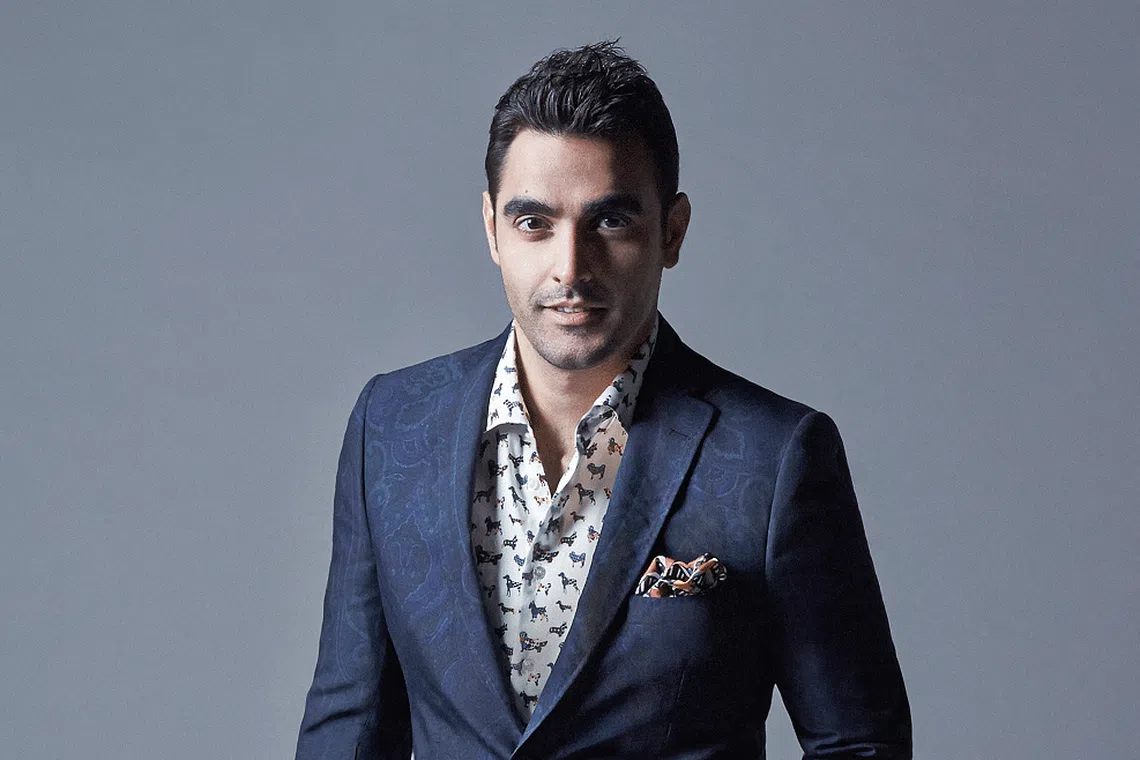
Kishin RK is the CEO of RB Capital, the family investment firm, and has spent more than a decade building a reputation as one of Singapore's most active — and most patient — property investors. His father, Raj Kumar, is the family patriarch and founder: the man whose capital, contacts, and cautious instincts seeded the empire. Together, they are regular fixtures on Singapore wealth rankings, control a portfolio of income-producing assets, and operate in the quiet corridors of the market where deals are done in boardrooms rather than at product launches.
To understand why the recent deal looks the way it does, you first need to understand RB Capital's playbook. The firm has historically specialised in freehold commercial and mixed-use properties — walk-up offices, retail podiums, and older buildings in and around the prime districts that might attract an en bloc bid or a repositioning exercise. These are the kind of assets that larger institutional buyers often overlook because they are too small or too complex, but which can be acquired at a meaningful discount to replacement cost. The family is understood to hold these assets across market cycles, improve them, raise occupancy and yield, and then sell into strength when capital is abundant and prices are high.
| Aspect | What is publicly known |
|---|---|
| Principals | Raj Kumar (founder/patriarch), Kishin RK (CEO of RB Capital) |
| Investment focus | Freehold commercial and mixed-use properties |
| Typical strategy | Buy under-utilised assets, reposition, hold through cycles, sell into strength |
| Known asset zone | Newton-Balmoral / Bukit Timah corridor, among others |
| Market profile | Regular fixtures on Singapore wealth rankings |
This approach sounds simple, but it is rare in practice. It requires holding power — the ability to weather years of flat yields and rising interest rates without being forced to sell — and it requires timing. Much of RB Capital's success has come from buying when sentiment is low and selling when enthusiasm is high. The recent deal reads like a textbook exit: a well-timed sale of assets that had been held, improved, and matured over many years, transacted into a market flush with liquidity and hungry for scarce freehold exposure.
Key traits that define the family's investment style:
- Value orientation: prefers under-priced, under-managed assets over trophy showpieces
- Long holding periods: patience is the edge, not leverage
- Freehold bias: values the control and permanence of freehold tenure
- Counter-cyclical instinct: buys in downturns, monetises in upcycles
That background matters, because it tells you the sellers were not selling out of distress. They were selling because the market gave them a price worth accepting — and that, in itself, is a signal about where prime assets are in the cycle.
Inside the Billion-Dollar Deal
So what actually happened?
According to media reports, the family's investment vehicles divested a portfolio of prime freehold assets in a transaction valued in excess of S$1 billion. The portfolio is understood to include Balmoral Plaza, a freehold mixed-use development along Bukit Timah Road in the Newton-Balmoral corridor — an address that sits just minutes from the Orchard Road core and the good-class bungalow belt. Balmoral Plaza was reportedly acquired en bloc by the family's side years earlier, repositioned and held while the surrounding neighbourhood continued to gentrify and prime district prices climbed.
The buyer, according to reports, was an entity backed by private capital, with market chatter pointing to family office-linked or high-net-worth interests. That detail is important. A billion-dollar portfolio of this type is not typically bought by a retail investor, or even by a conventional private equity fund in a hurry; it is the kind of asset that appeals to very patient money — the money of families who think in generations rather than quarters.
The structure of the transaction is also worth noting. Portfolio sales of this scale are usually executed through the transfer of shares in special purpose vehicles — each asset is typically held by its own entity — rather than the sale of the properties themselves. Share transactions can be faster to execute and can avoid the stamp duty and administrative friction that would come with multiple individual property transfers. None of this is unusual; it is simply how the top end of the market operates.
Why did the deal cause such a stir? A few reasons:
- Scale: single-portfolio transactions above S$1 billion are rare in Singapore's private property market. Most headline numbers come from government land sales or listed developer transactions; a private family sale at this size stands out.
- Benchmarking: every major transaction becomes a reference point for valuers, lenders, and neighbouring owners. A sold portfolio in the Newton-Balmoral corridor effectively reprices comparable freehold assets in the vicinity.
- Signal: the fact that private capital — reportedly including family office interests — was willing to deploy enormous sums into Singapore property reaffirms the city's status as a regional safe haven for wealth.
- Timing: the sale comes after several years of cooling measures, elevated interest rates, and geopolitical turbulence. The fact that a billion-dollar deal can still get done cleanly says a great deal about market depth.
It is worth being precise about what the deal does — and does not — tell us. It does not tell us that the whole Singapore market is booming; the luxury and commercial segments have been running a different race from the mass market. But it does tell us that at the very top of the market, capital remains abundant, conviction remains high, and freehold scarcity continues to command a premium.
Prime Districts and the Price of Scarcity
To understand the deal, you have to understand what makes the assets so valuable in the first place. The Balmoral-Newton-Bukit Timah corridor sits at the edge of Singapore's core prime districts — the districts that estate agents shorthand as D9, D10, and D11: Orchard, River Valley, Bukit Timah, Holland, Tanglin, and Newton. Together, these form the Core Central Region (CCR) under the Urban Redevelopment Authority's (URA) regional classification.
Prime district pricing rests on a handful of structural pillars:
- Land is finite: Singapore cannot create new freehold land. The government releases mostly 99-year leasehold land through its land sales programme; genuine freehold land is a shrinking, privately held stock. Every freehold asset traded is effectively a coin that will never be minted again.
- The GCB premium: fewer than 3,000 Good Class Bungalows (GCBs) exist, spread across 39 gazetted GCB areas. They are Singapore's rarest residential asset class, and by law they can only be purchased by Singapore citizens — individuals, not companies. That rule keeps the pool of eligible buyers small but extraordinarily wealthy.
- The en bloc drought: the supply of en bloc opportunities — which once fed the prime market with redevelopment sites — has thinned considerably. Owners' expectations rose with prices, development charges and land values climbed, and the calculus for successful collective sales became harder. Less redevelopment supply means more scarcity for existing freehold assets.
- Network effects of the core: D9-D11 are where the top schools, embassies, medical facilities, and luxury retail are concentrated, and that clustering is self-reinforcing.
The GCB market is a good barometer of this scarcity. According to media reports, a GCB off Queen Astrid Park changed hands in 2023 at a price around S$120 million. In 2024, a GCB at Bagnall Road reportedly transacted at approximately S$128.8 million, setting a new record. Several other bungalows crossed or approached the S$100 million mark in the same period. These are not numbers that move on sentiment alone; they are the product of a market where supply is essentially fixed and demand is global.
Luxury condominiums in the prime districts tell a similar story. Caveats lodged in the past couple of years show freehold and 99-year leasehold new launches in District 10 transacting at levels that were unthinkable a decade ago:
Reported PSF at Select District 10 Luxury Launches (S$)
As the chart above shows, the upper end of the condominium market has pushed firmly past the S$3,000 PSF mark, with standalone trophy projects reaching toward and beyond S$5,000 PSF. The figures are indicative, based on reported caveats at or shortly after launch; actual unit-level pricing varies by floor, view, and size. But the direction is unmistakable: prime district prices in Singapore have been re-rated over the past decade, and the scarcity premium has widened.
For the highest-profile projects, the buyer profile has shifted too. All-cash purchases, purchases by trusts, and purchases linked to wealthy families have become common at the top end. This is one reason the market has held up so well despite cooling measures: the marginal buyer in the luxury segment is often less sensitive to interest rates than to scarcity and inheritance considerations.
The table below summarises the factors that keep prime district prices structurally supported:
| Factor | Impact on prime prices |
|---|---|
| Limited freehold land | Creates a permanent supply ceiling |
| Small GCB stock (fewer than 3,000 units, citizens only) | Keeps trophy home prices at a sustained premium |
| Sparse en bloc supply | Reduces future supply of redevelopment sites |
| Global safe-haven demand | Brings international capital to a tight market |
| Policy cooling measures | Curb speculation but rarely reverse structural scarcity |
None of this means prime prices only go up. Cooling measures have, at various points, stalled or slightly corrected the CCR segment — most notably after the April 2023 round of property cooling measures, when the additional buyer's stamp duty was raised sharply and loan limits were tightened. For a while, luxury new launches priced themselves more cautiously, and some developers absorbed margin rather than chase record prices. But the structural drivers remain, and the recent Raj Kumar-Kishin RK deal is a reminder that at the very top of the market, freehold scarcity is still the most powerful force in pricing.
Family Offices: The Quiet Force Reshaping the Market
The elephant in the room for any conversation about billion-dollar property deals is the family office. Singapore has become the preferred hub for wealthy families across Asia and beyond to set up dedicated vehicles to manage their wealth. The numbers are striking. According to the Monetary Authority of Singapore (MAS) and subsequent media estimates, the number of single family offices (SFOs) in Singapore has grown from around 400 in 2020 to roughly 1,100 by the end of 2022, about 1,400 by the end of 2023, and some 2,000 by 2024.
Estimated Single Family Offices in Singapore
A note on the data: figures for the later years include media estimates based on MAS disclosures and industry reporting, and official MAS communications have, at various points, used narrower ranges. But the trend line is clear and widely acknowledged: Singapore's family office ecosystem has multiplied several times over in the space of a few years. MAS-administered tax incentive schemes for family offices — the well-known 13O and 13U structures under the Income Tax Act — have played a significant role in making the city-state an attractive base for multigenerational wealth.
Why do family offices love property? And why does it matter for a deal like the Raj Kumar-Kishin RK transaction?
- Tangible wealth: real estate is an asset families understand, can see, and can pass down across generations. It fits the multi-generational mandate of a family office far better than, say, a basket of venture capital funds.
- Yield and appreciation: prime Singapore property offers a combination of rental income and long-term capital appreciation that is hard to replicate in many fixed-income markets.
- Inflation hedge: real assets tend to hold value when monetary conditions loosen.
- Safe haven: Singapore's political stability, rule of law, and deep capital markets make it a default destination for wealth seeking shelter from volatility elsewhere.
- Institutional scaffolding: professional family offices behave more like institutions than private buyers — they conduct due diligence, they buy whole portfolios, and they hold. That professionalism has pushed up the quality of bidding at the top of the market.
But there is a policy twist that helps explain why so much family office capital flows into commercial and mixed-use assets rather than luxury homes.
Every serious discussion about the high-value residential market in Singapore has to confront the Additional Buyer's Stamp Duty (ABSD). The ABSD has ratcheted steadily upward over the past decade, and the increases for foreign buyers have been nothing short of dramatic:
ABSD for Foreigners Buying Residential Property in Singapore (%)
When ABSD for foreign individuals hit 60% in April 2023 — on top of the base Buyer's Stamp Duty — the calculus for foreign families buying Singapore homes changed fundamentally. A foreigner buying a S$10 million luxury apartment would face around S$6 million in ABSD alone. For many family offices, the rational response was not to overpay for residential; it was to pivot toward asset classes that do not attract ABSD.
This is where the market's structure matters. Commercial and mixed-use properties — offices, shops, shophouses, and mixed developments like Balmoral Plaza — are not subject to ABSD. A family office can acquire an entire freehold commercial building without paying residential stamp duties. This is not a loophole; it is a deliberate feature of Singapore's policy design, intended to keep residential land affordable while leaving commercial capital free to flow.
The decision tree above is a simplified version of how many family offices think, but it explains a great deal of what we see in Singapore's transaction data: the rise of family offices has coincided with heavy demand for shophouses, strata commercial units, and whole commercial buildings. The billion-dollar Raj Kumar-Kishin RK portfolio sits squarely in this zone — a freehold, income-producing commercial asset base that a family office can acquire, manage, and hold across generations without tripping over residential stamp duty policy.
It also explains the growing "institutionalisation" of private wealth in Singapore. Ten years ago, a family buying S$100 million of property might have done so through a maze of personal name purchases. Today, the same capital arrives through a single family office with a chief investment officer, a research budget, and a mandate. That shift has made the market deeper, more professional, and more competitive at the top end — and it is one reason prices in prime commercial corridors have proven so sticky.
What a Billion-Dollar Deal Means for the Rest of the Market
It is tempting to read a deal like this and assume the entire Singapore property market is on fire. The reality is more nuanced — and the nuance matters for anyone making a property decision, whether it is a first flat or a fifth investment property.
First, the benchmarking effect. Large transactions at the top of the market do not just record history; they make it. Valuers and banks take note of a S$1 billion portfolio sale, and comparable assets in the same corridor get marked up in subsequent valuations. For owners of similar freehold commercial or mixed-use properties, the deal is good news: their assets likely became more valuable the day the headlines broke.
Second, the sentiment effect. Property markets run on confidence as much as on fundamentals. A billion-dollar deal, even a private one, filters into the broader narrative that Singapore property is a safe and profitable place to hold wealth. That narrative attracts more capital, which supports prices across segments — though the effect is strongest closest to the epicentre of the deal.
Third, the divergence effect. URA data through 2024 and into early 2025 has shown that price growth in the mass-market and city-fringe segments — the Outside Core Region (OCR) and Rest of Central Region (RCR) — has actually outpaced the Core Central Region in recent quarters, partly because the CCR was the most affected by the 2023 round of cooling measures. What the luxury market offers is not always the fastest growth; it offers the greatest stability and scarcity. The billion-dollar deal underscores that high-value freehold assets remain a favoured destination for patient capital, even when other parts of the market are moving faster.
The deal also draws attention to the income dynamics of prime commercial property. In an environment where interest rates remain elevated but are beginning to ease, well-located freehold commercial assets offer yields that look increasingly attractive relative to cash and bonds. That yield compression story — the gradual squeeze of returns as buyers accept lower initial yields for perceived safety and appreciation — is a big part of why family offices and private capital keep circling assets like the ones in this portfolio.
For everyday buyers, the takeaways are practical:
- Don't let headline deals define your strategy. A transaction at the top of the market is information, not instruction. Your purchase decision should be based on your own holding period, budget, and needs.
- Location scarcity is real. The same forces that make D9-D11 expensive — finite freehold land, limited supply, strong demand — operate, in diluted form, in mature estates across Singapore. Understanding scarcity helps you identify value in less obvious places.
- Data is your edge. Every transaction in Singapore is ultimately recorded through caveats and URA data. The same transparency that lets analysts dissect a billion-dollar portfolio also lets a young buyer compare projects, districts, and price movements — provided they know where to look.
- Policy changes the game. ABSD, loan-to-value limits, and seller's stamp duties have shaped the market more than almost any single economic variable over the past decade. Family offices redirect toward commercial; foreign buyers sit on the sidelines; citizens buying first homes enjoy the most favourable policy treatment. Understanding the policy map is half of understanding the market.
There are also risks to keep in view. Interest rates, though easing from their recent peaks, remain higher than the ultra-low era of the 2010s, and elevated rates put downward pressure on valuations at any point of the market. Global economic turbulence can interrupt capital flows into Singapore. And the government has shown it is willing to intervene further if prices run ahead of fundamentals. A billion-dollar deal is a vote of confidence, not a guarantee against a downturn.
Finally, the deal is a reminder that "the market" is not a single thing. There is the market of HDB upgraders, of first-time condo buyers, of REIT managers, and of family offices buying whole buildings. They are connected, but they are distinct. The Raj Kumar-Kishin RK deal tells you a great deal about one of those markets. To understand the rest, you need district-by-district, project-by-project data — the kind of granular picture that transaction records and analytics platforms exist to provide.
Food for Thought
- If family offices are consolidating prime freehold assets, what happens to the availability of commercial space in D9-D11 for smaller businesses over the next decade?
- With ABSD at 60% for foreign individuals, how much of the luxury market's strength is genuinely foreign capital, and how much is local wealth recycling through family vehicles?
- Should an ordinary property buyer pay attention to billion-dollar deals, or are the two markets — trophy assets and everyday homes — effectively decoupled?
- Is the rise of family offices a net positive for Singapore's property market (depth, professionalism, stability) or a concern (concentration of ownership, less transparency)?
- If you had the capital and the mandate of a family office, would you buy commercial freehold, a portfolio of shophouses, or a GCB — and what would your holding period be?
The Bottom Line
The Raj Kumar-Kishin RK deal is not just a rich family selling a few buildings. It is a condensed lesson in how Singapore's property market works at its highest level: scarce freehold land, patient capital, policy architecture that channels money toward particular asset classes, and a buyer base — increasingly made up of family offices — that thinks in generations.
For the rest of us, the lesson is simpler: the billionaire's market and the everyday market run on the same fundamentals of scarcity, location, and timing — they just operate at different scales. Understanding one helps you understand the other.