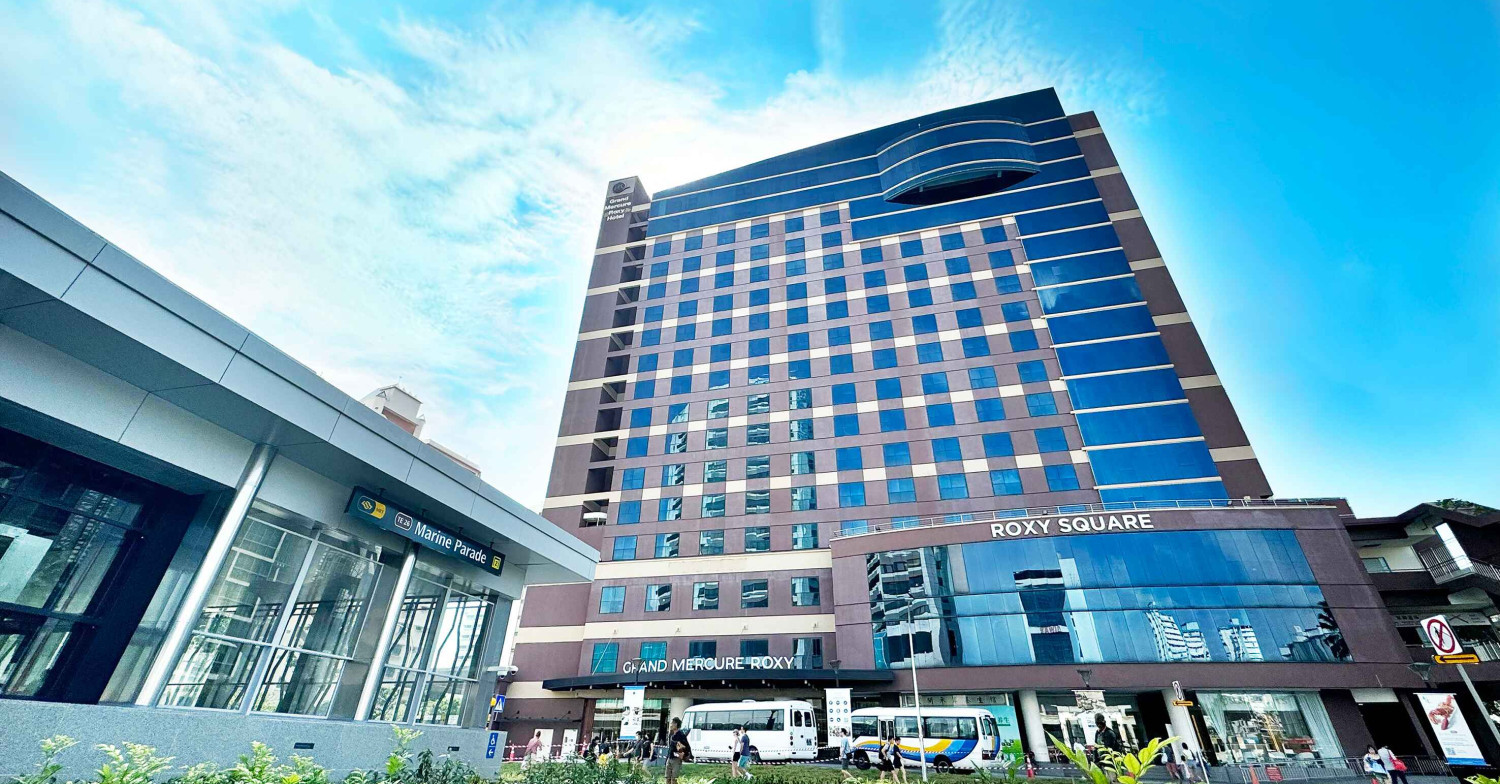
Every Singaporean who has driven along East Coast Road knows the feeling: the faded facade of Roxy Square, the sprawling resort-style mall that looks like it belongs to another decade, and the quiet question — when is someone finally going to do something with it? Roxy Square has long been the punchline of East Coast property conversations, an aging reminder that not every asset in District 15 has aged gracefully. But beneath the dated exterior sits one of the most compelling redevelopment stories in the Marine Parade property market. With Marine Parade MRT station now open at its doorstep, a collective sale saga that has put the site firmly in the spotlight, and a Master Plan that continues to push for rejuvenation in mature estates, Roxy Square is no longer just a fading mall. It is a bellwether for how urban renewal could reshape resale condo prices, rental yields, and the investment case for an entire district.
For property investors, this matters far beyond nostalgia. The story of Roxy Square is, at its core, a story about land value, scarcity, and the long arc of Singapore's urban transformation. When a large, under-utilised site in a desirable district finally gets a new lease of life, the ripple effects are rarely confined to the site itself. They show up in the resale prices of neighbouring condos, in the rental expectations of landlords, and in the way banks, agents, and buyers recalibrate what a district is "worth." This article revisits Roxy Square — where it came from, why it has been stuck in limbo, and what a successful redevelopment could mean for investors watching the Marine Parade property market.
A Brief History of Roxy Square: From Resort Dream to Sleeping Asset
To understand why Roxy Square matters, you have to understand what it once was. Completed in the early-to-mid 1980s, Roxy Square was, in its heyday, a bold experiment — one of Singapore's first integrated mixed-use developments, combining a shopping mall with a residential condominium known as Roxy Residences. The design was deliberately resort-themed, with a cavernous central atrium, water features, and a stepped architectural profile meant to evoke a holiday getaway. In an era when Singapore's retail scene was dominated by simple, functional shopping centres, Roxy Square stood out as something genuinely different.
The differences, however, did not age well. Over the decades, the mall's layout — multi-level, inward-looking, and hard to navigate compared with modern podium malls — became a liability. Retail tenancy shifted from high-street brands to budget F&B operators, tuition centres, and independent shops. The atrium that once felt grand began to feel cavernous and dated. By the 2010s, Roxy Square had become the kind of place you visited for a specific cheap meal, not for a shopping trip. For residents of the East Coast, it was beloved in the way an old neighbourhood uncle is beloved — familiar, slightly worn, and not something you would invite to a business meeting.
Above the mall, Roxy Residences continued its quiet existence. The residential block, reportedly comprising a few hundred homes, has long been one of District 15's more unassuming addresses. Residents enjoy the unbeatable convenience of having a mall (such as it is) downstairs, but they also live with the constant hum of a property that is widely considered under-optimised. The lease, reportedly 99 years, is ticking — and that ticking clock is one of the most important dynamics in the entire Roxy Square story.
Here is a quick snapshot of the asset as it stands:
| Attribute | Detail |
|---|---|
| Address | 50 East Coast Road |
| Completed | Early-to-mid 1980s |
| Components | Retail mall + Roxy Residences (residential) |
| Tenure | Leasehold, reportedly 99 years |
| Nearest MRT | Marine Parade (Thomson-East Coast Line) |
| Walking distance to MRT | Roughly 5–10 minutes |
| Zoning (Master Plan 2019) | Commercial & Residential |
The key takeaway from this history is not that Roxy Square is old — many successful malls in Singapore are older. The takeaway is that Roxy Square is old and structurally under-utilised. Its plot ratio, its layout, and its retail mix all sit well below what the land could command today. That gap between current use and potential use is precisely what makes a site attractive for redevelopment. And that gap, more than nostalgia, is what has kept the Roxy Square story alive in the minds of property investors.
The Location Dividend: MRT, Master Plan, and the East Coast Revival
Location has never been Roxy Square's problem. If anything, the location is the entire thesis.
Marine Parade is one of Singapore's most established residential areas, developed from the 1970s as a seaside town designed to bring the HDB heartland closer to the coast. It offers a rare combination in mature Singapore: a real HDB community, a cluster of private condominiums, excellent schools, a famous hawker centre, and one of the island's great public spaces — East Coast Park — all within a compact, walkable area. Parkway Parade, which opened in 1979, has been the district's retail anchor for decades. The food culture along East Coast Road and the nearby Katong-Joo Chiat heritage enclave gives the area a personality that newer towns simply cannot replicate overnight.
What the area lacked, for a long time, was a world-class rail connection. That changed on 21 June 2023, when the Thomson-East Coast Line (TEL) Stage 4 opened, bringing with it Marine Parade and Marine Terrace stations. Marine Parade station, in particular, sits along Marine Parade Road, a short walk from Roxy Square. For a district that had relied on buses and cars for decades, the arrival of the TEL was transformative — and it happened to arrive just as the conversation about Roxy Square's future was heating up.
The MRT opening is not just a convenience story; it is a land-value story. Walking distance to a train station is one of the most reliable predictors of residential price premiums in Singapore, and the effect tends to be strongest in mature estates where such connectivity was previously missing. For Roxy Square, the MRT turned an aging mall into something far more interesting: a development site with excellent transport connectivity. And that, in turn, aligned perfectly with the Urban Redevelopment Authority's (URA) long-running push to rejuvenate mature estates.
Under the Master Plan 2019, the Roxy Square site is zoned for commercial and residential use, with redevelopment potential that has been widely discussed in property circles. The more recent Master Plan 2025, released for public consultation in late 2024, broadly continues the push to intensify and rejuvenate mature estates — particularly those now served by new MRT lines. The policy direction is clear: the government wants older pockets of the city to be redeveloped into higher-density, better-designed mixed-use precincts rather than left to decay.
The local context that makes this area compelling:
- Schools: Tao Nan School, CHIJ Katong Convent, St. Patrick's School, and Victoria Junior College are all within the Marine Parade vicinity — a magnet for families.
- Retail: Parkway Parade is a one-stop mall; the Marine Parade Central Market & Food Centre is one of Singapore's most beloved hawker hubs.
- Recreation: East Coast Park is Singapore's largest coastal park, attracting cyclists, joggers, and weekend families.
- Future supply: The broader East Coast corridor, including the Bayshore precinct further east, is earmarked for significant residential intensification in coming years.
The story of the district's broader market also matters here. Mature-estate HDB prices — the pulse of neighbourhoods like Marine Parade — have been climbing steadily, reflecting both genuine demand and the spillover effect of a tight private market.
HDB Resale Price Growth in Singapore (2019–2024)
As the chart above shows, the broader resale market has seen sustained demand since 2020, and mature estates like Marine Parade have been part of that story. When an area's fundamentals — transport, schools, amenities — improve while prices keep pace with national trends, the conditions for redevelopment become much more forgiving.
The timeline below captures how the Roxy Square story has evolved alongside the district's transformation:
The En Bloc Saga: Reading the Market's Temperature
For years, property watchers have speculated about Roxy Square's future. The site's size, its mixed-use zoning, and its location near the new MRT station made it an obvious candidate for a collective sale. The question was never whether the owners would try — it was whether the market would cooperate.
In 2023, the owners made their move. Roxy Square was launched for collective sale, with a reserve price reportedly in the region of S$690 million, according to media reports at the time. Marketing materials reportedly pointed to the redevelopment potential of the site, with press reports suggesting a new project could yield roughly 500 to 600 residential units, along with a modern retail component. On paper, it had all the ingredients of a headline-grabbing tender: prime District 15 land, MRT connectivity, and a rare opportunity to assemble a large mixed-use site in a mature estate.
And yet, the tender reportedly did not result in a successful sale. The site remains, for now, in collective-sale limbo — a familiar fate for complex en bloc sites in Singapore.
Why did it stall? A few forces were at play:
- Strata complexity: Roxy Square is a strata-titled mixed-use development, meaning the mall, the residential units, and the various commercial spaces are owned by hundreds of different parties. Getting the required consensus among owners is a logistical marathon. Mixed-use sites like this are notoriously harder to assemble than pure residential condos.
- ABSD headwinds: In April 2023, the government raised Additional Buyer's Stamp Duty (ABSD) rates — most dramatically for foreign buyers, up from 30% to 60%. This cooling measure reverberated across the entire en bloc market, making developers more cautious about aggressive land bidding.
- Interest rate environment: 2023 was a year of elevated interest rates, which raised developers' cost of carry and made large land acquisitions harder to justify.
- Land price expectations: Developers and owners often disagree on what a site is worth. The reported asking price implied a certain land rate that, in the post-ABSD environment, was a harder sell.
Roxy Square is hardly alone in this struggle. Singapore's history is littered with mixed-use and strata-titled complexes that took years — sometimes decades — to assemble for redevelopment. The comparison table below shows how some of Singapore's most famous aging complexes have fared:
| Development | Built | Status | Reported Price |
|---|---|---|---|
| Golden Mile Complex | 1973 | Sold en bloc in 2022 | S$700 million |
| People's Park Complex | 1973 | Collective sale launched 2025 | ~S$1.3 billion (reported) |
| Katong Shopping Centre | 1980s | Multiple en bloc attempts over the years | Earlier ask reportedly ~S$250 million |
| Roxy Square | Early 1980s | Tender in 2023, reportedly no sale | ~S$690 million ask (reported) |
What this scorecard reveals is that the market for aging mixed-use complexes is real but highly selective. Golden Mile Complex — a Brutalist icon with a similar strata-titled structure — finally sold in 2022 after years of attempts, proving that assembly is possible when the numbers align. People's Park Complex, another icon of the same era, reportedly sought even more ambitious pricing when it was launched in early 2025. The pattern suggests that these sites are not un-sellable; they are simply waiting for the right combination of policy clarity, market conditions, and pricing expectations.
The broader private property market context in recent years has also shaped developer appetite. After a strong run of price growth through the pandemic era, developers became more selective about the land they put through their feasibility models.
Singapore Private Property Price Index Annual Change (2020–2024)
The line chart above shows the moderation in private property price growth over the past few years. While prices are still rising, they are doing so at a slower pace — and that makes developers more disciplined about how much they will pay for a complex, slow-to-assemble site like Roxy Square.
For investors, the en bloc saga is not just a piece of trivia. It is the single clearest signal of where the site's value is heading. When a collective sale eventually succeeds — and most analysts expect it will, given enough time — the transaction will reset the land-value baseline for the entire Marine Parade area. That reset will have immediate implications for everyone who owns property nearby.
How a Redevelopment Could Reshape Marine Parade Property Prices
Let us now game out the scenario that has investors most excited: Roxy Square is successfully assembled, sold, and redeveloped into a modern mixed-use project. What happens to the surrounding Marine Parade property market?
The New Launch Premium Effect
The most immediate and predictable effect is what property analysts call the "new launch premium." When a major new residential project launches in a maturing district, it typically sets a price benchmark significantly above prevailing resale levels. This is partly a function of product quality — new units, modern layouts, better facilities — and partly a function of land costs, construction costs, and development margins. The developer needs to sell at a certain price to make the numbers work.
Once that benchmark is set, it changes the psychology of the entire market. Sellers of older resale condos in the district feel justified in raising their asking prices. Buyers, having seen the new launch prices, start to view resale units as "relative bargains" even if the prices have gone up. Banks' valuation models adjust. Agents re-calibrate their comps. The result is a gentle but persistent upward drift in resale prices across the surrounding area.
District 15 has seen this play out before. The old Amber Park, a sprawling freehold? Actually no — the old Amber Park condo at Amber Road was assembled and redeveloped in the late 2010s, and the new project reportedly launched at an average price of over S$2,300 psf. That launch, in turn, anchored expectations for resale properties across the broader Katong-Marine Parade corridor. When a new project comes into a mature estate and sells well, it effectively writes a new price chapter for the whole district.
The En Bloc Optionality for Roxy Residences Owners
One overlooked angle is what happens to Roxy Residences itself. If the collective sale succeeds, owners of Roxy Residences stand to receive a share of the sale proceeds — a financial outcome that could be dramatically higher than what they would receive from an ordinary resale transaction. This "en bloc optionality" is already baked into some pricing decisions in the area. Buyers who purchase units in developments earmarked for collective sale are effectively buying a lottery ticket with a floor price: the current rental or resale value, plus the potential upside of a future collective sale windfall.
For Roxy Residences specifically, the optionality is unusually strong because the entire complex — mall and residences together — is the collective sale candidate. That means the residential owners' fate is tied closely to the commercial strata owners', which adds complexity but also adds potential upside. If the deal ever closes, it could be one of the more lucrative en bloc payouts in District 15 history, given the site's scale.
Rental Market Dynamics
The rental picture is more nuanced. In the short term, a successful en bloc would remove some older rental units from the market — the Roxy Residences units that are currently rented out would eventually be vacated and demolished. That reduction in supply, all else being equal, is mildly supportive of rents in the surrounding area.
In the medium term, however, the new development would bring hundreds of new homes to Marine Parade, and some of those would inevitably be rented out by investors. New supply tends to put a cap on rental growth, particularly for older, less well-appointed units nearby. Landlords of older condos around Marine Parade would face competition from shiny new units offering better layouts and facilities at comparable or slightly higher rents.
That said, the demand side is also strengthening. The TEL has made Marine Parade significantly more accessible to workers in the CBD, Marina Bay, and the upcoming Greater Southern Waterfront developments. The district's schools continue to attract families who prefer to rent in the area to be close to Tao Nan or VJC. East Coast Park, with newer recreational infrastructure and the ongoing redevelopment of the coast, keeps drawing people who want the seaside lifestyle. The long-term rental outlook for Marine Parade is therefore supported more by the district's fundamentals than threatened by a single redevelopment.
Which Segments Stand to Benefit Most?
If the redevelopment goes ahead, the beneficiaries would likely include:
- Resale condo owners in nearby projects — they get the halo effect of a new launch benchmark and improved district perception.
- Roxy Residences owners — they hold the ultimate en bloc optionality.
- HDB upgraders in Marine Parade — they may see their flats appreciate as the district's cachet rises, making their eventual upgrade more affordable.
- Landlords of newer condos near Marine Parade MRT — they benefit from increased district-level demand even if rents face some competitive pressure.
- Retail investors — new retail space at the redeveloped Roxy Square would likely command higher rents than the current aging mall, though the transition period could be painful for existing tenants.
The Bear Case
It would be irresponsible to present only the optimistic scenario. There are real risks to the Roxy Square redevelopment thesis:
- It may never happen: Collective sales of complex mixed-use sites routinely fail. The owners may not reach consensus, the market may not offer the right price, or the site could sit in limbo for another decade.
- Timeline slippage: Even if a sale succeeds, redevelopment takes years. Between tender award, approvals, construction, and launch, you could easily be looking at six to ten years before the new project is completed.
- Policy risk: Future cooling measures or changes to land-use policy could alter the economics of the redevelopment.
- Rental disruption: If you are buying a rental unit in the area today, the prospect of new supply arriving in a few years should temper your rental yield expectations.
- Interest rate cycles: If borrowing costs remain elevated, the new launch might be priced conservatively, limiting the benchmark effect.
In other words, the Roxy Square story is an opportunity with a fuse — but the fuse could be long, and it could even fizzle out.
What Property Investors Should Watch: A Practical Checklist
If you are considering investing in Marine Parade or the broader District 15 area with an eye on the Roxy Square redevelopment, here is what to monitor:
1. Collective Sale Milestones
The single most important catalyst is a successful tender. Watch for:
- Announcements of a new collective sale launch
- Tender closing dates and whether bids are received
- Reported bid amounts compared with the asking price
- Any news of a private treaty or direct negotiation with a developer
2. Master Plan Revisions
The Master Plan 2025 and future revisions can alter plot ratios, zoning, and development charges for the Roxy Square site. Any indication that the site's redevelopment potential has increased would make a collective sale more likely — and more valuable.
3. MRT Usage and District Connectivity
Marine Parade MRT has already changed the area's accessibility. Watch for:
- Ridership trends on TEL Stage 4
- Announcements of new bus interchanges or pedestrian improvements around the station
- Future cross-island connections that could further boost the district
4. New Launch Pricing in District 15
Every new launch in the vicinity gives you a data point on where the market thinks District 15 is heading. Compare:
- New launch PSF prices vs. resale PSF in nearby projects
- The "new launch premium" percentage — if it widens, resale sellers have room to raise prices
- Sales velocity of new projects — fast sales signal strong demand, slow sales signal buyer resistance
5. Rental Transaction Volumes
The rental market is the canary in the coal mine for a district's fundamental demand. Track:
- Rental volumes in Marine Parade condos
- Rental yields for nearby projects
- Rental trends for HDB flats in the area — this tells you about the broader population inflow
6. Land Sale Activity in the East Coast Corridor
Government land sales and successful tenders in the broader East Coast area are leading indicators of developer confidence. If developers are paying top dollar for nearby sites, the Roxy Square site's value rises accordingly.
For a quick mental check of your own investment posture, here is a simple decision framework:
The framework captures the essential truth of the Roxy Square investment thesis: you are being paid (via potential capital appreciation and en bloc optionality) for your patience. If you cannot hold the asset for the long term, the more prudent play is to focus on rental yield and cash flow rather than banking on the redevelopment.
The Katong-Joo Chiat Precedent: How a District Reinvents Itself
Roxy Square's redevelopment would not be happening in a vacuum. The surrounding historical enclave of Katong and Joo Chiat has been undergoing its own slow, organic gentrification for years. Once a slightly sleepy Peranakan heritage area, it is now home to boutique hotels, trendy cafés, art galleries, and some of the most expensive shophouse transactions in Singapore. The transformation was driven by a combination of heritage conservation, food tourism, and a wave of affluent young families who chose the area for its character and proximity to the coast.
Marine Parade sits thatched against this gentrifying belt, and the spillover effects are already visible. The stretch of East Coast Road running from Katong towards Roxy Square has seen a quiet refresh — new eateries, renovated shophouses, and a younger crowd. A redeveloped Roxy Square would effectively complete the connective tissue between the heritage charm of Katong and the coastal living of Marine Parade. It would give the area a modern anchor — a place where the neighbourhood's shoppers, families, and professionals can converge, much as they once did when the mall first opened in the 1980s.
This is worth emphasising: the Roxy Square redevelopment is not just a real estate event; it is a neighbourhood event. It would create a new node that ties together the disparate pieces of the East Coast — the HDB heartland of Marine Parade, the private estates around Marine Terrace, the heritage district of Katong, and the recreational sprawl of East Coast Park. That kind of place-making tends to have outsized effects on property values because it changes how people perceive the district — from a place you pass through to a place you want to live in.
Food for Thought
As you consider what Roxy Square's potential transformation means for your own property decisions, here are a few questions worth sitting with:
-
Are you comfortable with long, uncertain timelines? The en bloc and redevelopment process for a complex mixed-use site like Roxy Square could take five to ten years or more. Does your investment horizon actually support that kind of wait?
-
How much are you willing to pay for optionality? Buying a resale unit in a district with a pending redevelopment story means paying today's prices for a future upside that may or may not materialise. How would you feel if the collective sale fails and the area just continues to age gracefully?
-
What would you do if a new launch near Marine Parade prices itself 30% above existing resale units? Would that confirm the district's rise, or would it signal an overheated market? Your answer reveals a lot about your investing temperament.
-
Is the MRT effect already priced in? Marine Parade station opened in mid-2023, and the market has had time to absorb the news. Are you buying on the basis of what has already happened, or what has not yet happened — like the Roxy Square redevelopment?
-
Would you be a landlord competing with brand-new supply? If you are buying a rental unit in Marine Parade today, a future new development at Roxy Square will eventually bring hundreds of new homes into the market. Your rental yield assumptions need to account for that.
Conclusion: An Old Mall, A New Chapter
Roxy Square is a study in contrasts: an aging mall in a rising district, a complex ownership structure on a prime piece of land, and a redevelopment story that has been "coming soon" for so long that it is easy to dismiss. But the fundamental forces are moving in one direction. The MRT is open. The Master Plan supports rejuvenation. The district around it — Katong, Joo Chiat, Marine Parade — is becoming more desirable by the year. The collective sale may have stalled, but collective sales of complex sites often stall before they eventually succeed. In Singapore's land-scarce property market, large developable sites in mature, well-connected districts do not stay under-utilised forever.
For the investor, the lesson is not to treat Roxy Square as a get-rich-quick en bloc play. It is to recognise that districts with this kind of latent redevelopment energy are, over the long run, where property value gets created. The resale condo bought near a future redevelopment site, the rental unit acquired near a new MRT station, the HDB flat upgraded by improving district cachet — these are the patient, structural plays that compound over time. The mall may be dated, but the district's trajectory is not.