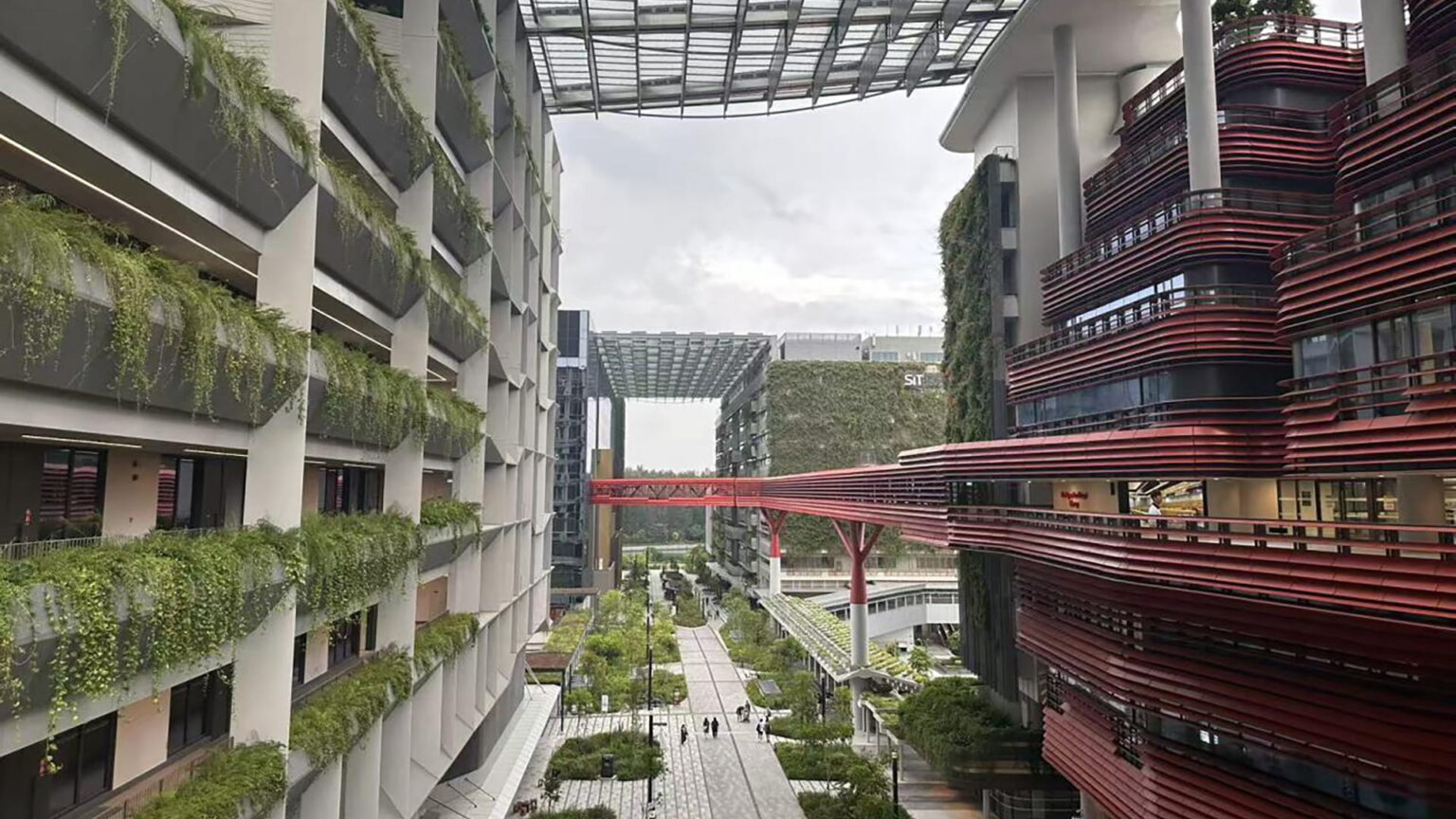
Stand at the edge of Punggol Waterway on a weekday evening and you'll see exactly why this north-eastern town has become one of the most hunted-for addresses among young Singaporean buyers. Runners glide along the 4.2 km promenade, toddlers chase bubbles on the lawns, and the reflections of brand-new HDB blocks shimmer in the water. Turn the other way and the skyline tells a different story — tower cranes above the Punggol Digital District (PDD), the freshly-inked station markers of Punggol Coast MRT, and the sprawling new campus of the Singapore Institute of Technology (SIT).
Punggol property has moved from punchline to powerhouse in barely a decade. Once described — affectionately or otherwise — as the ulu town at the end of the North East Line, Punggol is now Singapore's most ambitious experiment in "smart town" living, and its property market is feeling the heat. HDB resale prices have climbed steadily, executive condominiums (ECs) have quietly pushed past the $1,200 psf mark, and private condos are commanding waterfront premiums that would have seemed unthinkable when the first blocks rose from the swamps.
But is the boom justified by fundamentals, or is it just good storytelling? In this guide, we'll break down the Punggol property landscape — HDB, condos, and ECs — look at what the Punggol Digital District and new infrastructure mean for prices, and give you a practical playbook whether you're a first-timer hunting for a BTO or an investor sizing up rental yields.
The Town That Was Waiting for Its Moment
To understand Punggol's property boom, you have to understand how long this town waited for its close-up.
Punggol's transformation was first promised in 1996, when then-Prime Minister Goh Chok Tong unveiled the Punggol 21 vision at the National Day Rally — a plan to build a waterfront town of tens of thousands of new homes, complete with a man-made waterway and lush parkland. The name means "hurricane" in Malay, a nod to the gales that once swept across the island's north-eastern coast. But the Asian financial crisis hit soon after, and for years, Punggol remained a sleepy outpost of a few early BTO blocks, empty plots, and a lot of ambitious renderings.
The revival began in the late 2000s. HDB designated Punggol as Singapore's first eco-town, built around a 4.2 km waterway that was completed in phases from 2011. The waterway turned Punggol into a genuine waterfront living destination — not just an HDB town with a canal, but a place where jogging paths, park connectors, and waterside dining became part of daily life. In the mid-2010s, HDB launched its Smart HDB Town framework, and Punggol's Northshore District became the pilot — equipped with smart lighting, automated waste collection, and other tech-enabled features.
Then came the big catalysts. In 2018, the government announced the Punggol Digital District — JTC's first mixed-use business district, built around a new SIT campus. And in December 2024, the Punggol Coast MRT station opened on the North East Line, finally giving the town's northern neighbourhoods a rail connection of their own.
The result is a town that is no longer just a "non-mature estate" with cheap flats and long commutes. It is an actual destination — and property prices have followed.
Punggol at a Glance
| Attribute | Detail |
|---|---|
| Planning area | District 19 (with Sengkang and Hougang) |
| Distance from CBD | Roughly 15–18 km, about 40–45 min by MRT to Raffles Place |
| Resident population | Well over 100,000 and climbing |
| Signature feature | 4.2 km man-made waterway |
| MRT access | North East Line (incl. Punggol Coast from Dec 2024) |
| Key future driver | Punggol Digital District & SIT campus |
| Typical tenure | 99-year leasehold (HDB and most private) |
The Punggol HDB Market: BTOs, Resale, and the $700,000 Question
For most buyers, Punggol starts and ends with HDB. And that's where the market has been doing the most interesting things.
BTO: Still the Subsidised Entry Point
Under the new BTO classification that took effect with the October 2024 sales exercise, Punggol's flats are largely categorised as Standard flats — the descendants of the old "non-mature estate" label. That's good news for affordability: Standard flats are priced with deeper subsidies than Plus or Prime flats, and come with fewer restrictions on resale.
In recent launches, four-room Standard flats in Punggol have been priced very roughly from the mid-$400,000s to the high-$500,000s, depending on storey, block, and facing. Five-room flats have ranged into the $600,000s to low-$700,000s at the top end. Flats with unblocked waterway views, or those walking distance to the Punggol Coast MRT, command the upper end of the range.
The catch, as with all BTOs, is time. Build periods typically stretch three to five years, and in the most oversubscribed Punggol launches, balloting chances for first-timers — even in the "first-timer" queue — aren't guaranteed. The trade-off is simple: you trade time for subsidy.
| Flat Type | Recent Punggol BTO Launch Price (Approx.) | Typical Resale Price (2024–25) |
|---|---|---|
| 3-room | High $300,000s to low $400,000s | $480,000 – $560,000 |
| 4-room | Mid $400,000s to high $500,000s | $620,000 – $720,000+ |
| 5-room | $600,000s to low $700,000s | $720,000 – $850,000+ |
Figures are indicative ranges drawn from HDB published launch prices and market transaction reports; actual prices vary by block, storey, and facing.
Resale: The Market That Swung the Weather
The resale market is where Punggol's boom has been most visible. In the post-2021 upturn, HDB resale prices across Singapore posted their strongest run in over a decade, and Punggol was one of the biggest beneficiaries — driven by young families priced out of more central estates, plus the ongoing narrative of the Digital District lifting the town's prospects.
National HDB Resale Price Growth (%) — Flash Estimates
As the chart above shows, the pulse of the national resale market has been strong — and Punggol has largely tracked, or in some months outperformed, the national trend. By 2024–2025, four-room resale flats in Punggol were regularly transacting above the $600,000 mark, and larger or better-located units — especially those near the waterfront or the MRT — have reportedly crossed the $700,000 threshold in a number of deals. Headlines about Punggol resale flats selling for $700,000 or more, once unthinkable for a "non-mature" town, are now routine.
What's driving the premium? Three things:
- The waterfront effect. Flats overlooking the waterway, Coney Island, or the Punggol Strait command a visible premium over interior units — often 5–10% in resale transactions, according to market observers.
- The MRT premium. Units within walking distance of a station — particularly the newer Punggol Coast station — attract stronger demand from tenants and young couples who prize the commute.
- The PDD narrative. Buyers are pricing in a future where the Digital District brings thousands of white-collar workers and students into the immediate neighbourhood, lifting both rental demand and resale values.
Grants and Cooling Measures: What You Need to Know
The government has not been a passive observer of this boom. In August 2024, a package of measures reshaped the HDB buying calculus:
- The Enhanced CPF Housing Grant (EHG) for first-timer families buying resale flats was raised from $80,000 to $120,000, with higher amounts also extended to first-timer singles.
- The HDB loan-to-value (LTV) limit was cut from 80% to 75%, meaning buyers need a bigger downpayment in cash and/or CPF — a deliberate slowdown measure.
- Other grants, including the Family Grant and the Proximity Housing Grant for families who choose to live near their parents, can stack on top of the EHG for qualifying resale buyers.
For a young couple, the maths can be dramatic. A four-room Punggol resale flat at $680,000, after a $120,000 EHG and other grants, starts to look comparable on a cash-out-of-pocket basis to a brand-new BTO — but with the key advantage that you can move in immediately rather than waiting three to five years.
Punggol Condos and ECs: The Private Slice of the Boom
HDB may dominate the headlines, but Punggol's private market has been quietly rewriting expectations too.
Executive Condominiums: The Bridge Between
Punggol has a small but influential cluster of executive condominiums — hybrid housing that starts subsidised and turns fully private over time. The big four are Prive (2013), Twin Waterfalls (2013), Aura (2015), and Topiary (2019). Each marked a step-change in pricing.
Punggol EC Launch Prices (Approx. Average PSF at Launch)
The trend line is unmistakable. At Topiary's launch in 2019, average prices reportedly crossed $1,200 psf — at the time, a milestone for an EC anywhere in Singapore, not just Punggol. Today, resale EC units in Punggol trade at significant premiums to their launch prices, though they remain below comparable private condos on a psf basis.
A few ground rules for ECs if you're new to them:
- Income ceiling: Household income must not exceed $16,000 to buy an EC.
- Loan limits: ECs are subject to the Mortgage Servicing Ratio (MSR) of 30% of gross monthly income, like HDB flats — not the 55% Total Debt Servicing Ratio applied to private property.
- Resale timeline: A 5-year Minimum Occupation Period (MOP) applies. From years 6 to 10, you can sell only to Singaporeans and permanent residents; after 10 years, the EC is fully privatised and can be sold to foreigners and companies.
That privatisation schedule creates an interesting investor play: buy an EC at launch, ride the MOP, and sell in years 6–10 to a larger pool of buyers — or hold past year 10 and unlock the full market.
Condos: Waterfront Living, Private Prices
Punggol's private condo supply is small by Singapore standards — a handful of completed projects like The Waterina, RiverTrees, and Waterscape at Cove, plus the mixed-use The Terrace. That scarcity is itself part of the story. With limited new condo launches in Punggol proper in recent years, resale supply has been the only game in town, and prices have responded accordingly.
According to property portal and transaction data, resale condos in Punggol have been changing hands at roughly $1,200 to $1,500 psf in the 2024–2025 period, with waterfront-facing units and those closest to the waterway capturing the top of the range. That puts Punggol condos at a notable premium to nearby Sengkang's — a reflection of the town's distinctive waterfront identity and its future digital-district cachet.
HDB vs EC vs Condo: The Honest Comparison
| Factor | HDB Resale | EC | Private Condo |
|---|---|---|---|
| Entry price | $600k+ (4-room) | From ~$1.2k psf at launch | From ~$1.3k–1.5k psf resale |
| Income ceiling | $14,000 (BTO/CPF grants) | $16,000 | None |
| Loan rules | MSR 30% | MSR 30% | TDSR 55% |
| Who can buy | SC/PR (SC for BTO) | SC only at launch; PRs after MOP | SC/PR/foreigners (condos) |
| MOP | 5 years | 5 years | None |
| Subsidies | Grants up to $120k+ | Subsidised land, CPF grants | None |
Punggol Digital District: The Catalyst Waiting to Mature
If you want to understand where Punggol property is heading, you need to understand the Punggol Digital District — the single largest structural catalyst in the town's history.
What Is the PDD?
The PDD is JTC's first mixed-use business district, spanning roughly 50 hectares at the northeastern tip of Punggol — about the size of 70 football fields. It's being built around the Singapore Institute of Technology's new campus, which reportedly began welcoming students in 2024. Unlike a conventional business park, the PDD is designed as a live-work-play environment, with offices, research facilities, retail, and campus life woven together.
The district is also a testbed for smart infrastructure — centralised cooling, autonomous goods delivery, smart lighting, and district-level energy management are all part of the plan. When fully built out, the PDD is expected to create an estimated 28,000 jobs across tech, research, and related sectors, according to government announcements.
What That Means for Property
Jobs and students do wonderful things for housing demand. The PDD's construction timeline matters enormously for buyers, because the property market tends to price in expectations long before the doors open:
- During construction (now): Prices already carry a "PDD premium" baked into resale flats and condos near the district, even though it's not yet fully operational.
- At opening (2024 onwards): SIT's campus brings thousands of students, faculty, and staff into the area every day — a structural boost to rental demand, especially for smaller units and rooms near the station.
- At full build-out (late 2020s–2030): The 28,000 jobs arrive. That's the point where the rental and resale fundamentals could genuinely catch up to — or overtake — the premium buyers are paying today.
The risk, of course, is timing. If the PDD takes longer than expected to fill, or if the tech sector cools, the premium buyers are paying now could stall. But the direction of travel is clear: Punggol is the only HDB town in Singapore where a full digital-district ecosystem is landing on its doorstep.
Other Catalysts in the Pipeline
- Punggol Coast MRT (opened Dec 2024) — the NEL extension puts the entire northern half of Punggol on the rail network, unlocking previously "too far" neighbourhoods.
- Northshore District — HDB's first smart district continues to mature, with new BTO projects completing and filling with young families.
- Coney Island and Punggol Point — the park connectors, beaches, and nature trails keep Punggol's lifestyle narrative strong, supporting demand from families who prioritise outdoor living.
- More BTO supply — the government has maintained a strong BTO pipeline in Punggol, which helps keep broader price growth in check by giving first-timers an alternative to resale.
How to Play the Punggol Market: Tips for Buyers and Investors
So you're sold on Punggol. Now what? The right move depends heavily on your timeline, budget, and risk appetite.
For First-Time Buyers
- Decide BTO vs resale early. If you can wait 3–5 years and your income is within the $14,000 ceiling, a Standard BTO in Punggol is still the cheapest path to ownership. The subsidy is real, and under the new framework, resale conditions are simpler than for Plus or Prime flats.
- If you need a home now, do the grant maths. A resale flat with the enhanced EHG (up to $120,000 for eligible first-timer families) can make a $650,000–$750,000 Punggol flat surprisingly affordable. Get your HDB Flat Eligibility (HFE) letter before you start viewing flats — it tells you exactly what grants and loans you qualify for.
- Mind the new LTV rules. With HDB loans now capped at 75% LTV, you'll need at least a 25% downpayment in cash and/or CPF. Plan for that before you commit to an OTP.
- Location within Punggol matters more than ever. Flats near Punggol Coast MRT, the waterway, or within walking distance of the eventual PDD retail spine will hold value better than those at the fringe. Paying a little more for a better block is often worth it.
For Upgraders and Investors
- Target the PDD catchment. Investors should focus on units within a 10-minute walk or one MRT stop of the PDD and Punggol Coast station — that's where rental demand from SIT and future tech workers will concentrate.
- Rental yields are decent but not spectacular. Punggol HDB flats and condos have been achieving gross rental yields in the ballpark of 3–4% in recent quarters — respectable by Singapore standards, but don't expect to get rich from rent alone. The bigger play is capital appreciation as the PDD fills out.
- Watch the ABSD trap. If you buy a private condo while still owning an HDB flat, you'll trigger ABSD (20% for Singaporeans on a second residential property) unless you sell the HDB within six months. Plan the sequencing carefully.
- Respect the 99-year lease. Punggol's newer flats are young, but the lease clock is ticking from the day of lease commencement. For investment units, your holding period should be comfortably shorter than the lease runway.
- Don't chase the top. After several years of strong growth, Punggol prices have already re-rated. A patient approach — buying quality, not just anything — will serve you better than assuming the double-digit growth of 2021–2022 will repeat forever.
The Risks Nobody Likes to Talk About
- Supply pipeline: A steady stream of Punggol BTOs completing in the late 2020s could moderate resale price growth as buyers choose brand-new flats over older resale units.
- Interest rates: If rates stay higher for longer, the affordability picture tightens, and the low-LTV environment amplifies the impact.
- PDD execution risk: If the digital district's occupancy or timeline slips, the premium that buyers paid for the "story" could deflate.
- Lease decay psychology: As newer towns elsewhere (e.g., Tengah) capture the "new town" spotlight, Punggol's novelty premium may soften.
Food for Thought
Before you make a move in Punggol, ask yourself these questions:
- Are you buying the story or the asset? The PDD is real, but it's also years from full build-out. Would you still buy the same flat if the District took five years longer than promised?
- Is $700,000+ for a 4-room HDB resale in Punggol rational, or emotional? Compare it against what the same money buys you in Sengkang, Hougang, or even Woodlands — and be honest about which factors (waterway, MRT, future jobs) are worth paying for.
- What's your exit plan? If you buy a resale flat today, who will buy it from you in 2035 — when the flat is older, the lease is shorter, and the PDD has long been built? Will the neighbourhood still command a premium?
- How does the grant landscape change your maths? The enhanced EHG makes resale flats far more attractive for first-timers — but it also means more competition for the same pool of resale flats. Are you better off as a BTO applicant who wins a subsidised flat, or as a resale buyer with grants?
- What would a recession do to Punggol prices? The town's current strength rests on optimism about the digital economy. If tech hiring slows, PDD's build-out could stall — and prices could correct faster than more mature, diversified estates.
The Bottom Line
Punggol's property boom is not a bubble — at least, not yet. It is a town finally delivering on a promise made in 1996, with the infrastructure, lifestyle, and jobs to back it up. But booms have a way of testing buyers' discipline, and Punggol is no exception. The smartest approach is to buy the fundamentals — proximity to the waterway, the new MRT, and the PDD — at a price that still leaves room for the future to arrive, rather than paying for a future that has already been fully priced in.