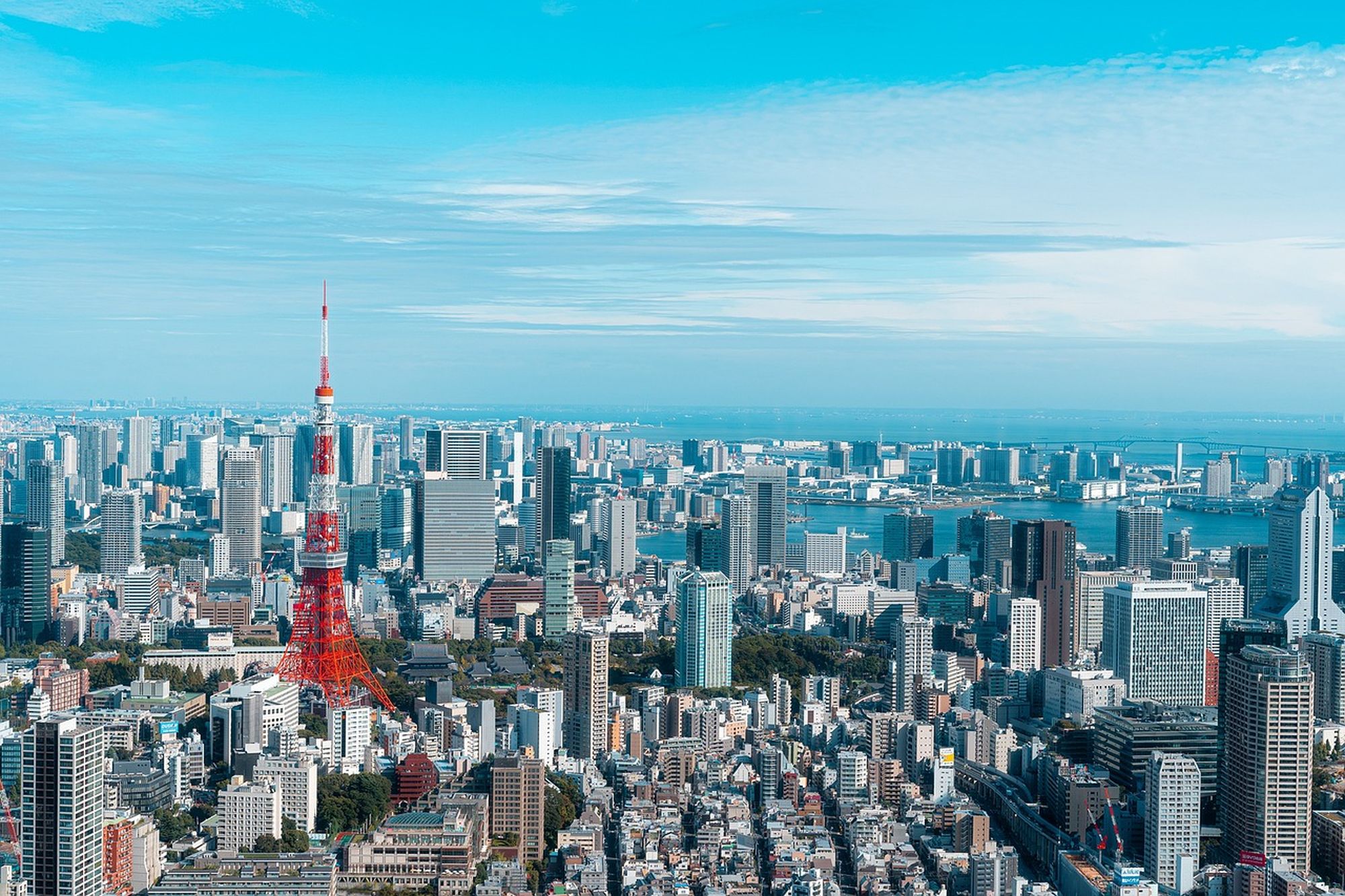
It starts innocently enough. You're three episodes deep into a Tokyo Airbnb marathon, the itinerary is a spreadsheet of ramen shops, and somewhere between the Shibuya skyline and a golden-hour temple in Kyoto, you think: what if I just… lived here for a few months? Then the quieter, more dangerous thought arrives: what if I bought something?
For a growing number of Singaporeans, that thought has become a transaction. Japan's weak yen, rock-bottom interest rates (if you can get a loan at all), and property prices that look absurd next to Singapore's — condos in central Tokyo can cost less than an HDB executive apartment in a mature estate — have turned buying property in Japan into one of the most-discussed cross-border moves in Singapore's property community.
But here's the thing nobody puts in the YouTube thumbnail: buying property in Japan is easy. Owning it well is not. The country's ageing population, rigid resale market, punishing depreciation schedules, and a tax system designed for residents can quietly turn a "cheap" purchase into an expensive hobby.
This guide walks through the good, the bad, and the genuinely weird parts of buying real estate in Japan — from Tokyo condos and Osaka machiya to Hokkaido holiday homes — so you can decide whether it's a smart diversification play or a very expensive holiday souvenir.
Why Japan? The "Cheap" Allure of a Mature Market
Let's get the obvious out of the way: Japan looks deeply affordable to Singapore eyes.
A freehold apartment in a decent Tokyo neighbourhood, within walking distance of a station, can be found for under ¥50 million (roughly S$450,000–500,000). Compact one-bedroom units in older buildings go for far less. In Osaka, the same money buys noticeably more space. In regional cities, you can pick up a standalone house for the price of a COE — sometimes literally less than a Singapore car and its certificate of entitlement.
Contrast that with the home front. HDB resale prices climbed close to 10% in 2024 on top of several years of double-digit growth. New launch condos in the Rest of Central Region routinely price above S$2,500 psf, and the government's cooling measures — including a 60% Additional Buyer's Stamp Duty (ABSD) for foreigners buying Singapore property — make investment property here brutally expensive for anyone already holding property.
Japan offers the opposite energy. No ABSD. No stamp duty for foreigners beyond the standard rates locals pay. No residency requirement. No "foreign investment approval" process like Australia or Canada. And with the yen sitting at multi-decade lows against the Singapore dollar, the currency tailwind alone made purchases roughly 20–30% cheaper in SGD terms than they were a few years ago.
The yen effect is a real phenomenon, not just influencer talk
When the Singapore dollar buys more yen than it has in decades, every price tag in Japan carries an implicit discount. For a Singaporean earning in SGD, a ¥40 million property that once cost about S$500,000 at pre-2022 exchange rates might cost closer to S$360,000 today. That's a significant entry barrier removed.
The flip side, of course, is that currencies run both ways. If the yen strengthens, your property's SGD value can rise even if the Japanese property market doesn't move. But if you ever need to convert back — say, when selling — you're exposed to whatever the exchange rate does at that moment.
A demographic picture that explains everything
None of Japan's property story makes sense without understanding its shrinking population. Japan has been losing people since around 2010, and the trend is accelerating.
Japan's Population in Decline (Millions)
Fewer people, fewer households, less demand — that is the long-term structural headwind behind Japan's famously flat property prices. But within that national story, there are bright spots: Tokyo and Osaka continue to gain population as young people move to the cities, foreign tourists return in record numbers, and a tight supply of new construction in central wards keeps certain segments remarkably resilient.
Tourism is rewriting the economics
Japan welcomed a record 36.9 million foreign visitors in 2024, smashing its pre-pandemic high. That tourism wave is directly relevant to property buyers because it fuels short-term rental income — the "Airbnb maths" that makes many purchases attractive in the first place.
Foreign Visitors to Japan (Millions Per Year)
A regulated short-term rental market doesn't guarantee income — management quality, property condition, and location still decide everything — but the demand tailwind is real, particularly in Tokyo's tourist districts, Kyoto's historic streets, and Hokkaido's ski resorts.
What Can You Actually Buy? A Quick Tour of the Asset Classes
Japanese property is not a monolith. The kind of property you buy determines everything — income, depreciation, taxes, and how miserable (or pleasant) ownership is.
Tokyo condos — the rental workhorse
For most Singaporean investors, Tokyo is the default. A compact condo (mansion, as locals call it) near a station in a ward like Shinjuku, Shibuya, Toshima, or Sumida offers the strongest combination of tenant demand and resale liquidity.
What you get for your money: a freehold title — meaning you own the land under the building outright, forever. No 99-year lease reset, no leasehold depreciation, no Singapore-style land rent. Some buildings are built on leasehold land, so always check, but freehold is the norm for condos.
The catch: Japanese condos are typically smaller than Singapore expectations. A "family" unit is often 60–75 square metres; a one-bedroom might be 30–40 sqm. Modern buildings are earthquake-engineered and well maintained, but older buildings — anything pre-1981 or pre-2000 — come with varying degrees of renovation risk.
Typical gross rental yields in Tokyo are modest by regional standards but attractive compared with Singapore. Market watchers commonly cite yields in the 3–5% range for Tokyo condos, before expenses. After management fees, property tax, and income tax, net cash flow can be thin — but for many buyers, the goal isn't cash flow; it's owning a freehold asset in a global city at a price Singapore stopped offering years ago.
Osaka machiya — the Airbnb favourite
The machiya — a traditional wooden townhouse, often narrow-fronted and stretching deep into the block — has become the symbol of Japan property investment on social media. In Osaka, machiya in neighbourhoods like Minami, Namba, and Tennoji have been snapped up for short-term rental conversion.
The appeal is obvious: a photogenic, period property that rents well to tourists; a purchase price that, a few years ago, could dip below ¥20–30 million for a run-down unit; and Osaka's more relaxed short-term rental ordinances compared with Kyoto.
The traps are equally obvious. Machiya are old wooden buildings with short effective lifespans and maintenance needs that can swallow your profit for years. They depreciate far faster than modern reinforced concrete condos. Many are in areas that are quiet outside tourist seasons. And short-term rental regulations are tightening — Kyoto has banned certain holiday lets in its Gion district, and many condo management committees prohibit short-term letting outright.
Hokkaido holiday homes — the lifestyle play
Hokkaido is a different animal entirely. You're not buying for tenant demand; you're buying for snow, scenery, and second-home joy. Niseko is the famous one — international buyers, powder snow, and prices that have long since stopped being "cheap." But other Hokkaido areas — Furano, Otaru, even Sapporo's outskirts — offer more affordable resort or lakeside properties.
Holiday homes come with real costs that investor content rarely flags: high management fees for winter maintenance, heating costs, and long periods of zero income if you're not renting it out. If you rent it out to offset costs, you convert a lifestyle asset into a business, with all the tax and compliance complexity that entails.
Many owners end up loving it. Just go in with your eyes open: Hokkaido property is a luxury purchase with an investment story, not necessarily an investment.
Other options: whole buildings, bare land, and regional houses
Beyond the big three, you'll see listings for:
- Small apartment blocks — a scary step past condos, with serious management obligations.
- Akiya (vacant homes) — government listings of abandoned houses, sometimes sold for a few thousand dollars, needing hundreds of thousands in renovation.
- Bare land — cheap, illiquid, and almost impossible to finance if you're not building immediately.
For a first-time Japan buyer, a modern or well-maintained freehold condo in a core city is the lowest-risk entry point.
What a Purchase Really Costs (Beyond the Sticker Price)
Here's where many Singaporeans get hurt. The advertised price is the beginning, not the total.
The one-time cost stack
When you buy in Japan, expect to budget an additional 7–10% on top of the purchase price for acquisition costs. The breakdown looks roughly like this:
Typical Breakdown of a Japan Property Purchase (Illustrative)
| Cost | Typical amount | Notes |
|---|---|---|
| Property price | Sticker price | Paid at closing |
| Brokerage fee | ~3% + ¥60,000 + 10% consumption tax | Standard industry rate, negotiable in rare cases |
| Real estate acquisition tax | ~3–4% of assessed value | Billed months after purchase; assessed value is usually lower than market price |
| Registration fee | ~¥100,000–500,000 | For transferring the title; scales with price |
| Stamp duty | ¥10,000–480,000 | Banded by contract price |
| Legal/translation/admin | ¥50,000–200,000 | You'll likely pay extra for English-language support |
Assessed values are typically 60–80% of market value, which softens the tax blow — but not by nearly enough to ignore it.
The annual running costs
Ownership doesn't stop billing you after the keys change hands.
| Recurring cost | Typical amount | Notes |
|---|---|---|
| Fixed asset tax + city planning tax | ~0.5–1.0% of assessed value per year | Japan's equivalent of annual property tax |
| Condo management fee | ¥15,000–40,000/month | Covers common areas, lifts, security |
| Repair reserve fund | ¥5,000–30,000/month | The building's "sinking fund"; crucial in older condos |
| Property manager (for overseas owners) | ¥8,000–20,000/month | Handles tenants, repairs, tax filings |
| Insurance (fire/earthquake) | ¥20,000–40,000/year | Adequate cover is non-negotiable for debt-free owners |
Add these up and a fully managed Tokyo condo can cost ¥400,000–800,000 (S$3,600–7,200) per year just to hold, before any mortgage interest or rent shortfall.
The tax that surprises everyone: 20.42% withholding on rent
If you own rental property in Japan and are a non-resident, Japanese law generally requires the tenant's side — typically your property manager — to withhold 20.42% of gross rent and remit it to the tax office.
Yes, gross rent. Not profit. Not net income. Gross.
You can file a Japanese tax return at year-end to reclaim some of it against actual expenses, but a tax representative (a paid agent, often your property manager) is usually needed to handle the paperwork. It's a real, predictable drag on yield that many property blogs conveniently omit.
Can You Get a Loan? The Financing Reality
Here's the uncomfortable truth: most Singaporeans buying property in Japan pay cash.
Japanese banks are famously reluctant to lend to non-residents. Without a Japanese address, a Japanese income, and a Japanese credit history, the major banks — SMBC, Mizuho, MUFG — will show you the door. A few banks have dabbled in loans for foreign residents, but "resident" is the operative word. A Singaporean with no Japan visa generally cannot access Japanese mortgage rates.
The alternatives:
- Cash: The most common path. Japanese sellers and agents genuinely prefer it, and it can help you negotiate a lower price.
- Loans against Singapore property: Some Singapore banks and private lenders offer to refinance or extend credit against your Singapore property to fund an overseas purchase. The rates are higher than a Singapore mortgage and far higher than a Japanese mortgage.
- Developer financing: Occasionally offered for new launches, but rare and usually short-term.
If you're borrowing against Singapore collateral, stress-test the math. A Japan property yielding 4% gross, carrying 2% in costs and taxes, netting maybe 1.5–2%, rarely covers the interest on a Singapore-dollar loan. Cash-flow-positive Japan is the exception, not the rule.
The Buying Process, Step by Step
Once you've chosen a property, the process is remarkably streamlined — often faster and less adversarial than Singapore's. There's no option period, no romantic-sounding COV discussions, just a fairly mechanical transaction.
- Research and shortlist. Work with a licensed real estate agent (takken-ya) who has experience with foreign buyers. English-speaking teams exist but are busy; verified bilingual agents are worth their premium.
- Due diligence and site visit. Visit in person if you can. Check the building's repair reserve, inspection reports, zoning, and any restrictions on short-term lets. If you can't visit, have a professional do a video walkthrough and building document review.
- Submit a purchase application. The "buying intent" form signals your seriousness. Sellers can accept multiple applications and pick one — cash offers with flexible closing dates win.
- Sign the purchase agreement. This happens usually within one to two weeks. At signing, you pay a deposit, commonly 10%, and the rest at closing.
- Closing. Typically one to two months later. Your lawyer or agent completes the registration, pays the taxes and fees, and transfers the title. You receive the keys and an enormous stack of documents in Japanese.
- Begin management. Either self-manage (possible only if you're fluent in Japanese), hire a property manager, or — for holiday homes — engage a short-term rental operator.
The whole journey, from offer to keys, can take 2–4 months. The hardest part is not the acquisition — it's everything that comes after.
The Legal Side: What Foreigners Are (and Aren't) Allowed to Do
The legal framework for foreign ownership in Japan is extraordinarily open. Let's be crystal clear:
- ✅ Foreigners can buy and own real estate outright. No residency, no citizenship, no visa required.
- ✅ You can own freehold land. Full fee-simple ownership, the same right a Japanese citizen has.
- ✅ No government approval process. Japan has no equivalent of Australia's FIRB or Canada's foreign buyer ban. You transact like a local.
- ✅ No minimum stay. You can own a property you visit twice a decade.
But there are two critical "buts":
Buying property ≠ getting a visa
Japan does not offer a "golden visa" or any immigration pathway through property purchase. There's a Business Manager visa, and running a lodging business or rental operation can support an application, but simply owning a condo gives you zero immigration status. You still enter Japan on tourist or work visas like everyone else.
The inheritance tax you didn't expect
This is the hidden landmine. Japan imposes inheritance tax on real estate located in Japan, regardless of whether the owner is a Japanese resident — including when a Singaporean owner passes away. Singapore abolished its estate duty in 2008, and many Singaporeans assume their global assets inherit that tax-free status. For Japan property, that assumption is wrong.
If you hold Japan property directly, Japan can levy inheritance tax at rates up to 55% on the Japan-sited asset, subject to deductions and treaty considerations. Estate planning — through holding structures, insurance, or gifting strategies — is non-negotiable for anyone buying significant Japanese assets. This is a conversation to have with a cross-border tax advisor before signing, not after.
The Hidden Traps Nobody Films in the Vlogs
Every promising investment has its graveyard stories. For Japan property, the traps are numerous, well-documented, and avoidable if you know what to look for.
1. The depreciation machine
The building you buy will lose value. That's by design — Japanese tax law aggressively depreciates buildings:
- Wooden structures: depreciated to near-zero in about 22 years.
- Reinforced concrete condos: depreciated over roughly 47 years.
The land under the building retains value, which is why central Tokyo land prices have been rising. But a 30-year-old condo is priced as a heavily depreciating asset, and when you resell, buyers will discount for the building's remaining life. Buying an old building because it's "cheap" often means buying into accelerated future depreciation.
2. The akiya problem: Japan has too many houses
Japan's vacant housing crisis is staggering — an estimated 9 million akiya (empty homes) nationwide. In the countryside, homes are literally being given away.
That's great for bargain-hunters and a warning for everyone else: supply vastly exceeds demand outside the urban cores. Buying a cheap house in a depopulating region is a fast route to owning an illiquid, unsellable, tax-liable liability. The only places with genuine demand — Tokyo's 23 wards, Osaka's core, a handful of resort towns — are the ones that don't look "cheap."
3. Condo rules can kill your Airbnb plan
Japan legalised short-term rentals through the minpaku law in 2018, capped at 180 nights per year. But the law gives significant power to local ordinances and building management committees.
Many Tokyo condos ban short-term rentals entirely in their management rules. You can buy a condo, outfit it beautifully, and discover the building's management association will not permit any guest stays under 30 days. Always verify minpaku permissibility before purchase — this alone decides whether your income model is viable.
4. The resale market is slow and unforgiving
Here's the Singapore blind spot: in Singapore, property resale is fast because demand is permanent. In Japan, resale liquidity is a genuine risk.
Sellers in Japan commonly wait 6 to 12 months or more for the right buyer. Older condos without renovated interiors linger. Regional properties can sit for years. Real estate agents charge fees on the buyer's side — your buyer pays their own agent — but the market is still thin outside the most desirable locations.
If you buy a "bargain" property in a non-core area, you may not be able to sell it at all — ever, at a price you'd accept.
5. Earthquake risk is a cost, not a caveat
Japan is one of the most seismically active countries on Earth. Modern buildings — post-1981 building code revisions, and especially post-2000 — are generally well-engineered. But Tokyo's next big earthquake is less a "what if" and more a "when."
Earthquake insurance is separate from fire insurance, limited in payout, and increasingly priced based on building age and structural standards. Factor it in as a permanent cost, not an optional extra.
6. The "foreigner premium" and trust issues
Some Japanese agents and sellers are less comfortable transacting with foreign buyers, which can lead to higher quoted prices, fewer negotiation concessions, or simply being ignored. Working through a well-connected English-speaking agent mitigates this, but it also adds cost. And in a market with no disclosure of comparable transaction details as transparent as Singapore's URA caveats, you're buying on trust and agent diligence.
So Is It Worth It? Scenarios That Work (and Those That Don't)
Let's be honest about the spectrum of outcomes.
Indicative Gross Rental Yields (Midpoint of Commonly Cited Ranges)
Gross yields look attractive compared with Singapore's ~2–3% for residential property. But after Japan's costs — management, taxes, depreciation, withholding — net yields compress quickly. The real return stories that work are:
| Scenario | Who it works for | Why |
|---|---|---|
| Cash purchase of a modern Tokyo condo, long-term rental | Investors seeking yield-plus-currency diversification | Freehold, tenant-demand stability, manageable costs |
| Short-term rental in a prime Osaka/Tokyo tourist district | Operators willing to be hands-on | Higher income potential, but regulatory and management risk |
| Niseko/Hokkaido resort property | Self-indulgent lifestyle buyers | Enjoyment value justifies the cost; income is bonus |
| Cheap akiya renovation project | Rehab enthusiasts with deep pockets | Emotional reward, poor financial return in most cases |
| Borrowing SGD to fund a "cash-flow positive" Japan dream | Almost nobody | The numbers rarely close; FX and interest risk both ways |
Here's a critical comparison point for Singaporean buyers:
| Singapore | Japan | |
|---|---|---|
| Ownership | 99-year leasehold common | Freehold common |
| Entry price | S$1M+ for condo | S$300–600K for decent Tokyo condo |
| Buyer pool | Massive, liquid | Thin outside core cities |
| Rental yield (gross) | ~2–3% | ~3–6% |
| Tax friction | High ABSD for additional property | Lower acquisition costs; 20.42% withholding on gross rent |
| Currency | SGD | JPY (weak now, but two-way risk) |
| Liquidity on sale | Fast | Slow |
| Risks | Policy-driven cooling | Earthquake, demographics, depreciation |
The honest conclusion: Japan property is not a Singapore-style capital appreciation play. It's an income and lifestyle play with freehold permanence, bought at a favourable currency moment, and held for years. If you need a liquid, high-growth asset that you can sell in a month, you're in the wrong country.
Food for Thought
Before you start scrolling Japanese listing portals, ask yourself these questions:
-
Can you tolerate holding an illiquid asset for a decade? If you might need the money sooner, Japan's slow resale market is a genuine constraint, not a theoretical one.
-
What is your actual yield assumption after every cost? If your "5% yield" becomes 2% net after taxes, management fees, and withholding, is the purchase still worth the complexity?
-
Are you prepared for the inheritance tax conversation? Singapore has no estate duty — Japan does, on its land. Have you discussed Japan-held real estate with a cross-border tax advisor?
-
Can you genuinely manage a property you can't easily visit? Distance, language, and regulation make the property manager relationship the single most important decision you'll make. Are you comfortable trusting someone 6,000 km away?
-
Is your motivation investment, lifestyle, or FOMO? There is a world of difference between buying a Tokyo condo for income and buying because "everyone is doing it." Only one of those is a financial strategy.
The Bottom Line
Buying property in Japan is not a hack, a loophole, or a guaranteed path to riches. It is a legitimate, well-regulated market where a Singaporean can own freehold real estate in some of the world's most livable cities at a transient currency discount — provided they respect the system's rules: budget 7–10% for acquisition costs, accept thin net yields, plan for slow resale, and take inheritance tax seriously.
Done right, it's a fascinating addition to a Singaporean portfolio — a lifestyle asset in a country you love, a modest income stream, and a hedge against an all-Singapore exposure in a market that just keeps getting more expensive. Done carelessly, it's an expensive lesson in why "cheap" real estate is rarely cheap.