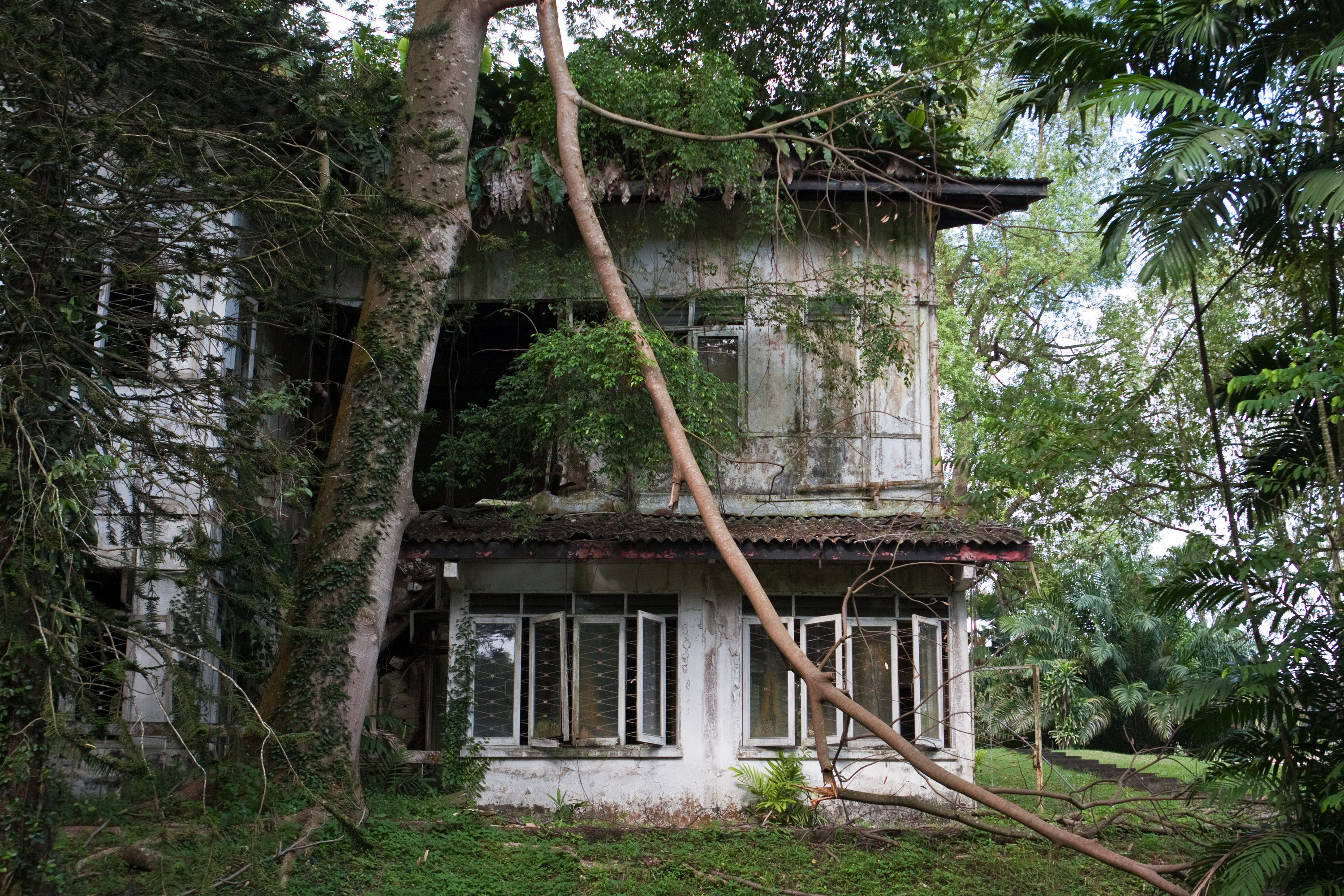
Somewhere in Singapore, a 133-hectare racecourse is sitting silent. A century-old school campus is being reborn as a lifestyle village. A riverside godown that once stored spices is now a boutique hotel with an international design award. And one of the most oversubscribed HDB estates in recent memory sits on land that last took burials in the 1970s.
In most property markets, "abandoned" is a dirty word. It conjures boarded-up windows, falling values, and capital fleeing to the next suburb. But the hidden value of abandoned buildings in Singapore is one of the most under-told stories in local real estate. Because in a country where land is the scarcest resource there is, a vacant building isn't a failure — it's a holding pattern. It's a plot of future value wrapped in ageing concrete, waiting for the right zoning, the right operator, or the right moment in the Master Plan.
This article explores how Singapore quietly turns dead buildings and disused land into mixed-use developments, what that means for surrounding property prices, and how you can learn to read the signs before the hoardings go up.
Why "Abandoned" Is the Wrong Word in Singapore
Singapore doesn't do urban decay the way other cities do. You won't find a Detroit-style grid of collapsed factories or a Tokyo neighbourhood of forgotten lots. With just over 700 square kilometres and nearly six million people, land is the country's most precious commodity — and the state owns most of it.
Who Owns Singapore's Land?
According to the Singapore Land Authority, roughly nine out of every ten hectares in Singapore are state land. That single fact explains almost everything about why "abandoned" buildings here are different. When the government is the ultimate landlord, vacancy is rarely an accident. It's a deliberate, patient strategy — land held back from the market until the right use, and the right price, arrives.
So what does "abandoned" actually mean in the Singapore context? Usually one of these:
- Institutions moved out. Schools relocate to new towns, armies redeploy, hospitals consolidate. The old campus or camp sits empty for a decade while planners decide its fate.
- Leases or licences ended. The Singapore Turf Club's lease wasn't renewed and horse racing stopped in October 2024, leaving a vast site at Kranji awaiting its next chapter.
- Industry relocated. Port operations are shifting to Tuas, freeing the entire southern waterfront. Manufacturing moved out of old estates decades ago, leaving industrial shells scattered around the island.
- Stigma lingered. Bidadari Cemetery closed in the 1970s, yet the land took decades to shake off its reputation before becoming one of Singapore's most desirable new towns.
- The market simply moved on. Older malls and office blocks lose tenants to shinier rivals, and the building slowly becomes a "zombie" — half-alive, half-empty, waiting for redevelopment economics to tip.
The important shift is in mindset. In Singapore, vacancy is often the planning stage, not the end state. The state's land bank functions like a portfolio: some properties generate income now, some are held for appreciation, and some are "sold" to the future via the Master Plan.
Meanwhile, the land isn't completely idle. Temporary occupation licences allow interim uses — container pop-ups, urban farms, sports pitches, art installations — so that a waiting site still generates life, and sometimes even revenue, while its long-term purpose is resolved.
The Quiet Machine Behind Singapore's Adaptive Reuse Boom
None of this happens by accident. Singapore has built an entire machinery for turning old buildings into new assets, and it runs on three interconnected systems: the URA Master Plan, conservation policy, and government land sales.
The Master Plan as a value map
The Urban Redevelopment Authority's Master Plan is, in effect, a 10-to-15-year land use blueprint for the whole island. It tells you what can be built where — residential zones, commercial corridors, mixed-use precincts, parks, and future MRT alignments. When a zoning changes, the land's theoretical value changes overnight, even if nothing is physically built.
This is why the Master Plan is read so obsessively by developers, investors, and sharp homebuyers. A site zoned "Business 2" might be worth a fraction of what it would be worth if rezoned for residential or mixed-use. The plan is the invisible force that decides whether an abandoned warehouse becomes a hotel, an office park, or a block of flats.
Conservation: the art of keeping and upgrading
Singapore is often dismissed as a tear-down-and-rebuild city, but its conservation programme is genuinely world-class. Buildings gazetted for conservation — shophouses, former schools, military barracks, even a brutalist shopping complex — are protected, but owners are given planning flexibility in exchange: alternative uses, bonus plot ratios, or relaxed rules, as long as the facade and character are preserved.
That flexibility is what makes adaptive reuse commercially viable. A conserved warehouse can become a hotel only because the planners allow it. A former military camp becomes an art cluster only because the "use" is allowed to change. Conservation in Singapore isn't a museum piece — it's a development mechanism.
Government land sales: releasing value on schedule
When the state finally decides a site's future, it typically releases the land through the Government Land Sales programme, or appoints a developer via tender. The timing is deliberate: parcels are pushed out when the market can absorb them, and reserve-list sites are released only when a developer triggers demand.
The result is a remarkably orderly pipeline. A site can sit "abandoned" for a decade, then move through planning, tender, construction, and launch in a matter of years. This is the machine that converts dead buildings into mixed-use landmarks.
The economics of a "dead" building
At its core, redevelopment is an arbitrage on highest and best use. A 19th-century godown on the Singapore River has a scrap value as a warehouse — and an enormous value as a boutique hotel or riverside restaurant. The gap between the two is the hidden value. Adaptive reuse captures that gap, usually with less construction cost and faster timelines than a full redevelopment would take.
And critically, the gains don't stay inside the project. Property analysts have long observed what might be called the announcement effect: prices in the surrounding area tend to react to planning news well before construction is visible. When the Master Plan flags an area for growth, when an airbase announces its departure, when a racecourse is confirmed for housing — the neighbourhood's property map re-rates before a single foundation is poured.
Five Rebirths That Rewrote Their Neighbourhoods
Singapore's landscape is littered with buildings that have lived multiple lives. A short walk around the island tells you more than any statistic. Here's the timeline:
New Bahru: from empty school to the island's trendiest mixed-use village
The most talked-about adaptive reuse project in years is New Bahru, which opened in 2024 at 46 Kim Yam Road in River Valley. For 13 years, the site was a quiet ghost: the former Nan Chiau High School campus, left vacant after the school moved to Sengkang.
Instead of demolishing the low-rise campus, the developers kept the school-block layout and turned it into a mixed-use lifestyle village with reportedly around 40 tenants — restaurants and bakeries, wellness studios, retail, and flexible community spaces. The classrooms became F&B outlets; the parade grounds became alfresco dining space.
New Bahru matters for property watchers for three reasons:
- It proves that prime-district land held vacant for over a decade can be unlocked without demolition.
- It shows that curated, heritage-led mixed-use developments can become destination anchors that boost the surrounding lifestyle corridor — in this case, the stretch running from Robertson Quay to Fort Canning.
- It signals that the state and private players are comfortable waiting for the right concept, not just the right price.
River Valley is already an premium district, so New Bahru isn't going to single-handedly transform its location. But it strengthens the area's "cultural capital" — and cultural capital is something buyers consistently pay for.
Gillman Barracks: the army camp that gentrified a corridor
In 2012, a former British military barracks built in 1936 reopened as Gillman Barracks, a contemporary art cluster with galleries from around the world. The colonial buildings — conserved and meticulously restored — became a cultural destination along Alexandra Road.
What's often forgotten is the strategic intention. The government deliberately used arts and culture to soften and rebrand the Alexandra corridor: a zone that was once a mix of military camps, port logistics, and industrial facilities. Within a decade, the surrounding area was transformed. Mapletree Business City rose nearby, new condominiums sprouted along Alexandra Road and the Rail Corridor, and the entire southern stretch of central Singapore was repositioned as a desirable, connected address.
The lesson: a well-placed "abandoned" military site, paired with the right cultural anchor, can change how an entire district is perceived — and perceived is eventually how it's priced.
The Warehouse Hotel: a 19th-century godown becomes a design icon
Along Robertson Quay stands The Warehouse Hotel, built in 1895 as a riverside godown for spices and household goods. For years, it languished — a dilapidated shell in a neighbourhood still shaking off its industrial past.
In 2017, it reopened as a 37-room boutique hotel, with original concrete columns and warehouse bones intact. It won international design awards and became the poster child for Singapore River's transformation from cargo corridor to lifestyle strip.
The hotel's rebirth is a microcosm of what happened to Robertson Quay as a whole. Two decades ago, the area was functional but rough; today it's one of Singapore's most desirable addresses, surrounded by new riverside condominiums that trade at a significant premium. The warehouse-to-hotel conversion was both a symptom and a catalyst of that change.
Bidadari: from cemetery to the most wanted HDB town
Perhaps the boldest demonstration of hidden value isn't a building at all — it's an entire estate. Bidadari was a cemetery from the early 20th century until burials ceased in the 1970s. For decades, the land sat in public memory as a place of mourning, quietly waiting for its next life.
From the mid-2010s, Bidadari was redeveloped into a new town with roughly 10,000 public and private homes, the Alkaff Lake as its centrepiece, and Woodleigh and Bartley MRT stations on its doorstep. The BTO launches were consistently among the most oversubscribed of their time, and resale flats there have reportedly commanded healthy premiums over their original launch prices.
Bidadari proves the most important rule of Singapore's land game: stigma is temporary, zoning is permanent. Once the Master Plan re-labelled the land as a premier new town, the old reputation evaporated. Buyers who overcame the "cemetery discount" early — both among BTO applicants and early resale buyers — were rewarded as the estate matured.
Funan, Golden Mile, and St James: three honourable mentions
- Funan (City Hall): the dated DigitaLife Mall was torn down and rebuilt as an integrated development with retail, offices, and even an urban farm, reopening in 2019. A tired building with a prime plot became a mixed-use landmark.
- Golden Mile Complex (Beach Road): the 1973 brutalist icon was gazetted for conservation in 2021 and sold en bloc in 2022 for around S$700 million, proving that even ageing strata-titled buildings have enormous latent value.
- St James Power Station (HarbourFront): a 1927 coal-fired power station that reopened in 2006 as one of Singapore's most famous entertainment venues — the granddaddy of industrial adaptive reuse.
What these case studies tell us
| Project | Former life | New life | Location | Year of rebirth |
|---|---|---|---|---|
| New Bahru | Nan Chiau High School campus | Mixed-use lifestyle hub | River Valley (District 9) | 2024 |
| Gillman Barracks | 1936 British military barracks | Contemporary art cluster | Alexandra corridor | 2012 |
| The Warehouse Hotel | 1895 spice godown | 37-room boutique hotel | Robertson Quay (District 9) | 2017 |
| Bidadari | Cemetery closed in the 1970s | New town with public and private housing | Potong Pasir (District 13) | Mid-2010s onward |
| Funan | Funan DigitaLife Mall | Mixed-use development with retail and offices | City Hall | 2019 |
The common thread: every single rebirth was state-led or state-enabled. The Master Plan changed the use; conservation rules shaped the approach; the land sales pipeline provided the discipline. In Singapore, the "hidden value" of an abandoned building is essentially the difference between its current zoning and its next zoning.
The Next Wave: Where Vacant Land Becomes Valuable
If you think the story is over, look at the size of what's coming. The next generation of "abandoned" sites dwarfs everything that came before.
Size of Singapore's Next Redevelopment Frontiers (hectares)
The Singapore Turf Club site at Kranji
Horse racing ended at Kranji in October 2024, and the 133-hectare site — roughly the size of 180 football fields — is being handed back to the state. The government has been clear: this will become a major new residential area, reportedly housing around 20,000 homes, alongside parks and community facilities.
- What it means: The north-west region (Kranji, Woodlands, Choa Chu Kang) will gain an entirely new town. Existing HDB towns nearby could see renewed interest as the area's status rises.
- The catch: This is a multi-decade project. The first parcels may only come out towards the end of this decade, and full build-out will stretch far beyond. Patient investors take note; impatient ones move on.
Paya Lebar Air Base
The relocation of Paya Lebar Air Base to Changi, targeted around 2030, will free up approximately 800 hectares across eastern Singapore — an area larger than many mature towns. The land spans from Paya Lebar through towards Tampines and Bedok.
There's a subtle detail here that property watchers are following closely: the airbase has long imposed building height restrictions on surrounding areas for flight safety. When the base relocates, those limits can be relaxed over time, unlocking higher-density redevelopment potential for older low-rise buildings and underused land in the east. A quiet industrial site near the base today could become a mid-rise or high-rise mixed-use development tomorrow.
The Greater Southern Waterfront
The biggest prize of all is the Greater Southern Waterfront — roughly 1,000 hectares and 30 kilometres of coastline stretching from Marina East to Pasir Panjang. This is the land currently occupied by the port terminals at Tanjong Pagar, Keppel, and Brani, which will progressively relocate to Tuas through the 2020s and 2030s.
The government has flagged this as potentially the largest urban transformation since the modern city was built: new housing, offices, waterfront parks, and what could effectively become a second downtown along the southern coast. Areas like Bukit Merah, Telok Blangah, and Pasir Panjang are already seeing development interest in anticipation.
Homes planned at these sites
Approximate Homes Planned at Former Institutional Sites
The Rail Corridor precedent
For a sense of how fast perceptions shift, look at the Rail Corridor. When the KTM railway closed in 2011, the 24-kilometre strip of land could have become a development free-for-all. Instead, it was turned into one of Singapore's most beloved green corridors, stitching together communities from Woodlands to the city.
And yet, even this "non-development" created property value. The areas bordering the Rail Corridor — Bukit Timah, Queenstown, the Alexandra precinct — gained a permanent amenity that supports residential demand to this day. Green space, like art clusters and lifestyle villages, is itself a form of uplift.
| Site | Approximate size | Planned use | Where | Indicative timing |
|---|---|---|---|---|
| Singapore Turf Club | 133 hectares | Public and private housing, parks, community facilities | Kranji (District 25) | First parcels late this decade; full build-out over decades |
| Paya Lebar Air Base | about 800 hectares | Future housing, commercial, and community uses | Eastern Singapore, Paya Lebar toward Tampines | Phased after relocation, targeted around 2030 |
| Greater Southern Waterfront | about 1,000 hectares | Housing, offices, waterfront parks | Southern coast, Marina East to Pasir Panjang | Phased through the 2030s and 2040s |
How to Read a Dead Building: A Buyer's Checklist
You don't need an insider network to spot the hidden value in an underused site. You need the right lens and a willingness to look at a building's future use rather than its present state.
Five signals worth watching
| Signal | Where to verify | Why it matters | Watch out for |
|---|---|---|---|
| Zoning or plot-ratio change | URA Master Plan | Intended use drives land value more than the current building does | Master Plans get revised and timelines slip |
| New MRT stations or lines | Land Transport Master Plan | Connectivity lifts catchment demand across nearby resale and new homes | Construction delays of several years are common |
| State land tenders and interim leases | SLA and URA announcements | Signals exactly when a vacant site will be unlocked | Tenders can be withdrawn or deferred |
| Conservation gazetting | URA conservation portal | Heritage status tends to stabilise and lift neighbourhood values | Strict renovation and development controls apply |
| En bloc momentum | Owners' committees and news reports | A windfall event that resets the land value of an ageing site | Needs 80 per cent owner consent and can fail |
The investor's cheat sheet
- Buy before the announcement, not after. By the time the new MRT station or redevelopment is front-page news, much of the uplift is priced in. The rewards go to those reading the Master Plan and transport blueprints early.
- State land is a longer clock. Government parcels are released methodically. The gap between announcement and completion can be five to fifteen years, depending on the site. Make sure your holding period matches.
- Conservation is a double-edged sword. It protects an area from ugly redevelopment and usually supports values, but it also caps density. Heritage premiums are real but slow.
- Height restrictions are the sleeper factor. When constraints like airbase flight paths are lifted, previously capped sites can gain enormous development potential. Watch the east as Paya Lebar transitions.
- Every project has a "stigma discount" phase. Whether it's a cemetery, a racecourse, or an industrial estate, there's a moment when the old reputation suppresses prices. That's exactly when the smart money starts looking.
The risks nobody mentions
- Timelines slip. Ports, airbases, and racecourses don't move on schedule. The Greater Southern Waterfront has already seen its horizon extend deep into the 2040s.
- Supply can overshoot. When massive land banks release housing, they add supply to the surrounding market. The uplift for nearby owners isn't automatic; it depends on demand keeping pace.
- En bloc deals fail. Collective sales need 80 per cent consent, and a single holdout can kill a deal that took years to assemble.
- The "announcement effect" cuts both ways. Prices can soften once the news is out and the market has digested it. Buying the rumour and selling the news applies to buildings, too.
Food for Thought
If Singapore turned a cemetery into one of its most sought-after HDB towns, how much should you distrust the "reputation discount" on any stigmatised site today?
Would you rather buy next to a moribund building on the cusp of redevelopment — and tolerate years of uncertainty — or wait for the official announcement and pay the certainty premium?
When the Paya Lebar Air Base height limits finally lift, which of today's low-rise industrial buildings in the east suddenly become the most valuable parcels of land you've never noticed?
Is the state's patient "waiting game" with land a public service, or does it quietly inflate prices by controlling supply?
Which of today's ageing buildings — the tired 1990s malls, the 40-year-old offices, the aging sports complexes — will be the celebrated adaptive-reuse icons of 2040?
Conclusion
The hidden value of abandoned buildings in Singapore isn't really about the buildings at all. It's about the planning system that surrounds them: the Master Plan that re-labels a school as a lifestyle village, the conservation rules that let a godown become a hotel, the land-sales pipeline that turns a racecourse into a town of 20,000 homes. Every "dead" building is a data point in a much larger map of future value — and the map is public, patient, and surprisingly readable.