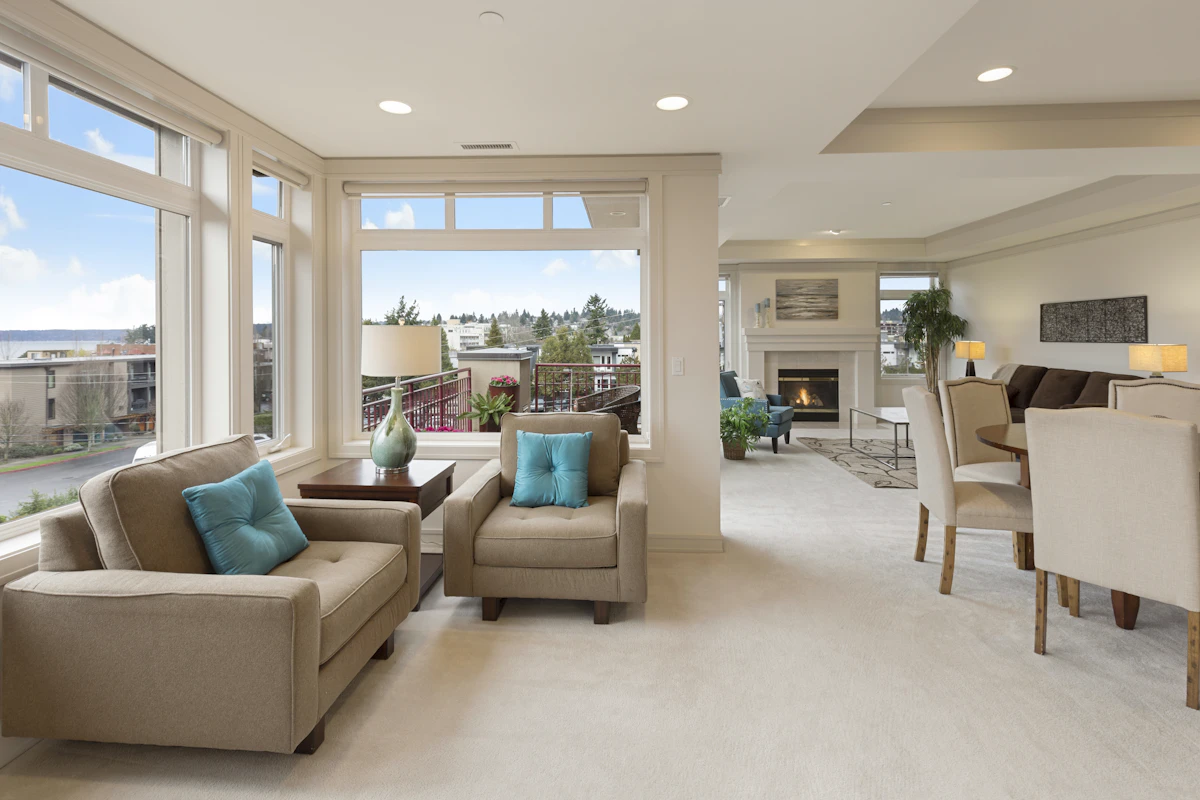
It starts with a 30-second video. A young couple films a walkthrough of their new BTO flat in Punggol — not a single word spoken, just a syncopated beat, a slow pan across a minimalist kitchen, and a text overlay: "What RM1,000/month gets you in Singapore." Before you know it, you've watched seven more videos, all narrated by bots or chirpy 20-somethings dissecting HDB grants, ABSD rules, and the "best secret MRT station no one is talking about." Somewhere between the dance trends and cooking hacks, you have become a property researcher.
Welcome to the era where TikTok is the new property agent. For Gen Z and millennials in Singapore, the black-and-white profile headshot token from the 1980s has been replaced by a pixelated grid of short-form videos. Whether you're procrastinating before bed or genuinely queuing an HDB flat, TikTok's algorithm has become a primary source of property inspiration — and sometimes, surprisingly solid financial education. But as with any viral medium, it comes with a heavy dose of hype. Here's how to navigate it.
The Algorithm as a Property Showroom
TikTok's rise as a search engine is well-documented. In 2023, global reports claimed the app was being used by younger demographics half the time they'd previously use Google, and real estate emerged as one of the most surprising categories in the so-called "SearchTok" trend. In Singapore, where housing is a national obsession, property content went from niche to mainstream in roughly two years.
Today, a simple search for #propertytokSG returns thousands of videos ranging from genuine agent listing tours to amateur TikTokers explaining the mechanics of SORA rates (usually in 45 seconds or less). The algorithm doesn't care whether a video comes from a licensed agent or a bored 25-year-old with a strong opinion. It only cares about watch time, saves, and shares. A video of a 3-room HDB renovation that cost $40,000 will outperform a professionally produced studio feature if the former has better relatability.
This has fundamentally changed how young buyers discover homes. Previously, you might browse PropertyGuru and then arrange a viewing. Now, the journey often looks like this:
The result is a generation that walks into viewings with visual expectations set by social media. They've already seen three versions of the kitchen layout before the agent opens the door. This isn't inherently bad — it makes buyers more efficient — but it introduces a new layer of "vibe" perception that statistics alone can't capture.
What Type of Property Content Actually Goes Viral?
Not all TikTok property videos are created equal. By observing the trending patterns across a typical month, we can break down the kinds of videos that dominate the local platform:
| Content Type | Typical Format | Why It Works | Example |
|---|---|---|---|
| Raw HDB Tours | 15-30s walkthroughs, no music, minimal edits | Feels authentic, "real estate hustle" energy | A couple walking through a 5-room flat in Bidadari |
| Renovation Before/After | Split screen, budget breakdown listed in captions | Taps into inspiration + cost envy | $60K makeover of a 4-room flat in Tampines |
| Financial Explainers | Whiteboard drawing, speaking to camera | Solves a painful math problem | "How much CPF should you use for your downpayment?" |
| Lifestyle & Area Vibe | Neighbourhood montage, café-hopping clips | Sells a feeling, not a unit | "24 hours living in Punggol" |
| Agent Listing Hype | Fast cuts, dramatic zooms, "rare gem" phrases | High production, low information | New condo launch video at Lentor |
| Satire/Parody | Meme-style skits about property struggles | Relatability leads to high share count | "POV: You ask for 10% discount on HDB resale" |
The virality often doesn't match the price of the property. A video about a $350,000 3-room flat in Jurong West can get more views than a $3 million penthouse in Sentosa because the former is aspirational to the majority of the platform's demographic. This skews the conversation toward affordability, grants, and "hidden gems" — a stark contrast to traditional property media's focus on luxury and prestige.
Why HDB > Condo in the TikTok Economy
In 2024, TikTok in Singapore became an unintentional champion of HDB living. Condo listings tend to look homogenous — marble floors, infinity pools, branded appliances. HDB flats, on the other hand, are infinitely customisable. Each renovation is uniquely messy and personal. They tell a story.
This has a measurable influence on preferences. When a specific renovation goes viral — say, an open-concept kitchen in a 5-room flat — it drives expectations for all 5-room flats in that area. Buyers begin asking agents, "Why doesn't this flat have a feature wall like the one on TikTok?" rather than using data like price per square foot (PSF) to compare value.
But the impact goes deeper. TikTok has reshaped the perception of certain districts. In the past, a district like Punggol was described by its "remote" location. Today, after dozens of videos showing the Punggol Waterway, new cafes, and the "snow city at Lot One," the area is often framed as a modern digital district. This isn't just a change in narrative; it can arguably be seen in the price trends of younger resale flats there.
HDB Resale Price Growth by Town (2021-2024)
The chart above reflects the trend observed in official HDB resale statistics; the towns that became TikTok darlings — Punggol especially — saw above-average growth during this period. While correlation isn't causation, the social-media-driven demand for "younger, cleaner, aesthetic" estates has played a role in buyer preference. When a district is continuously presented as "up-and-coming," the perceived risk of buying there drops, which makes buyers willing to pay a small premium.
Similarly, certain styles of interior design go viral with cohort effects. A "Scandi-minimalist" theme that gets 2 million likes in March can create a shortage of light-wood laminate flooring by April. Vendors picking up on these trends are then more likely to claim their flat is "TikTok-ready," justifying a higher asking price. You're not just paying for the flat; you're paying for the aesthetic that the app made you hungry for.
The Rise of the "FinTok" Property Advisor
Beyond the beautiful houses, the most impactful TikTok property content in Singapore might be the financial advice. Accounts that explain HDB grants, CPF usage, and ABSD in simple, 60-second snippets have amassed hundred-thousand follower counts. They fill a vacuum left by complex government brochures and jargon-heavy bank websites.
These finTok creators perform a valuable service: they make younger buyers aware of schemes they'd otherwise miss — the Enhanced CPF Housing Grant (EHG), the Proximity Housing Grant, deferred downpayment schemes, and how to calculate your Total Debt Servicing Ratio (TDSR) without an Excel spreadsheet. As a result, first-time buyers are arriving at viewings significantly better informed than previous generations. This is a form of empowerment that traditional channels struggled to achieve.
Take the financing process. It's a multi-step journey that TikTok has gamified:
The problem emerges when simplification crosses into misinformation. The 60-second format isn't built for caveats. A video saying "just use your CPF for the whole downpayment!" might be valid in specific cases but dangerous as a blanket rule. Creators who aren't licensed advisors don't have to make a reasonable effort to be accurate — they just need to be engaging.
We saw this when an unverified claim about a new "grant for all single buyers" circulated in 2023. It racked up millions of views before HDB had to issue a clarification on its own social channels. For a first-time buyer who watches five videos in the morning and applies for a flat in the afternoon, the risk of acting on faulty information is real.
Spotting Bad Property Advice on TikTok
Here are a few red flags to look out for:
- Absolute statements — Any video that says "always" or "never" regarding property purchase (e.g., "Never buy a leasehold property") ignores nuance.
- No citations — Good creators say "according to HDB's 2024 data"; bad ones say "I know for a fact."
- Mic drop pricing — Videos that claim "units sell out in one day" without specifying the project or period.
- Guaranteed rental yields — In Singapore, rental yields for condos vary wildly. Anyone quoting a single number for "the market" is oversimplifying.
- Promo code pressure — Some property "influencers" are tied to agents or banks and earn commissions, which influences their recommendations. You wouldn't trust a salesperson who doesn't disclose their commission in real life, so why trust them on TikTok?
The Psychology of FOMO and the "TikTok Home"
Perhaps the most dangerous effect of TikTok on the property market is the generation of artificial FOMO (fear of missing out). When you watch three videos in a row about a new launch at the same location — each one using a countdown timer and an urgent voiceover — your brain interprets this as "The market is heating up." You might rush into a BTO application or a resale decision without running the proper math.
Data from the resale market shows that property prices in Singapore have grown steadily, but not with the hockey-stick growth that some TikTok reels imply. Consider the average price growth of 3-room HDB flats across selected years:
Average Resale Price of 3-Room HDB Flats in Singapore (Selected Years)
The trajectory is upward, but it's not a frenzy. When a TikTok video shows an apartment's current price next to its price three years ago, it rarely accounts for inflation rates, renovation costs, or time value of money. They compare a freehold condo bought in 2021 with one sold in 2024 without mentioning that the economy bounced back from a pandemic. That creates a false narrative that "everything doubles in value," which simply isn't the case across the board.
Another side effect is the "TikTok home" aesthetic trap. Buyers become so anchored on the idea of an open-concept kitchen with a huge island that they overlook practical considerations like storage, ventilation, and future resale potential. Customisation is wonderful, but over-personalisation can actually hurt resale value — a future buyer might not share your taste for a bedroom with a sunken floor or a step-down living area.
How to Use TikTok as a First-Time Buyer (Without Losing Your Head)
The platform is too powerful to ignore, so the strategy is to use it like a professional. Property agents, after all, won't let you walk into a viewing without research. Here's your checklist for turning TikTok from a hype machine into an actual tool:
| Do This | Avoid This |
|---|---|
| A-list creators who cite official sources | Anonymous meme accounts that share "market insights" |
| Save videos for comparison, then verify on HDB's app or a property portal | Making offers based on a video's suggestion alone |
Search by area code (e.g., #D15) to see diverse neighbourhood voices | Chasing "one-of-a-kind" properties because they look amazing in 4K |
| Check the video date — property data from 2022 is outdated in 2025 | Using sensational headlines as a substitute for rental yield calculations |
| Cross-reference renovation costs with actual quotations | Assuming a viral renovation fits your budget without itemising |
| Use TikTok for discovery, then use Hiva for analysis | Asking the comment section for financial advice about your specific situation |
The most successful approach is to treat TikTok as the "inspiration stage." It's where you build your mood boards and your understanding of the lingo. Then, once you know what you want, switch to verified data sources. That's where you check price trends per square foot, district scores, and projected growth. The creative and the analytical parts of your brain should be fed by different platforms.
The Verdict: An Unlicensed Agent With 100,000 Followers
So, is TikTok genuinely the new property agent? In terms of influence, absolutely. It shapes first impressions, sets aesthetic trends, and even moves the needle on price expectations. In terms of accuracy and accountability, it's still the Wild West. There are gems on the platform — well-researched breakdowns of CPI vs. SRX indices, honest assessments of HDB lease decay, and genuinely funny cautionary tales — but you must be willing to do your own due diligence.
Remember, a property agent has a legal duty to act in your best interest and abide by codes of conduct. A TikTok creator, on the other hand, has a duty to be engaging. You wouldn't trust your life savings to a 30-second video, but you can trust it to point you in the right direction — if you verify what you've learned before signing anything.
Food for Thought
Before you dive into the next #PropertyTok session, consider these questions:
- How much of your perception of a district comes from videos vs. experience? If a neighbourhood's local food scene gets 2 million views, does that make it a better investment than a quieter, cheaper area?
- are you paying for the flat or the aesthetic? Would you pay $10,000 more for a "TikTok-ready" interior that you'd have to undo before resale?
- Can you spot the influencer's agenda? Is the creator licensed, or are they getting a commission from the developer they're promoting?
- What if the advice is wrong? Have you set aside time to consult an actual financial advisor or use a data platform to validate the numbers?
- Are you FOMO-ing or investing? If a video of a property launch causes your anxiety to spike, ask yourself: "Would I buy this in six months when I've slept on it?" If the answer is still yes, then it's not FOMO — it's conviction.