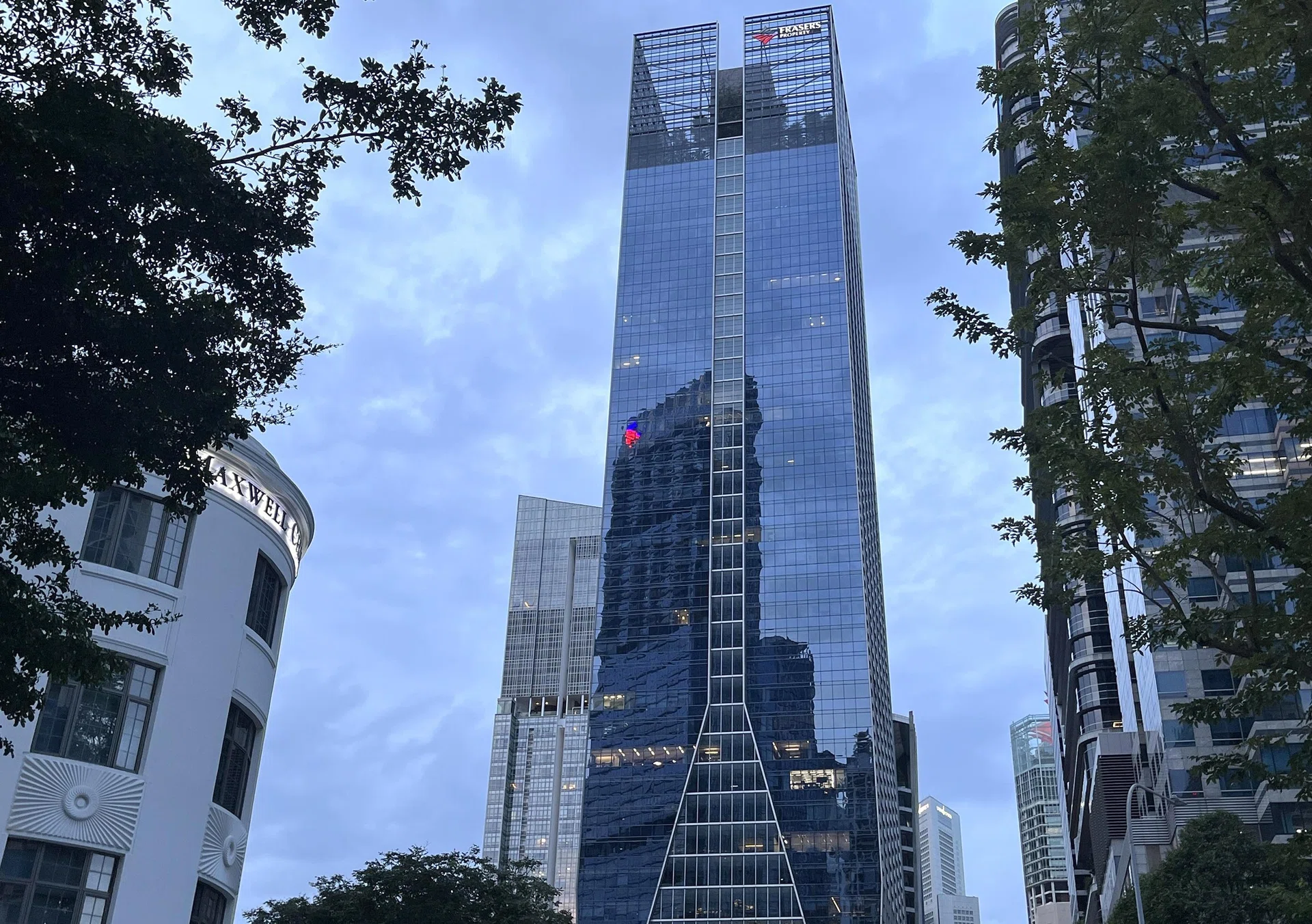
The potential S$5.7 billion Marina One mega deal is not merely another office sale. It is a test of how much institutional capital will pay for immediate control of approximately 2.02 million sq ft of commercial space in one of Singapore’s tightest prime-office markets. But the headline needs a crucial qualifier: S$5.7 billion is the seller’s reported target—not a disclosed bid, agreed consideration or completed transaction.
Market reports have identified Hongkong Land as the preferred bidder and CapitaLand as a rival participant. Yet, as of 2 August 2026, no public announcement reviewed has confirmed a binding sale-and-purchase agreement, deposit, financing package, regulatory clearance or completion date. An award could potentially arrive in August, according to the reported timetable, but even an award would not necessarily mean that the transaction had completed.
The distinction matters because, if signed and completed near the reported target, Marina One’s commercial components could reset the benchmark for large Singapore property transactions. If negotiations do not produce a deal, the process may instead reveal the price ceiling institutional buyers are willing to accept—even for rare, large-scale Marina Bay offices.
Marina One mega deal: What has actually been reported?
Marina One is owned by M+S Pte Ltd, a joint venture held 60:40 by Malaysia’s Khazanah Nasional and Singapore’s Temasek. The integrated development officially opened in January 2018 and comprises two office towers, a retail podium, two residential towers and the landscaped “Green Heart”.
The prospective sale concerns only the commercial components:
- Two 30-storey Grade A office towers
- Approximately 1.88 million sq ft of office net lettable area
- Approximately 140,000 sq ft of retail space across four levels
- A combined commercial net lettable area of approximately 2.02 million sq ft
The 1,042 apartments in Marina One Residences are excluded.
January reporting said M+S was considering a sale at between S$5 billion and S$6 billion, with JLL and Eastdil Secured reportedly engaged as advisers. It also indicated that the assets could be divided if no purchaser emerged for the entire commercial complex, according to a Business Times report republished by Citi Commercial.
In May, Bloomberg reported that M+S was seeking approximately S$5.7 billion, naming CapitaLand and Hongkong Land among possible bidders. Bloomberg cautioned that the deliberations were preliminary and might not result in a transaction.
In June, Mingtiandi cited market sources saying Hongkong Land had become the preferred bidder and was expected to enter exclusive negotiations. Neither M+S nor the reported bidders publicly confirmed that account.
The clearest way to understand the status is to separate reported information from established transaction facts.
| Item | Position as of 2 August 2026 |
|---|---|
| Seller | M+S Pte Ltd |
| Shareholders of M+S | Khazanah Nasional at 60%; Temasek at 40% |
| Assets marketed | Two office towers and about 140,000 sq ft of retail space |
| Residential apartments | Excluded |
| Initial reported guidance | S$5 billion to S$6 billion |
| Later reported target | Approximately S$5.7 billion |
| Reported preferred bidder | Hongkong Land |
| Other reported participant | CapitaLand |
| Monetary value of bids | Not publicly disclosed |
| Binding agreement | No public confirmation found |
| Possible award | Reportedly could come in August |
| Legal completion | No date publicly confirmed |
Seller target, preferred bidder and completed deal are different stages
Property-sale language can make a transaction sound more settled than it is. In reality, several commercial and legal steps may sit between the launch of a sale process and the transfer of an asset.
The public reporting places Marina One somewhere around the preferred-bidder or negotiation stage—not at legal completion.
A preferred bidder may receive a period in which to conduct due diligence and negotiate documentation. That status can still change if the parties cannot agree on price adjustments, warranties, financing, conditions or transaction structure.
Similarly, an “award” could mean that a seller has chosen a party with which to proceed. It does not automatically establish that:
- The buyer has signed an unconditional agreement
- A deposit has been paid
- Financing is committed
- Partner or regulatory approvals are complete
- The asset has transferred
- The seller has received the full consideration
Hongkong Land’s interim results on 28 July 2026 discussed its Singapore fund and acquisition capacity but did not announce a Marina One transaction. That omission does not prove negotiations are inactive; it simply means the disclosure did not provide the confirmation required to call Marina One a completed deal.
The accurate formulation remains: M+S is reportedly targeting about S$5.7 billion, and Hongkong Land has reportedly become the preferred bidder. No agreed price or completed sale has been announced.
What would a buyer actually acquire?
Marina One’s identity as an integrated development can obscure the composition of the proposed transaction. The buyer would not be acquiring every part of the familiar Marina Bay complex.
According to Marina One’s official specifications, the development includes two Grade A office towers, retail premises and separate residential towers. The reported sale package contains the office and retail portions only.
| Commercial component | Approximate net lettable area | Share of commercial NLA |
|---|---|---|
| Offices | 1.88 million sq ft | 93.1% |
| Retail | 140,000 sq ft | 6.9% |
| Total | 2.02 million sq ft | 100% |
Marina One Commercial Net Lettable Area
The numbers show that this is overwhelmingly an office investment. The retail podium plays an important supporting role—providing food, fitness, services and everyday convenience—but accounts for less than 7% of the reported commercial floor area.
That distinction affects valuation. Office and retail space generally have different rents, leasing risks, operating costs and capitalisation rates. A simple blended price per square foot can illustrate scale, but it cannot reveal how a buyer values each component.
The office towers are built for major occupiers
Reported tenants include Meta, PwC, Julius Baer, MUFG and Singlife, alongside other financial, technology and professional-services businesses. BNY and ANZ have also reportedly taken or planned moves into space.
The physical specifications are particularly relevant for large organisations:
- Typical floor plates reportedly range from approximately 34,000 sq ft to more than 40,000 sq ft
- Connected high-density “superfloors” provide approximately 100,000 sq ft
- The buildings can accommodate large teams across contiguous space
- Marina Bay offers direct access to Singapore’s financial and business district
- Marina One holds BCA Green Mark Platinum and LEED Platinum credentials
Large floor plates can improve workplace efficiency and internal connectivity. They are also difficult to reproduce in older CBD buildings, giving Marina One a potentially defensible leasing proposition.
The same feature creates concentration risk. If one major tenant returns or downsizes a large block, the landlord may need to lease a substantial amount of space at once. The effect on income depends on the lease-expiry profile, tenant incentives, fit-out requirements and demand for comparable contiguous premises.
The retail podium supports the office ecosystem
Reported retail occupants include Cold Storage, Virgin Active, Luckin Coffee, Smeg and 1855, together with food-and-beverage and service businesses.
This retail space should not automatically be valued like an Orchard Road shopping centre or a dominant heartland mall. Its role is closely linked to Marina One’s weekday office population, residents, nearby workers and visitors.
For a buyer, the retail strategy would probably focus on:
- Maintaining useful daily amenities
- Improving lunchtime and after-work footfall
- Curating food, wellness and service offerings
- Supporting office-tenant retention
- Activating common areas and the Green Heart
- Balancing destination concepts against dependable convenience trades
A well-run retail podium can enhance the overall office asset even when it represents a small share of total floor area. Conversely, weak occupancy or an unbalanced tenant mix can make an otherwise premium office complex feel less complete.
The structure may allow alternatives to a whole-asset sale
The office space is understood to have been divided into three strata lots under planning permission granted in 2018, while the retail area reportedly consists of 46 strata lots.
That structure may provide M+S with alternatives if a whole-complex transaction does not proceed. It could potentially divest components separately, subject to legal, commercial and management considerations.
A breakup could broaden the pool of buyers because fewer investors can fund an acquisition approaching S$6 billion. But separate sales would introduce other questions:
- How would value be allocated among the office lots?
- Would different owners align on leasing and capital expenditure?
- Who would control retail curation and common-area strategy?
- Could fragmented ownership weaken the integrated proposition?
- Would individual lots attract a premium or a control discount?
For a strategic buyer, keeping the commercial complex intact may offer greater control. For the seller, a piecemeal route could produce different pricing outcomes but take longer and involve more execution risk.
What does the S$5.7 billion Marina One valuation imply?
The reported target sounds enormous because it is. At S$5.7 billion, a basic calculation over the approximately 2.02 million sq ft of combined commercial net lettable area gives an indicative blended figure of about S$2,822 psf.
The broader reported guidance produces the following range:
| Assumed consideration | Indicative blended price over 2.02 million sq ft |
|---|---|
| S$5.0 billion | S$2,475 psf |
| S$5.7 billion | S$2,822 psf |
| S$6.0 billion | S$2,970 psf |
Implied Marina One Blended Pricing by Assumed Consideration
These figures are analytical ratios, not disclosed transaction prices. They combine office and retail NLA even though each component would ordinarily have its own income, risk and value.
Dividing S$5.7 billion by the office area alone would produce approximately S$3,032 psf, but that is not a valid office-only valuation. It would effectively assign no value to the retail space.
Why the acquisition yield cannot yet be calculated
A large commercial property is ultimately underwritten on income and risk, not headline price alone. To estimate an acquisition yield reliably, investors would need information that has not been publicly disclosed.
That includes:
- Passing office and retail rents
- Current occupancy
- Net property income
- Operating expenses
- Weighted average lease expiry
- Tenant incentives and rent-free periods
- Upcoming lease breaks and expiries
- Capital expenditure commitments
- Price allocation between the office and retail portions
- Financing costs and debt structure
- Treatment of GST and transaction expenses
A buyer may also make different assumptions about rental reversion. If existing leases were signed below current market rents, future renewals could lift income. If significant tenants are already paying strong rents or require costly incentives to renew, the upside may be smaller.
At this scale, seemingly modest assumption changes can have a large impact on value. A small shift in stabilised occupancy, market rent, operating expenses or required yield can translate into hundreds of millions of dollars.
The target is above a previous valuation reference
In 2020, M+S secured a S$1.95 billion green loan. At the time, the office and retail components were described as having an approximate value of S$5 billion, according to OCBC.
The reported S$5.7 billion target is 14% above that reference.
However, this is not a like-for-like transaction comparison. The 2020 number was a valuation description associated with financing, not the price from an arm’s-length sale. Market rents, interest rates, occupancy expectations and investor return requirements have also changed.
Leasehold tenure remains part of the equation
Marina One’s land is held on a 99-year lease beginning 1 July 2011, leaving approximately 84 years at the start of 2026.
That is still a substantial remaining term, but it is not freehold. Long-term underwriting must account for the gradual reduction of the residual lease, particularly if an investor expects to hold the property for decades or sell it into a future market with different financing and tenure preferences.
The leasehold nature also complicates direct comparisons with assets such as Paragon, which is freehold. Two properties may trade at similar headline values while presenting very different income profiles, tenure risks and redevelopment options.
Reported bidders: Why Hongkong Land and CapitaLand make sense
Only a limited group of investors could realistically pursue a multi-billion-dollar commercial complex. A bidder would need access to large amounts of equity and debt, institutional partners, commercial-property operating expertise and the capacity to absorb significant concentration in one location.
Hongkong Land and CapitaLand both fit that broad profile, although their exact bids and proposed structures have not been disclosed.
Hongkong Land and the Marina Bay scale argument
Hongkong Land is the most strategically obvious candidate because it already has extensive exposure to Marina Bay and Singapore’s prime commercial market.
In February 2026, it launched the Singapore Central Private Real Estate Fund, or SCPREF, with:
- S$8.2 billion of gross asset value
- Approximately 2.6 million sq ft of effective NLA
- Qatar Investment Authority, APG and a Southeast Asian sovereign investor as founding partners
- Interests in Asia Square Tower 1
- Interests in Marina Bay Financial Centre Towers 1 and 2
- Interests in Marina Bay Link Mall, One Raffles Quay and One Raffles Link
The fund’s mandate includes acquiring high-quality commercial assets in Singapore’s CBD and Orchard Road, according to the Hongkong Land announcement.
If the full Marina One commercial complex were added at S$5.7 billion, that amount would equal approximately 69.5% of the fund’s S$8.2 billion starting asset base. Adding 2.02 million sq ft would increase effective NLA from 2.6 million to approximately 4.62 million sq ft, or by about 78%.
| SCPREF scale illustration | Before hypothetical acquisition | After adding Marina One |
|---|---|---|
| Gross asset value | S$8.2 billion | S$13.9 billion |
| Effective NLA | 2.6 million sq ft | 4.62 million sq ft |
| Increase in NLA | — | Approximately 78% |
Illustrative SCPREF Effective NLA Before and After Marina One
This is only a scale illustration. It does not establish that Marina One would be placed entirely into SCPREF, that the fund would pay S$5.7 billion or that Hongkong Land would hold the same economic share throughout. A consortium, fund-level investment, syndication or other structure could produce different ownership outcomes.
Still, the strategic logic is visible. A landlord with a larger Marina Bay portfolio may gain:
- More leasing data across comparable buildings
- Greater ability to accommodate tenants moving between assets
- Procurement and operating efficiencies
- Stronger relationships with major occupiers
- Greater influence over rental benchmarks
- Opportunities to coordinate amenities and placemaking
The trade-off is concentration. A very large Marina Bay portfolio becomes more exposed to the same tenant industries, leasing cycle and geographic submarket.
Hongkong Land also acquired a 10.8% stake in Suntec REIT for S$541 million in March 2026, reinforcing its stated conviction in Singapore commercial real estate, according to Jardines.
CapitaLand and capital-deployment discipline
CapitaLand was named as another possible bidder in Bloomberg’s May report. Its fund-management platform, operating experience and access to institutional capital make it a credible participant in a transaction of this nature.
Subsequent market reporting said CapitaLand’s offer fell short and Hongkong Land moved into preferred-bidder negotiations. However:
- No CapitaLand bid value has been disclosed
- CapitaLand has not publicly confirmed losing the process
- There is no public confirmation that it withdrew
- The difference between the reported offers is unknown
CapitaLand and CapitaLand Integrated Commercial Trust have also been active in other major transactions, including arrangements concerning the S$3.9 billion Paragon acquisition and the S$2.476 billion Asia Square Tower 2 divestment, according to CapitaLand.
Those transactions provide context for bidding discipline. Even a buyer with substantial capacity must decide how Marina One compares with other uses of capital, considering expected returns, tenure, financing, portfolio concentration and asset-management demands.
Why Singapore’s office market strengthens the investment case
The prospective sale is occurring during unusually tight conditions in the premium office segment.
According to the Urban Redevelopment Authority’s second-quarter 2026 figures:
| Office-market indicator | Q2 2026 reading |
|---|---|
| Central Region office price change | Up 0.4% quarter on quarter |
| Office rent change | Up 0.8% quarter on quarter |
| Islandwide office vacancy | 11.0% |
| Previous-quarter vacancy | 10.8% |
| Office pipeline | Approximately 848,000 sq m, or 9.1 million sq ft |
The islandwide vacancy rate includes buildings of different grades and locations. Premium CBD conditions are much tighter.
CBRE reported:
- Core CBD Grade A rents of S$12.50 psf per month
- 0.8% quarter-on-quarter rental growth in Q2
- Six consecutive quarters of rental growth
- Core Grade A vacancy at a record-low 3.3%
- Vacancy down from 7.8% in Q4 2024
- Shaw Tower as the only significant new completion in 2026
- No major new supply expected in 2027
Core CBD Grade A Vacancy Tightening
CBRE’s Tricia Song characterised the market as facing a structural imbalance between demand and constrained supply. Consultants cited by Business Times also noted the continued appeal of larger, high-quality CBD space for accessibility, corporate image and talent needs.
The bullish case
For a buyer, Marina One offers immediate scale without waiting for land acquisition, planning, construction and lease-up.
The strongest arguments include:
- Scarcity: Prime CBD vacancy is exceptionally low
- Limited supply: Few major completions are expected through 2027
- Scale: Approximately 1.88 million sq ft of offices can be acquired in one process
- Floor-plate advantage: Large contiguous spaces suit major occupiers
- Tenant quality: Financial, technology and professional-services firms support institutional appeal
- Sustainability: Green credentials may assist financing and tenant retention
- Operating optionality: A buyer could hold, syndicate, place interests into a fund or consider later strata divestments
The counterargument
Strong leasing conditions do not make price irrelevant.
Office demand remains exposed to corporate cost management, hybrid-working policies and headcount changes. Artificial intelligence may eventually alter employment patterns in sectors that occupy premium offices. Financial and technology firms could consolidate space even while retaining prestigious CBD addresses.
A buyer near the reported S$5.7 billion target would therefore need to consider:
- Whether current rental momentum is sustainable
- How much near-term income depends on a few large tenants
- The cost of renewing or replacing major occupiers
- Future fit-out and capital expenditure
- Interest-rate and refinancing risk
- The remaining lease term
- The exit market for an unusually large asset
The purchase price may be paid once, but the underwriting assumptions must survive for years.
The retail backdrop is more mixed
Marina One’s retail component operates in a less uniformly strong environment.
URA’s Q2 figures showed:
| Retail-market indicator | Q2 2026 reading |
|---|---|
| Central Region retail price change | Up 0.8% quarter on quarter |
| Retail rent change | Up 0.6% quarter on quarter |
| Net change in occupied space | Down 37,000 sq m |
| Islandwide vacancy | 6.5% |
| Previous-quarter vacancy | 6.3% |
| Retail pipeline | Approximately 604,000 sq m, or 6.5 million sq ft |
CBRE reported prime retail rents rising 0.4% during the quarter but also highlighted negative absorption, business consolidation and weaker visitor arrivals. Food, wellness and selected fashion concepts continued to create demand, according to CBRE’s Q2 commentary.
For Marina One, this reinforces the importance of viewing retail as part of a mixed-use ecosystem rather than applying assumptions from an Orchard Road destination mall.
The relationship works in both directions. Strong office occupancy supports retailers, while useful retail amenities improve the experience for office tenants. A purchaser evaluating Marina One cannot treat the two components as entirely independent even though their valuations should be analysed separately.
How large would the Marina One deal be?
Singapore’s property investment market has been highly active in 2026, although consultancy totals differ because of varying definitions and cut-off dates.
Cushman & Wakefield reported:
- S$15.5 billion of investment sales in Q2
- S$7.6 billion of commercial transactions in Q2
- S$35.2 billion of investment sales in the first half
- S$11.6 billion of first-half office investment
- S$6.3 billion of first-half retail investment
Its research indicated that full-year activity could exceed the S$36.8 billion record from 2017, according to Cushman & Wakefield.
CBRE’s preliminary methodology produced a first-half total of S$34.658 billion, while Savills reported more than S$35 billion and raised its 2026 forecast to S$55 billion to S$60 billion.
Against Cushman & Wakefield’s figures, a hypothetical S$5.7 billion closing would equal approximately:
| Market-volume comparison | Marina One at S$5.7b as a share |
|---|---|
| H1 investment sales of S$35.2b | 16.2% |
| Q2 investment sales of S$15.5b | 36.8% |
| Q2 commercial transactions of S$7.6b | 75.0% |
These comparisons demonstrate scale, but Marina One should not be added to historical investment totals unless and until it completes under the relevant consultancy’s methodology.
Comparison with Singapore’s landmark property deals
| Asset or transaction | Reported or agreed value | Approximate pricing | Status or distinction |
|---|---|---|---|
| Marina One commercial components | S$5.7b target | S$2,822 psf blended | Not an agreed or completed transaction |
| Paragon | S$3.9b agreed value | 3.9% reported net property yield | Freehold mixed commercial asset |
| Asia Square Tower 1 | S$3.4b | S$2,667.50 psf | Completed in 2016 |
| Asia Square Tower 2 | S$2.476b agreed value | About S$3,203 psf | Completion expected in H2 2026, subject to conditions |
| DUO office and retail | S$1.58b | Not stated | M+S divestment in 2019 |
| One-third interest in MBFC Tower 3 | S$1.45b | Not stated | Partial-interest transaction in 2025 |
| Andaz Singapore | S$475m | Not stated | M+S divestment in 2019 |
Asia Square Tower 1 was sold to Qatar Investment Authority for S$3.4 billion in 2016 and was described at the time as Singapore’s largest single-tower property transaction, according to The Straits Times.
A Marina One closing at S$5.7 billion would be:
- S$2.3 billion larger
- Approximately 67.6% above the Asia Square Tower 1 value
Asia Square Tower 2 provides a useful procedural comparison. Its announcement identified the agreed S$2.476 billion value, contractual arrangements, conditions and expected completion period in an SGX announcement. Marina One has no comparable public transaction documentation yet.
The full Marina One project was described as a S$7 billion development when it opened, according to CNA. That figure should not be compared directly with the possible S$5.7 billion sale: the S$7 billion description covered the integrated development, including the 1,042 apartments excluded from the reported commercial transaction.
More than a property sale: Marina One’s historical context
Marina One emerged from the 2010 resolution of longstanding railway-land matters between Singapore and Malaysia. Land linked to the former Malayan Railway arrangements was exchanged for development sites in Marina South and Ophir-Rochor.
M+S was established in 2011 as a joint venture between Khazanah and Temasek to develop Marina One and DUO. The two projects initially carried a combined gross development value of approximately S$11 billion, according to a Khazanah annual report.
That history gives the prospective sale significance beyond a routine disposal. Marina One is one of the most visible physical outcomes of Singapore-Malaysia economic cooperation.
M+S has already monetised other components of its portfolio:
- DUO Tower’s offices and retail space for S$1.58 billion
- Andaz Singapore for S$475 million
A Marina One commercial sale would be much larger, while leaving Marina One Residences outside the transaction.
Taxes, financing and due diligence at S$5.7 billion
The headline price is only one part of the capital requirement. A direct acquisition could involve substantial stamp duty, GST funding, professional fees, financing expenses and working capital.
Buyer’s Stamp Duty
Buyer’s Stamp Duty for non-residential property is calculated on the higher of consideration or market value. The top marginal rate has been 5% since 15 February 2023, according to IRAS.
For a direct S$5.7 billion property transfer, BSD would be roughly S$285 million, before considering the detailed rate bands, transaction structure, available reliefs or other adjustments.
A share sale or fund-level transaction could produce a different stamp-duty and tax analysis. The legal buyer and acquisition vehicle therefore matter almost as much as the headline price.
GST and property tax
The sale and lease of non-residential property are generally subject to 9% GST, according to IRAS. A qualifying GST-registered purchaser may be able to recover input tax, but timing and funding requirements remain significant at this scale.
Non-residential property is also taxed at 10% of annual value, based on IRAS property-tax guidance. This would already be reflected in operating analysis, but potential buyers would need current annual-value and expense information to assess net income accurately.
Mixed-use title questions
Foreign purchasers can generally acquire commercial property without the restrictions that apply to landed residential property. Marina One is nevertheless a mixed-use development, and Singapore refined the treatment of land zoned “Commercial & Residential” in 2023.
Because the apartments are excluded, any Residential Property Act issue would depend on the exact strata titles, zoning and transaction vehicle. The Singapore Land Authority’s guidance underlines why title-specific legal due diligence is necessary.
Residential cooling measures such as Additional Buyer’s Stamp Duty should not be presented as automatically applying to this commercial sale simply because apartments exist elsewhere within Marina One.
Energy-efficiency obligations
Singapore’s Mandatory Energy Improvement regime took effect on 30 September 2025. Energy-intensive commercial buildings of at least 5,000 sq m may be required to conduct audits and implement measures to reduce energy use, according to the Building and Construction Authority.
Marina One’s Green Mark Platinum and LEED Platinum credentials are positive for financing, tenant appeal and long-term operating resilience. They do not, by themselves, prove exemption from every future audit or improvement requirement.
What the deal could mean for tenants and residents
A change of commercial landlord would not normally extinguish existing leases. The purchaser would generally acquire the landlord’s interest subject to contractual tenancy arrangements.
The more meaningful effects would unfold over time.
For office tenants
A large institutional owner could invest in amenities, common areas, sustainability systems and tenant services. Integrated ownership might also improve coordination between office leasing and retail curation.
At the same time, the tight Grade A vacancy rate could strengthen the landlord’s position during renewals. A fund-backed owner may pursue systematic rent reversion, space optimisation and portfolio-wide leasing strategies.
Tenants with large footprints would need to plan early because comparable contiguous space is limited. Still, they should not assume that a S$5.7 billion acquisition would automatically trigger rent increases. Renewal outcomes would depend on:
- Existing lease terms
- Remaining lease duration
- Market rents at the renewal date
- Incentive packages
- Fit-out requirements
- Space configuration
- Competing availability
- The strategic value of retaining the tenant
For Marina One residents
The reported transaction does not include Marina One Residences.
Consequently:
- Apartment titles would not transfer to the commercial buyer
- Existing residential ownership and tenancy arrangements would remain separate
- The indicative S$2,822 psf commercial figure is not a residential comparable
- The sale price should not be used mechanically to reprice individual apartments
Indirect effects are still possible. A new commercial landlord could change retail curation, estate presentation, visitor activity and the quality of shared-place management. A trophy transaction might also reinforce Marina Bay’s image as an institutional investment location.
Those influences are qualitative. Residential values remain driven by factors including unit attributes, tenure, views, floor level, transaction evidence, financing conditions and buyer demand.
What an August Marina One announcement must clarify
If M+S or a bidder announces an award or agreement, the headline alone will not be enough. Investors should look for answers to the following questions:
- Who is the legal buyer? Is it Hongkong Land, SCPREF, a consortium or another vehicle?
- What is the agreed consideration? Is it near the S$5.7 billion target?
- Which titles are included? Does the package contain all three office strata lots and all retail lots?
- What is the transaction structure? Is it an asset sale, share sale or fund-level investment?
- How is value allocated? What portion relates to offices and what portion to retail?
- What income supports the price? What are occupancy, passing rent, net property income and weighted average lease expiry?
- What yield does the agreed price imply?
- Which conditions remain? Are financing, partner consent or regulatory clearance required?
- Has a deposit been paid?
- Is there an exclusivity period or long-stop date?
- When is legal completion expected?
- Will M+S retain an economic interest?
- Does the buyer intend to preserve integrated ownership or divest components later?
An announcement should also be read for its verbs. “Selected”, “awarded”, “entered exclusive negotiations”, “signed” and “completed” describe different levels of certainty.
Until binding terms are disclosed, S$5.7 billion remains an indicative seller target for a prospective transaction—not a market-clearing price.
Food for Thought
- If the prime-office market is as tight as current vacancy figures suggest, how much future rental growth is already reflected in the reported S$5.7 billion target?
- Would Marina One be worth more under a single strategic owner, or could separate sales of its strata components unlock greater total value?
- How should investors balance Marina Bay’s scarcity against an approximately 84-year remaining lease?
- Could ownership of multiple major Marina Bay buildings create meaningful operating advantages, or would it produce excessive geographic and tenant concentration?
- If negotiations fail despite strong Grade A office fundamentals, would that signal concerns about Marina One specifically—or a broader limit on institutional pricing?
A landmark transaction—but not yet a done deal
Marina One’s prospective sale brings together an unusually rare asset, tight prime-office conditions and a formidable capital requirement. The commercial package is dominated by 1.88 million sq ft of offices, supported by a comparatively small but strategically important retail podium. At the reported S$5.7 billion target, the simple blended price is approximately S$2,822 psf, although the absence of income and price-allocation data prevents a reliable yield calculation.
Hongkong Land may have a compelling strategic rationale, while CapitaLand’s reported participation demonstrates the calibre of capital the process has attracted. But neither bidder’s offer has been disclosed, and preferred-bidder status is not the same as an acquisition. The next meaningful milestone is not another market rumour—it is a formal announcement setting out the buyer, agreed price, structure, conditions and expected completion.