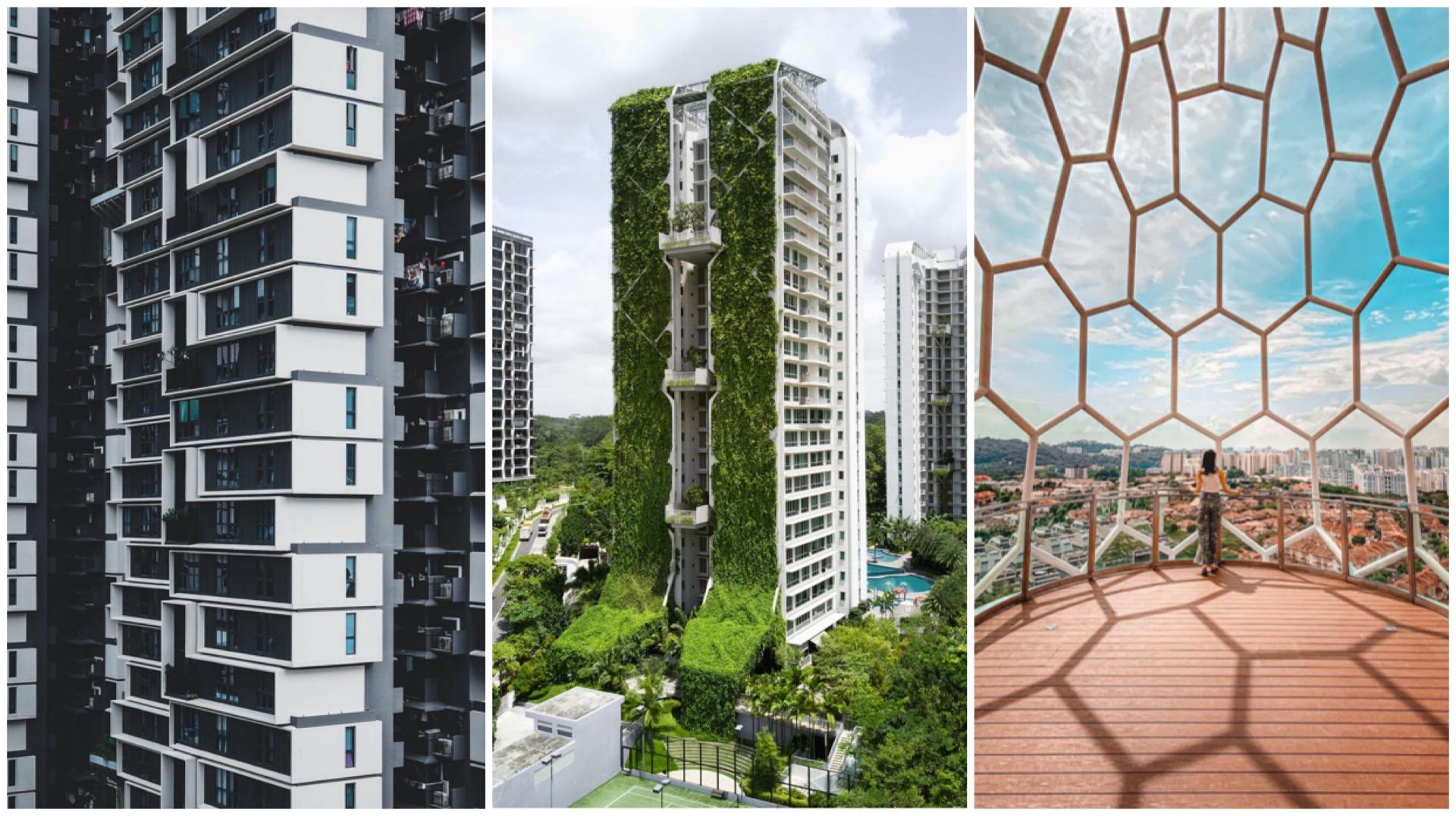
Walk past any new launch showflat in Singapore today and you'll hear the same pitch: sky gardens, vertical greenery, BCA Green Mark Platinum certification, "biophilic design." It's become almost impossible to find a condo brochure that doesn't lead with a rendering of lush foliage cascading down a facade. But here's the uncomfortable question few marketing decks want you to ask: does any of this actually show up in the resale price?
The answer, once you dig into actual transaction data, is more complicated — and more interesting — than either the developers or the skeptics would have you believe. Real, peer-reviewed research shows that greenery genuinely does move property prices in Singapore. But the kind of greenery that moves prices is often not the kind developers are selling you, and the premium for developer-marketed "biophilic" branding is far noisier than the premium for something much simpler: living near an actual, well-maintained public park.
This matters more than ever now that BCA Green Mark Platinum certification is quietly becoming mandatory for most new Government Land Sales (GLS) launches — which means a feature currently marketed as a special selling point is, for a growing share of new developments, simply the regulatory floor. If you're comparing a "green" condo against its plainer neighbour, you need to know what you're actually paying for.
Why This Question Matters Right Now
Singapore has spent nearly two decades building one of the most aggressive urban greening programmes in the world. The city-state has planted over 1 million trees under the OneMillionTrees movement, ahead of schedule, and now has roughly 47% of its land area under greenery. A recent cross-city academic comparison rating urban forests in eight major global cities found Singapore was the only city to pass a 30% urban tree canopy threshold — canopy credited with cooling shaded, vegetated zones by 4–6°C compared to bare urban surfaces.
Developers have noticed. Every masterplan district — Tengah "Forest Town," the Lentor Hills "garden district," Beauty World's nature-linked developments — now leans on greenery as a core value proposition, not a footnote. The Urban Redevelopment Authority's LUSH programme (Landscaping for Urban Spaces and High-Rises), now in its third iteration (LUSH 3.0), has formalised this by requiring developers to replace any greenery displaced by construction and introducing the Green Plot Ratio (GnPR) as a measurable landscaping standard — with a minimum 40% softscape requirement in designated replacement areas.
That last milestone is the one buyers most often miss: GLS sites now carry a mandatory minimum of BCA Green Mark Platinum Super Low Energy (SLE) certification. In practice, this means most major new launches built on state land will carry the top Green Mark tier by default — not because the developer went above and beyond, but because the government required it. When a showflat salesperson tells you a project is "Green Mark Platinum certified" as if it's a rare achievement, ask whether the site was a GLS tender. If it was, Platinum was never optional.
The Academic Evidence: Greenery Does Add Value — With a Catch
The most rigorous Singapore-specific study on this question comes from NUS's Future Cities Laboratory, led by researcher Richard Belcher and Assistant Professor Ryan Chisholm from the Department of Biological Sciences. They analysed roughly 16,000 HDB resale flat transactions over a 13-month window (April 2013 to April 2014) and cross-referenced sale prices against satellite-measured greenery levels near each flat.
The headline findings:
- Homebuyers paid approximately 3% more for flats located near green spaces within a 1.6km radius.
- Quantified precisely: every 1% increase in local greenery added about $553 to a flat's value.
- That figure rose to $883 per 1% increase in greenery for flats situated 200 metres to 1 kilometre from tree cover — identified as the "sweet spot" distance band.
- Crucially, almost all of the premium came from managed vegetation — parks, park connectors, landscaped streets — not from natural, unmanaged vegetation like forests or marshland, which showed a much weaker and less consistent price effect.
There's a twist, though, and it's one that cuts against the "more greenery is always better" assumption baked into most marketing materials: flats situated too close to greenery — within 200 metres — actually saw the value effect dampen or reverse, attributed to noise, humidity, insects, and general maintenance disruption from being right up against dense vegetation. It's not a straight line; it's an inverted-U curve, and the sweet spot is proximity, not immersion.
NUS/ETH Study: Value Added Per 1% Increase in Local Greenery
As Asst Prof Chisholm put it: "The results vindicate Singapore's policy of providing extensive green spaces for residents' recreation and could encourage the provision of more green spaces in tropical cities worldwide." Belcher, the lead researcher, further noted the true value may actually be underestimated, since the study only captured what buyers explicitly price in — not secondary, harder-to-perceive benefits like reduced air-conditioning load from the natural cooling effect of nearby vegetation.
This study covers HDB flats, not condos, and dates to 2013–2014 transaction data — worth flagging as a limitation. But it establishes a critical baseline: the strongest, most defensible greenery premium in Singapore's research literature is tied to proximity to managed public green space, not to a building's own landscaping budget.
What About BCA Green Mark Certification Specifically?
This is where the picture gets murkier — and where marketing claims tend to outrun the data.
A separate hedonic pricing study using a dataset of roughly 300,000 private residential unit transactions from 2005 to 2017 tested whether BCA Green Mark certification itself carries a measurable price premium, independent of a building's location or park proximity. The broader academic literature on green building certification (which spans multiple markets, not Singapore alone) cites premiums in a wide range:
| Data Source Type | Reported Premium Range |
|---|---|
| Actual sales-transaction data | 9.6% – 27.7% |
| Stated-preference surveys (buyers self-reporting willingness to pay) | 5.5% – 6.8% |
That gap between what people say they'd pay and what transaction records show them actually paying is itself a finding worth sitting with. It could mean buyers underestimate their own willingness to pay for sustainability, or — more likely — that sales-based premium estimates are partly confounded by other quality signals that correlate with green certification: better developers, newer construction, and often more desirable locations tend to cluster together with Green Mark ratings, making it hard to isolate the "green" effect from everything else those buildings do well.
The more robust and less overstated conclusion from this literature: the market does appear to price in a Green Mark premium, but it is inconsistent across certification tiers. Certified, Gold, GoldPlus, and Platinum don't produce a clean, linear price ladder — the market seems to reward top-tier labels disproportionately rather than pricing each incremental tier evenly. In plain terms: buyers can tell "Green Mark" from "no Green Mark," but they're less able to meaningfully distinguish Gold from GoldPlus from Platinum in terms of what they're willing to pay.
Property consultancy Savills has published figures suggesting Green Mark Platinum buildings command 3–7% higher resale values and 5–10% higher rental rates than non-certified peers, with rental premiums specifically cited at 4–9%, and CBD office rents up to 12% higher for Green Mark-rated buildings generally. One important caveat for readers: this Savills data originates primarily from the commercial and CBD office segment, not residential condos specifically — so treat it as directional market sentiment that Savills extends to residential contexts, rather than a condo-specific proven statistic.
Separately, a PropertyGuru Consumer Sentiment Study (H1 2020) found that 58% of Singaporeans said they'd be willing to pay a premium for an environmentally sustainable home. That's a real demand signal — though the survey predates the more recent GLS Green Mark mandate and should be read as sentiment, not transaction fact.
Real Transaction Comparisons: Biophilic Condos vs Their Plainer Neighbours
This is where the article earns its keep — comparing actual PSF data between condos that market themselves heavily on greenery and their more conventional neighbours in the same district, ideally the same enclave, to strip out location as a variable.
Case Study 1: Sky Habitat vs Sky Vue (District 20, Bishan)
This is arguably the cleanest natural experiment available in Singapore's condo market. Both towers sit directly next to each other in Bishan, both were developed by CapitaLand, and both are within a year of each other in completion:
- Sky Habitat — Moshe Safdie-designed "vertical village," extensive sky terraces, cascading greenery and daylight/void architecture as its central marketing pitch. TOP 2015.
- Sky Vue — a plainer, more conventional CapitaLand tower next door. TOP 2016 — one year newer than Sky Habitat.
Sky Habitat vs Sky Vue — Recent 12-Month Average PSF (S$)
According to EdgeProp's analysis, Sky Vue has consistently outperformed the more "biophilic" Sky Habitat. Since 2020, Sky Vue posted 30.5% price growth versus Sky Habitat's 25%. Rental rates tell the same story: Sky Vue commands $6.39 psf/month versus Sky Habitat's $4.84 psf/month.
This is a genuinely important counter-narrative data point. A heavily greenery-and-architecture-marketed project did not out-earn a plainer, newer peer sitting on the identical plot of land. Age, unit mix efficiency, and layout appear to have dominated over "green" architectural branding in this case.
Case Study 2: Reflections, Corals, and Caribbean at Keppel Bay (District 4)
Three towers in the same waterfront enclave, with meaningfully different greenery-marketing intensity:
| Project | Design Positioning | Recent Avg PSF |
|---|---|---|
| Reflections at Keppel Bay | Daniel Libeskind design, heavy waterfront greenery/park-connector marketing, TOP 2011 | ~$1,751–$1,801 |
| Corals at Keppel Bay | Lower-density, more exclusive, less greenery-forward marketing, newer | ~$2,351 (highest) |
| Caribbean at Keppel Bay | Oldest of the three, 16 years, TOP ~2004 | ~$1,499 (lowest) |
Keppel Bay Enclave — Recent Average PSF Comparison (S$)
Here again, the heavily greenery-and-design-branded Reflections does not command the top price in its own enclave. That distinction goes to Corals, marketed primarily on exclusivity and low density rather than landscaping. The takeaway: within the same waterfront pocket, scarcity and exclusivity beat greenery-and-design branding as a standalone driver. Greenery may still matter, but it appears to matter most when combined with genuine scarcity — not as an independent selling point.
Case Study 3: Bishan Point vs Clover by the Park — Proximity, Not Marketing
This comparison is cleaner in one important way: it isolates actual proximity to a real public park rather than a developer's own landscaping spend.
- Bishan Point (20-minute walk to the nearest park): $1,279–$1,410 psf
- Clover by the Park (directly adjacent to Bishan–Ang Mo Kio Park): $1,339–$1,856 psf, with a sustained premium trend over two years, plus higher rental ($4.10 vs $3.80 psf/month)
Park Proximity Effect — Bishan Point vs Clover by the Park (PSF Range Midpoint, S$)
This result lines up directly with the NUS/ETH finding: genuine proximity to a well-maintained public park is a more reliable value driver than a developer's marketing narrative around greenery. It's the same conclusion, just in the private condo market instead of HDB resale.
Case Study 4: Tree House and Parc Botannia — Certification Without a Clear Premium
Two more data points worth including for balance:
- Tree House (Bukit Panjang, District 23) holds the Guinness World Record for largest vertical garden — a 24,638.59 sq ft green wall — and was marketed heavily on sustainability, with claimed annual energy savings of around $500,000. Current resale PSF sits at $1,346–$1,711, averaging roughly $1,512 psf. That's a respectable figure for a 12-year-old, non-prime OCR project — but it's not a standout premium against generic Bukit Panjang/Choa Chu Kang peers of similar age.
- Parc Botannia (Sengkang/Fernvale, District 28), BCA Green Mark GoldPlus certified with a nature-inspired design around parkland and rivers, trades at $1,581–$2,034 psf — broadly in line with, rather than dramatically above, other Sengkang/Fernvale projects of similar vintage.
Both suggest that in the mass-market segment, Green Mark tier alone is not functioning as a dominant, standalone price lever.
Reading the Data Together: What Actually Drives the Premium
Putting the academic research and the transaction case studies side by side, three patterns hold up consistently:
-
Government-provided, managed greenery within 200 metres to 1 kilometre carries the most robust, peer-reviewed evidence of a resale premium. This is fundamentally a location effect — proximity to a park or park connector — not a developer marketing effect. The Clover by the Park vs Bishan Point comparison mirrors this almost exactly in the private market.
-
Developer-marketed "biophilic" design and Green Mark certification show a real but considerably noisier premium. The Sky Habitat/Sky Vue and Reflections/Corals comparisons demonstrate that a heavily greenery-branded project can genuinely underperform a plainer neighbour once other fundamentals — age, unit efficiency, exclusivity, density — diverge. Greenery branding doesn't automatically override those fundamentals.
-
BCA Green Mark Platinum is rapidly becoming a regulatory floor rather than a differentiator for anything built on a GLS site. Buyers should treat "Green Mark Platinum" marketing language with healthy skepticism for recent launches — it's frequently a compliance outcome, not a developer's above-and-beyond achievement. It's also worth noting the 2026 Green Mark framework revision shifts emphasis toward verified in-operation performance data (actual measured energy use) rather than theoretical, design-stage scoring — meaning older Platinum-rated condos may not reflect the same real-world performance standard as the label implies today.
One important methodological caveat that applies across every project-to-project PSF comparison in this article: none of these control for confounding variables like exact floor level, unit mix, precise frontage, or renovation condition. True causal isolation of a "greenery premium" requires the kind of hedonic regression analysis used in the NUS/ETH and certification studies — not simple project-average PSF comparisons. Treat the case studies here as illustrative, directional evidence, not proof of causation.
Upcoming New Launches Marketed Heavily on Greenery
For readers tracking the next wave of "biophilic" positioning in new launches, here's a watchlist — with the caveat that several of these sit on GLS land and will therefore carry Green Mark Platinum SLE certification as a regulatory default, not a unique achievement:
| Project | District | Greenery Angle | Status |
|---|---|---|---|
| Tengah Garden Residences / Tengah Garden Avenue | D24 | First private condo in Tengah "Forest Town"; borders a 5km forest corridor linking to Western Water Catchment and Central Catchment Nature Reserve | Previews reportedly March/April 2026; entry from ~$980,000 |
| Lentor Gardens Residences | D26 | Positioned within the Lentor Hills "green fingers" masterplan, near 157ha of nature reserves, parks and reservoirs | Showflat preview slated 4 July 2026 |
| Lentoria | D26 | Part of the same Lentor Hills Estate park-connector narrative; 267 units | Selling |
| Lentor Mansion | D26 | 533 units; part of the broader Lentor "garden district" pitch | ~75% sold as of March 2024 launch |
| The Reserve Residences | D21 (Beauty World) | WOHA-designed, nature-positive/biophilic flagship; won Sustainability Excellence and Innovation Excellence, EdgeProp Excellence Awards 2024; positioned as gateway to Bukit Timah Nature Reserve | Near-completed benchmark |
| Kent Ridge Hill Residences | D5 | Hillside, park-and-green-corridor integration | Current PSF $1,542–$2,310 |
Note that Tengah and the Lentor cluster are GLS sites — meaning Green Mark Platinum SLE certification is baked into their approval, not a bonus. If you're evaluating these against a per-square-foot premium for "sustainability," the more useful question is whether the specific site delivers genuine, close-proximity access to managed park or forest connector infrastructure — the variable the data says actually matters — rather than taking the certification label at face value.
Food for Thought
- If Green Mark Platinum becomes the default certification tier for nearly all new GLS launches within the next few years, what will developers market as the next differentiator once "sustainability" stops being a distinguishing feature?
- Does the Sky Habitat vs Sky Vue result suggest that elaborate greenery-integrated architecture actually carries a hidden cost — through higher maintenance fees, upkeep complexity, or design inefficiencies that erode unit layout value — that offsets whatever premium the greenery itself might generate?
- Given that the NUS/ETH study is now over a decade old and based on HDB data, is Singapore's private condo buyer today more or less willing to pay for genuine park proximity than in 2013–2014, especially post-pandemic when outdoor space took on new perceived value?
- If sales-transaction data shows a far higher green premium (9.6%–27.7%) than what buyers say they'd pay in surveys (5.5%–6.8%), are buyers underestimating their own preferences, or are other unmeasured quality factors (better locations, better developers) riding along with the "green" label and getting wrongly credited to it?
- As the 2026 Green Mark framework shifts toward verified in-operation performance rather than design-stage scoring, will older Platinum-certified condos that never had their real-world energy performance checked start trading at a discount to newly-verified stock?