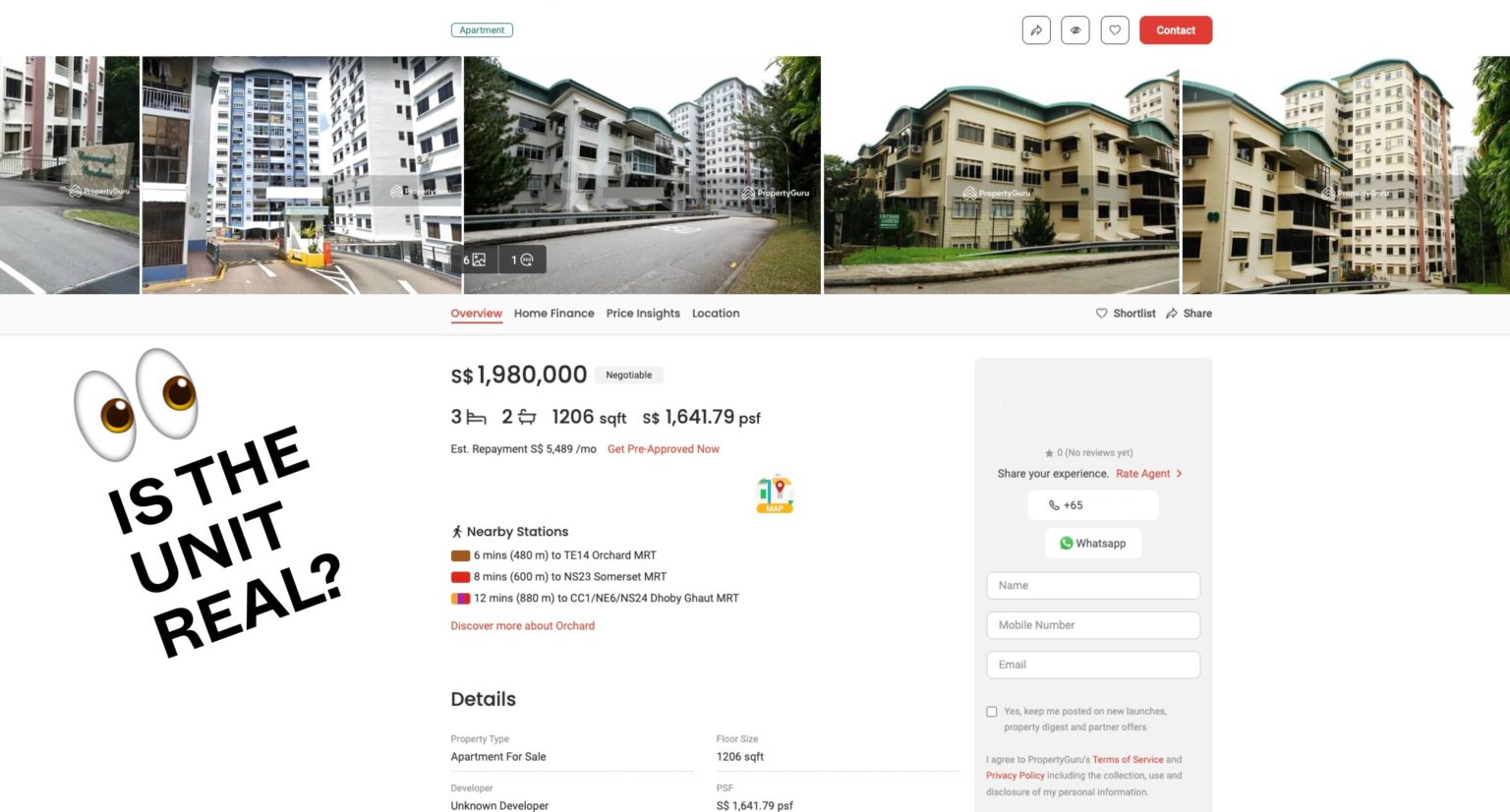
If you've been doom-scrolling through property content on TikTok lately, you might have stumbled upon a video that stopped you mid-scroll: a property agent guaranteeing a 12% rental yield for a Sentosa Cove unit. For anyone even vaguely familiar with Singapore's property market, that number should have set off alarm bells loud enough to wake your entire HDB block.
Here's the reality check: the average gross rental yield in Singapore hovers around 3.3%, and even in prime districts, legitimate yields rarely exceed 4-5%. A 12% claim isn't just optimistic—it's either mathematically impossible, deliberately misleading, or both. This viral incident isn't an isolated case; it's symptomatic of a growing trend where social media platforms have become the Wild West of property marketing, where exaggerated claims spread faster than fact-checks can catch up.
For young Singaporeans navigating their first property investment—or even seasoned buyers considering their next move—understanding how to evaluate rental yield claims has never been more critical. This article breaks down everything you need to know: from calculating realistic gross versus net yields, to identifying common marketing distortions, understanding the Council for Estate Agencies' (CEA) role in policing content, and knowing exactly what documentation to demand from any agent making bold promises.
The Anatomy of a Misleading Yield Claim
Why 12% Sets Off Every Red Flag
To understand why a 12% rental yield claim for Sentosa Cove is so problematic, let's look at the numbers that actually matter. Sentosa Cove represents the pinnacle of Singapore luxury living—waterfront bungalows, marina-facing condos, and some of the most expensive real estate per square foot in the country.
Current market data tells a very different story:
| Property Type | Average PSF (S$) | Typical Gross Yield | Typical Net Yield |
|---|---|---|---|
| Sentosa Cove Luxury Condos | 2,000–3,000 | 2%–4% | 0.5%–2.5% |
| Rest of Singapore (Private) | 1,500–2,500 | 3%–4% | 1.5%–3% |
| Singapore Overall Average | — | ~3.3% | ~1.8%–2.5% |
Sources: URA data, Homejourney analysis, 99.co transaction records
A 12% yield would require either:
- Rental income 3-4x higher than comparable properties in the same development
- Purchase price 60-70% below market value (which itself would raise serious questions)
- Some combination of mathematical gymnastics that would make an accountant weep
Let's put this in concrete terms. A typical 1,200 sq ft unit at The Oceanfront @ Sentosa Cove, at approximately S$2,400 psf, would cost around S$2.88 million. For a 12% gross yield, you'd need annual rental income of S$345,600—or S$28,800 per month. The actual rental range for such units? S$8,000 to S$12,000 monthly, yielding roughly 3.3% to 5% gross at best.
Rental Yield Comparison: Claimed vs Reality
The gap between claimed and actual yields isn't just a rounding error—it's a chasm that could cost uninformed buyers hundreds of thousands in disappointed expectations.
The Social Media Amplification Problem
What makes this case particularly concerning is how social media algorithms reward sensationalism over accuracy. A video promising "guaranteed 12% yields" generates more engagement—shares, comments, outraged reactions—than sober analysis ever could. The agent gains followers, the platform gains ad revenue, and potential buyers gain... dangerously misleading information.
The CEA has increasingly turned its attention to social media marketing, recognizing that traditional advertising regulations need to evolve for the TikTok and Instagram era. But enforcement moves at the speed of bureaucracy while viral content spreads at the speed of a swipe.
Gross vs Net Yield: The Critical Difference That Could Save Your Investment
Here's where even savvy buyers get tripped up. That 3.3% "average yield" you hear quoted? It's almost always gross yield—the simplest possible calculation that tells you almost nothing about your actual returns.
Understanding Gross Rental Yield
Gross Rental Yield = (Annual Rental Income ÷ Property Purchase Price) × 100
Simple, clean, and utterly misleading. This is the figure agents love to quote because it produces the highest possible number. It's also the figure that has left countless investors wondering why their "5% yield property" is actually costing them money each month.
The Reality of Net Rental Yield
Net Rental Yield = [(Annual Rental Income − Annual Expenses) ÷ Property Purchase Price] × 100
The expenses that get conveniently omitted from gross yield calculations can be substantial:
Fixed Annual Costs:
- Property tax: 0%–16% of annual value (progressive rate for non-owner-occupied)
- Maintenance fees: S$300–S$1,500+ monthly for condos
- Sinking fund contributions: Often 10%–30% of maintenance fees
- Property insurance: S$500–S$2,000 annually
- Management fees: 5%–10% of rental income if using an agent
Variable & Contingency Costs:
- Vacancy periods: Industry standard assumes 1–2 months annually
- Repair and maintenance: Budget 1%–3% of property value annually
- Tenant acquisition costs: Agent commissions (typically half-month to one-month rent per year)
- Legal and administrative: Tenancy agreement costs, dispute resolution
For a Sentosa Cove property, these costs compound dramatically. A S$3 million unit with S$10,000 monthly rent might show an attractive 4% gross yield. But factor in S$1,200 monthly maintenance, S$15,000 annual property tax, two months vacancy, and 8% management fees, and your net yield drops to approximately 1.8%—less than half the quoted figure.
How Expenses Erode Rental Yield: S$3M Sentosa Cove Example
The "Guaranteed Yield" Trap
Perhaps the most dangerous phrase in property marketing is "guaranteed yield." In the viral TikTok case, this guarantee was allegedly offered without substantiation. Here's what you need to understand:
- Rental income is never guaranteed—markets fluctuate, tenants leave, economic conditions change
- "Guaranteed" schemes often involve developer rebates that artificially inflate yields for the first 1-2 years
- Legal enforceability of "guarantees" is questionable unless specified in the Sale & Purchase Agreement
When an agent offers a "guaranteed 12% yield," the appropriate response isn't excitement—it's demanding to see the signed guarantee document, the developer's financial backing, and the legal mechanism for enforcement. In nearly all cases, these guarantees evaporate under scrutiny.
Common Marketing Distortions: A Buyer's Checklist
Beyond yield misrepresentation, social media property marketing employs several other tactics designed to create false urgency or unrealistic expectations. Here's your decoder ring:
1. The Selective Comparison
The Tactic: Comparing the property to the most expensive recent transaction in the building, regardless of differences in floor, view, or condition.
The Reality: A high-floor sea-facing unit's PSF doesn't apply to your mid-floor pool-view purchase.
Your Defense: Always request comparable transactions within the same stack/facing from the past 6 months, not just the highest recorded sale.
2. The Rental Optimism
The Tactic: Quoting "market rental" based on asking prices, not actual transacted rents.
The Reality: Asking prices can be 15-30% higher than actual rental transactions.
Your Defense: Demand redacted tenancy agreements or actual rental transaction data from URA's rental statistics.
3. The AI-Enhanced Imagery
The Tactic: Using AI-generated or heavily edited photos that show impossible views, enlarged spaces, or removed obstructions.
The Reality: The CEA now specifically requires disclosure of AI-altered images, but enforcement is challenging.
Your Defense: Always view the actual unit before making any decisions. Virtual tours and photos are starting points, never substitutes.
4. The "Below Market Value" Claim
The Tactic: Claiming a property is priced 20-30% below "market value" based on an inflated "valuation."
The Reality: The "market value" referenced often comes from a friendly valuer or is simply fabricated.
Your Defense: Obtain independent valuations from at least two established firms (CBRE, Colliers, Savills, etc.).
5. The Urgency Manufacture
The Tactic: "Last unit at this price!" "Developer raising prices tomorrow!" "Foreign buyer interest—act fast!"
The Reality: Artificial scarcity pressures emotional decision-making.
Your Defense: Never make six-figure decisions under time pressure. Legitimate opportunities remain available after due diligence.
Common Buyer Complaints About Property Marketing (2024)
CEA's Role: What the Regulator Can (and Can't) Do
The Council for Estate Agencies serves as Singapore's real estate watchdog, but understanding its actual powers and limitations helps set realistic expectations about enforcement.
What CEA Regulates
Under the Estate Agents Act and accompanying Advertising Guidelines for Estate Agents, the CEA prohibits:
- False or misleading statements about property characteristics, prices, or investment returns
- Unsubstantiated claims about rental yields, capital appreciation, or returns
- Misleading photographs without disclosure of alterations (including AI enhancement)
- Inflated pricing that doesn't reflect actual market conditions
- Failure to conduct customer due diligence, particularly regarding money laundering risks
Enforcement Powers
When violations occur, CEA can impose significant penalties:
| Violation Type | Maximum Fine (Agent) | Maximum Fine (Agency) | Additional Sanctions |
|---|---|---|---|
| Misleading advertising | S$100,000 | S$200,000 | Suspension/revocation of registration |
| Customer due diligence failures | S$100,000 | S$200,000 | Mandatory retraining, supervision requirements |
| AI image manipulation (undisclosed) | S$100,000 | S$200,000 | Public censure |
| Facilitating money laundering | S$100,000 | S$200,000 | Criminal referral, permanent revocation |
Source: CEA Disciplinary Framework, 2024
Recent Enforcement Actions
The CEA has demonstrated increasing willingness to act against social media misconduct:
- 2024: Multiple agents fined for customer due diligence failures related to the S$3 billion money laundering case, with investigations ongoing
- 2024: ERA Realty censured for lapses in agent supervision, particularly regarding advertising compliance
- 2023–2024: Increased scrutiny of AI-generated property images, with new guidelines requiring explicit disclosure
However, the CEA's enforcement has limitations:
- Reactive rather than proactive: Investigations typically follow complaints, not pre-publication review
- Platform challenges: Content spreads across TikTok, Instagram, Telegram, and private channels faster than monitoring can track
- Jurisdictional limits: Overseas-based agents marketing Singapore properties may fall outside direct CEA oversight
What This Means for Buyers
The CEA provides essential backstop protection, but you remain your own first line of defense. Regulatory action happens after damage occurs—your vigilance prevents the damage in the first place.
Documentation to Demand: Your Due Diligence Checklist
When any agent—whether on TikTok or at a property launch—makes claims about rental yields, treat it as the beginning of a conversation, not the end. Here's exactly what to request:
For Yield Verification
| Document | What It Proves | Red Flags |
|---|---|---|
| Redacted tenancy agreements (last 24 months) | Actual rental income achieved | Agent refuses, provides only "market estimates" |
| Rental transaction data from URA/EdgeProp | Comparable rents in development | Data is 12+ months old, from different stack/facing |
| Property tax statements | Actual annual tax liability | Agent includes owner's tax rebates not applicable to investors |
| Maintenance fee statements | True monthly carrying costs | Fees quoted exclude sinking fund, special levies |
For Price Verification
| Document | What It Proves | Red Flags |
|---|---|---|
| Recent transaction records (same development, comparable units) | Fair market value benchmark | Comparables are 6+ months old, different floor/condition |
| Independent valuation reports (2+ sources) | Professional price assessment | Agent insists on single "preferred" valuer |
| Developer price list (for new launches) | Transparent pricing structure | Prices not published, "by invitation only" |
For Agent Verification
| Document | What It Proves | Red Flags |
|---|---|---|
| CEA registration number | Legitimate licensed agent | Number doesn't verify on CEA Public Register |
| Professional indemnity insurance | Financial protection for negligence | Insurance expired, insufficient coverage |
| Agency authorization letter | Authority to market specific property | Marketing without owner's knowledge |
The "Show Me" Conversation Script
When an agent claims a specific yield, here's how to respond:
"That 12% yield sounds attractive. To help me evaluate this properly, could you provide:
- Redacted tenancy agreements for this unit or comparable units in the past 24 months?
- A breakdown of all monthly and annual expenses—maintenance, tax, insurance, management fees?
- The calculation method you're using—gross or net yield?
- Your CEA registration number for my verification?
I'll need these before proceeding further."
Legitimate agents welcome informed buyers. Those making unfounded claims will often become evasive, change the subject, or pressure you to "act fast" without documentation. This is your signal to walk away.
Sentosa Cove: The Real Investment Picture
To understand why the 12% claim was particularly absurd, let's examine what legitimate Sentosa Cove investment actually looks like.
Market Fundamentals (2024–2025)
Sentosa Cove occupies a unique position in Singapore property—the only location where foreigners can purchase landed property (with government approval), and Singapore's most exclusive waterfront enclave. But exclusivity doesn't automatically translate to exceptional yields.
Price Performance:
- Current PSF: S$2,000–S$3,000 for luxury condos, S$1,700–S$1,800 for non-landed resale
- Recent high-value transactions: S$23.89 million for paired units at Seven Palms
- Price trend: Stable to modest growth, with selective strong performers
Rental Market Reality:
- Typical monthly rents: S$8,000–S$15,000 for 2–3 bedroom condos
- Tenant profile: Expatriate executives, diplomatic families, short-term corporate rentals
- Vacancy rates: Higher than mainland Singapore due to smaller tenant pool
Sentosa Cove vs Singapore Average: Investment Metrics
Why Investors Actually Buy in Sentosa Cove
Understanding true investor motivation reveals why yield claims miss the point:
Primary Motivations:
- Lifestyle and prestige: Waterfront living, marina access, resort amenities
- Scarcity value: Limited supply of Singapore waterfront property
- Foreign ownership pathway: Unique landed property access for non-citizens
- Long-term capital preservation: Hard asset in politically stable jurisdiction
- Generational wealth transfer: Legacy asset with enduring prestige
Yield is rarely the primary driver. Investors accepting 2-3% gross yields are typically optimizing for capital preservation and lifestyle, not income generation.
The Foreign Buyer Factor
Sentosa Cove's foreign buyer eligibility creates unique dynamics:
- Additional Buyer's Stamp Duty (ABSD): 60% for foreigners (among world's highest)
- Total investment threshold: Typically S$5M+ for meaningful landed property
- Approval requirements: Singapore Land Authority approval for landed purchases
These barriers mean Sentosa Cove investors are ultra-high-net-worth individuals for whom rental yield is incidental to broader portfolio strategy. A "12% yield" pitch targeting this demographic would be not just misleading, but strategically bizarre.
Food for Thought: Questions Every Property Buyer Should Ask
Before your next property viewing—whether sparked by a TikTok video or traditional marketing—consider these questions:
-
"What would make this yield claim false, and how can I verify it independently?" Approach every investment claim with structured skepticism. What evidence would prove it wrong? Can you access that evidence? If not, why not?
-
"Am I being sold a lifestyle dream disguised as a financial investment?" Sentosa Cove's marina views and resort amenities are genuinely appealing—but emotional appeal can obscure financial reality. Separate what you want to be true from what the numbers actually show.
-
"Who benefits from my urgency, and what do they risk if I wait?" In any high-pressure sales situation, identify whose interests are served by your haste. Legitimate opportunities don't evaporate because you took 48 hours to verify claims.
-
"What percentage of my investment decision is based on verifiable data versus persuasive storytelling?" Social media property content is optimized for engagement, not accuracy. Audit your information sources—how much comes from transaction databases versus algorithm-driven feeds?
-
"If this investment performs at half the promised return, does it still make sense?" Stress-test every projection. A "guaranteed 12%" that delivers 6% might still be viable; one that delivers 2% is catastrophic. Know your floor before chasing ceilings.
Conclusion: Informed Buyers Make Better Decisions
The viral 12% yield TikTok episode, however it resolves with CEA investigation, serves as a valuable market education moment. It demonstrates how social media's incentive structures—engagement over accuracy, sensation over substance—can distort property marketing in dangerous ways.
For Singapore's property market to function effectively, buyers must develop the analytical skills to evaluate claims independently. The difference between gross and net yield, the documentation that substantiates (or exposes) marketing claims, and the realistic performance of specific markets like Sentosa Cove aren't arcane technical details—they're essential knowledge for anyone making six or seven-figure investment decisions.
The CEA's regulatory framework provides important guardrails, but enforcement will always lag behind innovation in misleading marketing. Your best protection is informed skepticism: demanding documentation, verifying independently, and recognizing that in property investment, if something sounds too good to be true, it almost certainly is.